
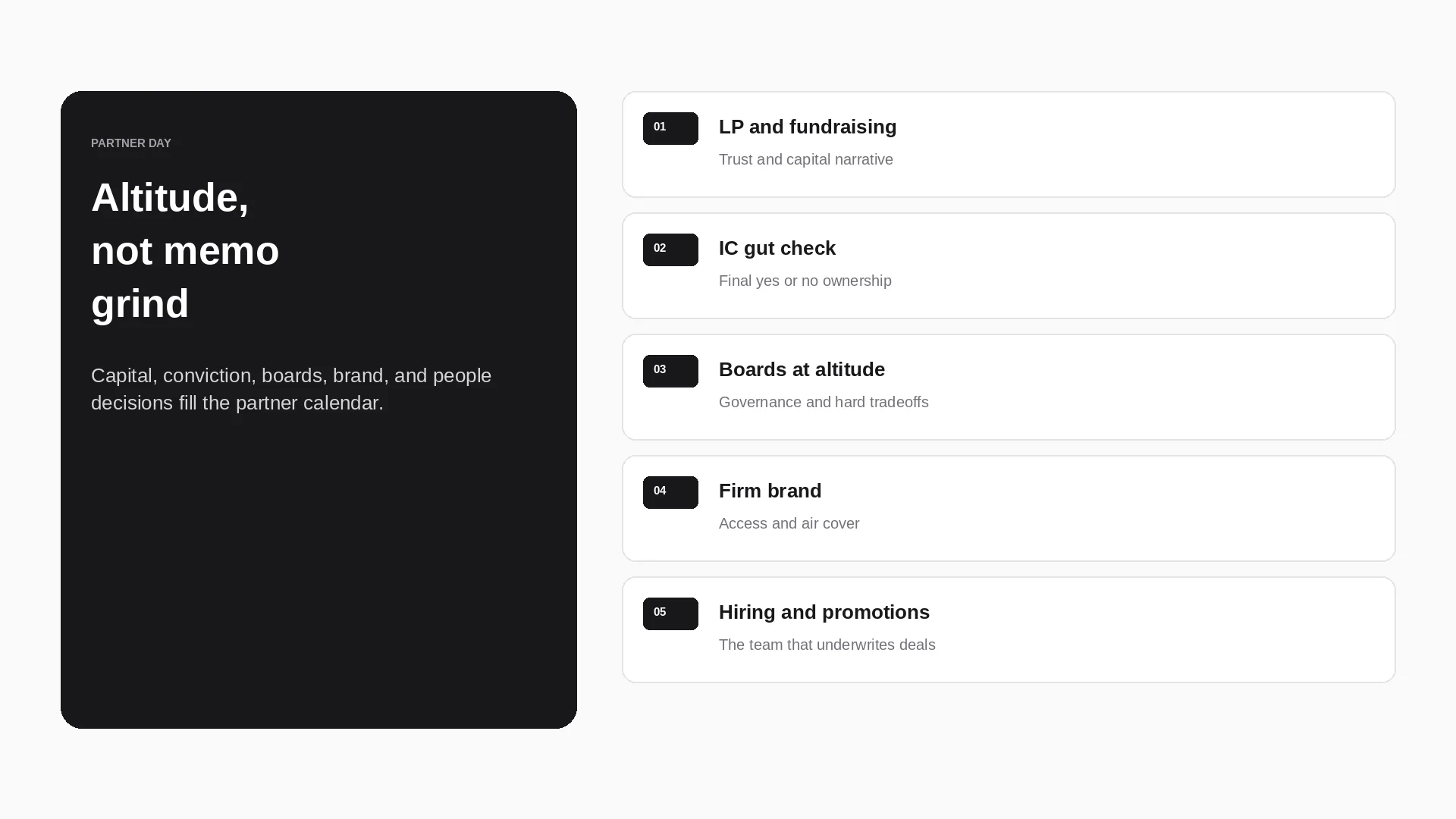
A venture capital partner day is altitude work. The calendar is less about drafting the memo and more about raising and stewarding capital, making final investment calls, sitting on boards, representing the firm, and deciding who gets hired or promoted.
The useful picture is not a private-island fantasy. It is a repeating loop across six workstreams: limited partner relationships and fundraising, sourcing at network altitude, investment-committee gut checks, portfolio boards, firm brand, and people decisions. Junior seats still grind decks and diligence. Partners decide what the firm commits to, who it works with, and how the franchise shows up in the market.
Treat the sample day below as a composite. Live deals, an open fundraise, a troubled board, or a hiring process can reorder every block. For hour ranges and spike patterns, use Venture Capital Careers' venture capital hours guide. For mandate and responsibilities, use the venture capital partner job description. For the junior day texture this page does not swallow, read the associate day in the life and analyst day in the life guides.
A timestamped day in the life of a VC partner
| Time | What often happens | Why it matters |
|---|---|---|
| 7:00-8:30 | News, overnight LP or founder notes, portfolio alerts, press requests | Partners absorb signal early so the team does not chase noise all morning |
| 8:30-9:30 | Partner sync: live deals, fundraise status, risk flags, calendar triage | Consensus firms burn mornings aligning conviction before anyone takes a meeting |
| 9:30-11:00 | LP call, prospective LP meeting, or quarterly update prep | Fundraising and LP trust are core partner products, not side projects |
| 11:00-12:30 | Board meeting or portfolio deep dive at altitude | Partners join for governance, hiring help, financing strategy, and hard tradeoffs |
| 12:30-13:30 | Working lunch with a founder, co-investor, or candidate | Relationship time still has a job: information, trust, or a next step |
| 13:30-15:00 | IC or pre-IC: hear the case, pressure-test open questions, make or block a call | Partners rarely rebuild the model. They own the final gut check |
| 15:00-16:30 | High-signal founder or co-investor meetings sourced through the network | Partner sourcing is referral and reputation work, not cold outreach volume |
| 16:30-17:30 | Hiring, promotion, or internal coaching conversations | Partners shape the team that will source and diligence the next decade of deals |
| 17:30-19:00 | Press, conference panel, portfolio dinner, or LP event | Brand and ecosystem presence are part of the job when the firm needs air cover |
| Evening | Variable: one more founder reply, board follow-up, or true off switch | Strong partners protect focus; weak calendars become permanent availability |
A live deal day looks different. A competitive process compresses IC. A term-sheet clock starts. An LP diligence request lands mid-board. Recurring work gets postponed rather than deleted.
The day also has judgment checkpoints candidates should listen for in interviews:
- Who has a real yes or no on investments?
- How much of the week is LP and fundraising versus deals versus boards?
- Which boards does this partner actually own, and what help do founders get between meetings?
- Who decides hiring and promotions on the investing team?
If a team cannot answer those questions, the partner title may be branding without decision rights.
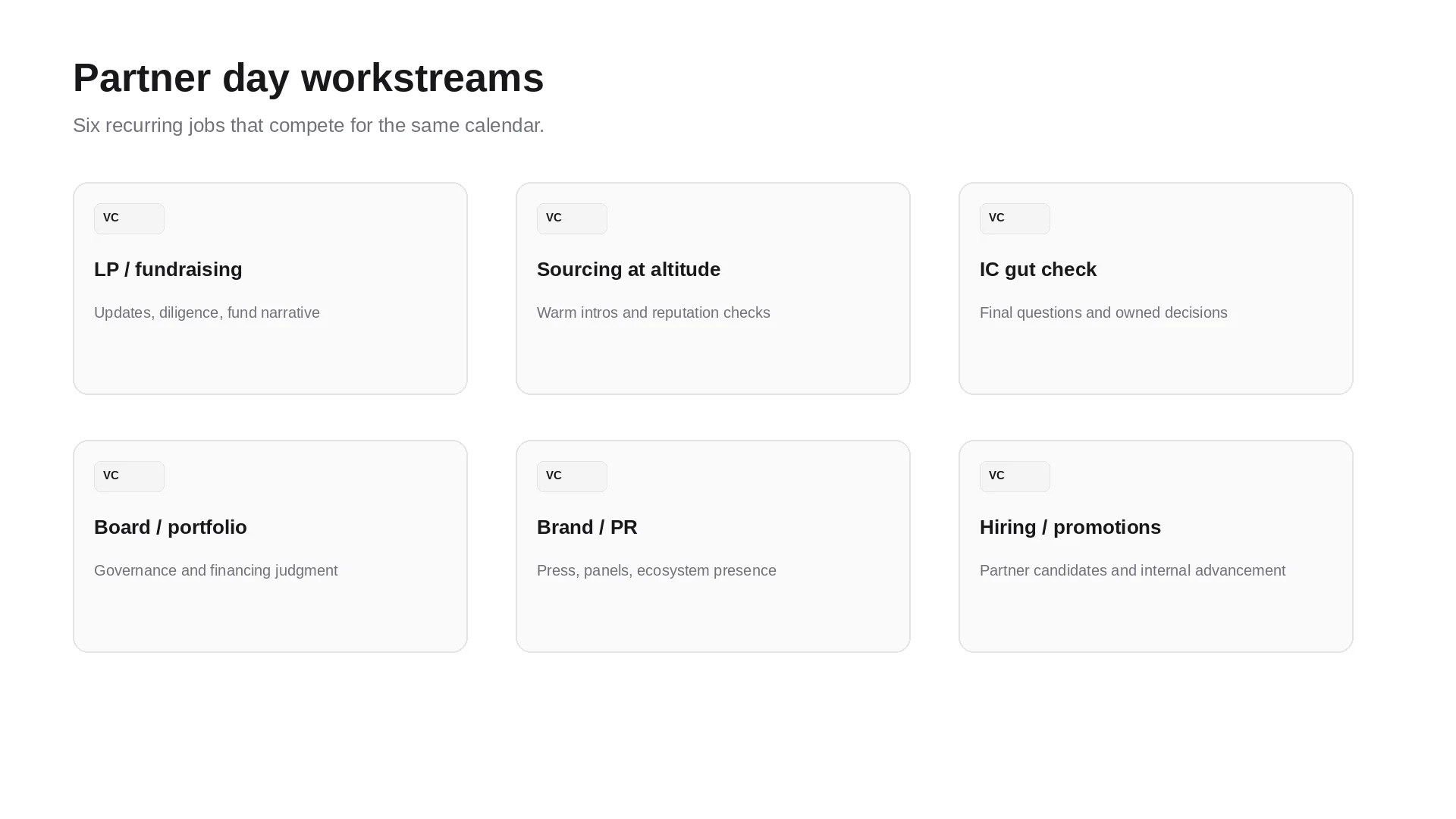
The workstreams that fill a partner day
Partners rarely do one job all day. The same person usually moves across six workstreams. The mix changes by fund stage and franchise strength, but the categories stay stable.
| Workstream | Typical partner work | What good looks like |
|---|---|---|
| LP relations and fundraising | Updates, diligence meetings, new LP outreach, fund narrative, co-investor coordination | Clear storytelling, honest performance context, and relationships that survive a quiet year |
| Sourcing at altitude | Warm intros, founder reputation checks, co-investor flow, selective first meetings | High-signal meetings, not inbox volume theater |
| IC gut check | Final questions, pattern recognition, risk ranking, yes/no ownership | A decision the firm can defend, with explicit open risks |
| Board and portfolio | Governance, hiring help, financing strategy, crisis judgment | Useful altitude help without turning every board into unpaid operating bandwidth |
| Brand and firm representation | Press, panels, content, conference presence | Reputation that improves deal access and LP trust, not vanity metrics |
| Hiring and promotions | Partner-level candidates, internal advancement, culture calls | A team that can underwrite deals when the partner is on a board or LP roadshow |
Two failure modes show up often.
Calendar theater. The partner stays busy in meetings and never creates a clear yes, no, or board action. Hero partnering. The partner jumps into every diligence thread and never leaves room for principals and associates to own the work.
A healthy day balances altitude and leverage. Partners decide and unblock. The rest of the team produces the evidence.
How the day changes by firm type
Firm type changes the texture of the day more than the job title does.
Seed and early-stage
Early-stage partner days often lean toward founder access, pattern recognition, board work on thin information, and continuous relationship maintenance. Diligence still matters, but the evidence set may be team quality, early customer pull, and market timing rather than long operating histories. Small partnerships can also mean more direct ownership of both fundraising and every live deal in the same week.
Growth and later-stage
Growth-partner days usually include denser processes, heavier IC packages, more financing complexity, and longer board agendas. The calendar can look more institutional when a live process or follow-on is underway. Relationship work still matters, but a larger share of the day may sit inside structured decision forums and LP communication.
Small fund versus platform fund
| Dimension | Smaller fund pattern | Platform fund pattern |
|---|---|---|
| Breadth | One partner may touch fundraising, IC, boards, and brand the same day | Work may split across more partners, platform staff, and specialists |
| Access | Faster proximity to every deal and every LP conversation | More process, more stakeholders, sometimes less personal coverage per company |
| Spikes | Fundraises and troubled boards hit harder because leverage is thin | Spikes still happen, but coverage and specialization can absorb some load |
| Career signal | Ownership stories across capital and companies | Judgment inside a franchise, communication across a larger partnership, and brand discipline |
In interviews, ask for the last week of the person who holds the seat. A week description beats a brand description.
Partner vs principal vs associate day
Titles vary by firm. Some franchises call many people partners on the website while reserving true decision and carry rights for a smaller set. Believe the day, not the masthead. VCC's venture capital career path and team structure guides cover ladder language in depth. The table below focuses on how the day feels.
| Dimension | Associate day | Principal day | Partner day |
|---|---|---|---|
| Primary job | Turn evidence into a recommendation and keep work moving | Own a workstream end-to-end and drive internal conviction | Own capital, final calls, boards, brand, and people decisions |
| Morning focus | Triage plus priority calls | Priority setting across deals and partner alignment | LP, partner sync, and risk flags at firm level |
| External time | May lead early founder or diligence conversations | Leads key conversations and manages escalation | High-signal founders, LPs, co-investors, press |
| Writing / decision product | Full narrative, risks, recommendation | Decision package and advocacy into IC | Final gut check, fund narrative, board judgment |
| Portfolio | Scoped projects with delivery ownership | Higher-stakes company issues and follow-on judgment | Board seats and financing or crisis altitude |
| Success signal | Judgment, prioritization, trusted ownership | Conviction building and outcome accountability | Capital raised, decisions owned, franchise quality, team built |
If the posted title says partner but the day is only diligence ownership with no LP or final-call rights, believe the day. If the title says principal but the person already owns boards and a yes vote, believe the day. For junior texture, stay on the associate and analyst day guides rather than stretching this page downward.
Operating partners and venture partners are adjacent seats, not synonyms. Operating partners usually bring company-building leverage into the portfolio. Venture partners often contribute sourcing, advice, or part-time coverage without the same full GP load. Keep those paths on the operating partner job description, how to become an operating partner, and how to become a venture partner pages.
Fit signals and walk-away questions
A partner day is a strong fit when you want responsibility for capital, conviction, and people under ambiguity. It is a weak fit when you mainly want deep specialist craft with few context switches, or when you need the work to look like a predictable factory schedule.
Use these walk-away questions before you romanticize the title:
- What share of this partner's week is fundraising and LP work versus deals versus boards versus brand?
- Who can actually say yes on an investment, and is that written down or informal?
- Which boards does the partner own, and what did they do between the last two meetings?
- How is carried interest allocated, and what has to be true before it matters?
- What happened the last time a deal or fundraise went sideways, and who absorbed the load?
- Is "partner" here a decision seat or a public label?
If the answers are vague, you may be chasing status language rather than a real seat. Many strong careers stay at principal level longer, move into operating roles, or build leverage as founders or operators before a true partner seat opens.
Use the day to evaluate roles and firms
Candidates should reverse the day-in-the-life question. Once you know what partner work looks like, ask whether a specific seat produces that work in a healthy way.
Then do concrete research:
- Browse open VC roles and compare stated responsibilities with the day mapped here.
- Research firms in the companies directory for stage, portfolio shape, and team signals.
- Cross-check workload claims with the hours guide, scope with the partner job description, and ladder context with the career path and salary guide.
- Create a profile for job alerts if you are actively searching.
The point of a partner day-in-the-life article is not romance. It is fit. If the day energizes you because you like capital allocation, board judgment, and building a partnership, the seat can be worth the ambiguity. If you want uninterrupted deep work with clear ownership of analysis alone, scrutinize whether "partner" is the right target or whether a principal, operating, or company-side path fits better.
FAQ
What does a venture capital partner do day to day?
Most partner days mix LP and fundraising work, high-signal sourcing, investment-committee decisions, board and portfolio judgment, firm brand, and hiring or promotion calls. The exact mix depends on fund stage, franchise strength, and whether a fundraise or live deal is active.
What does a typical day look like for a VC partner?
A useful composite day starts with signal triage and partner sync, moves into LP or board blocks, then IC or high-signal meetings, and ends with hiring, brand, or portfolio follow-through. No single timestamped schedule is universal.
How does a VC partner day differ from an associate or principal day?
Associates usually turn evidence into recommendations. Principals own workstreams and drive conviction. Partners own final calls, capital relationships, boards at altitude, brand, and team decisions. Titles vary, so ask for real examples from the seat.
How does partner work change at a seed fund vs a growth fund?
Seed and early-stage days often emphasize founder access, thinner evidence, and broad ownership. Growth days often include denser IC packages, heavier board agendas, and more institutional LP communication.
Are VC partner days nine-to-five?
Often no. Many partners have flexible core hours with uneven evenings around boards, LP travel, events, or live processes. Ask separately about travel, event load, and how the partnership protects focus.
How should candidates use this day view when evaluating offers?
Map the promised title to the six workstreams, ask for last-week examples, and compare the answers with open roles on Venture Capital Careers and firm profiles in the companies directory. Believe the day over the masthead.
Related posts
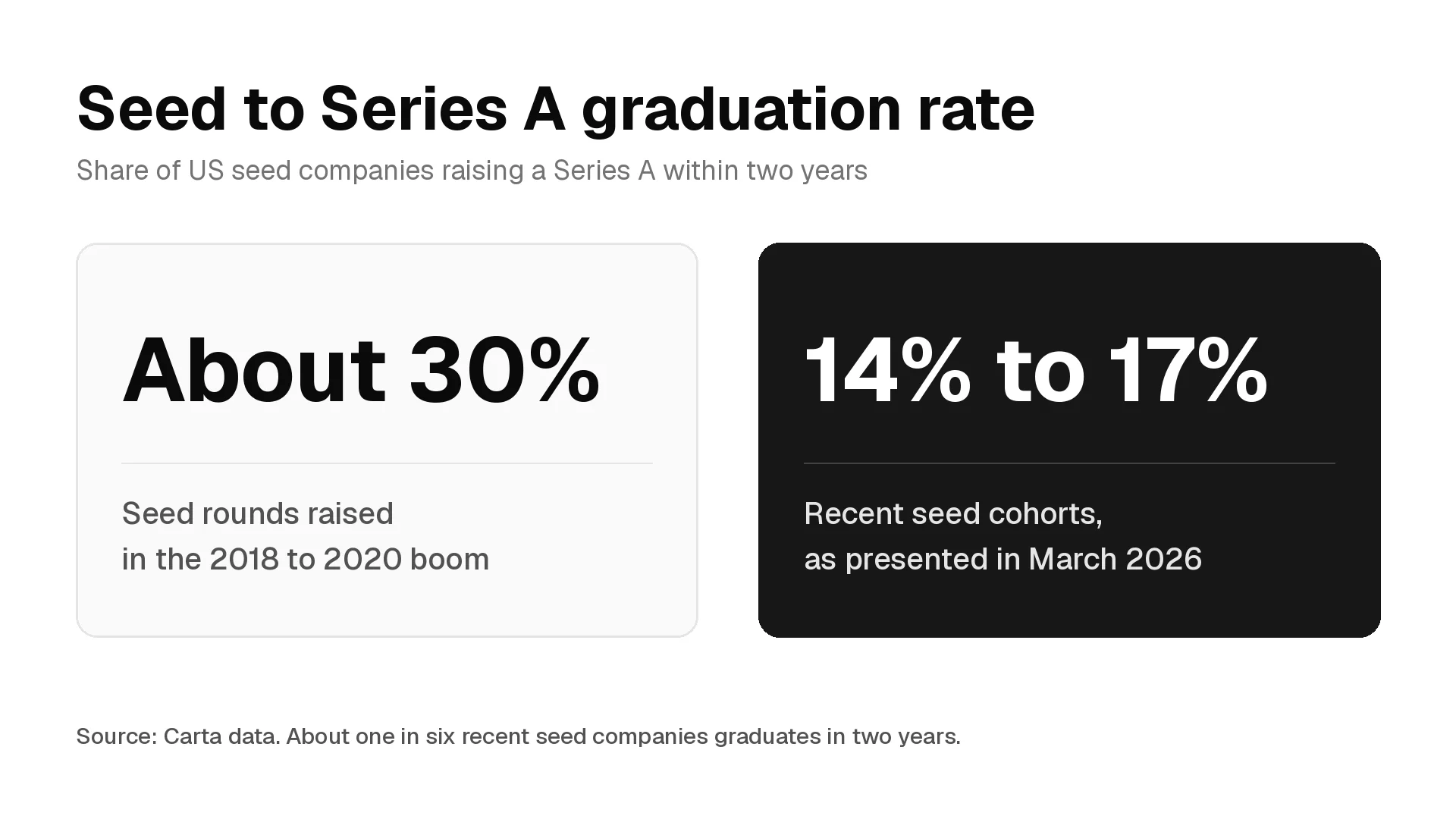
Seed to Series A graduation rates by cohort from Carta and Crunchbase, how long the jump takes, why rates fell after 2021, why published figures disagree, and how seed and Series A firms use the rate for reserves, LP reporting, portfolio reviews and interviews.
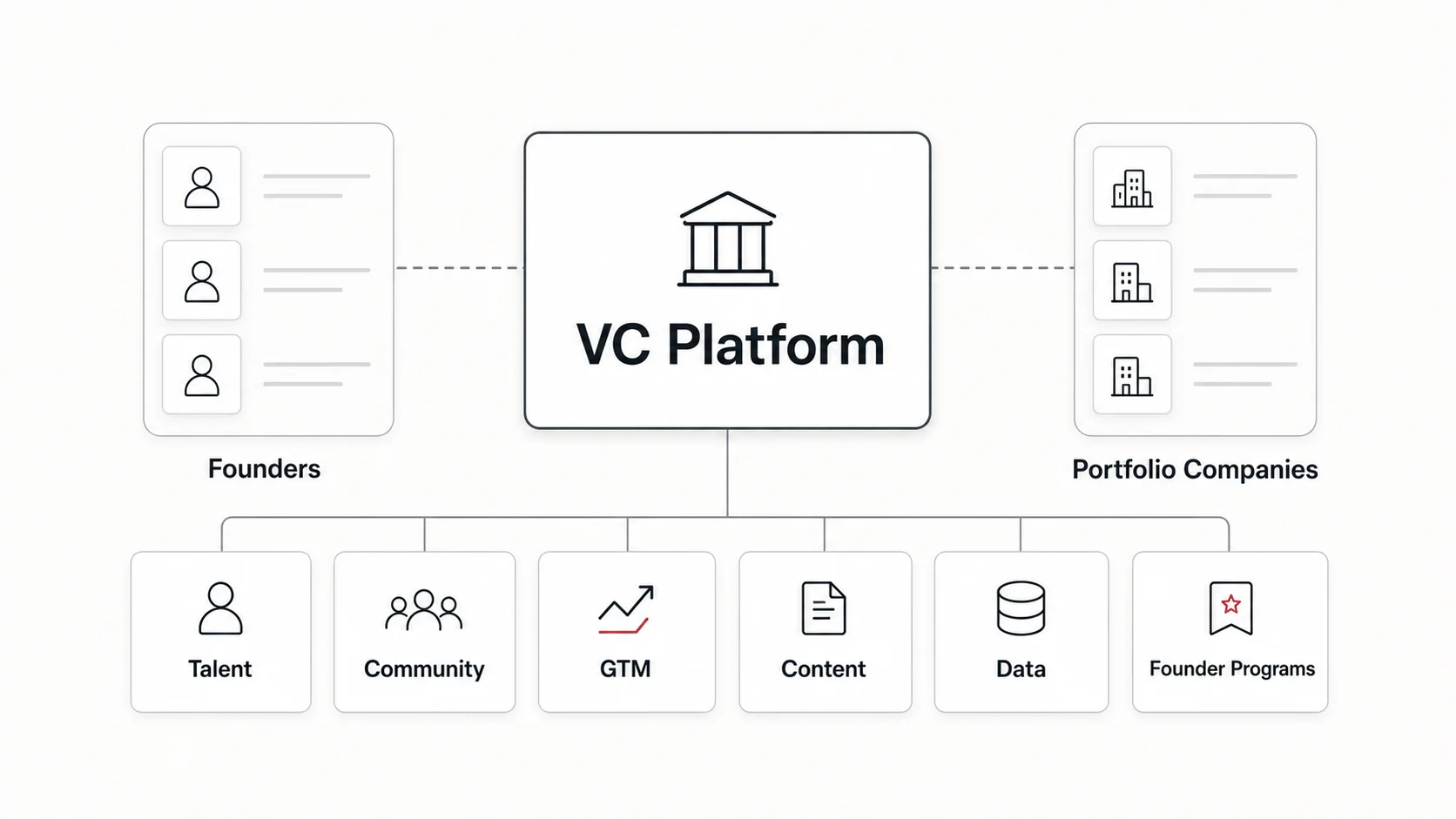
A venture capital platform role runs a VC firm's non-investing services for founders: talent, business development, community, marketing, and investment operations. Median platform pay is $165,000 base and $207,500 total cash.
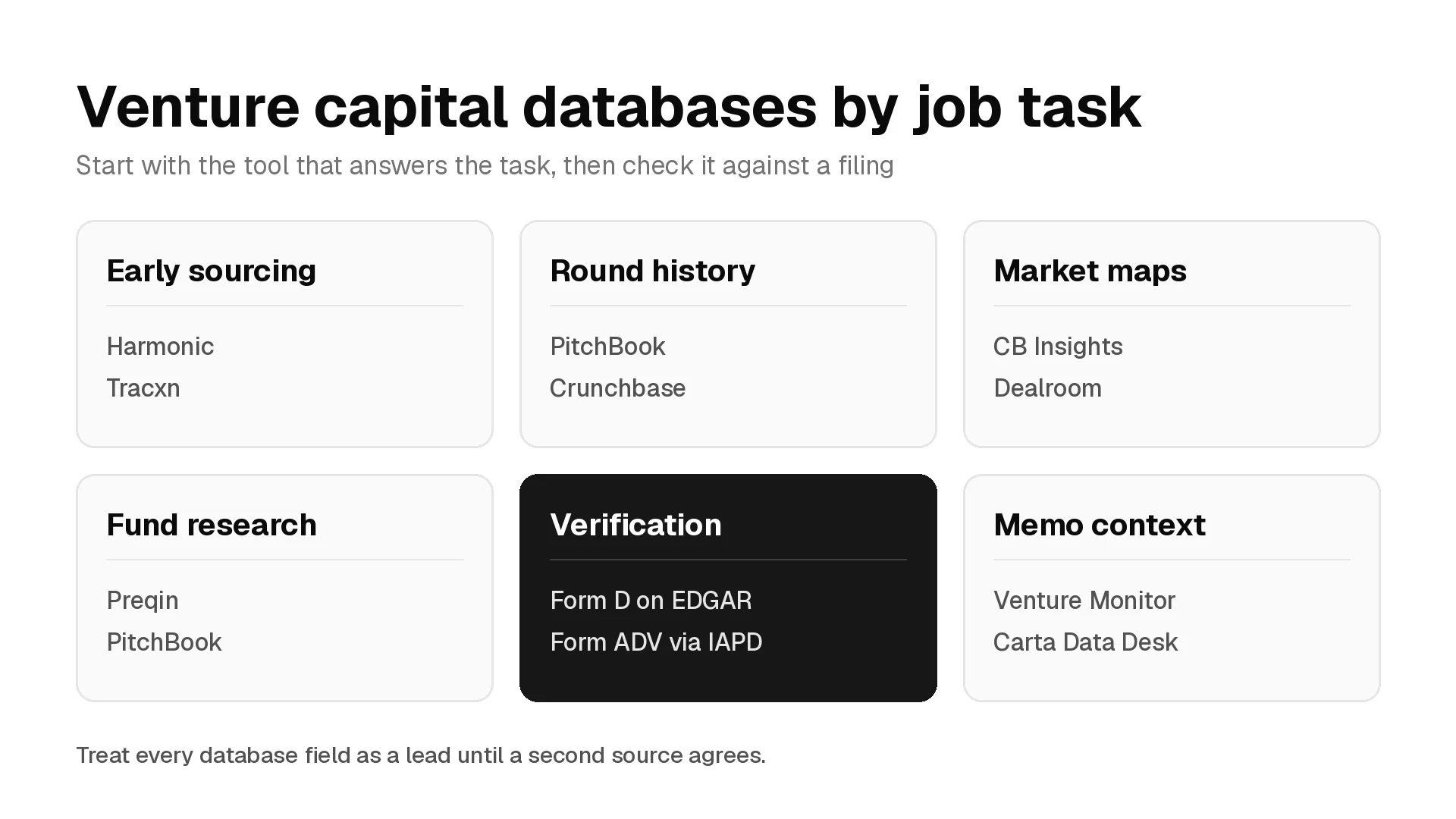
PitchBook, Crunchbase, CB Insights, Dealroom, Tracxn, Harmonic and Preqin compared by the VC task each one serves, with the free SEC filings that verify a record, a four-check round verification, student access limits and how database work reads in recruiting.