
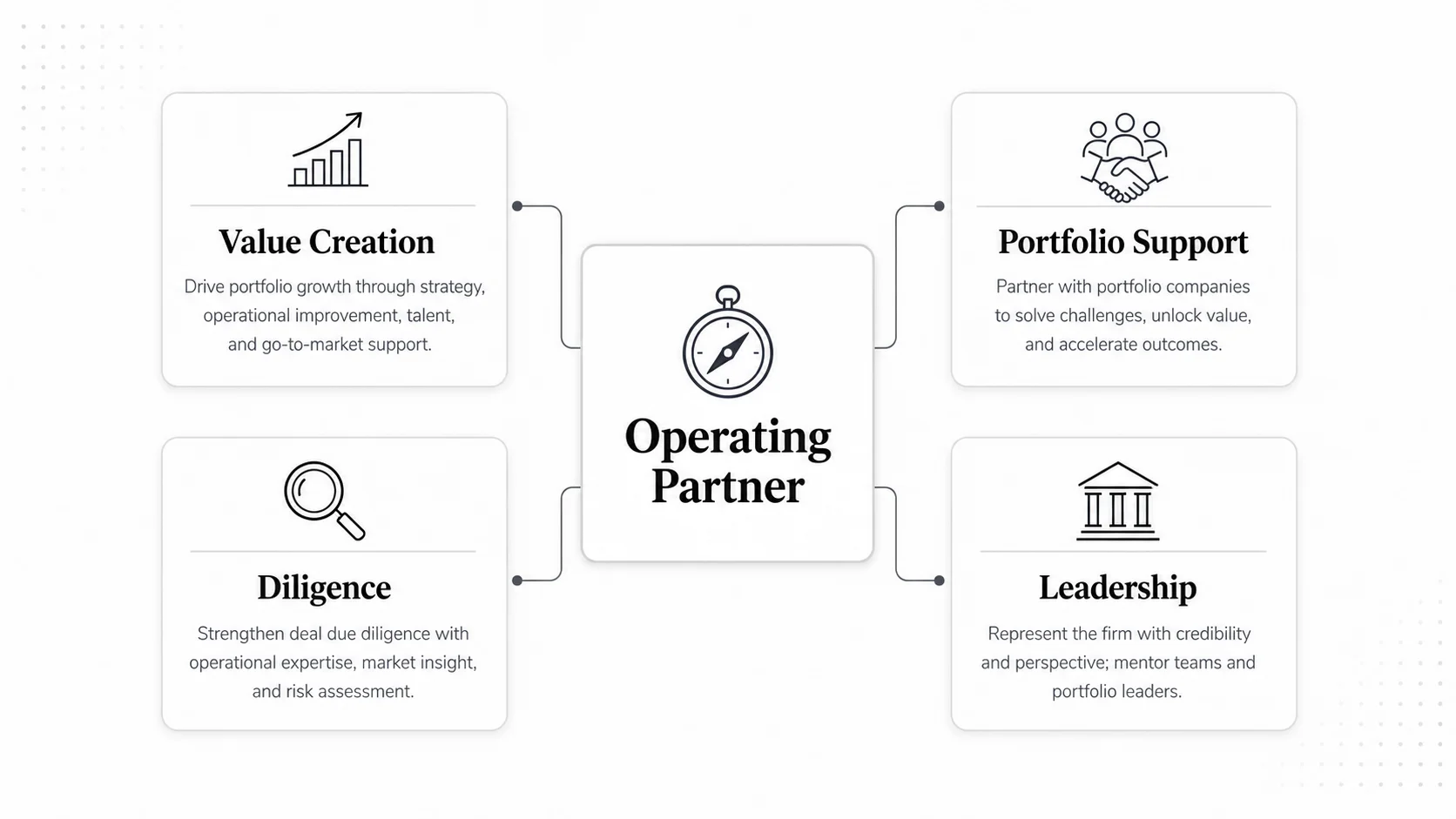
A venture capital operating partner is a senior operator who helps a VC fund improve portfolio company performance. The role is different from a traditional investment partner: an operating partner usually spends less time sourcing and leading deals and more time helping portfolio companies solve execution problems, build leadership capacity, improve go-to-market systems, or prepare for the next stage of growth.
For employers, the operating partner job description should be specific about the fund's portfolio support model. For candidates, the role is attractive when you can show repeated operating wins and executive trust, not just interest in startups.
What a VC operating partner does
The operating partner role exists because many venture funds want to be more useful after they invest. A good operating partner gives founders access to senior operating judgment without turning the fund into a consulting shop.
Common responsibilities include:
- Partnering with founders and executives on priority operating challenges.
- Building repeatable playbooks for hiring, sales, marketing, customer success, finance, product operations, or international expansion.
- Supporting portfolio company planning, board preparation, and executive hiring.
- Helping investment teams evaluate operational risk during diligence.
- Sharing patterns across the portfolio so one company's lesson becomes useful to others.
The best version of the role is not "general advice person." It is a trusted executive who can diagnose what is actually blocking growth, decide where the fund can help, and work with management without taking over the company.
Operating partner vs platform, venture partner, and general partner
Operating partner titles are easy to confuse with other venture roles. The cleanest distinction is where the person creates leverage.
| Role | Primary focus | Typical output | Best fit |
|---|---|---|---|
| Operating partner | Portfolio company operating improvement | Playbooks, executive coaching, functional support, value-creation work | Former operators, executives, functional leaders, portfolio support specialists |
| Platform leader | Scalable services and community across the portfolio | Talent programs, founder events, marketing support, community, resources | Platform, talent, marketing, community, and portfolio services leaders |
| Venture partner | Sourcing, network, thesis support, sometimes part-time investing | Deal flow, market access, founder relationships | Operators, angels, founders, or executives with valuable networks |
| General partner | Fund leadership and investment decisions | Sourcing, investing, board work, LP/fund leadership | Senior investors with ownership of fund outcomes |
If the role is mostly portfolio programs and community, read the venture capital platform role guide. If the role is mostly fund leadership, investment decisions, and external representation, compare it with the venture capital partner job description.
Venture capital operating partner job description template
Use this template as a starting point, then tailor it to the fund's stage, sector, and portfolio model.
Role summary
We are hiring a Venture Capital Operating Partner to help portfolio companies improve execution and scale more effectively. This person will work with founders, executives, and the investment team to identify high-impact operating priorities, build practical playbooks, support strategic initiatives, and contribute operational judgment during diligence.
Key responsibilities
- Work with portfolio company leadership teams on priority growth, operations, hiring, finance, product, or go-to-market initiatives.
- Build and refine repeatable operating playbooks that can help multiple portfolio companies.
- Support portfolio reviews, board preparation, executive planning, and KPI discussions where relevant.
- Partner with the investment team during diligence to assess execution risk, operating capability, and value-creation opportunities.
- Maintain trusted relationships with founders and executives without replacing company management.
- Share portfolio patterns with the fund so operating lessons improve future investing and support.
- Help define when the fund should provide direct operating support, external expert introductions, or no intervention.
Qualifications
- Senior operating experience in a startup, scale-up, portfolio company, functional leadership role, or relevant advisory role.
- Track record of measurable operating impact, such as revenue growth, hiring systems, margin improvement, customer retention, product execution, finance operations, or executive team development.
- Ability to earn trust with founders, executives, investors, and board members.
- Strong pattern recognition across company stages and business models.
- Clear communication, structured problem solving, and judgment about when to advise versus when to step back.
- Functional depth in one or more areas such as go-to-market, talent, finance, product, operations, customer success, data, or strategy.
Success measures
Good success measures are portfolio outcomes and relationship quality, not the number of meetings held. A fund might evaluate the role through founder feedback, operating initiatives completed, executive hires supported, diligence contributions, repeatable playbooks built, or measurable portfolio company improvements.
Employers hiring for this role can post a venture capital job on VCC and make the scope specific enough to attract the right operating profile.
Skills and evidence candidates should show
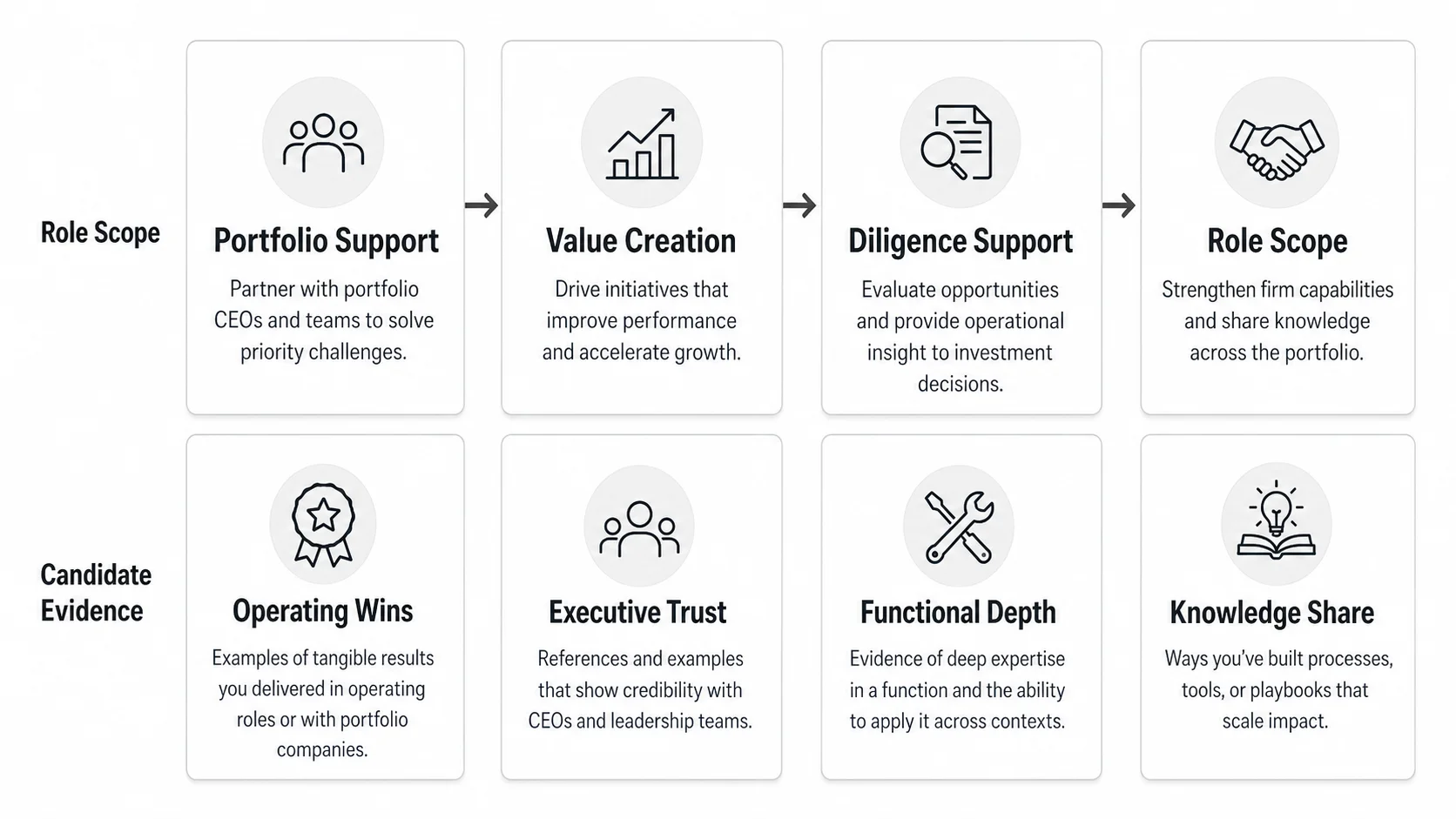
Operating partner candidates need proof that they can help companies get better. A polished VC story is useful, but operating evidence matters more.
Strong evidence includes:
- Operating wins: examples where you improved growth, retention, margin, hiring velocity, product delivery, customer success, finance operations, or executive decision-making.
- Executive trust: examples where CEOs, founders, boards, or functional leaders relied on your judgment during messy situations.
- Functional depth: a clear spike in one or two areas rather than shallow fluency across every business function.
- Pattern recognition: the ability to explain what changes between seed, Series A, growth, and later-stage companies.
- Repeatable playbooks: tools, processes, templates, or systems that worked across more than one company or team.
If you are applying, your resume should translate operating work into venture-relevant evidence. The venture capital resume guide is a good next step, especially if your background is more operator than investor.
When a fund should hire an operating partner
A fund should hire an operating partner when portfolio support is important enough to deserve senior ownership. That usually happens when:
- The fund has enough portfolio companies with similar operating needs.
- Partners are spending too much time on repeatable post-investment support.
- Founders need help in a specific function the investment team does not cover deeply.
- The fund wants to make portfolio support part of its differentiation.
- Diligence would improve with more operating judgment.
A fund should be cautious if it cannot define the operating partner's mandate. "Help portfolio companies" is too vague. The job description should say which company stages, functions, and support modes matter most.
How candidates should evaluate the role
Before applying, ask what the title means at that fund. Some operating partner roles are full-time portfolio support roles. Others are advisory, part-time, platform-adjacent, or tied to a specific function such as talent, revenue, finance, or product.
Useful questions:
- How many portfolio companies will this person support?
- Is the role expected to participate in diligence?
- Does the operating partner own a function, a stage, or a broad portfolio support mandate?
- How does the fund measure success?
- Is the role internal to the fund, embedded with portfolio companies, or split?
- How much authority does the operating partner have with founders and boards?
Candidates can browse current VC roles on the Venture Capital Careers job board and use the VC companies directory to research which funds emphasize portfolio support, platform, and operating expertise.
Interview preparation
Operating partner interviews usually test judgment more than textbook venture knowledge. Expect questions about companies you helped, executives you influenced, operating systems you built, and how you would support a founder without creating dependency.
Prepare stories that show:
- The business problem before you got involved.
- What you diagnosed.
- What you changed.
- How you handled resistance from executives or teams.
- What improved because of your work.
- What you would do differently next time.
For broader VC interview preparation, use the venture capital interview questions guide. For career context, pair this role with the venture capital career path guide.
FAQ
Is a VC operating partner an investment role?
Sometimes, but not always. Some operating partners join diligence and investment committee discussions, while others focus almost entirely on portfolio support. The job description should make that explicit.
Is the role more common in private equity or venture capital?
Operating partner roles are especially common in private equity, but venture funds also use operating partners when portfolio support, founder coaching, or functional expertise is part of the fund's model.
What background fits a VC operating partner role?
Common fits include former founders, startup executives, functional leaders, portfolio operators, go-to-market leaders, product or finance operators, and advisors with repeated company-building experience.
How is operating partner different from platform?
Platform teams usually build scalable programs and services across the portfolio. Operating partners usually provide deeper executive or functional support on operating problems. At smaller funds, the two can overlap, so the job description should define the actual mandate.
Related posts
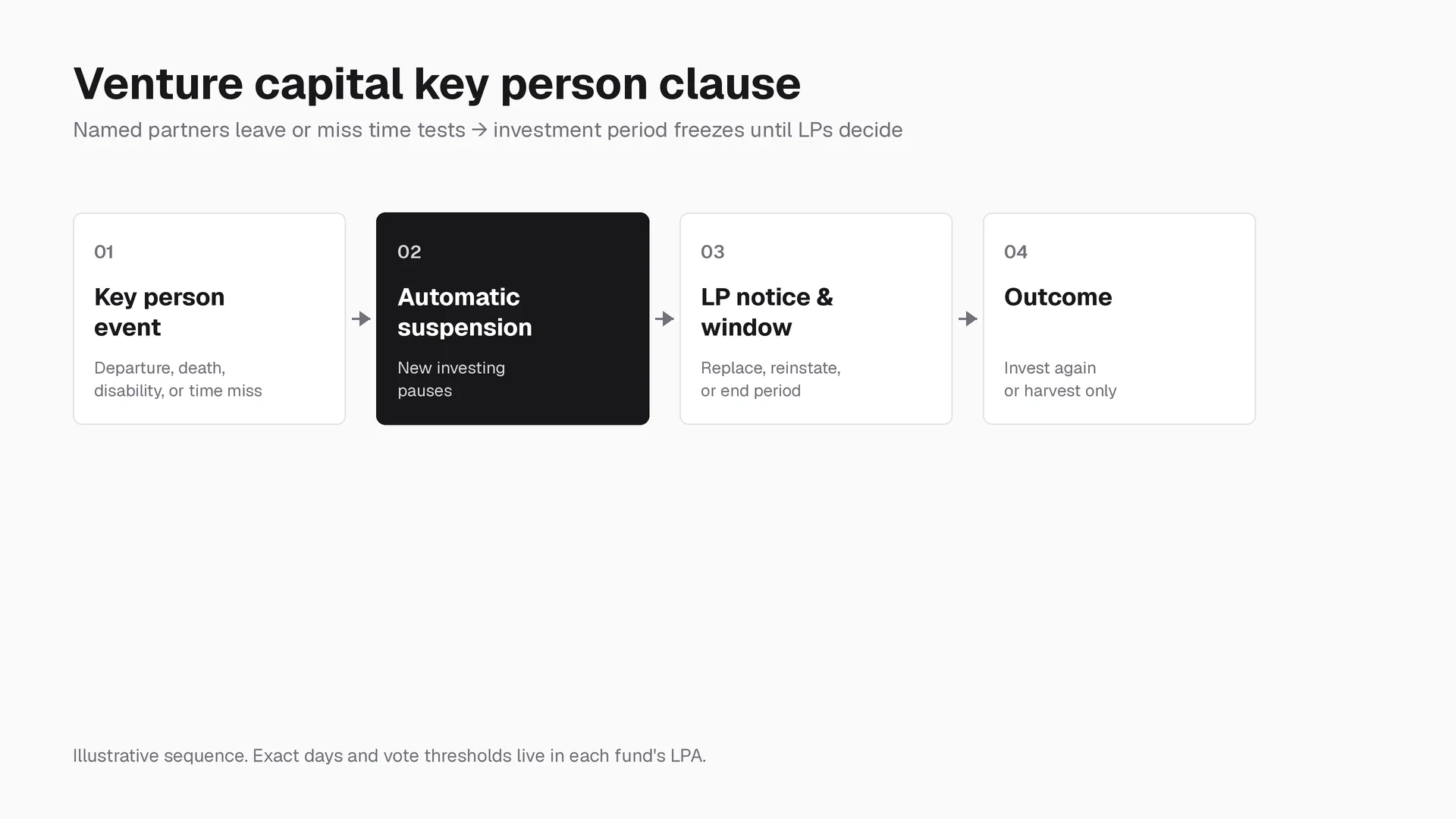
A key person clause names the partners a venture fund depends on and can freeze new investing if they leave. Here is how the trigger works, what still happens during a suspension, and what it means for your job search and seat.
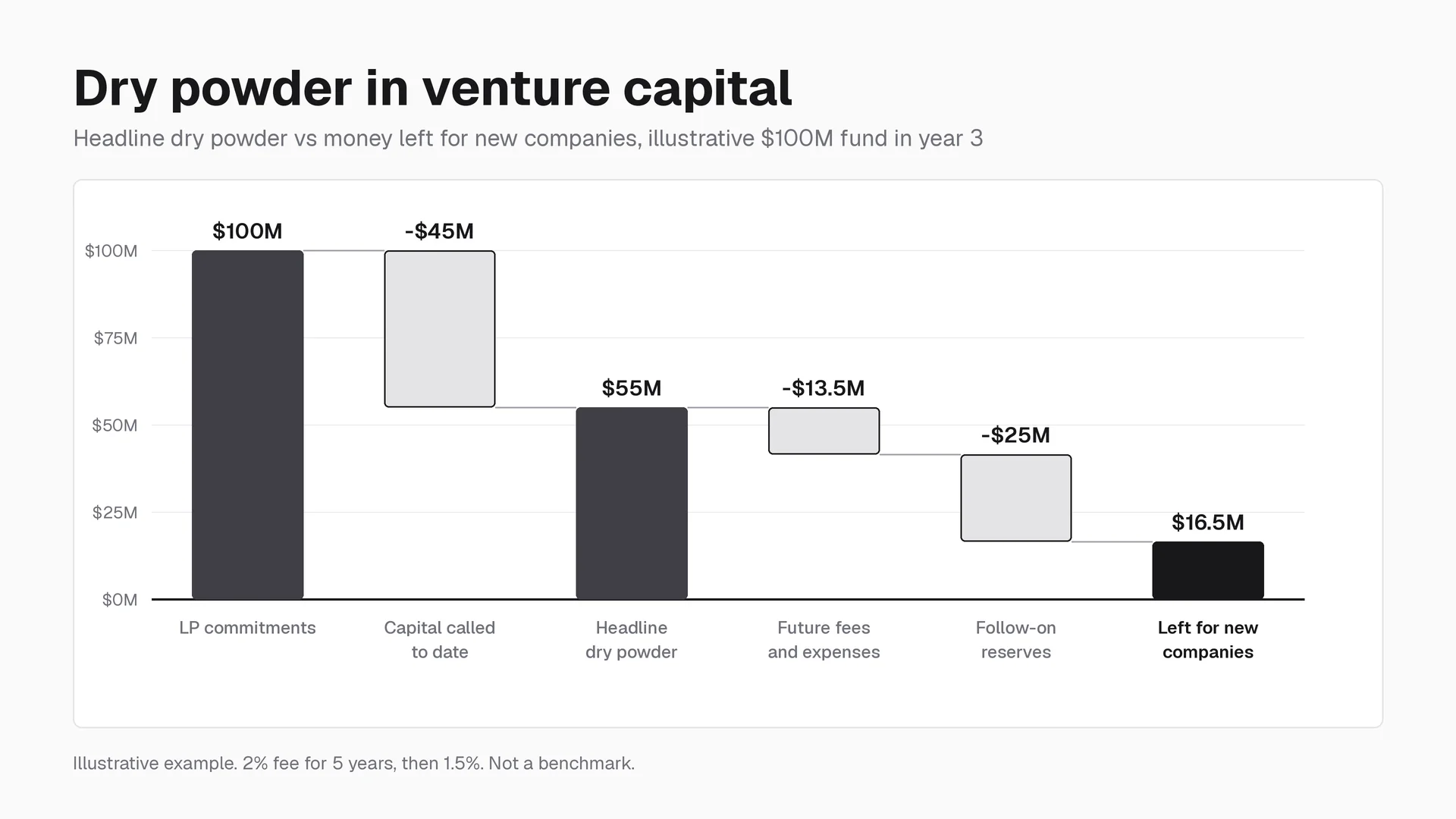
Dry powder in venture capital explained: the formula, a worked $100M fund example showing how little headline dry powder is left for new companies, current US and global data, and what a firm's dry powder tells you about hiring and the junior job.
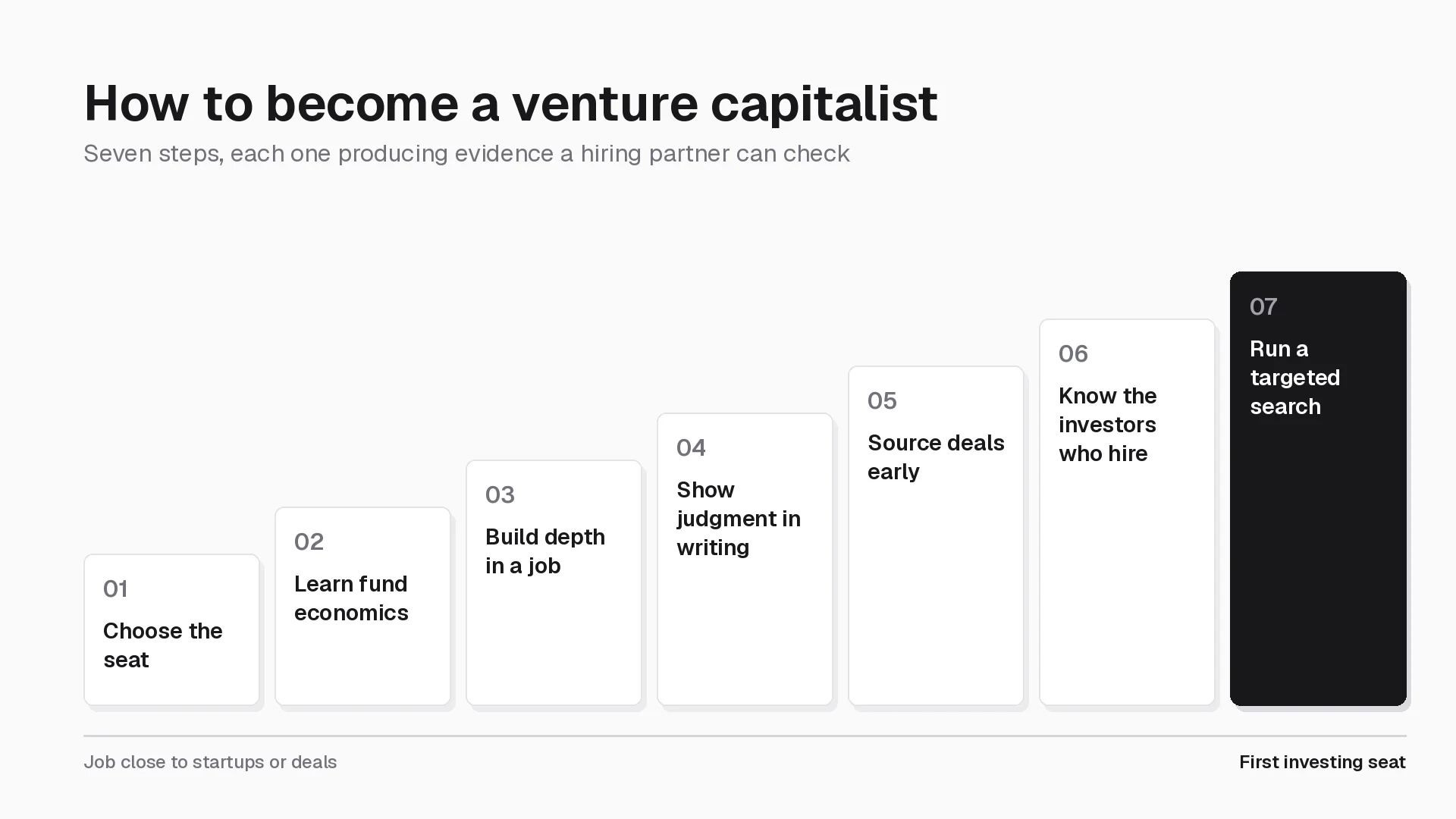
How to become a venture capitalist in seven steps: choose the seat, build depth, prove judgment in writing, source early, and run a targeted search. Includes entry paths by background, how fund size limits hiring, MBA placement data, and licensing.