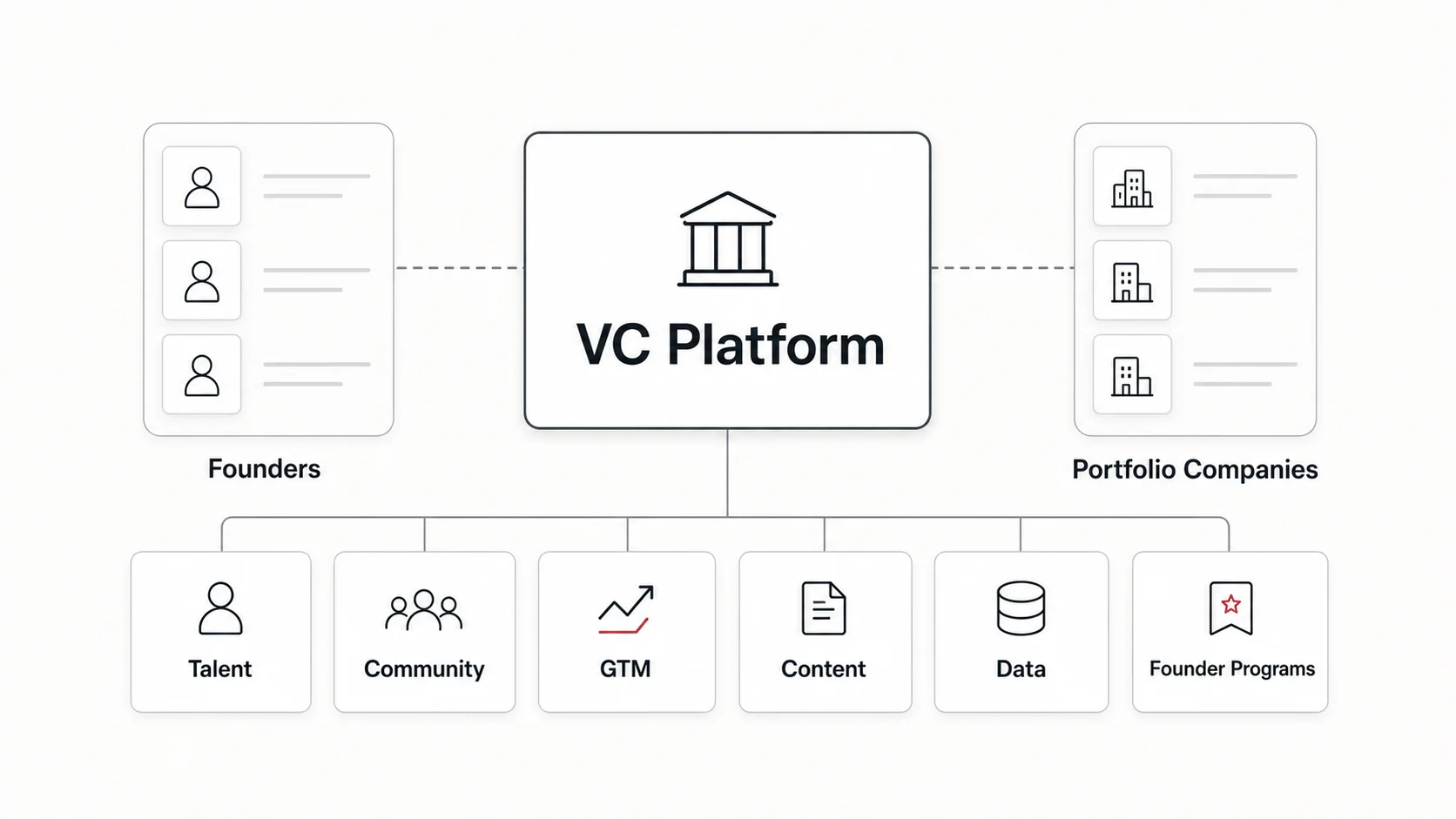
A venture capital platform role helps a VC firm support founders and portfolio companies beyond writing checks. Instead of sourcing and leading investments as the core job, platform teams usually build the systems, programs, relationships, and resources that make the fund more useful to founders.
That can mean talent support, founder community, events, go-to-market help, content, partnerships, data operations, vendor networks, or portfolio programs. At some funds, platform is a specialized team. At others, it is one generalist handling everything that does not fit cleanly into investing, finance, or operations.
For candidates, the important question is not just "What is platform?" It is whether the role matches the kind of VC work you actually want to do.
What is a venture capital platform role?
A venture capital platform role is a non-investment or investment-adjacent role inside a VC firm focused on helping portfolio companies and strengthening the fund's market position.
Platform work usually sits between the fund, founders, portfolio companies, operators, advisors, and sometimes limited partners. The goal is to create value that money alone cannot provide.
In practical terms, a platform person may:
- introduce portfolio companies to candidates, customers, advisors, or vendors;
- run founder communities, events, and workshops;
- create content that builds the fund's brand;
- help companies with hiring, go-to-market, partnerships, or operations;
- manage portfolio data, founder resources, and internal workflows;
- support investor relations, reporting, or ecosystem-building projects.
The role is not the same as being an investor, although the best platform teams work closely with investors. Platform may help a fund win deals, support companies after investment, and build founder trust, but the primary output is usually operating leverage rather than investment memos.
What VC platform teams actually do
The title "platform" can hide very different jobs. Before applying, look at the function underneath the title.
| Platform function | What the work looks like | Strong candidate backgrounds |
|---|---|---|
| Talent | Helping portfolio companies source, screen, and hire executives or early team members | recruiting, people ops, executive search, startup talent |
| Community | Running founder networks, dinners, Slack groups, portfolio events, and peer groups | community, events, founder programs, accelerator ops |
| Go-to-market | Helping companies with sales motion, partnerships, customer introductions, and revenue playbooks | sales, partnerships, customer success, growth, BD |
| Marketing and content | Producing founder-facing content, fund newsletters, portfolio stories, events, and brand campaigns | content, product marketing, comms, founder marketing |
| Data and operations | Managing portfolio data, CRM hygiene, founder resources, benchmarking, and internal systems | RevOps, BizOps, data, fund operations, chief of staff |
| Founder programs | Building repeatable playbooks, workshops, mentor networks, and office-hour programs | startup ops, accelerator programs, venture studio ops |
| Investor relations support | Helping with LP updates, annual meetings, reporting, and fund storytelling where platform overlaps with IR | IR, comms, finance, fund operations |
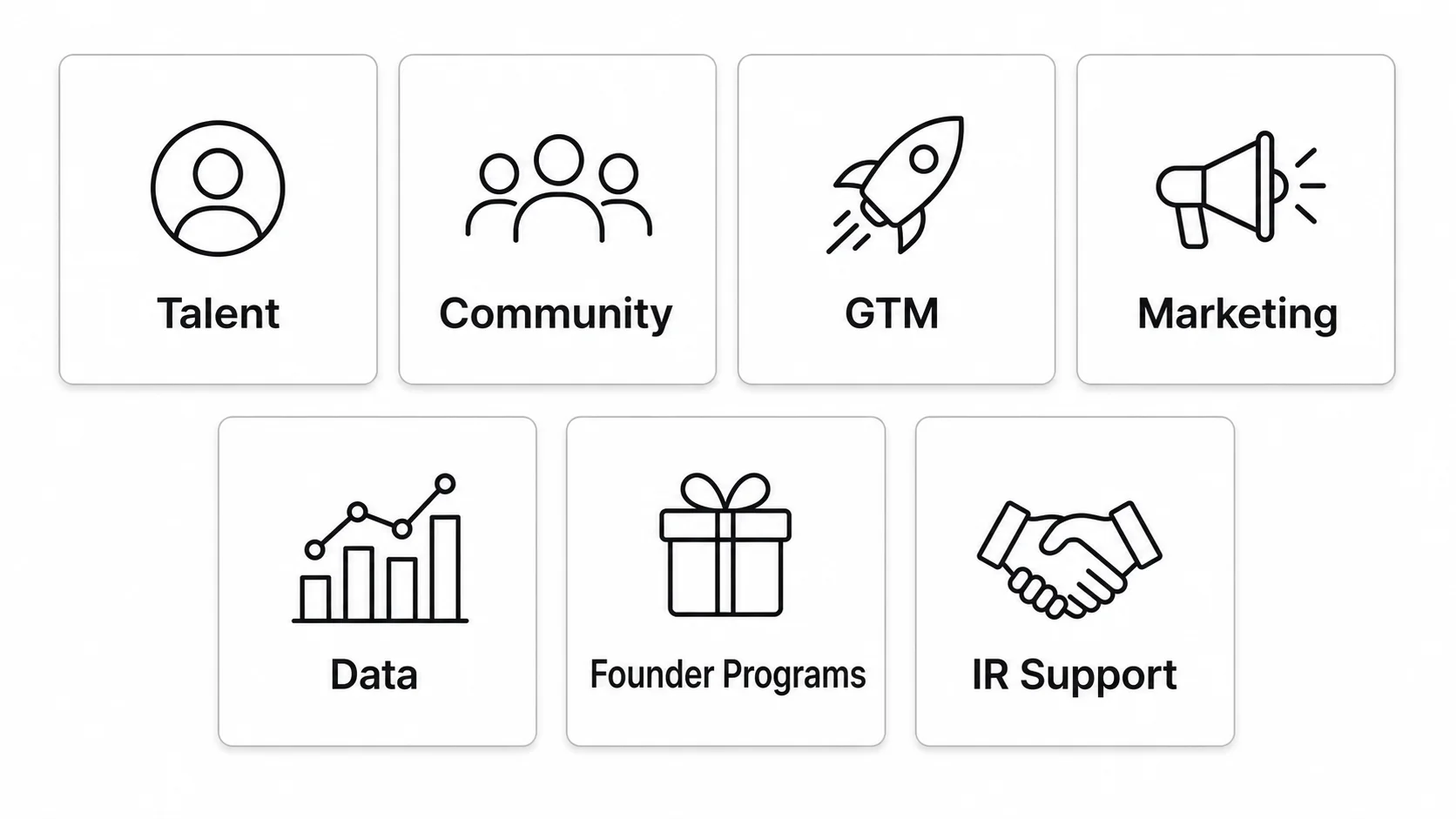
The same title can mean different things at different funds. "Platform Associate" at one firm may be mostly community and events. At another, it may be talent analytics, GTM introductions, or founder resource operations.
Platform vs investment vs operating partner roles
Platform roles are strategic, but they are not automatically investment roles. The distinction matters because candidates often use "break into VC" to mean very different things.
| Role type | Main job | Typical output | Best fit |
|---|---|---|---|
| Investment team | Source, evaluate, win, and support investments | market maps, founder calls, diligence, memos, investment recommendations | candidates who want deal judgment and investing reps |
| Platform team | Build founder support and fund-level operating leverage | talent programs, events, founder resources, GTM support, community, content | operators who like helping many companies at once |
| Operating partner | Senior specialist support for portfolio companies | executive coaching, GTM strategy, product advice, hiring help, board support | experienced operators with deep functional credibility |
| Portfolio manager | Track portfolio performance, reporting, reserves, and follow-on context | portfolio reviews, reporting, dashboards, data, internal analysis | finance, ops, data, and portfolio-management profiles |
Some platform roles include exposure to deals. You may hear founder feedback early, support diligence with customer or talent references, or help the investment team understand a market. But if a job description is mostly community, talent, or founder programs, do not assume it will become a sourcing or deal-lead role.
That is not a negative. It just means the role should be evaluated on its own terms.
How fund size changes the role
Platform work changes sharply by fund size.
| Fund type | What platform often means | Candidate tradeoff |
|---|---|---|
| Emerging manager | One person may own community, content, events, founder support, CRM, and special projects | Broad exposure, less specialization, more ambiguity |
| Small seed fund | Platform may focus on founder community, talent, GTM introductions, and portfolio resources | Close partner access, but limited team infrastructure |
| Specialist fund | Platform may be tied to a sector such as fintech, climate, healthcare, deep tech, or crypto | Strong sector learning, narrower network |
| Multi-stage fund | Platform may be a larger team with talent, GTM, marketing, data, IR, and events specialists | More structure, clearer specialization, potentially less investment exposure |
Read the job description for clues. If the role mentions "portfolio services," "founder success," "talent network," or "community," it is likely founder-facing platform. If it mentions "LP reporting," "fund operations," or "annual meeting," it may sit closer to investor relations or fund operations. If it mentions "sourcing" and "investment memos," it may be platform-adjacent but closer to the investment team.
Who is a strong fit for VC platform jobs?
VC platform roles are often a better fit for operators than traditional finance candidates.
Strong backgrounds include:
- Startup operators who have helped teams scale hiring, sales, customer success, product launches, or internal operations.
- Recruiters and talent leaders who understand executive search, compensation, hiring process, and founder-level talent questions.
- Community builders who have run founder networks, member communities, accelerators, fellowships, or events.
- Product marketers and content leads who can turn a fund's thesis and portfolio work into credible founder-facing content.
- Partnerships and business development people who can open doors for portfolio companies.
- Chiefs of staff and BizOps profiles who can build systems, manage cross-functional projects, and create order from ambiguity.
- Customer success and founder-success profiles who know how to support many stakeholders without becoming a bottleneck.
The common thread is leverage. A good platform hire helps many founders, partners, or portfolio companies at once.
Skills VC firms look for in platform candidates
Platform candidates need evidence, not just enthusiasm for startups.
| Skill | What it means in a VC platform role | Strong resume evidence |
|---|---|---|
| Founder empathy | You can work with high-context, low-time founders without adding process burden | Ran founder office hours, supported startup customers, worked directly with CEOs or executives |
| Program design | You can turn repeated founder needs into scalable resources | Built onboarding, community programs, hiring playbooks, customer events, or workshops |
| Network building | You can create useful connections without spamming people | Built advisor networks, candidate pools, partner ecosystems, or member communities |
| Functional depth | You bring a real specialty, not generic "operator" language | Owned recruiting, GTM, content, partnerships, data, ops, or customer success outcomes |
| Communication | You can write clearly for founders, partners, and external audiences | Published founder content, newsletters, playbooks, event briefs, or executive updates |
| Systems thinking | You can organize data, resources, processes, and follow-up | Built CRM workflows, dashboards, resource hubs, reporting systems, or internal operating cadence |
| Judgment | You know when to help, when to introduce, and when to stay out of the way | Managed sensitive stakeholder relationships or high-trust operator/advisor networks |
If your experience is not already in venture capital, translate it into platform language. "Managed events" is less useful than "ran a 300-person founder community with monthly programming and sponsor partnerships." "Worked in customer success" is less useful than "built onboarding playbooks that reduced implementation time for 40 startup customers."
For broader skill positioning, pair this with the venture capital skills guide. When you start rewriting your application materials, use the venture capital resume guide to turn operating experience into evidence.
How to read a VC platform job description
Platform job descriptions often sound broad. Decode them before applying.
Ask:
- Is the role mostly pre-investment, post-investment, or firm operations?
- Will you work directly with portfolio company founders?
- Is the work talent, community, GTM, marketing, data, IR, or a mix?
- Who manages the role: a partner, head of platform, COO, investor relations lead, or investment team member?
- Does the role have clear success metrics?
- Is it a specialist role or a generalist role?
- Does the job description mention sourcing, diligence, or investment memos, or is it strictly platform?
- Does the fund already have a platform team, or would you be building the function from scratch?
The answers tell you whether the job is a community role, a talent role, an operations role, a founder-success role, or a hybrid. The title alone will not.
Use the Venture Capital Careers job board to compare active roles across titles. Search for platform, talent, community, operations, founder success, portfolio support, and partnerships. The wording of live job descriptions will teach you how funds define platform in practice.
Is platform a good way to break into venture capital?
Platform can be a strong way into venture capital if you want to support founders, build networks, and work across many portfolio companies. It is especially attractive for operators who do not have a traditional investing background but can bring a useful function to a fund.
It is less attractive if your only goal is to become an investment partner. Some people move from platform into investing, but that is not the default path. The skills overlap, but the scorecard is different.
A platform role may be right if you want to:
- work closely with founders after investment;
- build programs, communities, and resources;
- help companies hire, sell, market, or operate better;
- understand how different startups scale;
- become known in a founder or operator network;
- join a VC firm without pretending to be a deal person on day one.
It may be the wrong role if you mainly want:
- ownership of investment decisions;
- full-time sourcing and diligence;
- financial modeling as the core skill;
- a clear partner-track investment seat;
- limited events, community, or operational work.
Be honest about the work you want. Platform is not a consolation prize for candidates who cannot get investment roles. It is a different function with a different value proposition.
How to prepare for a VC platform role
Start by choosing a platform lane. A generic "I can help portfolio companies" pitch is too vague.
Stronger lanes include:
- Talent platform: "I can help early-stage companies build repeatable hiring systems."
- GTM platform: "I can help technical founders test sales motions and customer introductions."
- Community platform: "I can build founder programming that produces useful peer learning, not just events."
- Marketing platform: "I can turn portfolio and thesis work into credible founder-facing content."
- Data/ops platform: "I can build the systems that make portfolio support measurable and repeatable."
Then build a fund-specific point of view. For each target firm, identify:
- stage and sector focus;
- portfolio company patterns;
- founder support already visible on the website;
- gaps where your background could help;
- two or three portfolio companies where your functional experience is relevant.
Use the Venture Capital Careers companies directory to build that target list. A platform pitch is stronger when it names the fund's actual stage, sector, and portfolio model.
What to bring into platform interviews
Platform interviews usually test whether you can be useful to founders and credible with partners.
Prepare examples for:
- a program you built from scratch;
- a time you helped a startup, customer, executive, or internal team solve a messy operational problem;
- a community, talent network, partner network, or customer network you grew;
- a time you turned repeated questions into a playbook or system;
- a fund or portfolio company where you can explain how your background would add value.
Bring one short platform idea for the firm. It does not need to be elaborate. A concise idea like "a quarterly talent roundtable for seed-stage heads of engineering" or "a customer-introduction map for B2B portfolio companies selling into healthcare buyers" is more convincing than generic interest in venture.
If the role has investment exposure, prepare for investment-team questions too. The venture capital career path guide can help you understand how platform fits alongside analyst, associate, principal, and partner roles. For investment-style interviews, review common venture capital interview questions.
Find platform roles and research funds
Platform roles can appear under many titles:
- Platform Associate
- Platform Manager
- Head of Platform
- Community Manager
- Talent Partner
- Portfolio Talent Lead
- Founder Success Manager
- GTM Platform Lead
- Portfolio Operations
- Venture Operations
- Ecosystem Manager
- Partnerships Manager
Do not search only for "platform." Many relevant roles use function-specific titles.
Start with the VC job board and compare role titles, responsibilities, and reporting lines. Then use the companies directory to research whether each fund has a platform model that matches your background.
For broader role discovery, the venture capital job boards roundup can help you compare where VC roles are posted. But for the platform search itself, prioritize job descriptions that clearly explain whether the role is talent, community, GTM, operations, marketing, or founder support.
FAQ
Do VC platform roles lead to investing roles?
Sometimes, but not automatically. Platform roles can build founder access, market context, and fund credibility, but investment roles are judged on sourcing, diligence, judgment, and deal ownership. If you want to move into investing, choose platform roles with real exposure to investment-team work and build separate evidence of investment judgment.
What titles are common for VC platform roles?
Common titles include platform associate, platform manager, head of platform, talent partner, community manager, portfolio operations, founder success, GTM platform, ecosystem lead, and venture operations. The title matters less than the actual function.
Do platform roles work directly with portfolio companies?
Many do. Talent, GTM, community, and founder-success platform roles often work directly with portfolio company founders and operators. Some platform-adjacent roles are more internal, focused on content, data, reporting, events, or investor relations.
What background is best for VC platform jobs?
There is no single best background. Strong candidates often come from startups, recruiting, community, marketing, partnerships, customer success, operations, or founder programs. The best background is the one that matches the fund's platform needs.
Is head of platform the same as operating partner?
No. A head of platform usually builds the fund's platform function and manages founder support programs. An operating partner is usually a senior functional expert who works directly with portfolio companies on strategic or operating problems. Some funds blur the titles, so read the responsibilities carefully.
Turn platform interest into a targeted search
The best platform candidates do not pitch themselves as broadly helpful. They know which founder problems they can solve, which funds need that help, and which roles actually match their operating background.
Browse open roles on the Venture Capital Careers job board, research fund models in the companies directory, and then tailor your resume around the platform function you can credibly own. In platform hiring, specificity is the signal.
Related posts
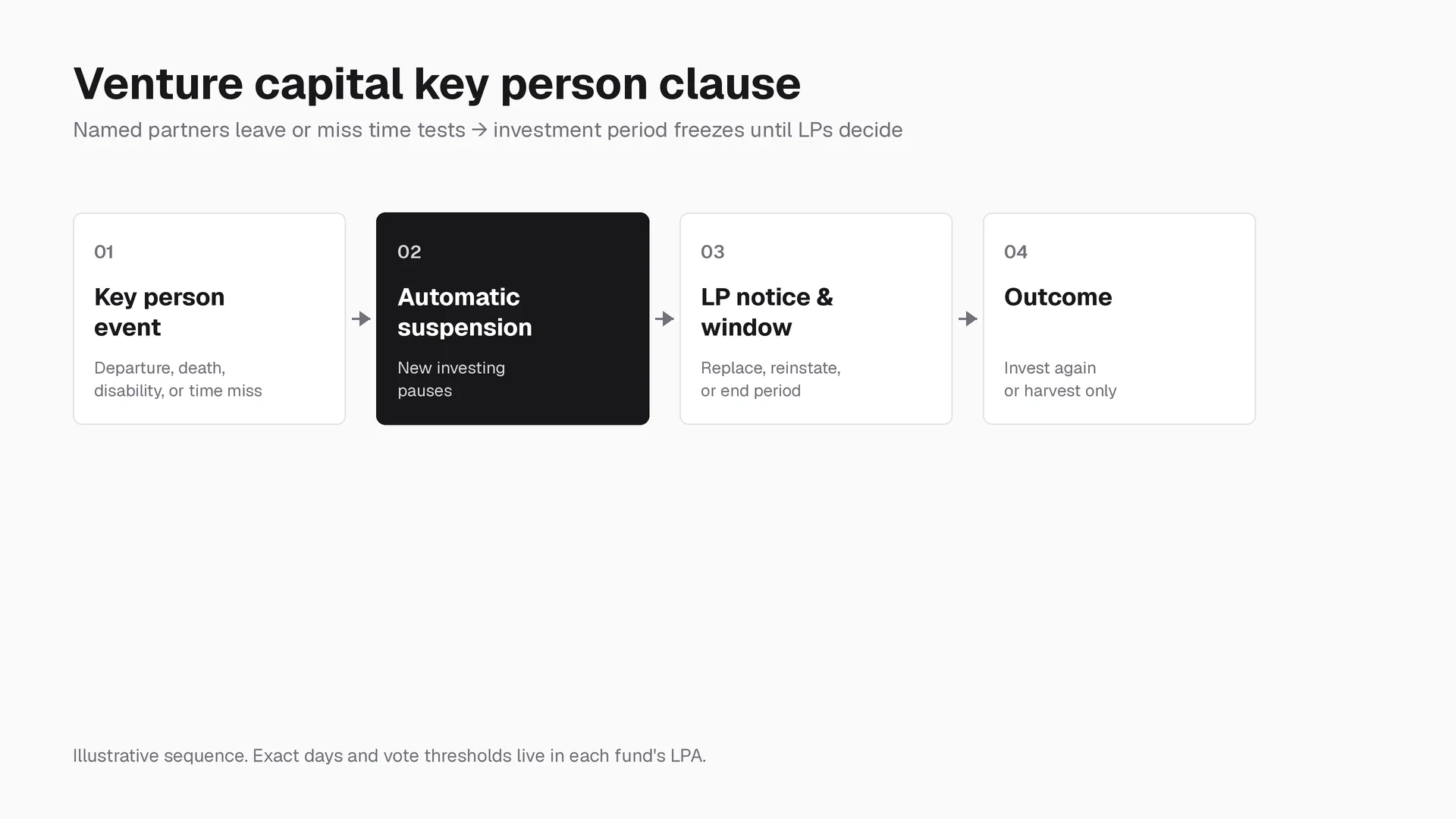
A key person clause names the partners a venture fund depends on and can freeze new investing if they leave. Here is how the trigger works, what still happens during a suspension, and what it means for your job search and seat.
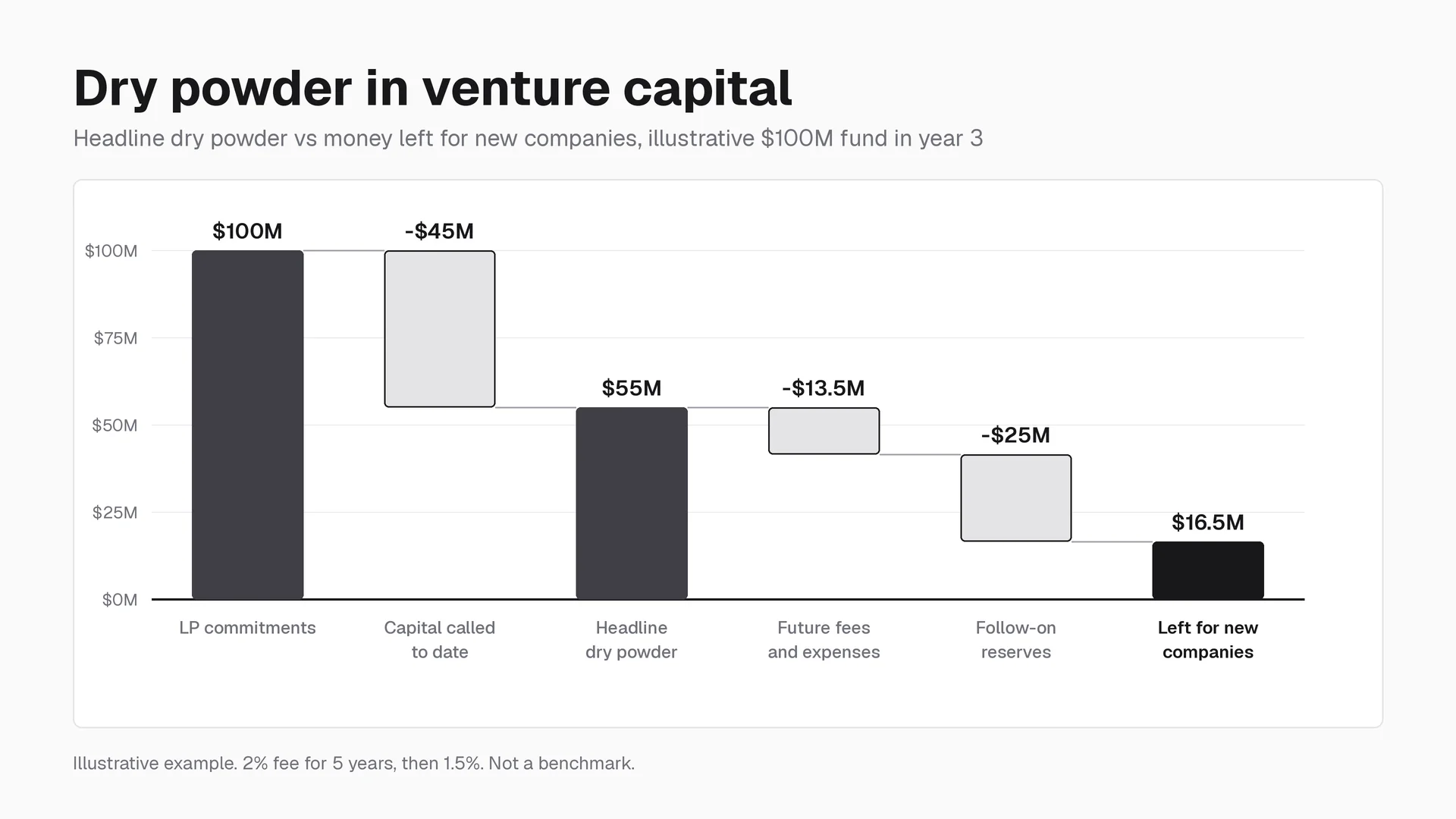
Dry powder in venture capital explained: the formula, a worked $100M fund example showing how little headline dry powder is left for new companies, current US and global data, and what a firm's dry powder tells you about hiring and the junior job.
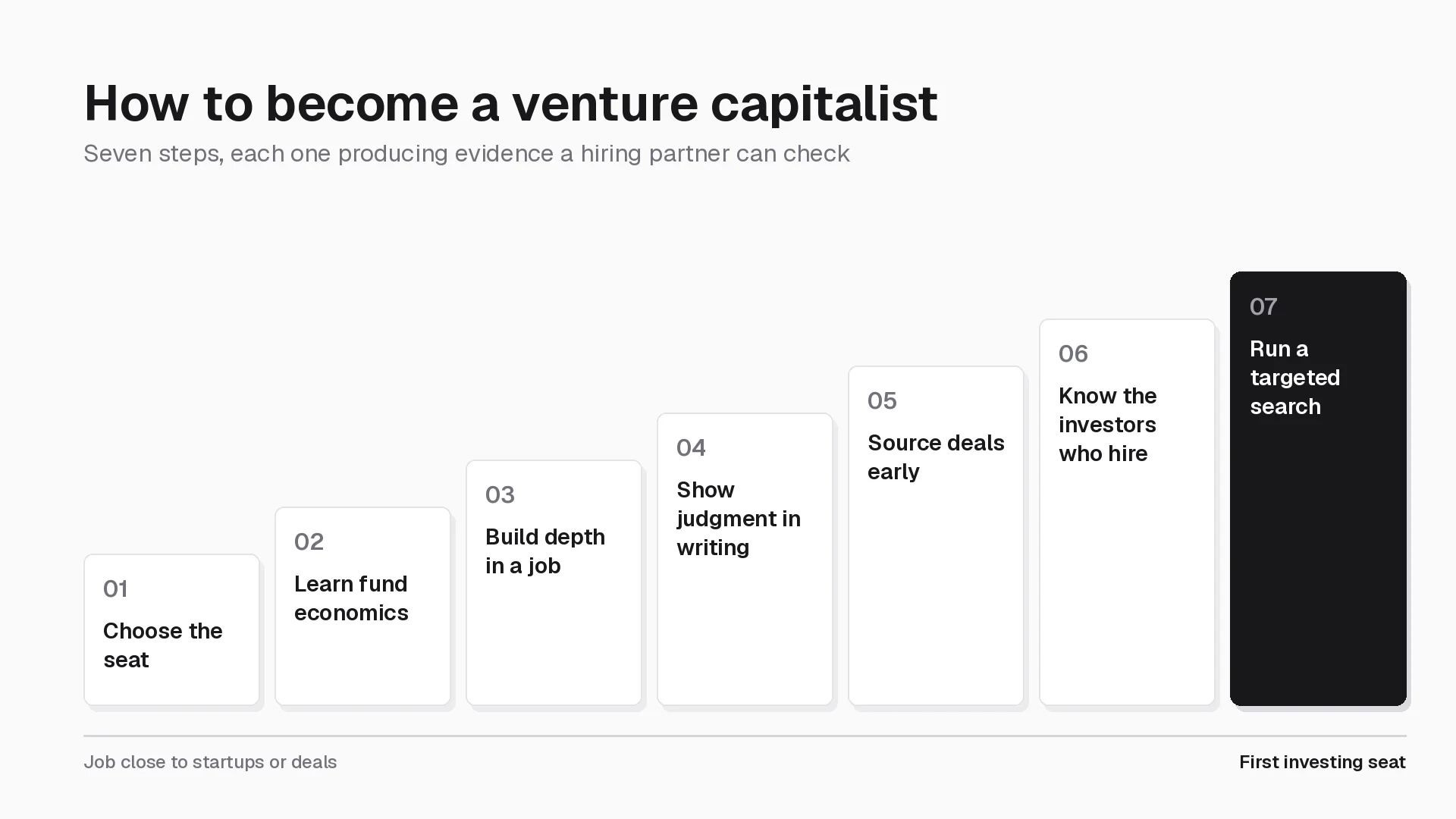
How to become a venture capitalist in seven steps: choose the seat, build depth, prove judgment in writing, source early, and run a targeted search. Includes entry paths by background, how fund size limits hiring, MBA placement data, and licensing.