
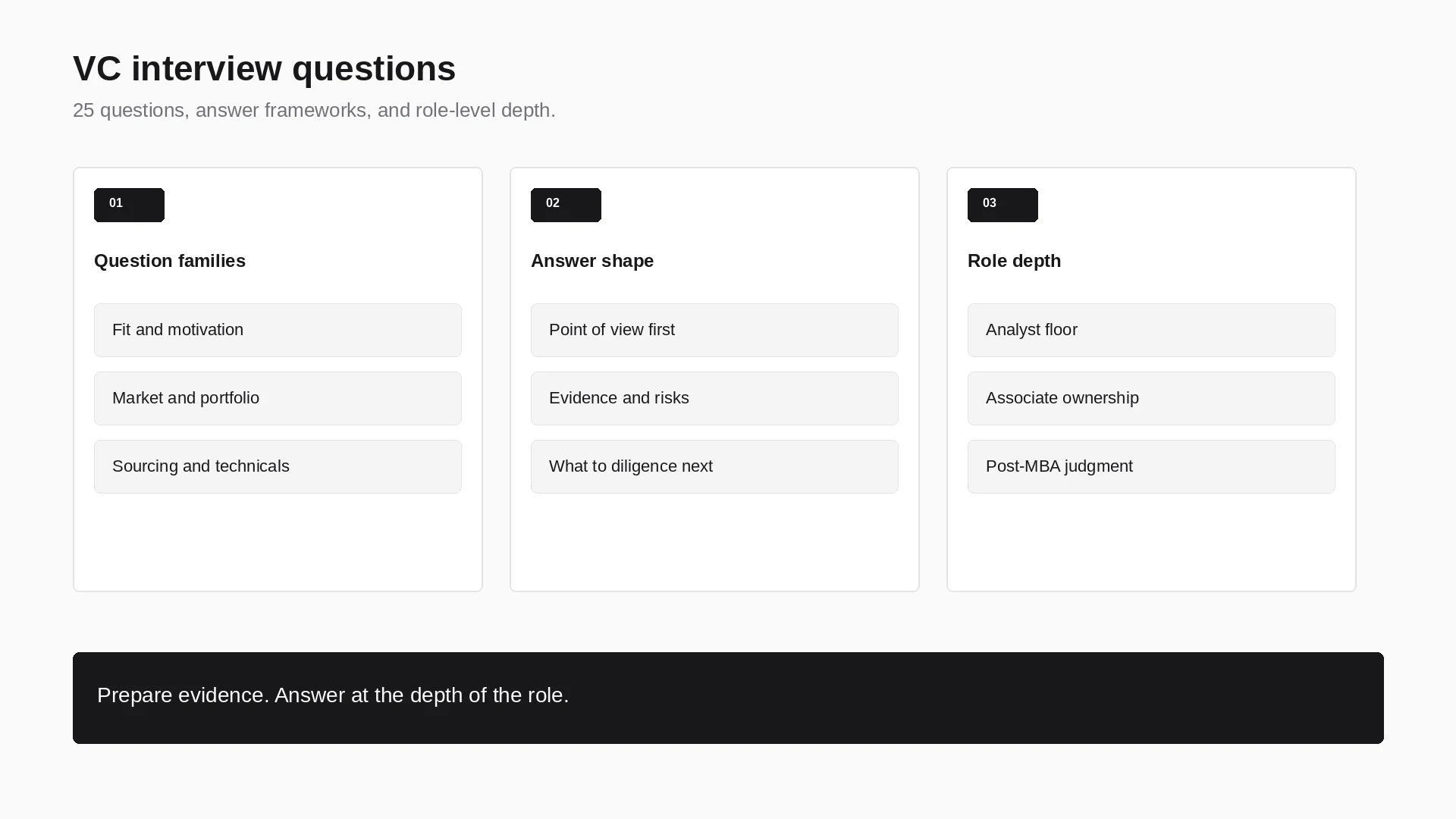
Venture capital interviews usually test five things: motivation and fit, investment judgment, ability to source and work with founders, technical fluency, and communication under uncertainty. The exact process varies by fund, but analyst and associate candidates should expect questions about the firm, its portfolio, a market or startup, sourcing, valuation and ownership, and an investment case.
Do not prepare by memorizing polished scripts. Build reusable evidence: a one-page firm brief, two startup pitches, one market view, two portfolio opinions (one invest, one pass), a short technical review, and one case or memo rep. Browse open roles on the Venture Capital Careers job board and use the companies directory to research each fund before the interview.
Internship loops have a different bar. Use the venture capital internship interview questions guide for intern-specific depth. This page focuses on full-time analyst, associate, and post-MBA investment-team interviews.
What VC interviewers are actually testing
Most question lists look random until they are mapped to what the interviewer is scoring. A partner is rarely hunting for a perfect definition. They want to see how a candidate forms a view with incomplete information.
| Question family | What the interviewer wants to learn |
|---|---|
| Fit and motivation | Why this work, this role, and this fund make sense |
| Market and investment | Whether the candidate can form and defend an investment view |
| Sourcing and founders | Whether the candidate can earn access, ask useful questions, and build trust |
| Technical | Whether the candidate understands ownership, dilution, and return math |
| Case study | Whether the candidate can turn incomplete evidence into a clear recommendation |
Strong answers share the same shape: a clear point of view, two or three pieces of evidence, the main risk, and what to verify next. Weak answers summarize slides, dodge a decision, or sound certain about facts the candidate has not checked.
What the VC interview process can look like
There is no single industry sequence. Common stages include a recruiter or associate screen, one or more investment-team interviews, a written or live case, and a partner or final round. Some funds add a founder conversation or a take-home memo.
Before the first call, confirm the role scope. Analyst and associate work differs by fund size and stage. Read the venture capital analyst job description and venture capital associate job description pages, then match preparation to the posting rather than a generic template.
- Screen: resume narrative, why VC, why this firm, light market or portfolio questions.
- Investment-team interviews: startup pitch, sector thesis, portfolio views, sourcing approach.
- Technical or modeling: ownership math, unit economics, sometimes a short model or cap-table drill.
- Case or memo: invest or pass with a written or verbal recommendation.
- Final: partner fit, judgment under pushback, questions about the role.
If the process includes a modeling test or cap-table drill, use the dedicated guides rather than cramming everything into this question bank: venture capital modeling test and venture capital cap table interview.
Fit and motivation questions
These questions check whether the candidate understands the job and can connect past work to investing. Interviewers listen for specificity about stage, sector, and how the candidate creates leverage on a small team.
1. Tell me about yourself
Keep this to about two minutes. Structure: relevant background, the bridge into venture, and why this firm is the logical next step. End on the work the candidate wants to do in the first six months, not a life story.
2. Why venture capital?
Answer with the work, not the brand. Good reasons include judgment under uncertainty, working with founders, pattern recognition across companies, and building a point of view on markets. Avoid “I love startups” without evidence of research, sourcing, or operating exposure.
3. Why this firm?
Name the mandate: stage, sector, geography, check size, and how the firm helps founders. Reference two portfolio companies with a real opinion. Generic praise for “culture” or “brand” fails quickly.
4. Where do you want to be in five years?
Show a credible path inside or adjacent to investing without pretending every associate becomes a partner on a fixed timeline. Tie the answer to skills the role builds: sourcing, diligence, portfolio support, and communication with partners.
Market, startup, and portfolio questions
This is where most candidates win or lose. Interviewers want a view that can survive follow-ups, not a pitch-deck summary.
5. Pitch a startup we should meet
Pick a company the fund could actually back. Cover problem, product, why now, customer evidence, business model, and the biggest open risk. Have a clear ask: intro, diligence note, or pass for mandate reasons.
6. Which market would you invest in?
State the market, the wedge, the buyer, and why timing favors new entrants. Name two companies that illustrate the thesis and one that breaks it. If the fund is stage-specific, size the opportunity in language that matches that stage.
7. Which portfolio company do you like?
Choose one portfolio company and argue the invest case: customer, differentiation, go-to-market, and what would make the company miss. Blind cheerleading reads as unprepared.
8. Which investment would you have passed on?
This tests intellectual honesty. Pick a real company, state the original thesis as charitably as possible, then explain the risk that would have driven a pass. Stay respectful. The goal is judgment, not dunking on the firm.
9. How would you evaluate an early-stage company?
Give an order of operations: founder and insight quality, problem urgency, initial customer proof, product wedge, go-to-market motion, market structure, and financing risk. Say what would change the decision with one more week of diligence.
Sourcing and founder questions
Funds hire people who can create deal flow and earn founder trust. Answers should show a system, not a vague claim about “networking.”
10. How would you source deals for this fund?
Describe channels that match the mandate: operator networks, university or lab pipelines, accelerators, communities, outbound on emerging categories, and inbound triage. Explain how the candidate would prioritize time in the first 90 days.
11. Tell me about a relationship you built from scratch
Use a concrete example with outreach, value given before asking, and an outcome. If the candidate has no investing relationships yet, use a sales, recruiting, research, or community example with the same mechanics.
12. How would you earn a founder’s trust?
Be useful without overclaiming. Strong answers mention preparation on the product, clear follow-ups, honest feedback, and introductions that actually help. Avoid sounding like a service provider who promises things the fund cannot deliver.
13. What would you ask on a first founder call?
Ask about customer discovery, why the product wins now, go-to-market motion, hiring plan, and what the founder wants from a board or investor. Save term-sheet negotiation questions for later unless the founder raises them.
14. What would you do in your first 30 days?
Propose a practical plan: learn the portfolio and rejected deals, shadow diligence, own a narrow sourcing slice, and ship one useful note or market map. Ambition without a work plan sounds hollow.
Venture capital technical interview questions
Technical intensity varies. Early-stage funds often test conceptual fluency. Growth and multi-stage funds may push harder on unit economics and ownership math. Prioritize the core set below, then deepen for the specific fund.
| Priority | Topics |
|---|---|
| Core for most roles | Pre-money vs post-money, dilution, ownership, SAFE vs note vs priced round, basic SaaS or marketplace metrics |
| Role-dependent | Simple returns bridge, pro rata, option pool math, LTV/CAC logic, cohort quality |
| Specialist / later-stage | Full LBO-style model, complex waterfall, deep biotech trial math |
15. How do you value a pre-revenue startup?
Say that price is a negotiation around ownership for the check size, informed by comps, scarcity, team quality, and financing dynamics. Walk through what would raise or lower willingness to pay. Do not pretend a DCF is the main tool at pre-seed.
16. What metrics matter for this business model?
Match metrics to the model. SaaS: retention, net revenue retention, payback, gross margin. Marketplace: take rate, liquidity, concentration. Consumer: retention cohorts and contribution margin. State the metric, the decision it informs, and a failure mode.
17. Explain pre-money and post-money valuation
Pre-money is the company value before the new cash. Post-money equals pre-money plus the new investment. Ownership for the new investor is investment divided by post-money. Be ready for a quick numeric example.
18. How do SAFEs, convertible notes, and priced rounds differ?
SAFEs and notes delay priced valuation and convert later, usually with a discount or valuation cap. Notes are debt with interest and maturity; SAFEs typically are not. A priced round sets a valuation and issues preferred shares now. For interview drills that go deeper on ownership, use the cap table interview guide.
19. What do IRR, TVPI, and DPI measure?
IRR is the annualized return. TVPI is total value to paid-in capital (distributions plus remaining value). DPI is distributions to paid-in capital (cash returned). Candidates should know why a high TVPI with low DPI can still mean an immature fund.
Case study and investment memo questions
Cases test synthesis. The interviewer wants a recommendation, the two or three reasons that matter, the risks that could kill the deal, and a diligence plan. For full case walkthroughs, use the venture capital case study interview guide. For written memos, use the investment memo template.
20. Would you invest in this company?
Lead with invest or pass. Support with market, product, team, and traction evidence. Name the single risk that would flip the decision. Then outline the next diligence steps.
21. Build or present an investment memo
A usable memo is short: thesis, market, product, go-to-market, team, traction, deal terms if known, risks, and recommendation. Do not confuse length with quality.
22. Size this market
Prefer a bottom-up sketch: buyers, price, adoption. State assumptions out loud. Top-down TAM from a report is a starting point, not an answer.
23. Defend your recommendation under pressure
When challenged, restate the claim, concede what is weak, and update or hold with a reason. Changing a view after new evidence is a strength. Abandoning a thesis at the first pushback is not.
24. What would you diligence first if you had one hour?
Pick the uncertainty that most affects the decision: customer interviews, churn evidence, technical feasibility, or competitive switching costs. Explain why that hour changes the recommendation more than polishing slides.
25. What did you intentionally leave out of your analysis?
This checks prioritization. Good candidates name secondary issues parked for later and why they ranked lower than the core risks.
How answer depth changes by role
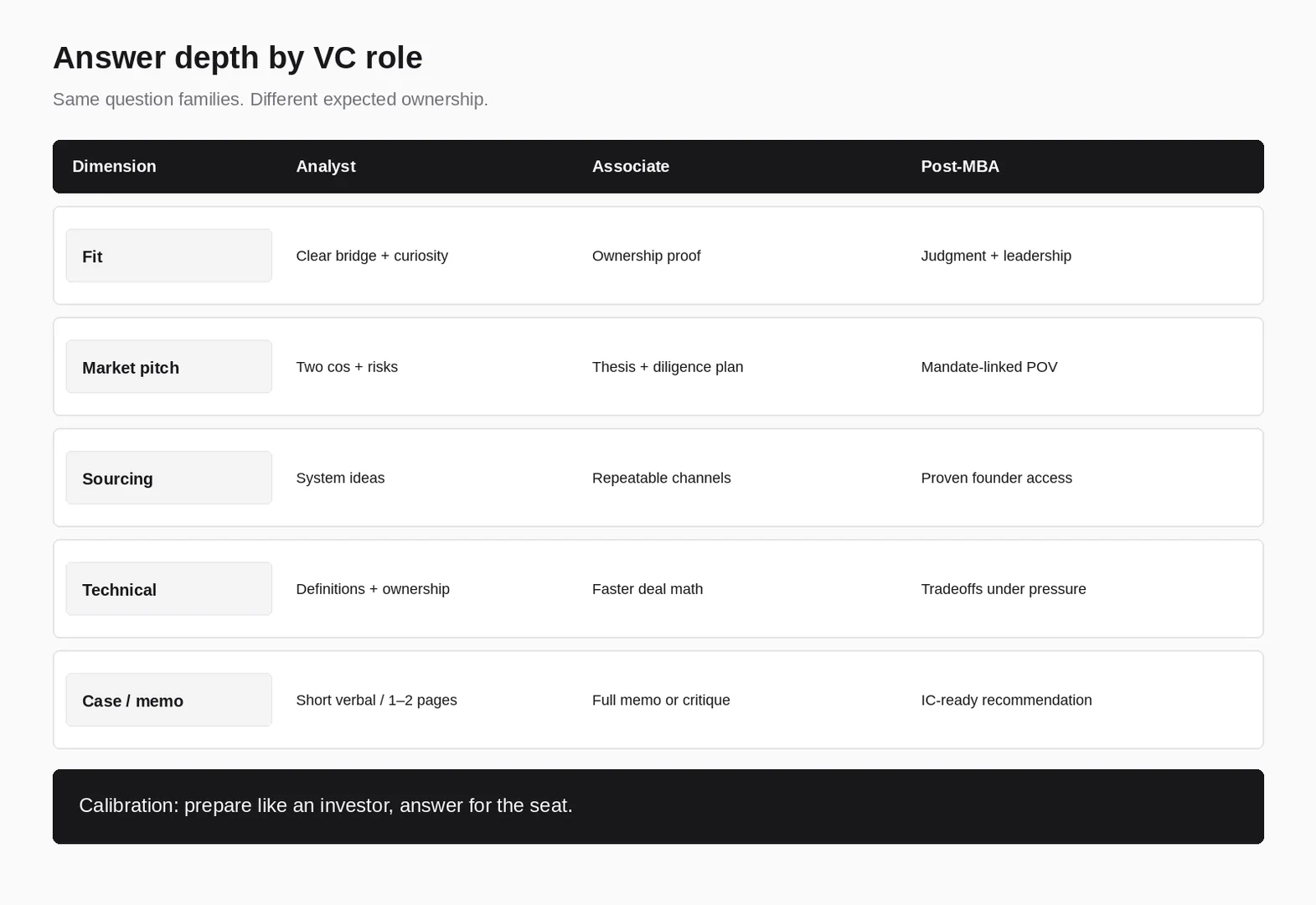
Most public question banks treat every candidate the same. Funds do not. The themes stay constant. The expected depth, ownership claims, and technical floor change with the seat.
| Dimension | Analyst | Associate | Post-MBA / senior associate |
|---|---|---|---|
| Fit story | Clear bridge from school or early role; curiosity and output | Proof of ownership on research, sourcing, or deals | Credible investing or operating judgment and leadership examples |
| Market / startup pitch | Two companies, crisp risks, clean structure | Thesis with comps, customer logic, and diligence plan | Point of view that survives partner pushback and links to firm mandate |
| Sourcing | System ideas and early network experiments | Repeatable channels and prioritization | Proven access and founder trust examples |
| Technical floor | Definitions and simple ownership math | Faster ownership, dilution, and unit-economics judgment | Comfortable with deal math and tradeoffs under time pressure |
| Case / memo | Short verbal or one to two pages | Full memo or live deck critique | IC-ready recommendation and risk ranking |
Calibration rule: prepare like an investor, answer at the depth of the role. Over-modeling an analyst screen can waste time. Under-preparing an associate case reads as unserious. For internship depth, stay on the internship interview questions page.
How to prepare for a venture capital interview
Preparation beats volume. A focused packet beats a hundred unread flashcards.
- Write a one-page firm brief: mandate, recent investments, two portfolio views, two competitors or peer funds, and three questions to ask.
- Prepare two startup pitches and one market thesis that fit the firm.
- Prepare one invest case and one pass case on portfolio or peer companies.
- Drill core technicals with numbers out loud until the language is automatic.
- Run one timed case or memo and score it.
- Practice answers standing up. Cut anything that does not support a decision.
Use a simple mock-answer scorecard. Score each answer 0–2 on specificity, evidence, decision quality, risk honesty, firm relevance, and delivery. Anything below 8 of 12 needs another rep.
Resume and narrative work belongs upstream. Tighten the story with the venture capital resume guide and the broader how to get a job in venture capital path before polishing interview scripts.
Common mistakes in VC interviews
- Pitching a company outside the firm’s stage or sector without acknowledging the mismatch.
- Giving a market view with no customer or competitive mechanism.
- Knowing the portfolio names but having no invest or pass opinion.
- Memorizing definitions without being able to use them in a deal example.
- Sounding certain about unverified claims instead of stating assumptions.
- Treating the interview as a performance instead of a working session.
Questions to ask a venture capital firm
Ask questions that reveal how the seat actually works.
Mandate and differentiation
What would make a company a clear fit or a clear pass for this fund today?
Investment decisions
Who owns diligence workstreams, and how do disagreements get resolved before an investment committee?
Role ownership
What does a strong first six months look like for this hire?
Feedback and progression
How does the team give feedback on memos, sourcing, and founder calls?
Portfolio and founders
Where does the investment team spend time with founders after the check closes?
Frequently asked questions
How technical are venture capital interviews?
Enough to show fluency in ownership, dilution, and model-specific metrics. Depth rises with fund stage and role. Specialist modeling belongs on the modeling-test and cap-table pages linked above.
How long should a VC interview answer be?
Most spoken answers work best in 60 to 90 seconds, then invite follow-ups. Cases and memos can run longer, but the recommendation should appear early.
Should I prepare a startup pitch if the firm did not request one?
Yes. Many screens turn into “pitch something” without warning. Two prepared companies prevent panic.
What should I do if I do not know an answer?
Say what is known, what is assumed, and what would be checked next. Inventing precision is worse than structured uncertainty.
How many companies and markets should I prepare?
Two startup pitches, one market thesis, and two portfolio opinions are enough for most loops if the work is deep.
When interviews are on the calendar, create an account at Venture Capital Careers, browse live roles, and keep firm research tied to the companies directory. Pair this question bank with the venture capital career path guide when deciding which seat to target next.
Related posts
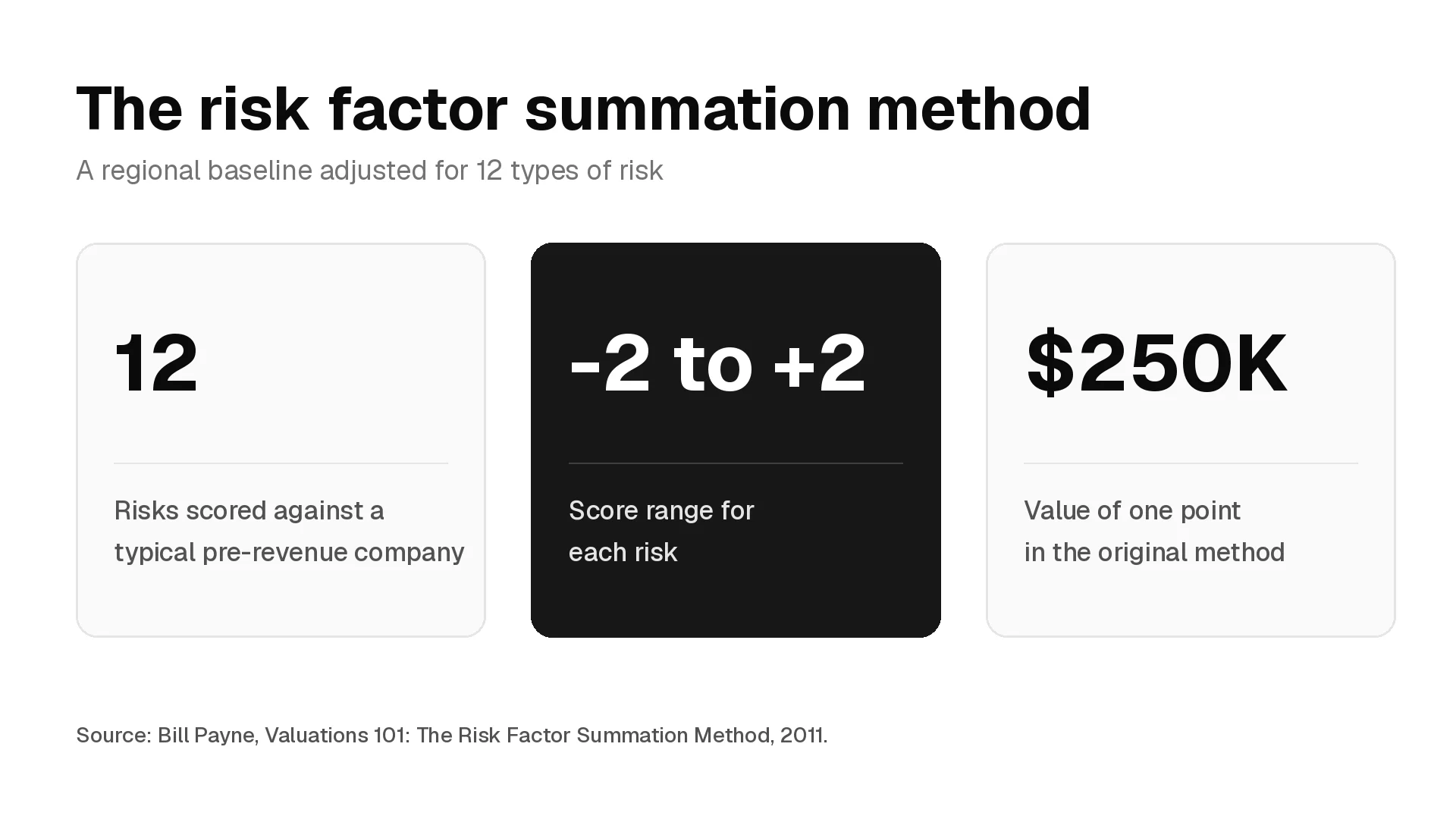
How the risk factor summation method values a pre-revenue startup, how to score each of the 12 risks with evidence, a worked example with ownership and 10x checks, whether the $250,000 step still fits current seed prices, and how VC analysts use it in memos and interviews.
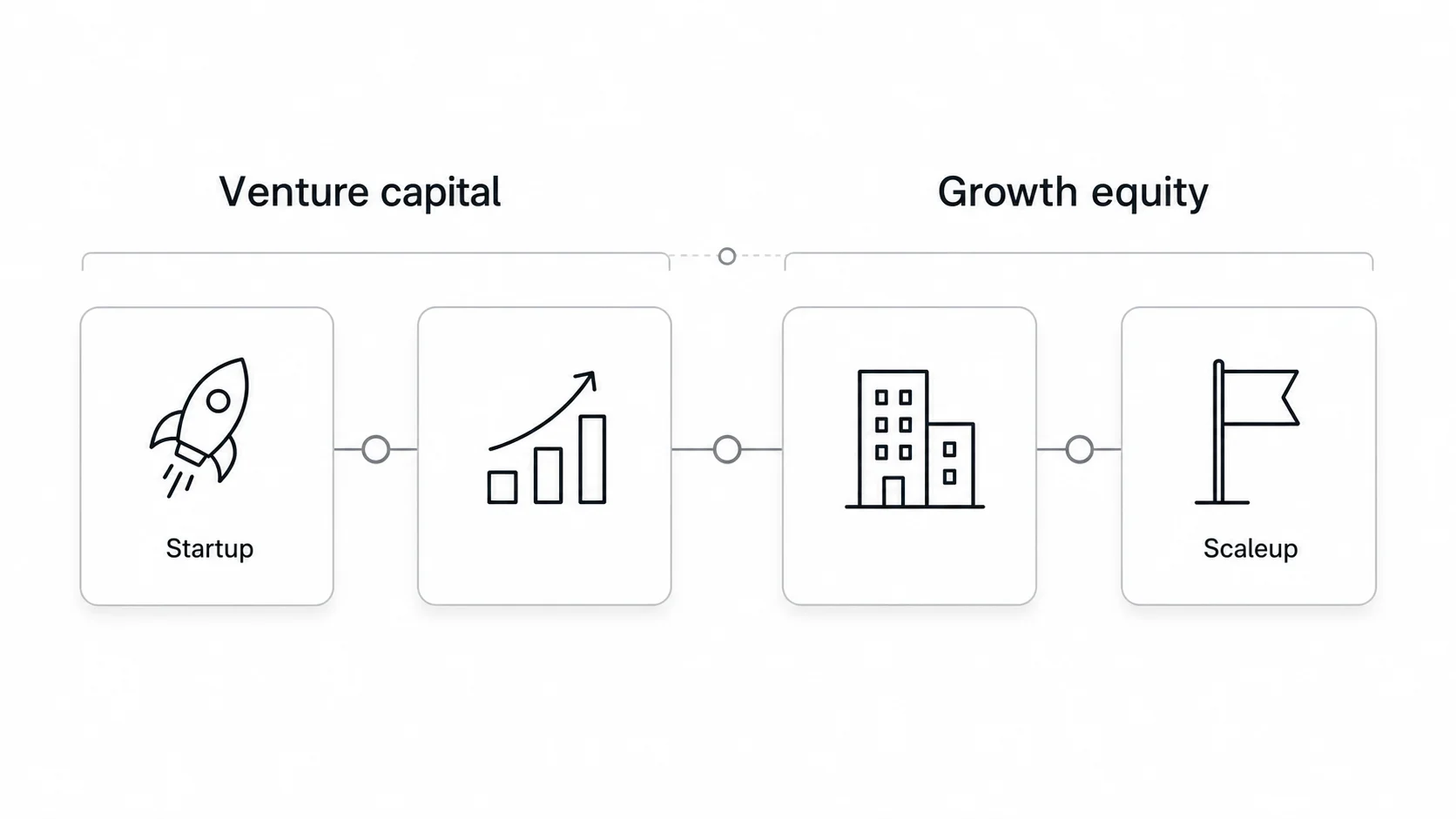
Growth equity buys minority stakes in proven, growing companies; venture capital backs startups still proving the market. Compare stage, risk, terms, secondaries, loss ratios, 2026 round sizes and careers.
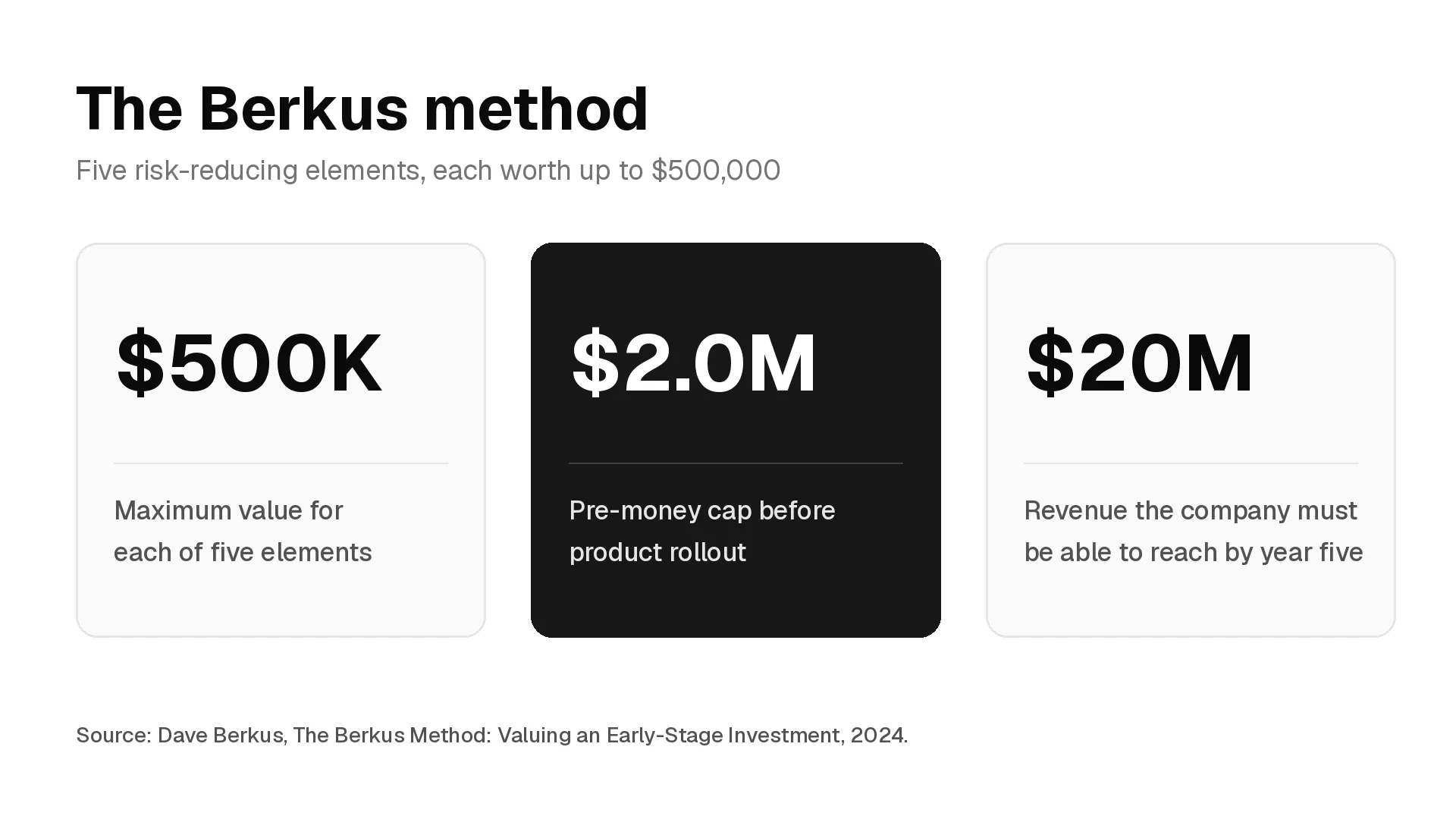
How the Berkus method values a pre-revenue startup, how to score each of the five elements, a worked example with ownership and 10x checks, how the $500,000 caps compare with current seed prices, and how VC analysts use it in memos and interviews.