
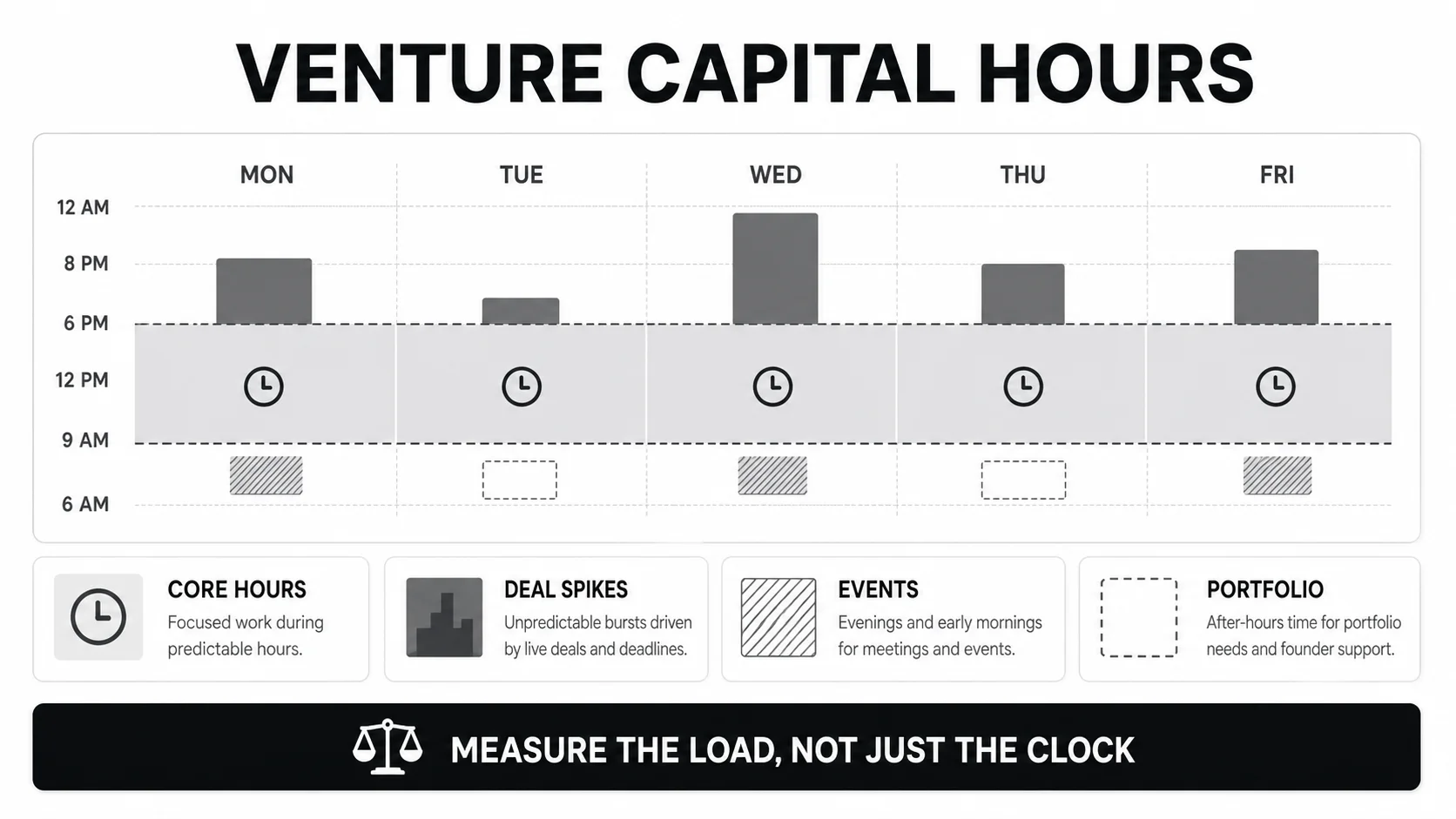
Most venture capital investment professionals should plan around 50 to 60 hours in a normal week, with quieter periods below that and live-deal, fundraising, or portfolio-company periods that run longer. The number is a planning range, not an audited industry average. Team size, fund stage, role, travel, and manager habits can move the experience materially.
The harder part is that VC often has better calendar flexibility than investment banking but weaker work-life separation. A founder message, portfolio issue, industry dinner, or promising introduction may arrive after the formal workday. Mergers & Inquisitions makes the same distinction in its VC career analysis: fewer office hours do not make the job a clean nine-to-five.
The useful question is therefore not only “How many hours will I work?” Ask four questions:
- How large is the recurring weekly load?
- How often does the workload spike?
- How much work happens outside the calendar?
- How much control will I have over when the work gets done?
Venture capital hours at a glance
The ranges below are interview hypotheses synthesized from current career sources, including the dedicated Growth Equity Interview Guide hours article. Treat them as a starting point to verify with the actual team.
| Role | Normal-week planning range | Recurring load | Common spike source | Schedule control |
|---|---|---|---|---|
| Intern or analyst | 45–60 hours | Market maps, CRM work, screening, research, meeting notes, memo support | Urgent partner request, IC preparation, live diligence | Low to moderate; tasks are often responsive |
| Associate or senior associate | 50–65 hours | Sourcing, founder calls, diligence, memos, references, portfolio projects | Competitive deal, term sheet, IC deadline, portfolio issue | Moderate; ownership rises, but deadlines do too |
| Principal or VP | 50–65+ hours | Theme ownership, sourcing, deal leadership, portfolio work, internal selling | Partner decision, board matter, fundraising, winning allocation | Moderate to high over the calendar; low during critical moments |
| Partner or GP | 50–70+ hours | Sourcing, founder relationships, IC, boards, LPs, recruiting, firm building | Fundraise, portfolio crisis, board issue, competitive round | High calendar autonomy, but broad responsibility and weak separation |
| Platform or operating role | 40–55 hours in many teams | Recruiting, talent, marketing, community, portfolio projects, operations | Event cycle, portfolio hiring sprint, annual summit, fund launch | Often more predictable, but function and event calendar matter |
A 55-hour associate week can feel manageable when evenings and weekends are protected. A 45-hour week can feel intrusive when calls, events, and messages are scattered across every day. Hours matter; their shape matters more.
Why a 50-hour VC week can still feel always on
VC workload has four layers. Only the first is fully visible on a calendar.
Core hours
Core hours contain the scheduled work: team meetings, founder calls, market research, diligence, investment memos, and portfolio reviews. This is the part candidates usually hear about when an interviewer says the team works “roughly nine to six.”
Deal spikes
Venture deals are less modeling-intensive than many private equity transactions, but urgency still compresses work. A sought-after company may set a term-sheet deadline. Customer references may need to happen across time zones. An investment memo can change after a partner challenges the market, team, or ownership case.
The spike is not only more work. It is the loss of control over work that was already planned.
Portfolio demands
Portfolio support can range from a scheduled recruiting introduction to an urgent bridge-financing discussion. Junior investors may prepare analysis and coordinate references; senior investors may join board calls, help recruit executives, or manage a financing problem.
Portfolio work is often lumpy. A quiet set of companies creates little off-hours load. One company running out of cash can reorder a week.
Ecosystem work
Sourcing depends on relationships. Dinners, demo days, conferences, founder introductions, and investor calls may be optional in theory but important to performance in practice. Henrik Wetter Sanchez's reflection on life as a VC associate makes the work clear: meeting founders and investors is not decoration around the job; it is part of developing judgment and access.
That does not mean every event is valuable. Strong teams distinguish relationship-building from performative attendance. Weak teams turn every gathering into a vague obligation.
Flexibility is not protected time. A role can let you leave the office at 5:30 p.m. and still expect a dinner, late founder call, and Sunday memo edit. During interviews, ask separately about office hours, event expectations, weekend work, and response-time norms.
What makes venture capital hours increase
The fund label explains less than the operating system behind it. Seven variables usually predict workload better than title alone.
| Variable | Lower-load pattern | Higher-load pattern |
|---|---|---|
| Deal stage | Early screening with light process | Late-stage or growth diligence with more data, modeling, and transaction coordination |
| Deal competition | Patient pipeline and clear pass rules | Compressed decisions to win allocation |
| Team size | Enough junior and operational leverage | Small team where every investor covers sourcing, diligence, portfolio, and firm work |
| Portfolio load | Clear coverage and stable companies | Many boards, active hiring needs, bridges, restructurings, or follow-on rounds |
| Fund cycle | Steady deployment | New fundraise, final deployment push, annual LP meeting, or reporting period |
| Sector and geography | Local, familiar sector with limited travel | Cross-border calls, conferences, laboratories, regulated diligence, or specialist references |
| Manager norms | Prioritized work and explicit response expectations | Constant urgency, late revisions, unclear ownership, and “always available” culture |
Early-stage funds are not automatically lighter. They may use less financial modeling, but a small team can carry a high sourcing and meeting load. Late-stage funds are not automatically banking-like. They can have better leverage and process. Corporate venture is not automatically nine-to-five if the team manages global stakeholders or annual strategic planning.
A normal week versus a crunch week
A normal week has repeated blocks. A crunch week does not add a second calendar; it forces important work into the gaps.
| Time | Normal week | Crunch week |
|---|---|---|
| Monday morning | Pipeline review and market work | Partner debate on a live deal; diligence plan reset |
| Monday–Wednesday | Founder meetings, research, references, memo drafting | Back-to-back founder, customer, expert, legal, and internal calls |
| Wednesday–Thursday | Portfolio project and IC preparation | Memo rewrite, model review, term-sheet work, IC pre-wire |
| Evenings | One event or catch-up block | References across time zones, document review, internal messages |
| Friday | Follow-ups, reading, relationship work | Final decision, founder call, allocation negotiation, postponed recurring work |
| Weekend | Usually protected or light reading | Catch-up on displaced tasks; urgent deal or portfolio work |
The strongest signal is not whether crunch happens. Investment work has deadlines. Ask how often it happens, whether several deals can overlap, what work gets deprioritized, and whether managers protect recovery time afterward.
The FINSIMCO day-in-the-life article usefully describes the recurring tasks—pitch triage, market analysis, founder meetings, memos, debate, and networking. A candidate should go one step further and ask how the team behaves when all six become urgent at once.
How hours differ by role
Seniority changes the source of pressure more reliably than it reduces the workload.
Analysts: responsive work and frequent context switching
Analysts often own research, market maps, pipeline hygiene, screening notes, and memo support. The job can be predictable when priorities are clear. It becomes exhausting when several investors treat the analyst as shared on-demand capacity.
Ask who sets priorities, how many senior investors the role supports, and what happens when two partners need work for the same IC.
Associates: more ownership, sharper deadlines
Associates typically move closer to founders, references, diligence, and investment writing. Investopedia's VC associate career overview notes that hours can expand near deal closings and that early- and late-stage firms emphasize different work.
This is often the most variable seat. Good associates develop control over research and meetings, then lose that control temporarily when a live deal becomes competitive.
Principals: calendar control with internal and external pressure
Principals can own themes, lead parts of diligence, support boards, and build the conviction needed to win partner approval. They may choose more of their calendar than associates, but they also carry reputational pressure across founders, partners, and portfolio companies.
The key diligence question is whether the role has real decision leverage or remains an execution seat with a senior title.
Partners: autonomy is not lightness
Partners may have the most flexible calendars and the weakest boundaries. Sourcing, founder relationships, boards, LP fundraising, recruiting, investment decisions, and firm management all compete for time. A partner can leave the office early and still work through dinners, travel, and weekend calls.
Platform and operating teams: a different workload cycle
Platform, talent, marketing, finance, legal, operations, and portfolio-support roles may follow more functional rhythms than deal rhythms. The Venture Capital Careers platform-role guide explains the range of those responsibilities.
Predictability depends on the function. Community roles spike around events. Talent teams spike around executive searches. Finance and operations spike around reporting, audits, closes, and fundraising. Do not use an investment-team hour estimate for a platform job.
VC work-life balance versus adjacent careers
VC usually offers fewer extreme hours than investment banking, but it is not simply banking with shorter days. The work moves from execution-heavy deadlines toward judgment, relationships, and a less standardized calendar.
| Career | Typical workload pattern | Predictability | Weekend risk | Work-life separation | Core tradeoff |
|---|---|---|---|---|---|
| Investment banking | Long scheduled days plus transaction spikes | Low | High during live deals | Poor | Strong training and cash; least control |
| Private equity or growth equity | Deal-driven analysis, models, IC, portfolio work | Low to moderate | Meaningful during processes | Poor to moderate | Higher cash and structured investing; heavy execution |
| Venture capital | Meetings, sourcing, market work, diligence, memos, portfolio, events | Moderate until a deal or portfolio issue spikes | Usually lower than banking, not zero | Often weaker than headline hours imply | Startup access and autonomy; lower junior cash and less linear progression |
| Corporate venture | Investment work plus strategic and corporate stakeholder cycles | Often moderate | Usually lower, team-dependent | Often clearer | Corporate resources and stability; mandate can change with leadership |
| Startup operating role | Function-specific execution under company pressure | Highly stage- and manager-dependent | Can be high near launches or financing | Variable | Direct operating ownership; concentrated company risk |
The right comparison depends on what is making you leave.
- If you dislike raw volume, VC may improve the week.
- If you dislike unpredictability, a small fund with compressed deals may not solve the problem.
- If you dislike being responsive to senior people, an analyst or associate seat can still recreate that dynamic.
- If you want protected evenings, ask about events and messaging norms, not only office hours.
- If you want higher near-term cash, compare the workload with the Venture Capital Careers salary guide; junior VC pay often does not compensate for every hour the way candidates expect.
- If you want startup judgment and relationships, VC can be worth a less linear promotion path.
Use the broader VC career path to compare the work and promotion logic at each level. Hours should be one part of the decision, alongside learning, decision exposure, manager quality, compensation, carry, and the role's likely exit.
Test the role, not the title
“Great work-life balance” is not evidence. Convert the claim into six operating facts.
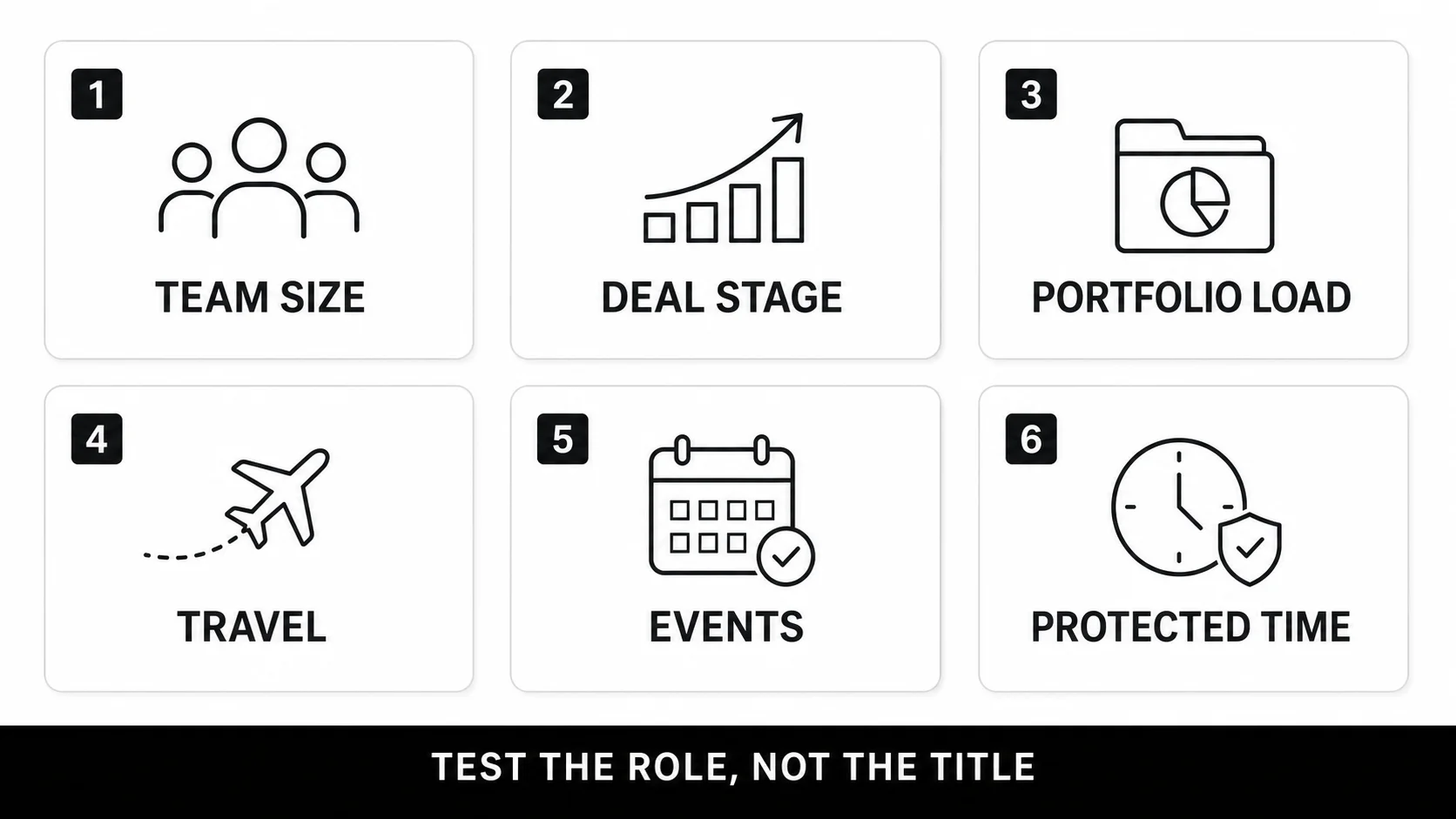
| Dimension | What to verify | Strong signal | Red flag |
|---|---|---|---|
| Team size | People at each level, shared resources, and who supports whom | Clear ownership and realistic coverage | One junior person serves every investor without priority rules |
| Deal stage | Normal diligence depth, check size, and decision timeline | Team can describe a typical process and a compressed exception | Every deal is described as urgent and bespoke |
| Portfolio load | Companies per investor, board seats, and support expectations | Named coverage with escalation rules | Broad “value-add” promise with no capacity plan |
| Travel | Conferences, portfolio visits, founder meetings, and cross-office work | Expected cadence is explicit | “Some travel” means continual last-minute trips |
| Events | Required dinners, demo days, panels, and community commitments | Events are selective and tied to strategy | Attendance is treated as a proxy for commitment |
| Protected time | Weekend, vacation, response-time, and recovery norms | Managers give examples of deprioritizing work | The team praises flexibility but cannot name a protected boundary |
Ten interview questions that reveal the workload
- What did the team work on last week?
Listen for the mix of recurring work, live deals, portfolio needs, and events.
- How many companies is each investment professional actively covering?
Ask what “covering” means: board work, monthly calls, recruiting, analysis, or occasional introductions.
- How many deals reached full diligence in the last quarter?
The number is less important than who did the work and whether processes overlapped.
- What creates a late night here?
Strong answers name specific triggers. Weak answers say late nights never happen or everything is urgent.
- How often does the team work on weekends?
Separate reading and light catch-up from required deliverables, calls, or travel.
- Which events are expected, and how are they counted as work?
A dinner that replaces part of the workday feels different from one added after it.
- How are priorities resolved when two partners need urgent work?
This exposes whether the team has management leverage or only hierarchy.
- What response time is expected after hours?
Ask separately about founders, partners, portfolio executives, and routine internal messages.
- What happened after the team's last intense deal period?
Recovery behavior is more informative than a promise of balance.
- Why did the last person leave, and what did their busiest month look like?
Specificity reveals more than adjectives.
Ask several people the same two or three questions. Consistent answers are a signal. A partner's “flexible” schedule and an associate's “always available” schedule can both be true.
Decide whether the workload fits you
The best VC role is not the one with the fewest hours. It is the one where the workload buys experience you want and leaves boundaries you can live with.
VC may fit when...
- You enjoy switching between markets, companies, people, and incomplete evidence.
- Relationship work feels energizing rather than like unpaid overtime.
- You can tolerate episodic uncertainty in exchange for more calendar autonomy.
- The role gives you meaningful exposure to diligence, writing, decisions, or portfolio work.
- You value startup access and investment judgment enough to accept a less standardized promotion path.
Another path may fit better when...
- You need consistently protected evenings or weekends and the team cannot demonstrate them.
- You want a structured training program and clear promotion schedule.
- You prefer operating depth inside one company to comparative judgment across many.
- The role is mostly sourcing volume without decision exposure.
- The compensation, carry, and learning do not justify the off-hours demands.
Corporate venture may provide clearer corporate rhythms, but its mandate can change with leadership. A platform role may offer more functional depth, but events or portfolio projects can create their own peaks. An operating role may eliminate investor networking while introducing launch, customer, and fundraising pressure.
Choose the work pattern, not the industry stereotype.
Research roles and firms on Venture Capital Careers
Use the Venture Capital Careers job board to compare current investment, platform, operating, and portfolio roles. Then use the companies directory to understand each firm's stage, sector, geography, and team.
Create a simple worksheet before interviews:
- Role outputs: sourcing, research, models, memos, portfolio work, LP work, or function-specific delivery.
- Team leverage: people above, beside, and below the role.
- Deal rhythm: average active processes and compressed decisions.
- Portfolio load: companies, boards, and support model.
- Off-hours load: travel, events, time zones, and response expectations.
- Learning return: decision exposure, manager quality, and likely next role.
Compare the job description with the VCC analyst job description or associate job description. A title that looks senior may still be a high-volume execution role. A small-fund analyst seat may offer unusually broad ownership.
The interview should confirm or disprove your worksheet. If the team cannot explain the work pattern, assume the uncertainty belongs to the role.
Frequently asked questions
How many hours do venture capital associates work?
A useful normal-week planning range is roughly 50 to 65 hours, with longer periods during competitive deals, investment-committee deadlines, portfolio problems, or fundraising. The actual experience depends on stage, team size, process, and event expectations. Verify the range with several members of the team.
Do venture capitalists work weekends?
Not every weekend. Many VC roles protect most weekends, with occasional reading, catch-up, travel, live-deal work, or portfolio emergencies. Ask how many weekends the team worked in the last quarter and what the work involved.
Is VC work-life balance better than investment banking?
Usually on total hours, yes. Not always on separation. VC can replace late-night execution with founder messages, networking events, travel, and portfolio responsibilities distributed across the week. Candidates leaving banking should test predictability and boundaries, not assume every fund offers a clean lifestyle upgrade.
Do VC partners work fewer hours than associates?
Partners usually have more control over their calendars, but they do not necessarily work less. They cover deals, boards, LP fundraising, sourcing, recruiting, firm management, and public relationship-building. Seniority changes the mix of work and the source of urgency.
Which type of VC firm has the best work-life balance?
No fund type guarantees it. Corporate venture, established platforms, and teams with strong leverage can be more predictable. Small funds can also be humane when partners prioritize well. Stage, team capacity, portfolio load, travel, event norms, and manager behavior are more useful than the label.
Measure the load, not just the clock
Use 50–60 hours as an orientation point, then investigate the shape of the week. A sustainable role has a manageable baseline, explainable spikes, selective off-hours work, and credible protected time. An unsustainable role hides constant availability behind the word “flexible.”
The right question is not whether venture capital has good work-life balance. It is whether this team, in this fund cycle, gives you the work, learning, and control you want.
Related posts
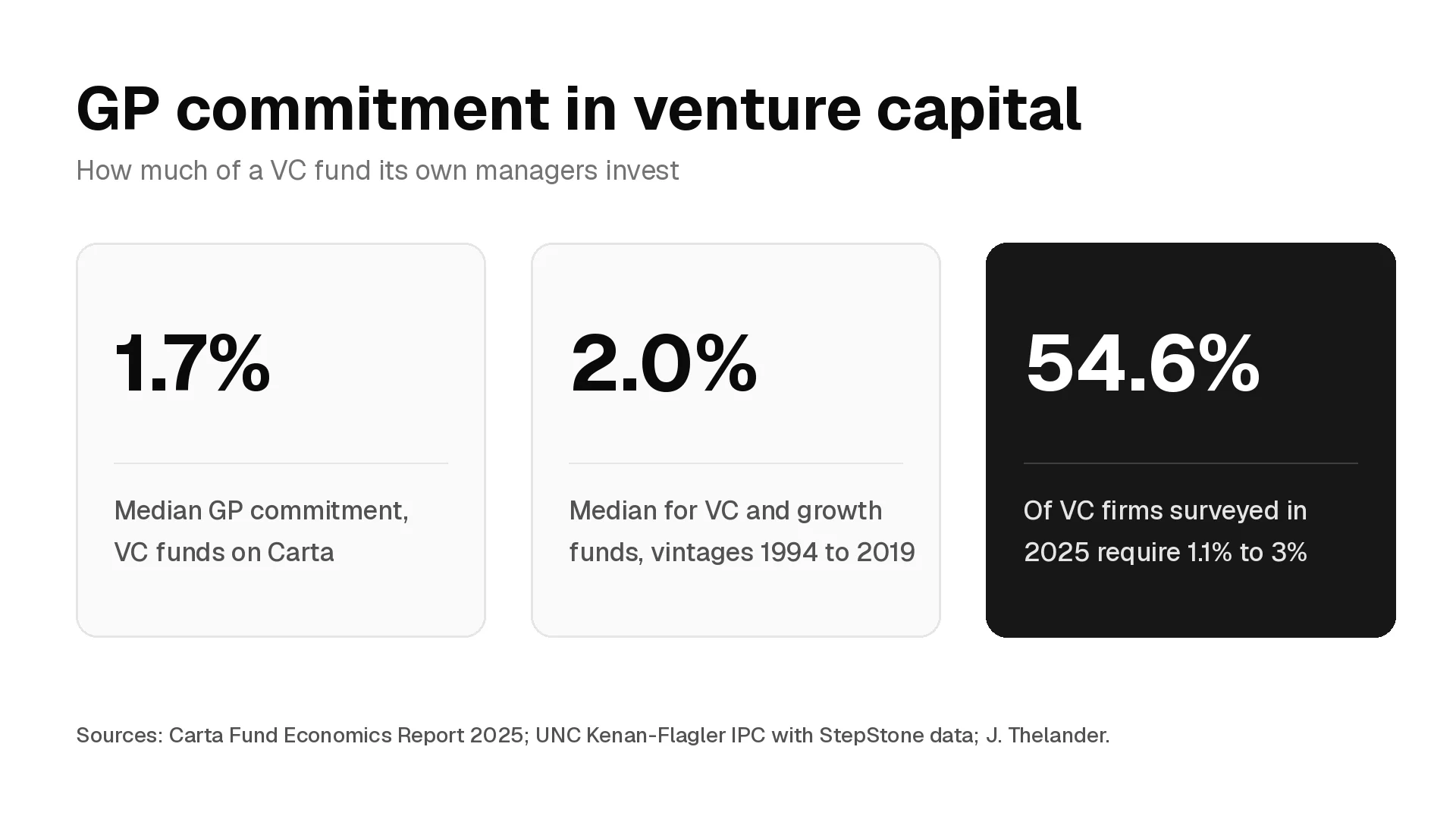
What a GP commitment is, how large it is in venture capital, how GPs fund it, where it sits in the LPA, what the returns evidence says, how firms split it across partners and principals, and what to ask before you accept a role with carry.
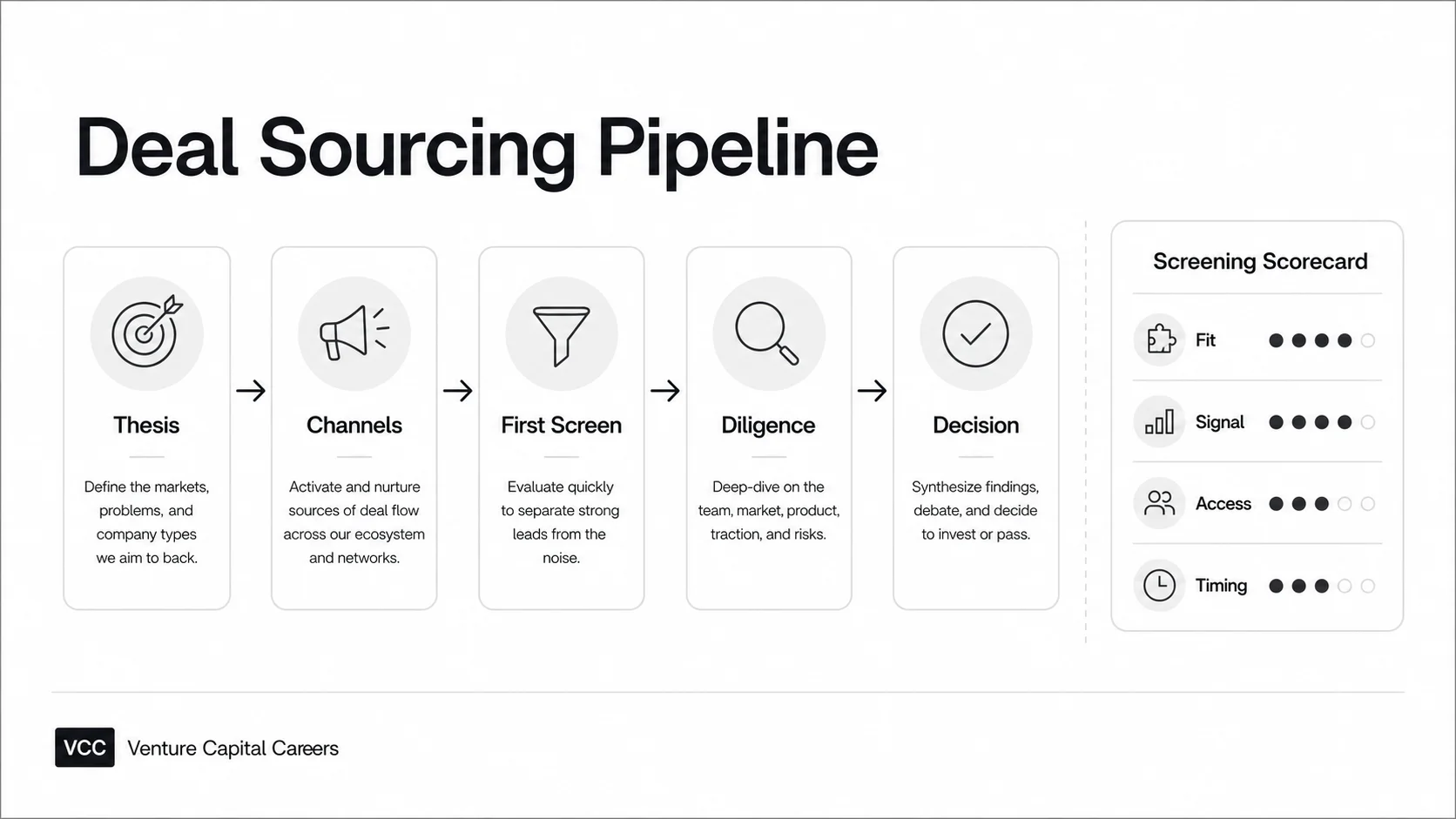
Most closed VC deals start with a relationship. See where deals come from by stage, how to work each sourcing channel, which signals show up early, and how analysts run a weekly sourcing process.
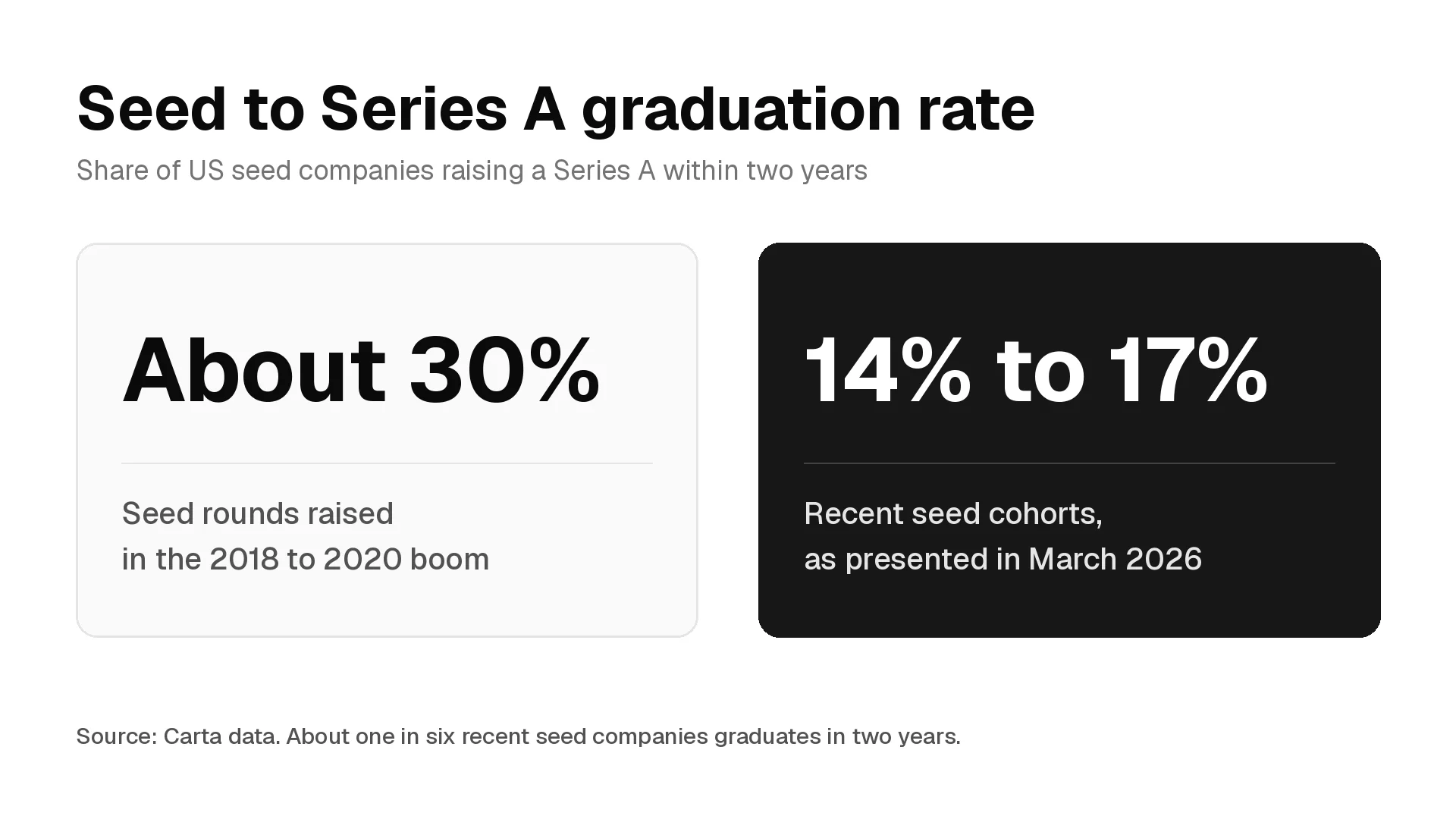
Seed to Series A graduation rates by cohort from Carta and Crunchbase, how long the jump takes, why rates fell after 2021, why published figures disagree, and how seed and Series A firms use the rate for reserves, LP reporting, portfolio reviews and interviews.