
A venture capital operating partner is a senior operator paid by the fund to improve how portfolio companies execute. The job is post-investment work: hiring, go-to-market, finance ops, product process, or founder coaching. It is not a general partner seat with a friendlier title, and it is not a guaranteed vote on the next deal.
If you want a salaried investing role, start with how to get a job in venture capital. If your edge is company-building rather than sourcing, an operating partner mandate can be the cleaner fit, as long as the fund can name the problem you own.
What a VC operating partner actually does
The useful default is simple. A general partner is accountable for the fund. An operating partner is accountable for a defined slice of portfolio execution.
That slice is usually one or more of:
- Diagnosing what is actually blocking a company, then helping the founder fix it without taking the CEO job
- Building playbooks for hiring, sales, marketing, customer success, finance, or product operations that more than one company can reuse
- Supporting executive searches and onboarding when the company is adding a first VP or replacing a weak one
- Giving the investment team an operator read during diligence
- Hosting a functional community so portfolio leaders stop solving the same problem in isolation
What you usually do not do, unless the agreement says so in writing:
- Commit the fund
- Lead term-sheet negotiation as the deal owner
- Sit as the voting board director for the partnership
- Run the management company
Titles are noisy. Some firms put "operating partner" on a platform lead. Some use it for a fractional advisor. Some use it for an investor who also likes to help with hiring. The work test is better than the biography test: which companies do you support, what changes because you showed up, and who inside the partnership consumes that work?
Employers writing a posting should use the operating partner job description. Candidates should not treat that hiring template as a how-to for landing the seat.
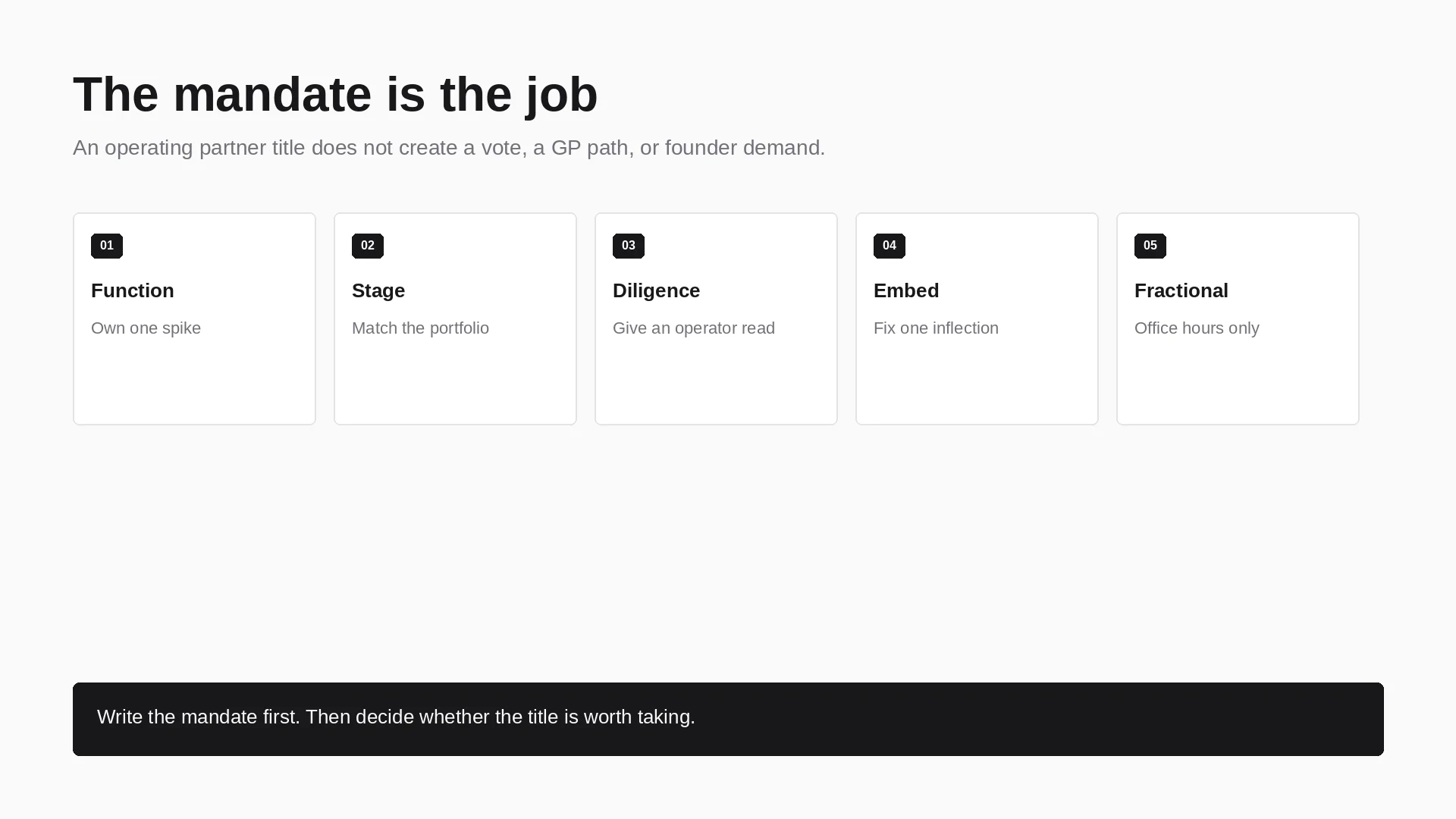
Five common operating-partner seats
"Operating partner" is a family of mandates, not one job. Name the seat before you chase the title.
| Seat | Recurring output | Typical authority | Best when |
|---|---|---|---|
| Functional partner | Playbooks and sprints in one spike such as GTM, talent, product, or finance | Strong inside that function; limited investment vote | You have repeated wins at the stage the fund actually holds |
| Stage partner | Zero-to-one or scale-up operating help across a few companies | Deep on a small set of companies | Your scars match seed versus growth, not a generic "startups" story |
| Diligence partner | Operator reads that change whether a deal proceeds | Influence before the check; less after | Partners already ask you to diligence execution risk |
| Embedded partner | Weeks inside one company at an inflection | High at that company; thin elsewhere | The fund wants a temporary operator, not a portfolio-wide platform |
| Fractional advisor | Office hours, a Slack channel, and occasional workshops | Advice, not ownership | You are between operating jobs and the firm will not fund a full-time seat |
If the work is mostly events, content, and a talent network, you may actually be looking at a platform role. If the work is sourcing and specialist coverage with a retainer, you may be looking at a venture partner affiliation. Do not let a senior-sounding title hide a different job.
Operating partner vs GP, venture partner, platform, and EIR
These roles sit next to each other on firm websites and get used as if they were interchangeable. They are not.
| Role | Primary job | Usual time | Usual economics pattern | Path signal |
|---|---|---|---|---|
| Operating partner | Repeatable portfolio execution | Employee, advisor, or partner-track operator | Salary or retainer plus some carry | Operator mandate, not a sourcing title |
| General partner | Fund performance, IC, LPs, firm building | Durable full-time | Broader carry, often a GP commit | Actual partnership |
| Venture partner | Expand investing reach or specialist coverage | Fractional or fund-specific | Retainer plus deal or fund carry | Senior affiliation; GP path only if written |
| Platform lead | Scalable programs across many companies | Full-time staff | Salary, sometimes light carry | Services and community, not one-to-one coaching |
| Entrepreneur in residence | Time-boxed embed, often while exploring a company | Months, not a career title | Stipend plus optionality | Temporary, not a substitute OP role |
For the work-loop comparison, use venture partner vs operating partner. For the employer template, stay with the job description. How people actually land an operating partner seat, and when they should walk, is a different question from how the titles compare.
Private equity operating partners are a cousin, not the same job. PE seats often assume control, a value-creation plan, and a later-stage company. VC seats usually assume a founder who still runs the company and a fund that cannot force the operating agenda. If your only proof is a PE turnaround, say so. Early-stage founders will hear the difference.
How the seat pays
Do not reverse-engineer a salary from the word "partner."
Common pieces:
- Salary or retainer. More likely when the firm wants ongoing coverage, a named function, and a minimum weekly commitment. Less likely when you are between jobs and the firm is offering "access" as the benefit.
- Bonus. Sometimes tied to founder feedback, hires closed, or internal platform goals. Rarely tied to a clean company P&L you control.
- Fund carry. A slice of the pool, usually smaller than a GP's, and slow to pay. Read the carried interest explainer for the vocabulary, then have advisers read the documents.
- Deal-linked or project economics. More common in fractional seats. Fine as a supplement, weak as a living if the firm also wants exclusivity.
- Co-invest or company equity. Sometimes, when you take a board or embedded role. It can conflict with fund incentives. Get the conflict policy in writing.
The negotiation that matters is rarely the headline percentage. It is how many companies you cover, who prioritizes your time, whether diligence is in scope, what happens when a founder does not want help, and whether carry continues into the next fund.
A part-time seat can be an excellent bridge. It is a poor substitute for cash if the partnership expects full-time availability, travel, and on-call founder support.
Who actually gets hired
Funds do not hire operating partners the way they hire analysts. There is no campus process and no standard pipeline.
The backgrounds that show up repeatedly:
- Functional leaders who scaled a motion the fund's companies keep getting wrong: first sales team, first international hire, first finance stack
- Founders or COOs who have lived the stage the portfolio is in, not a later stage they wish the companies would skip to
- Operators who already helped the firm's companies as an advisor, board helper, or portfolio executive
- Specialists whose network is the product: a talent map, a buyer set, a technical community
A startup operator path can lead here. An analyst-to-associate ladder usually does not dump you into this title. If you are early-career and want investing reps, look at salaried roles or fellowships first. For the broader ladder, use the venture capital career path.
The hiring filter is operating evidence plus founder trust. A famous former title without recent company-building work is a weak case. A quieter operator who can name the last three messy problems they fixed, and the founders who would still take the call, is a stronger one.
Stage match matters more than brand names. Seed funds want zero-to-one scars. Growth funds want systems. Late-stage and PE-flavored seats want control and efficiency. Mixing those stories is how candidates look senior and still miss.
How to get the seat
Most durable operating partner seats are not filled from a job board. They are created when partners already trust your judgment on companies they own, or want to own.
A sequence that works more often than a cold "can I be your operating partner?" email:
- Pick one function and one company stage you can defend with dated examples.
- Choose two or three funds whose actual portfolio matches that stage. Use the companies directory, then test the website thesis against recent investments and how those companies are staffed.
- Help one portfolio company in public view: a hiring sprint, a GTM teardown, a planning session. Finish the work. Ask the founder whether it was useful.
- Repeat until a partner can describe your edge without looking at your LinkedIn.
- Only then ask whether a formal mandate exists: advisor, functional partner, embedded project, or operating partner.
Warm introductions from portfolio founders still beat most cold outreach. If a posting exists, treat it as a filter. Show the mandate you can cover, not a generic desire to "be in VC."
When you do have the conversation, ask for the work, not the title:
- What problem was this seat created to solve?
- How many companies am I expected to touch, and who decides the queue?
- Do founders request me, or do partners assign me?
- Is diligence in scope, and who uses that memo?
- How is success measured in year one if no company "looks transformed"?
- How much of the job is firm marketing, events, or content rather than company work?
Time the ask to the fund cycle when you can. Firms earlier in a new fund usually have more fee budget and a longer runway to prove the role. A seat created in year six because someone else is doing it is a weaker signal.
Translate your operating resume into venture-relevant evidence before you apply. The venture capital resume guide is useful if your last ten years read like a company org chart instead of a fund mandate. Interviews test judgment more than textbook terms. Prepare the messy stories, then use the interview questions guide for the shared process.
Proof to ship before you ask for the title
Funds do not need another person who "loves helping founders." They need a repeatable engine they can explain to the rest of the partnership and to LPs.
Build a proof packet before you ask for a title:
- Operating wins. Three dated examples with the before state, what you changed, and what moved. Revenue, retention, hiring velocity, burn, or a ship date. Pick the metric the company actually used.
- Founder trust. Names, not adjectives. Who would still take your call, and what you did that earned the second conversation.
- Stage and function match. The company profile you can help, and the profile you will not pretend to cover.
- Playbook. One reusable artifact: a hiring scorecard, a pipeline review, a planning cadence, a finance dashboard. If it only worked once, it is a story, not a practice.
- Time budget. Hours per week, travel, exclusivity you can accept, and conflicts you already have.
- Mandate memo. In your words: customer, outputs, authority, economics, review date.
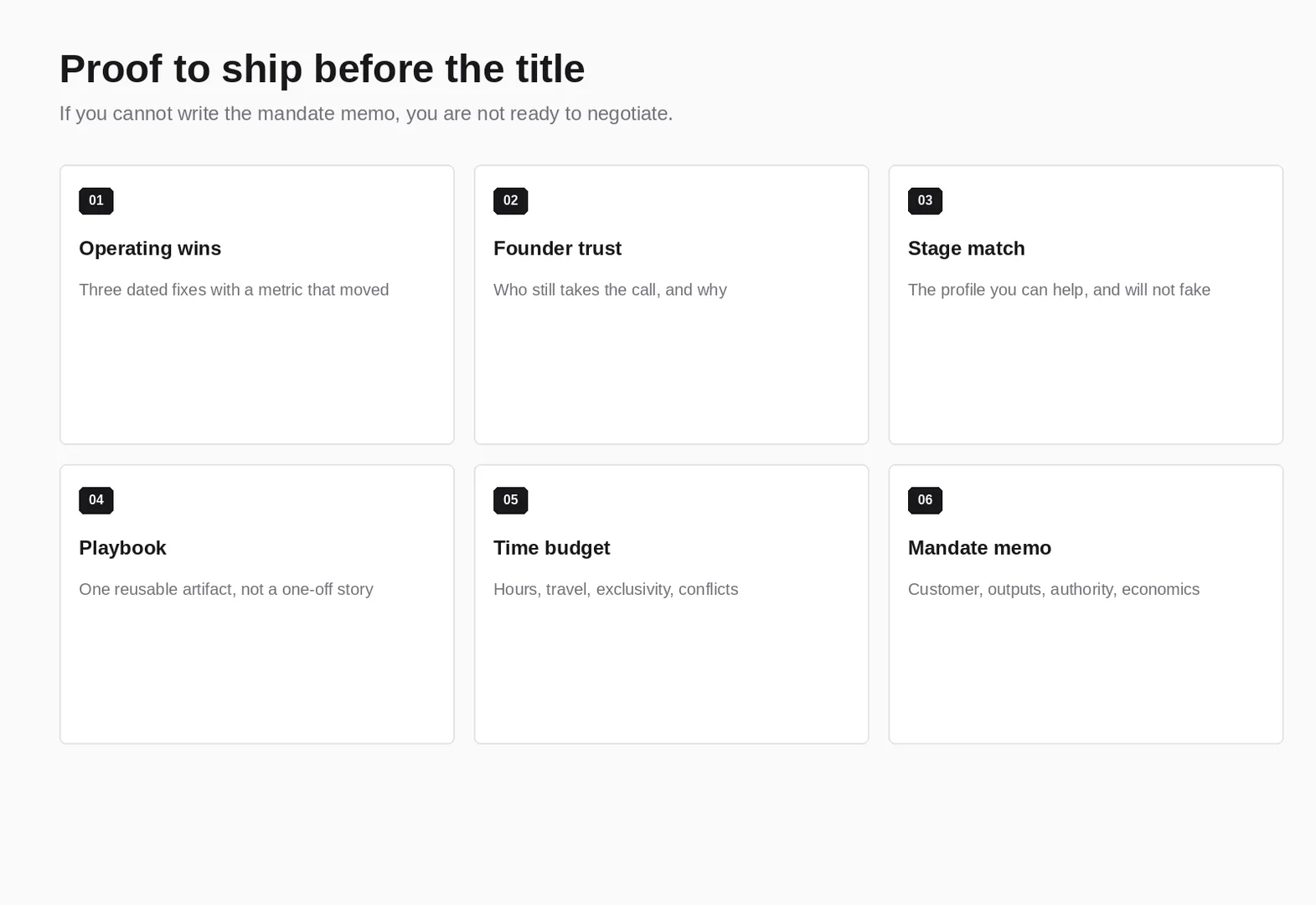
If you cannot write the mandate memo, you are not ready to negotiate. If the firm will not correct a material inaccuracy in that memo, the ambiguity is part of the offer.
When the title is a trap
An operating partner title can be an excellent senior role. It can also be unpaid consulting with a nicer business card, or a kitchen-sink job that absorbs everything the investing partners do not want to do.
Walk, or renegotiate, when:
- The fund cannot name the primary customer of the role: founders, deal partners, or the firm's own marketing calendar
- You are expected to cover dozens of companies with no triage rule
- Founders treat you as a spy for the partnership, and the firm has no plan to change that
- Help is optional for companies and mandatory for you
- Diligence, events, content, recruiting, and firm ops are all "part of the job" with no capacity model
- Pay is deal-linked only while availability is full-time
- "Path to investing partner" has no decision date, criteria, or precedent
- Your time is prioritized by whoever shouts, not by a written queue
- The role is mostly improving the VC firm itself rather than portfolio companies
Operating partner is rarely a stealth on-ramp to a GP seat. Some people later pick up investing judgment. That is a different job, and it needs sourcing proof the operating work does not automatically create. If investing is the real goal, say so early and diligence the path, or choose a different seat.
If you want a salaried operating or platform job instead, browse open VC roles and research firms in the companies directory. Use job alerts so you see new seats while you keep shipping proof.
Frequently asked questions
Is a VC operating partner an investment role?
Sometimes, but not by default. Some operating partners join diligence and partner meetings. Others never vote. Ask who consumes your work and whether you can commit capital. If the answers are vague, treat the seat as portfolio support.
Is this the same as a private equity operating partner?
No. PE operating partners often work with control, a defined value-creation plan, and a more mature company. VC operating partners usually work with founder-led companies that can decline the help. The scars transfer only when the stage matches.
Can an operating partner become a GP?
Yes, but the title does not create the path. Look for written milestones, expanding investment authority, sourcing proof, and documented economics that continue into later funds. Many excellent operating partners never join the partnership, and that can still be a good career.
Do I need to have been a CEO?
No. Functional leaders, COOs, and operators who have owned a hard problem at the right stage get hired. A CEO title without recent, specific wins is weaker than a VP who can show three companies where the motion actually changed.
Do operating partners get carry?
Often a smaller slice than investing partners, and sometimes none in fractional seats. Treat cash, carry base, vesting, company count, and time expectation as one package. Do not assume GP-like economics because the word "partner" appears on a website.
How is this different from a platform job?
Platform teams usually build programs many companies can use: talent pipelines, events, content, community. Operating partners usually go deeper with fewer companies on a functional problem. At small funds the two collapse into one person. Make the fund say which job it is buying.
Where do I find operating partner jobs?
A few seats are posted. More are created after you have already helped a portfolio company. Watch the job board, check firm sites, and keep doing useful work. Do not wait for a posting if a partner already uses you as the unofficial operator.
Related posts
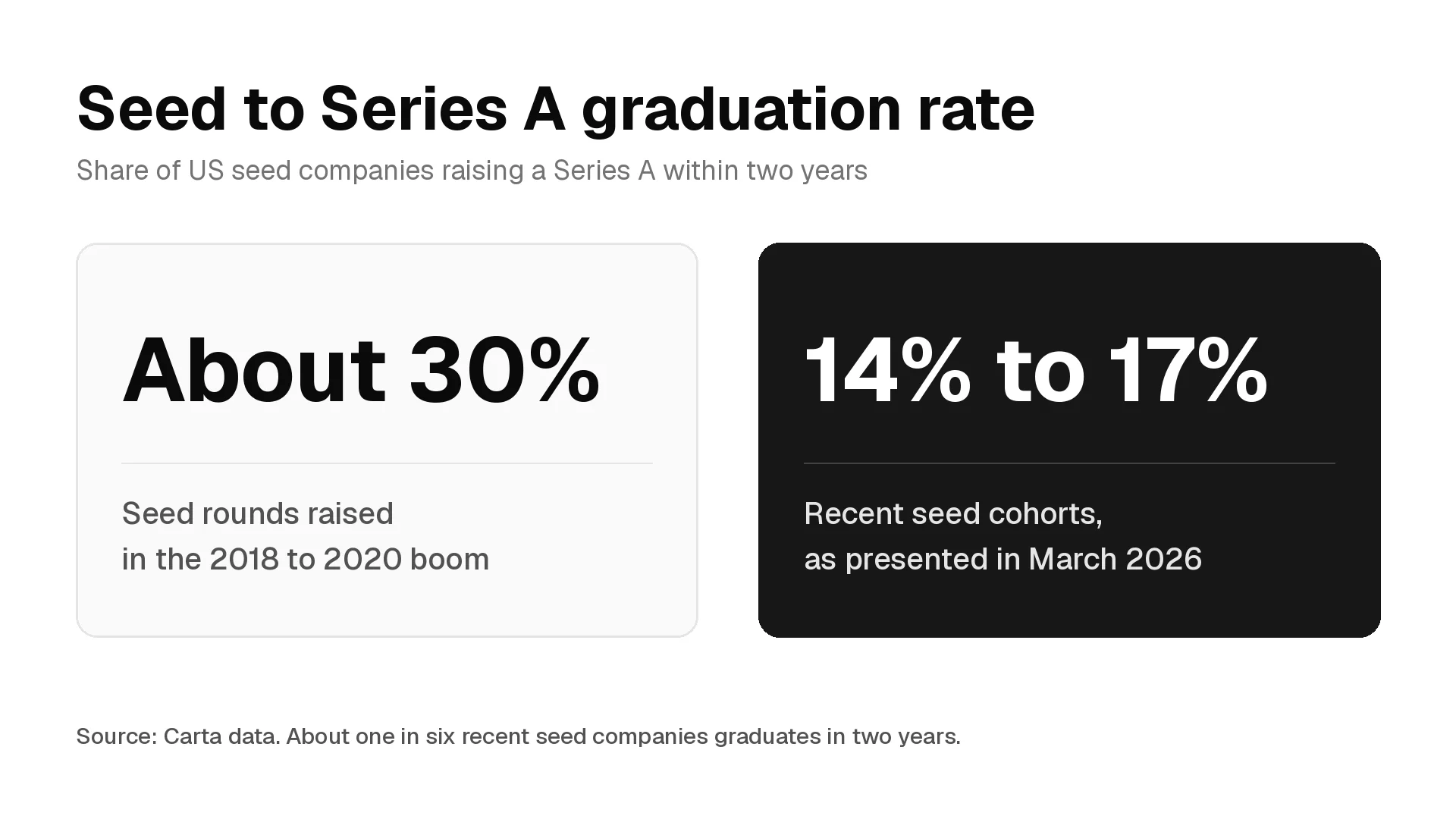
Seed to Series A graduation rates by cohort from Carta and Crunchbase, how long the jump takes, why rates fell after 2021, why published figures disagree, and how seed and Series A firms use the rate for reserves, LP reporting, portfolio reviews and interviews.
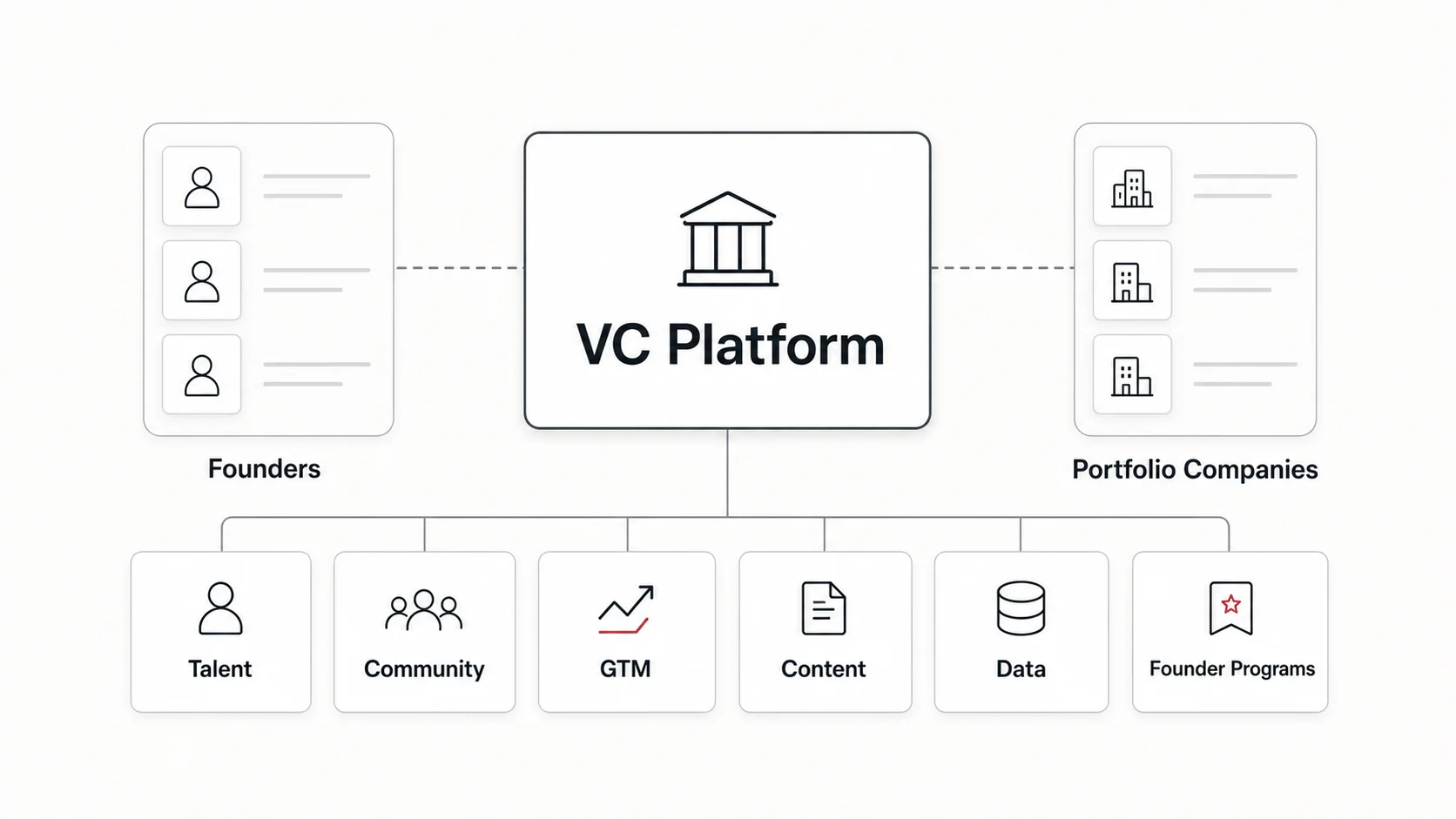
A venture capital platform role runs a VC firm's non-investing services for founders: talent, business development, community, marketing, and investment operations. Median platform pay is $165,000 base and $207,500 total cash.
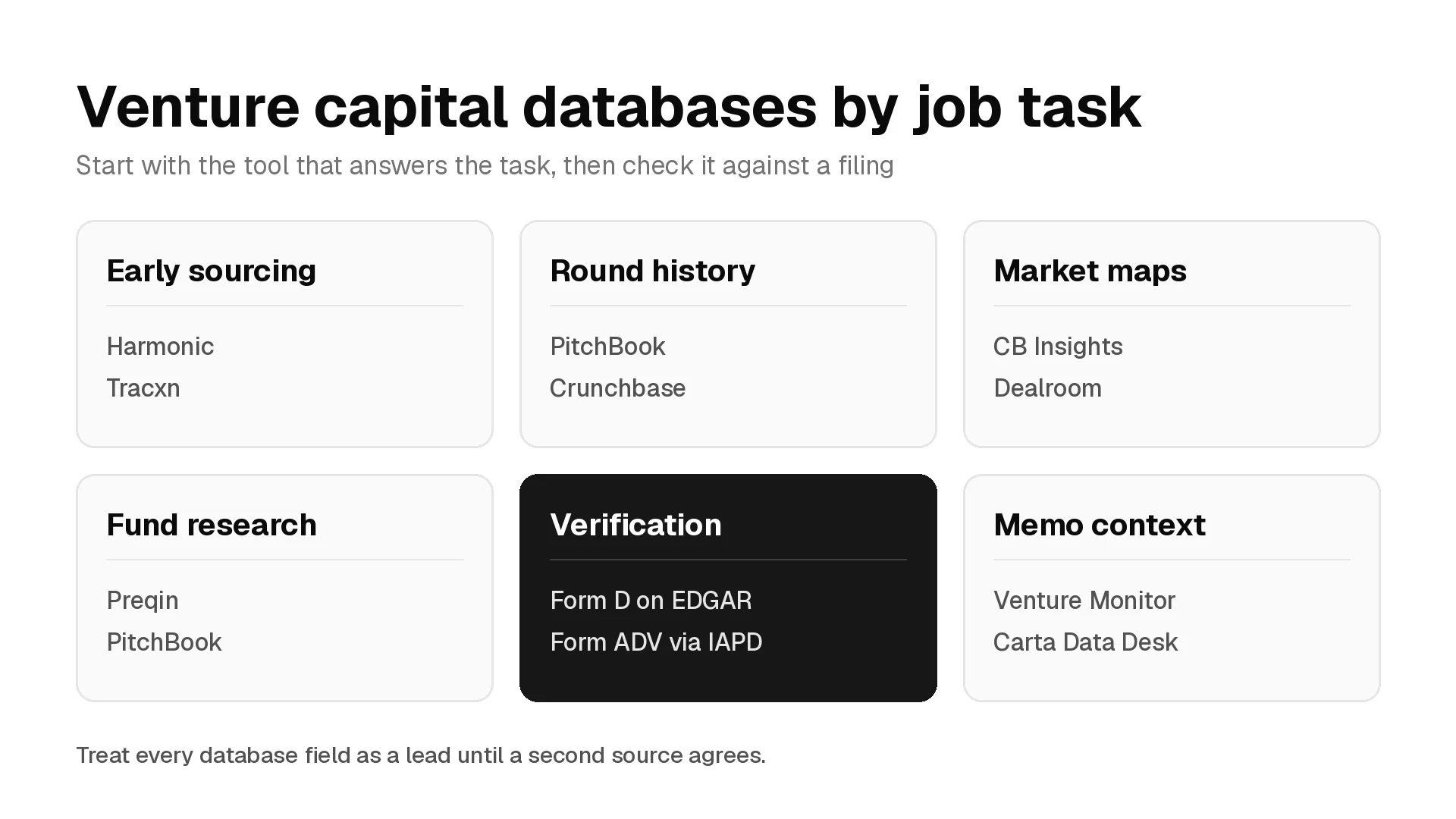
PitchBook, Crunchbase, CB Insights, Dealroom, Tracxn, Harmonic and Preqin compared by the VC task each one serves, with the free SEC filings that verify a record, a four-check round verification, student access limits and how database work reads in recruiting.