
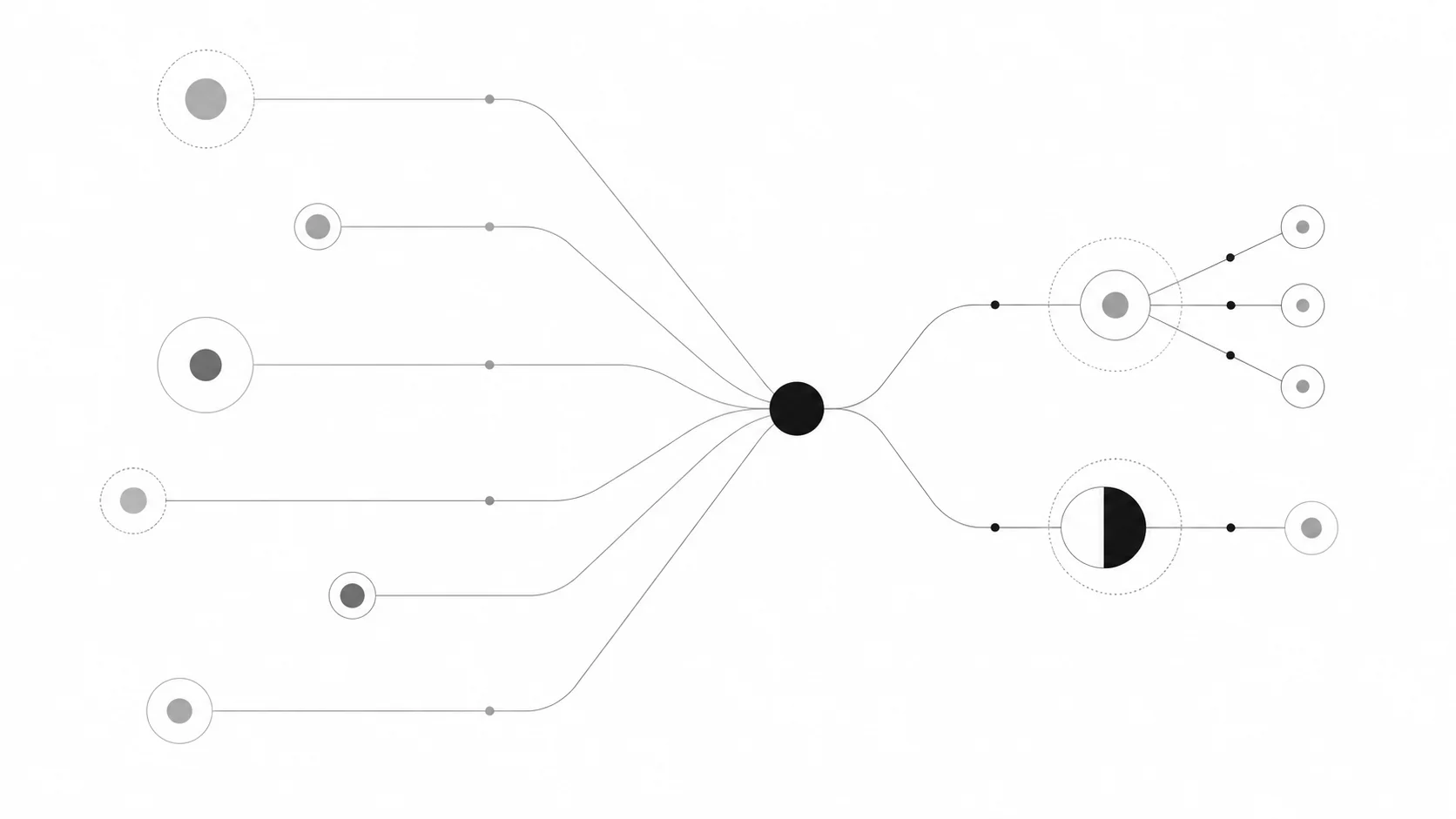
A venture capital team is usually organized around an investment function, with platform or portfolio support, finance and fund operations, legal and compliance, investor relations, and firm operations surrounding it. The investment team finds and evaluates companies. Senior investors or an investment committee approve capital. The other functions execute the investment, support the portfolio, run the funds, and report to limited partners.
That is the useful map—but it is not a universal org chart. A small seed fund may combine most functions across a few people and vendors. A large multi-stage firm may have specialist teams for each one. When comparing firms or jobs, look past titles and ask what the role produces, who it serves, and which decisions it can make.
The venture capital team structure at a glance
Do not confuse team structure with venture capital fund structure. The fund, general partner, management company, and limited partners are legal and economic entities. Team structure describes the people doing the work. Many employees are hired by the management company even when their day-to-day work supports one or more funds.
| Function | Core purpose | Recurring outputs | Primary internal customer | Typical decision right |
|---|---|---|---|---|
| Investment | Find, assess, win, and monitor investments | Sourcing pipeline, diligence, memos, term recommendations, board work | Partners and investment committee | Recommend; senior members may approve |
| Platform and portfolio support | Help portfolio companies solve repeatable operating problems | Talent, go-to-market, community, data, and founder programs | Portfolio leaders and deal teams | Design and deliver support within mandate |
| Finance and fund operations | Keep each vehicle's cash, books, valuations, and reporting accurate | Capital calls, reconciliations, valuation support, statements, audit materials | Partners, administrators, LPs | Execute controls and reporting; escalate exceptions |
| Legal and compliance | Protect the firm, funds, and transactions within applicable rules | Deal documents, policies, filings, conflicts reviews, compliance records | Investment team, GP, and operations | Advise, review, approve defined legal/compliance steps |
| Investor relations and capital formation | Raise funds and maintain the LP relationship | DDQs, fundraising materials, LP updates, annual meetings, data-room responses | Existing and prospective LPs, partners | Coordinate communications; partners make core fundraising commitments |
| Firm operations and executive support | Make the management company function | Hiring coordination, budgeting, systems, vendors, scheduling, internal projects | The whole firm | Execute operating decisions within delegated authority |
Titles sit inside these functions. Analyst, associate, principal, and partner usually describe the investment career path, while platform, finance, legal, IR, and operations use their own ladders. “Partner” can also describe different mandates. A title alone rarely tells you whether someone sources, votes, manages people, owns economics, or supports founders.
The five handoffs that make the firm work
The clearest way to understand a VC firm is to trace one opportunity through five verbs: source, assess, approve, support, report.
- Source. Investment professionals build relationships, develop theses, review inbound opportunities, and identify companies that fit the fund's mandate. Platform leaders, operating partners, scouts, and portfolio founders may contribute introductions, but the investing function normally owns the opportunity pipeline.
- Assess. A deal team evaluates the market, product, team, financing, ownership path, risks, and fit with the fund. Legal specialists may flag structural issues. Finance may test reserve or exposure implications. Platform experts may assess a functional topic such as hiring or go-to-market. One team integrates the evidence into a recommendation.
- Approve. The authorized partners or investment committee decide whether the fund should invest. The analyst who built the model or the principal who leads the deal may shape the recommendation without holding the final vote.
- Support. After closing, the deal lead owns the investment relationship. Platform specialists may help the company recruit, sell, communicate, or build community. Finance monitors the position and cash flows. Legal and compliance manage follow-on documents, conflicts, and governance work.
- Report. Finance and fund operations produce reliable fund data. Deal teams explain portfolio developments. Investor relations turns that evidence into consistent LP communications, while senior partners own the relationship and the firm's account of performance.
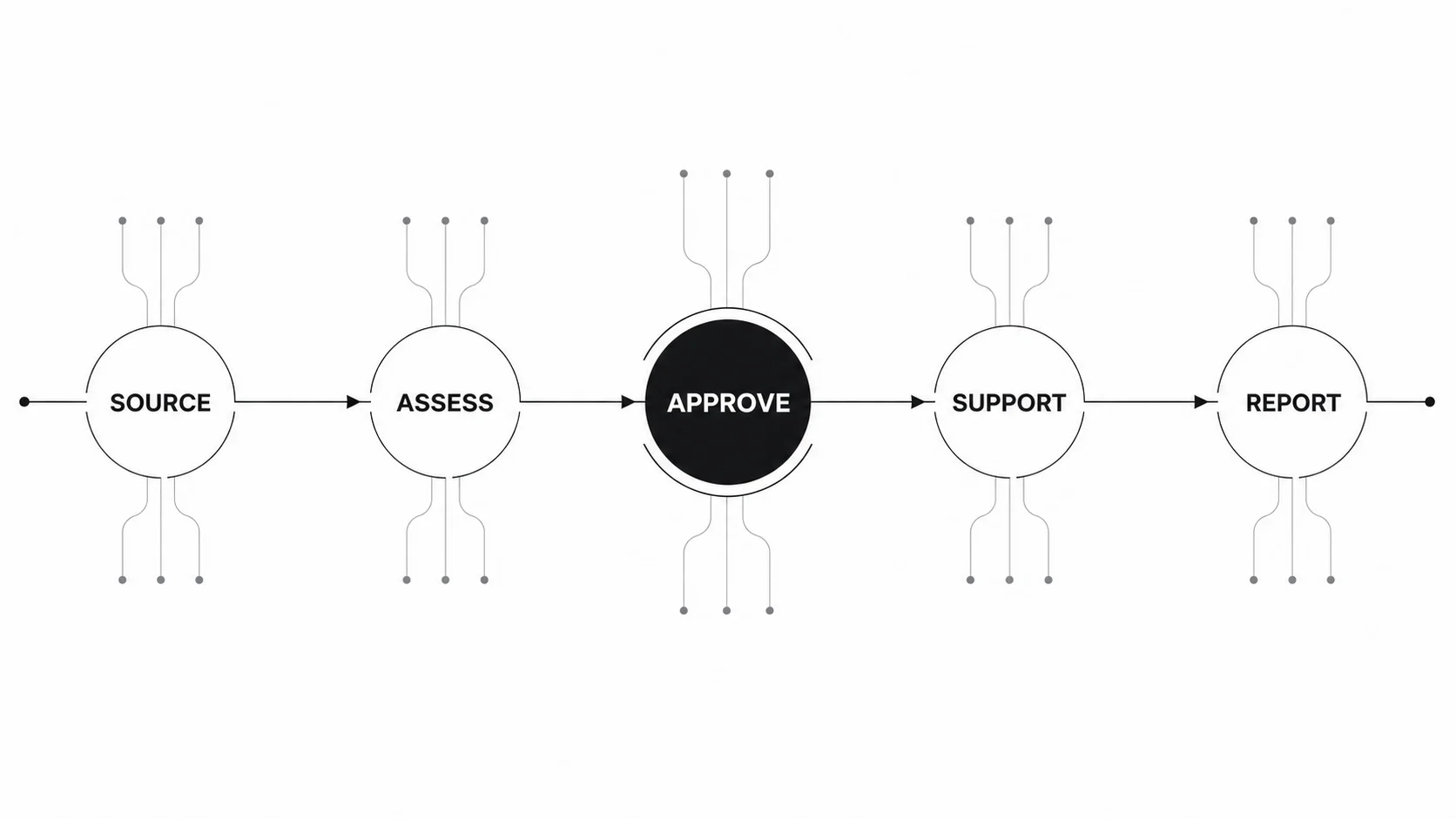
The same person can appear in several stages. What matters is the handoff. A platform leader who sources a company may pass it to an investor to assess. A principal may sponsor an investment but need partner approval. An investor-relations professional may draft an LP update, while a partner owns the message. Strong team design makes those boundaries explicit.
What each function owns
Investment team
The investment team converts a thesis and network into a portfolio. Junior investors tend to spend more time on market mapping, outreach, screening, models, references, and memo work. Senior investors spend more time on thesis, founder relationships, deal leadership, investment judgment, boards, portfolio decisions, and fundraising.
The ladder can make the team look more orderly than it is. At a focused emerging manager, an associate may join nearly every stage of a deal. At a larger firm, sourcing, diligence, sector research, and portfolio monitoring can be divided among specialists. MIT's life-sciences VC research similarly found that smaller firms often combine sourcing and diligence, while larger organizations can create dedicated teams for each.
Platform and portfolio support
Platform turns repeated portfolio needs into a function. Common lanes include talent, go-to-market, marketing, communications, community, partnerships, data, and founder development. A platform team does not normally replace company management. It creates leverage: targeted introductions, repeatable programs, expert networks, and playbooks that portfolio leaders can use.
The boundary with investing varies. Some platform professionals contribute to diligence or sourcing; others enter only after investment. The full venture capital platform role guide explains those lanes and career implications. In a job description, “platform” is incomplete unless the firm names the portfolio problem, service model, and expected outputs.
Finance and fund operations
Finance and fund operations protect the accuracy of the fund. The function coordinates cash, books, expense allocations, capital calls, distributions, valuations, investor statements, audit materials, tax workflows, and fund-administrator relationships. It also keeps separate vehicles separate—an operational discipline that matters when one brand manages several funds or SPVs.
This is not merely back-office administration. A decision cannot become an investment until documents, approvals, cash, and records align. The venture capital fund accounting guide covers the work in more detail.
Legal and compliance
Legal and compliance sit across both transactions and the management company. Work may include fund formation, investment documents, conflicts, policies, marketing review, regulatory filings, employee matters, side letters, and governance records. Some firms employ in-house counsel; others rely heavily on outside counsel and compliance vendors.
The function's authority is easiest to understand as a set of gates. Legal can advise whether proposed terms match the agreement. Compliance can require a review or record before an action proceeds. Senior investors still own the commercial decision, but they do not make legal or compliance obligations disappear.
Investor relations and capital formation
Investor relations connects the firm to current and prospective LPs. During fundraising, the team coordinates outreach, diligence requests, the data room, reference processes, meetings, and closing work. Between fundraises, it manages reporting calendars, questions, annual meetings, portfolio narratives, and relationship coverage.
IR depends on the other functions. Finance supplies consistent performance and cash-flow data. Investment teams explain company developments. Legal reviews what can be communicated. Partners supply the strategy, judgment, and relationships investors are underwriting. A strong IR team orchestrates this evidence; it does not invent it.
Firm operations and executive support
Firm operations runs the management company: budgets, vendors, systems, recruiting coordination, onboarding, internal communications, executive workflows, and special projects. Chief-of-staff or business-operations roles can sit here, but the title is especially variable. One chief of staff may run partner priorities; another may own portfolio programs or fundraising operations.
This function often sees the whole organization without owning each specialist decision. That breadth can be valuable, but candidates should distinguish exposure from authority.
Who decides what
“Works on” and “decides” are not synonyms. Use four questions for any recurring process: Who recommends? Who approves? Who executes? Who verifies or reports?
| Decision or process | Recommends | Approves | Executes | Verifies / reports |
|---|---|---|---|---|
| Sourcing priority | Investment team and sector leads | Relevant partner or team lead | Investors, scouts, network contributors | Investment operations or deal-team reviews |
| Diligence conclusion | Deal team | Deal sponsor before IC submission | Investment team with specialist input | Memo owner and reviewers |
| New investment | Deal sponsor | Authorized partners or IC, under firm rules | Legal, finance, and deal team close it | Finance records; governance process retains evidence |
| Portfolio support plan | Deal lead and platform | Portfolio company chooses whether to engage; firm lead sets resources | Platform and relevant experts | Platform lead and deal team review usefulness |
| Valuation and fund reporting | Finance plus deal-team input | Governance defined by the firm's policies and fund documents | Finance, administrator, and auditors as applicable | Finance and IR distribute approved reporting |
| Fundraising message | IR and partners | Managing partners or fundraising leadership | IR coordinates the process | Legal/compliance and finance verify relevant content |
This table is a diagnostic, not a claim that every firm votes or reports the same way. IC membership, veto rights, delegated authority, valuation governance, and partner roles depend on the firm's agreements and policies. In interviews, ask for the actual flow rather than assuming a title carries a vote.
Three common VC team archetypes
Team design follows strategy, resources, and complexity. These three archetypes are more useful than a “typical headcount” because they show how work is combined or separated.
| Archetype | How work is organized | Candidate upside | Tradeoff to test |
|---|---|---|---|
| Emerging manager | Partners and a small investing team cover sourcing, diligence, portfolio work, and fundraising; fund administration, legal, and compliance may rely on external providers | Broad exposure and short distance to senior decisions | Limited specialist support, less formal training, and priorities that shift with fundraising |
| Established specialist | A focused investment team is supported by selected experts in finance, IR, talent, or operations | Deep sector context, clearer thesis, and repeatable working relationships | Titles may be narrow; promotion and lateral mobility depend on the firm's strategy |
| Multi-stage or multi-fund platform | Multiple investing teams and specialist functions operate across strategies, geographies, or vehicles | Defined lanes, deeper resources, and functional career paths | More handoffs, more matrixed reporting, and less visibility outside the assigned strategy |
None is inherently better. A generalist who wants to learn the full fund may prefer an emerging manager. A functional operator may find a real craft ladder inside a developed platform team. An investor who wants structured mentorship and sector specialization may favor an established or larger firm.
The risk is choosing by logo or title instead of operating model. A large firm's “associate” can have a narrower but well-supported remit. A small firm's associate can touch everything but receive little structured coaching. Breadth and authority are separate; so are proximity and sponsorship.
How to decode a VC job description
A useful job description should let you reconstruct the role on one page. If it cannot, bring these questions to the interview.
1. Which function owns the role?
“Venture,” “strategy,” and “operations” can conceal the real lane. Is the job measured on investment recommendations, portfolio outcomes, LP service, fund controls, or management-company execution?
2. Who is the manager—and who is the internal customer?
Reporting to a partner does not necessarily mean investment authority. A talent lead may report to a partner while serving portfolio founders. A fund controller may report to a CFO while supporting every strategy. Name both relationships.
3. What must exist every week, month, and quarter?
Outputs reveal the job better than adjectives. Ask about pipeline reviews, memos, founder programs, capital-call packages, LP reports, compliance records, or operating cadences. “Strategic” work still produces something observable.
4. Which decisions can the role make?
Separate access from voice, voice from recommendation, and recommendation from approval. Ask whether the role can prioritize opportunities, lead diligence, sponsor a deal, vote, commit firm resources, approve communications, or sign anything.
5. Which funds or strategies does it support?
One brand can manage several vehicles. Clarify whether the job is dedicated to a seed strategy, shared across funds, attached to an opportunity vehicle, or responsible for the whole management company.
6. Where are the handoffs?
Ask what arrives before your work starts and who receives it afterward. A sourcing role should connect to a screening process. A platform role should connect to portfolio needs and deal teams. An IR role should have reliable inputs from finance and investors.
Use the Venture Capital Careers companies directory to compare firm stage, sector, and strategy, then browse open VC roles for evidence in reporting lines and outputs. Treat missing scope as an interview question, not proof that the job is bad.
How firms should scope a new role
“We need more leverage” is not a job description. Before hiring, write a seven-field role card:
- Business problem: the bottleneck this hire removes.
- Function: investing, platform, finance, legal/compliance, IR, or firm operations.
- Internal customer: the person or group that consumes the work.
- Recurring outputs: what the hire must deliver weekly, monthly, and quarterly.
- Decision rights: what the role recommends, approves, executes, or escalates.
- Handoffs: required inputs and downstream owners.
- Success evidence: observable quality, speed, coverage, or stakeholder outcomes—without inventing vanity metrics.
For example, “platform associate” is weak scope. “Build and run the intake, matching, and follow-through process for seed-stage portfolio hiring requests; report to Head of Platform; coordinate with deal leads; own program execution but not company hiring decisions” is a workable mandate.
The card also exposes organization problems before they become recruiting problems. If two teams believe they approve the same work, settle the decision right. If no one can provide the hire's inputs, fix the handoff. If success depends on authority the role will not receive, redesign it.
Once the scope is clear, employers can post a VC role where candidates are already comparing venture firms and functions.
Frequently asked questions
Who employs people at a venture capital firm?
Many team members are employed or contracted by the management company, which runs the operating business across one or more funds. AngelList and Sydecar both describe this management-company role. Legal arrangements vary, so candidates should check the actual employer named in their documents.
Is platform part of the investment team?
Usually it is a separate function that works closely with investors and portfolio companies. Some platform professionals contribute to sourcing or diligence, but that does not automatically give them investment authority. The mandate and reporting line determine the boundary.
Who has the final vote on an investment?
The firm's authorized partners or investment committee decide under its own governance process. A principal or associate may lead the work and make the recommendation without holding the final vote. Ask who can sponsor, vote, veto, and approve exceptions.
Do small VC funds combine roles?
Often. A small team may combine investing, portfolio support, fundraising, and internal operations while using outside providers for fund administration, legal, tax, or compliance. The benefit is breadth; the risk is unclear ownership or overloaded roles.
Which function is best for breaking into venture capital?
The function that matches evidence you can already show. Investment teams value judgment, research, sourcing, and company evaluation. Platform teams value a functional craft and founder usefulness. Finance, legal, IR, and operations reward accuracy, process ownership, and domain knowledge. A role close to investment meetings is not automatically an investing role.
Build the map before you judge the title
A VC firm is not just a ladder of analyst, associate, principal, and partner. It is a set of functions moving work through source, assess, approve, support, and report. The strongest role is the one whose outputs, authority, handoffs, and learning match the career you want.
Build that map for each employer. Research venture capital firms, compare the team structure with the firm's strategy, and then browse current VC jobs with better questions than “How senior is the title?”
Related posts
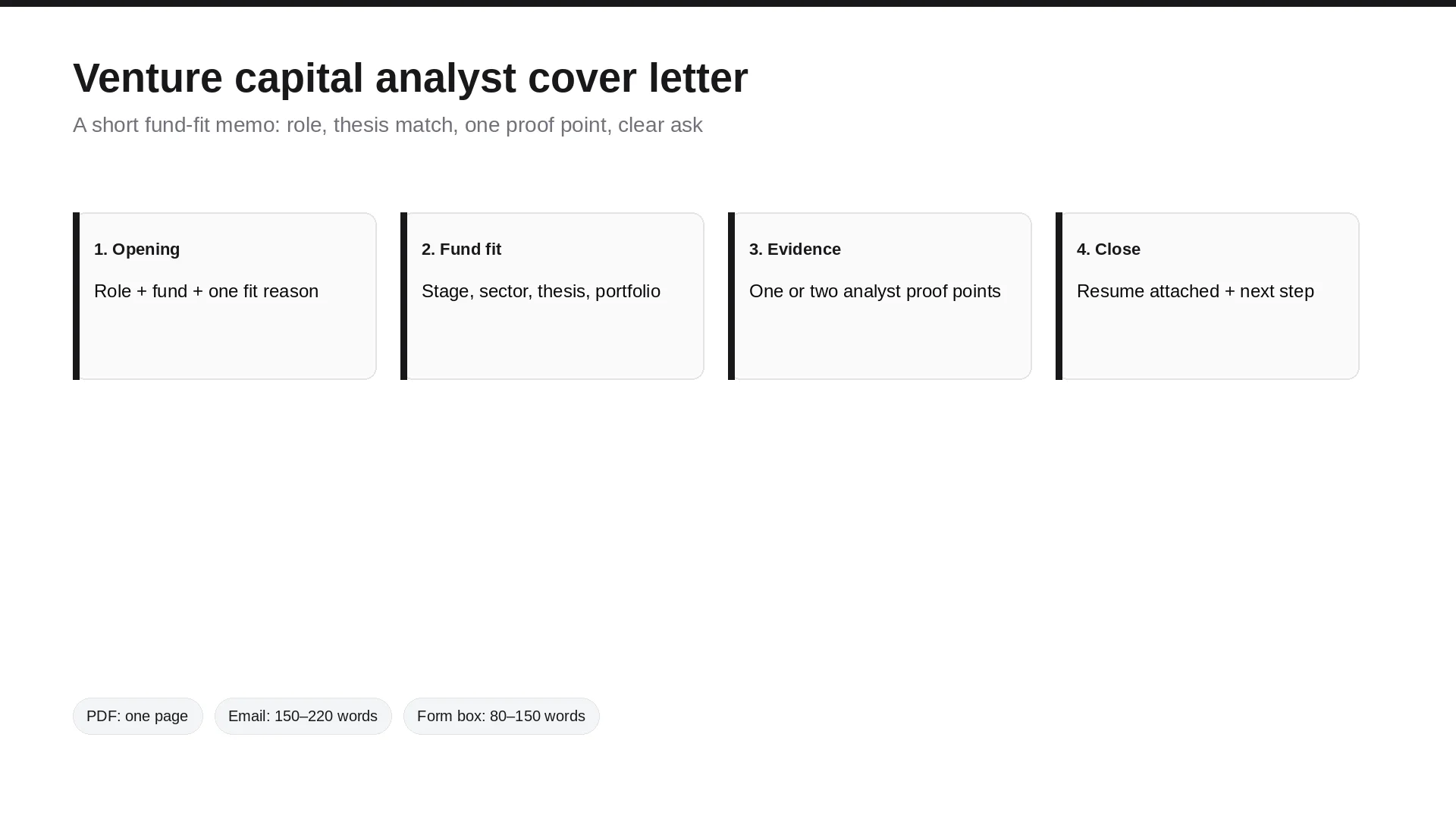
Write a concise VC analyst cover letter that ties your background to fund fit, sourcing, research, and investment analysis. Includes a template, sample letter, channel lengths, and checklist.
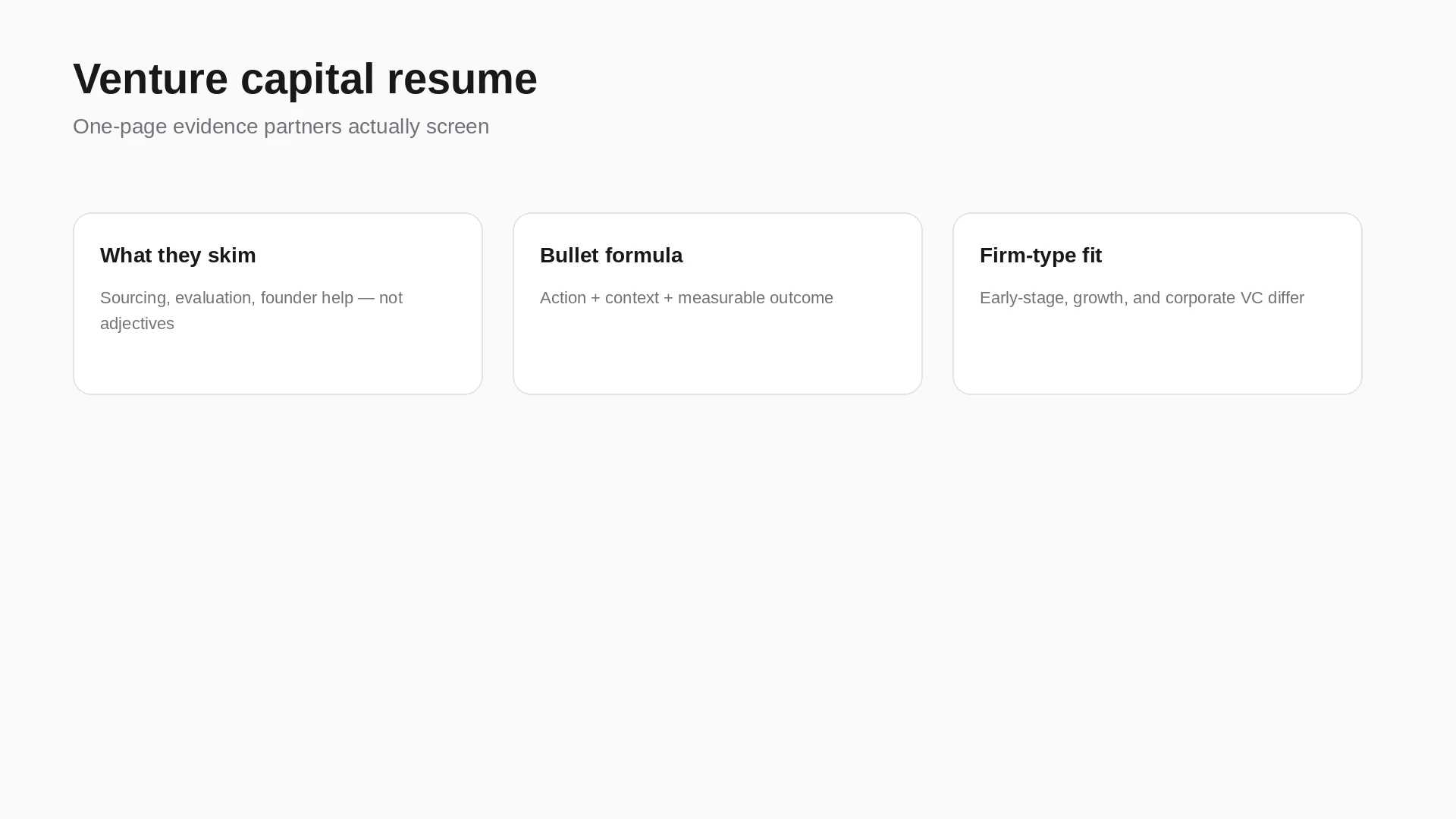
A VC resume is a one-page evidence document. Structure, bullet formula, path and firm-type tailoring, template, and examples partners actually screen for.
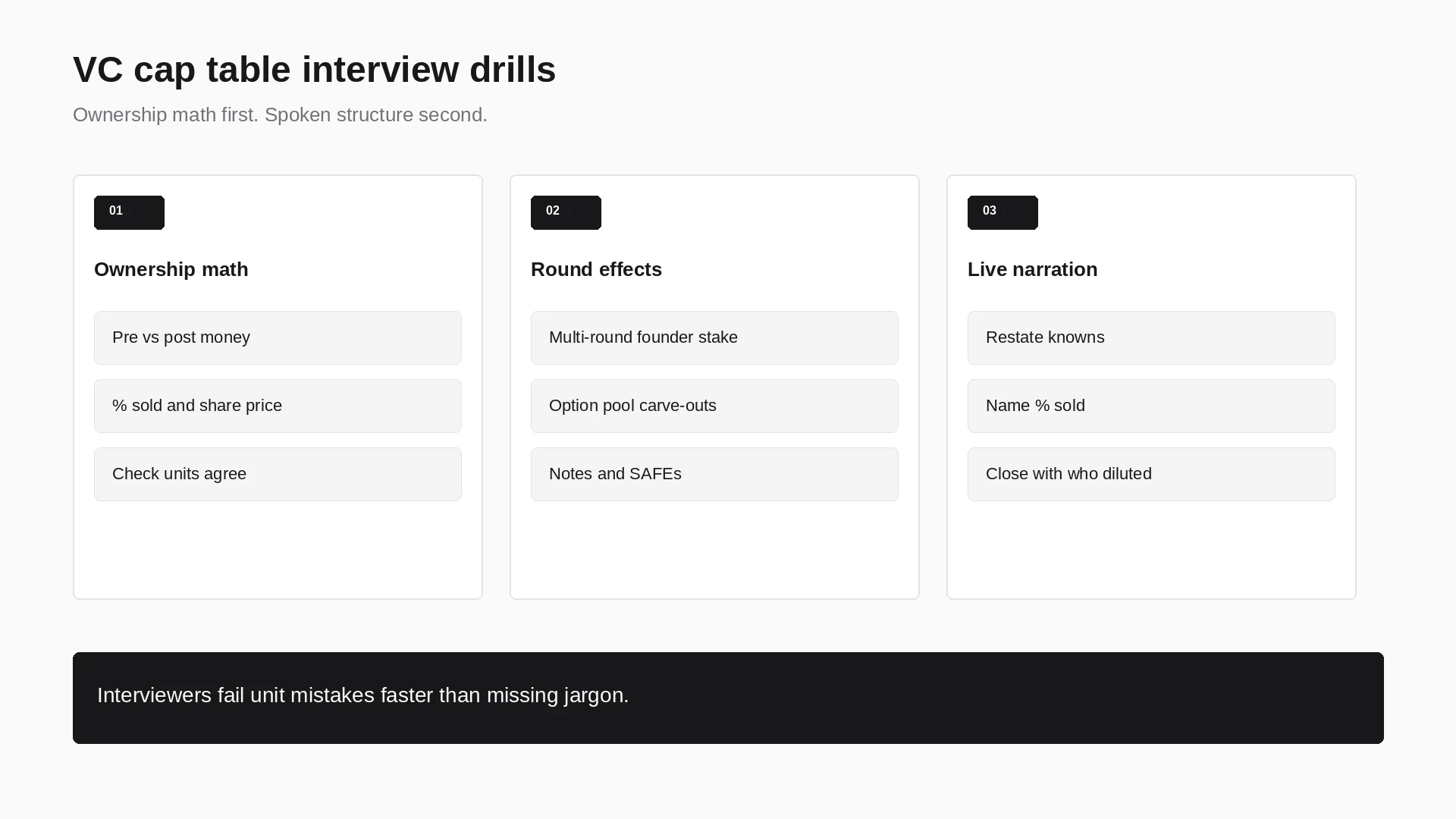
Cap table interview questions test whether you can track ownership through a round without freezing. Practice the math, then practice saying the answer out loud.