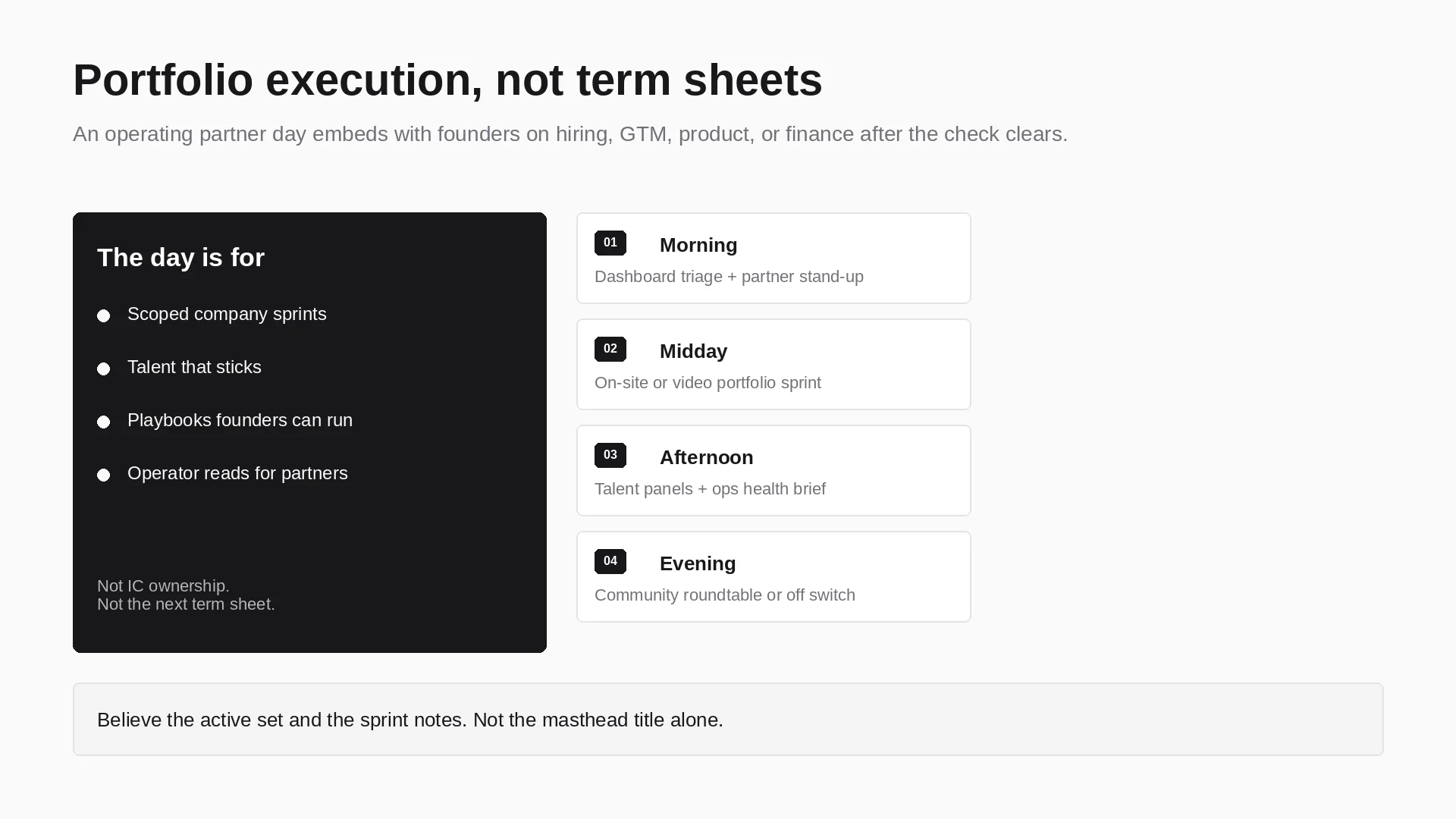
An operating partner's day is built around portfolio execution. The work embeds with founders on hiring, go-to-market, product, or finance. It is not built around running investment committee or writing the fund's next term sheet.
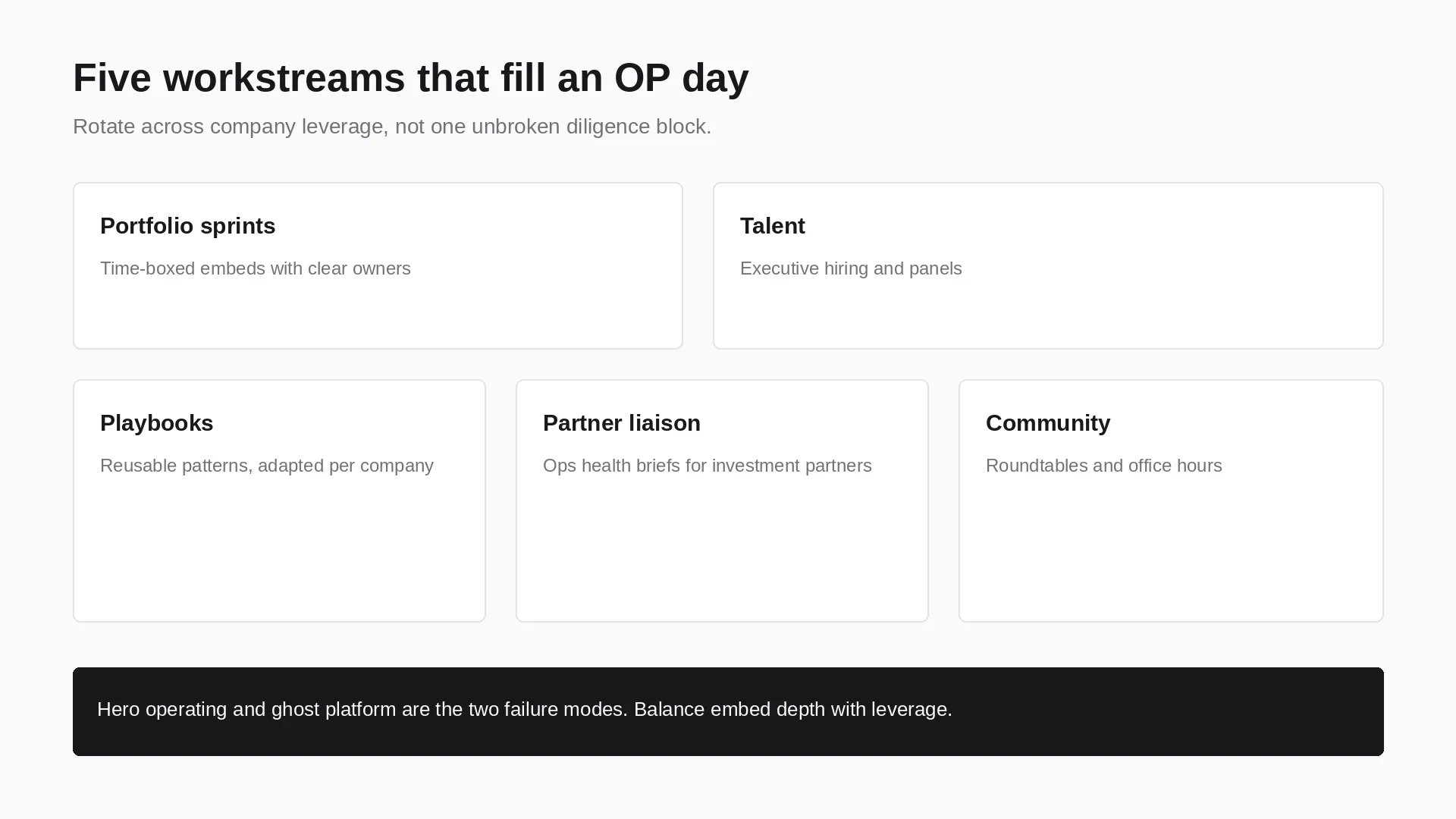
The useful picture is a repeating loop across five workstreams: portfolio sprints, talent, playbooks, partner liaison, and community. Investment partners still own capital allocation and final votes. Platform teams often own firm-wide talent and events calendars. Operating partners sit in the middle as functional specialists who move company outcomes after the check clears.
Treat the sample day below as a composite. A Series A hiring burst, a broken sales process, a board crisis, or a live follow-on can reorder every block. For mandate and posting language, use Venture Capital Careers' operating partner job description. For how operators land the seat, use how to become a venture capital operating partner. For investment-altitude texture this page does not swallow, read the partner day in the life and associate day in the life guides.
What an operating partner day is actually for
The day has one job. Help portfolio companies execute faster in a defined functional lane without replacing the founding team.
Strong days look like short, scoped interventions. A two-hour roadmap workshop. A VP Sales interview panel. A pricing teardown with annotated next owners. A founder debrief that turns into a written plan the company can run without the operating partner in the room.
Weak days look like calendar theater. Endless advice with no owners. Sitting in every board as unpaid bandwidth. Rewriting decks the company should own. Competing with the CEO for decision rights.
Two framing ideas show up repeatedly in practitioner accounts of the seat:
- Influencer, not doer. The operating partner brings pattern recognition and toolkits. Founders keep the P&L and the final call.
- Repeatable leverage. One specialist raises the baseline across many companies by shipping playbooks, not by becoming a permanent fractional executive at one startup.
If a firm cannot say which function you own, which companies are in your active set, and how success is measured, the title may be branding without a mandate. Confirm that before you optimize a calendar.
A timestamped day in the life of a VC operating partner
| Time | What often happens | Why it matters |
|---|---|---|
| 7:00-8:30 | Portfolio dashboards, overnight founder notes, burn or churn alerts, Slack triage | Catch spikes early so the day goes to the right company, not the loudest inbox |
| 8:30-9:15 | Internal stand-up with investment partners on priority support requests | Align on which companies get deep work this week and which get office hours |
| 9:15-11:00 | Portfolio sprint: roadmap workshop, GTM teardown, finance cleanup, or hiring plan | Hands-on value creation is the core product of the seat |
| 11:00-12:00 | Travel or reset between company sessions; capture owners and deadlines while context is fresh | Notes that die in a notebook do not move metrics |
| 12:00-13:00 | Working lunch with a founder, functional lead, or candidate | Relationship time still needs a next step |
| 13:00-15:00 | On-site or video deep dive with a second portfolio company | Bandwidth across companies is the job; one favorite company is a trap |
| 15:00-16:30 | Talent work: executive interview, reference calls, compensation banding, pipeline update | Senior hiring is often the highest-leverage OP intervention |
| 16:30-17:30 | Partner liaison: ops health brief, follow-on risk note, LP update bullet on platform wins | Investment partners need an operator read, not a vibe check |
| 17:30-19:00 | Community: portfolio roundtable, office hours, workshop, or founder Slack answers | Cross-portfolio learning compounds if someone hosts it |
| Evening | Variable: annotated model comments, one more founder reply, or a true off switch | Strong OPs protect focus; weak calendars become permanent on-call |
A live spike day looks different. A key hire process compresses everything else. A broken quarter starts a multi-day embed. A board asks for an operator read before a follow-on. Recurring community work gets postponed rather than deleted.
The day also has judgment checkpoints candidates should listen for in interviews:
- Which companies are in the active set this month, and who decided that?
- What does a finished sprint look like in writing?
- Who owns the yes on investments, and how does the OP's read feed that decision without pretending to be IC?
- How much travel is expected, and how is remote support scoped?
If a team cannot answer those questions, press for a written mandate before you accept the title.
Workstreams: portfolio sprints, talent, playbooks, partner liaison, community
Operating partners rarely do one job all day. The same person usually moves across five workstreams. The mix changes by fund stage and platform maturity, but the categories stay stable.
| Workstream | Typical OP work | What good looks like |
|---|---|---|
| Portfolio sprints | Time-boxed embeds on hiring, GTM, product, or finance at inflection points | Clear owners, dated next steps, and a metric the company can track without you |
| Talent | Source executives, run panels, negotiate bands, build pipelines | Hires that stick; founders who still take the recruiting call |
| Playbooks | Codify sales, hiring, product, or finance patterns into workshops and docs | Reuse across companies without forcing one-size-fits-all |
| Partner liaison | Brief investment partners on ops health, flag execution risk, contribute LP-facing wins | An operator read that improves follow-on and board quality |
| Community | Roundtables, Slack channels, office hours, brand talks that help portfolio leaders | Founders help each other; the OP hosts rather than performs |
Two failure modes show up often.
Hero operating. The OP jumps into every thread and never leaves a playbook the company can run alone. Ghost platform. The OP hosts events and publishes content but never owns a hard company outcome.
A healthy day balances embed depth and leverage. Operating partners unblock and teach. Founders and functional leads execute.
How the day changes by fund type
Fund type changes the texture of the day more than the job title does.
Seed and early-stage
Early-stage OP days often lean toward zero-to-one product validation, first sales hires, founder coaching, and thin process. Diligence still matters when partners ask for an operator read, but the evidence set may be team quality and early customer pull rather than mature systems. Small partnerships can also mean more direct ownership of both community hosting and every live company fire in the same week.
Growth and later-stage
Growth OP days usually include denser systems work: international expansion, sales process cleanup, finance readiness, executive layering, and longer board agendas. The calendar can look more institutional when a company is preparing a growth round or cleaning metrics. Relationship work still matters, but a larger share of the day may sit inside structured workshops and talent processes.
Platform-heavy funds
| Dimension | Lean OP pattern | Platform-heavy pattern |
|---|---|---|
| Breadth | One OP may touch sprints, talent, and community the same day | Work may split across talent partners, platform leads, and functional specialists |
| Access | Faster proximity to every company that needs help | More process, clearer tiers, sometimes less personal coverage per company |
| Spikes | Company crises hit harder because leverage is thin | Spikes still happen, but specialists can absorb some load |
| Career signal | Ownership stories across companies and functions | Judgment inside a franchise, communication across a larger platform team |
In interviews, ask for the last week of the person who holds the seat. A week description beats a brand description of "value add."
Operating partner vs investment partner vs platform vs venture partner
Titles vary by firm. Some franchises put "partner" on many people while reserving true investment votes and carry for a smaller set. Believe the day, not the masthead. VCC's venture partner vs operating partner and platform role guides cover mandate language in depth. The table below focuses on how the day feels.
| Dimension | Operating partner day | Investment partner day | Platform / talent day | Venture partner day |
|---|---|---|---|---|
| Primary job | Move post-investment execution in a function | Own capital, conviction, boards, brand, people | Run firm-wide talent, events, or community systems | Contribute sourcing, advice, or part-time coverage |
| Morning focus | Portfolio alerts and sprint prep | LP, partner sync, risk flags | Pipeline, events calendar, inbound talent | Selective founder or network triage |
| External time | Embedded with portfolio teams and candidates | High-signal founders, LPs, co-investors, press | Candidates, portfolio HR leaders, community guests | Advising or sourcing conversations |
| Decision product | Sprint notes, hire recommendations, ops health briefs | Final gut check, fund narrative, board judgment | Platform KPIs, hiring outcomes, program cadence | Introductions, advice memos, selective diligence |
| Portfolio depth | Deep functional embeds across an active set | Board altitude across owned companies | Broader coverage, lighter per-company depth | Often shallower or part-time |
| Success signal | Metrics moved, hires that stick, founders who re-ask | Capital raised, decisions owned, franchise quality | Platform utilization and founder satisfaction | Deal access or advisory usefulness without full GP load |
If the posted title says operating partner but the day is only content and events with no company outcomes, believe the day. If the title says platform but the person already owns hard functional sprints and partner briefings, believe the day. For investment-altitude texture, stay on the partner day in the life guide rather than stretching this page upward.
How operators land and survive the seat
This is the information-gain section most DITL pages skip. The day only makes sense if you can get into the seat and stay useful once you are there.
Path signals that usually matter
Operators who land OP seats typically bring a dated functional spike: revenue scaled, product shipped, finance cleaned, or an executive team hired under real pressure. Consulting frameworks help only when paired with owned outcomes. Serial founders who prefer advisory work over another full-time CEO seat also show up often.
Funds hire for stage match. A seed fund wants zero-to-one pattern recognition. A growth fund wants systems and executive hiring. Mismatch here is a common reason strong operators fail interviews.
Use the full landing OS on how to become a venture capital operating partner. Keep this page focused on what the day demands after you arrive.
Survival habits once you have the title
- Write the active set. Know which companies get deep work this month and which get office hours.
- Time-box sprints. Embed long enough to create owners, then leave a playbook.
- Protect decision rights. Offer options. Do not compete with the CEO for the final call.
- Brief partners in writing. An ops health note beats a hallway vibe.
- Measure something. Revenue velocity, hire quality, burn multiple, or another leading indicator the company already tracks.
- Refuse one-size-fits-all. Pattern-match, then adapt. Forced playbooks destroy trust.
Common early mistakes: overcommitting bandwidth, ghosting investment partners, and treating community hosting as a substitute for company outcomes. Regular expectation resets with the partnership fix most of that.
For ladder language and adjacent seats, use the venture capital career path and team structure guides.
Fit signals and walk-away checks
An operating partner day is a strong fit when you want multi-company leverage in a functional lane, enjoy coaching founders under ambiguity, and can leave credit with the company. It is a weak fit when you mainly want to write checks, run IC, or stay as a single-company executive with one P&L.
Use these walk-away questions before you romanticize the title:
- What function do I own, and which companies are in my active set?
- How is success measured at 90 days and at one year?
- Who has the investment vote, and how does my operator read feed that process?
- How much of the week is deep company work versus events and content?
- What happened the last time a portfolio company rejected the advice?
- Is "operating partner" here a real mandate or a public label?
If the answers are vague, you may be chasing status language rather than a seat. Many strong careers stay as operators inside companies, move into platform roles, or take investment seats only after building judgment beside deal teams.
For workload realism, cross-check the venture capital hours guide. OP weeks can look flexible on paper and still spike hard around hiring bursts, board cycles, and travel.
FAQ
What does a venture capital operating partner do day to day?
Most OP days mix portfolio sprints, talent work, playbook shipping, partner liaison, and community hosting. The exact mix depends on fund stage, platform maturity, and which companies are in the active set.
What does a typical day look like for a VC operating partner?
A useful composite day starts with portfolio triage and partner stand-up, moves into company sprints and talent work, then ends with partner briefs or community sessions. No single timestamped schedule is universal.
How does an operating partner day differ from an investment partner day?
Investment partners own capital, final calls, boards at altitude, brand, and people decisions. Operating partners own post-investment execution in a function. Titles vary, so ask for real examples from the seat. Compare with the partner day in the life guide.
How does OP work change at a seed fund vs a growth fund?
Seed and early-stage days often emphasize founder coaching, first hires, and thin process. Growth days often include denser systems, executive layering, and financing readiness.
Do operating partners sit on boards or write term sheets?
They often hold observer seats or informal advisory roles. Full voting board seats and term-sheet ownership usually stay with investment partners unless the firm has a nonstandard mandate. Ask for the written model before you assume either.
How should candidates use this day view when evaluating offers?
Map the promised title to the five workstreams, ask for last-week examples, and compare the answers with open roles on Venture Capital Careers and firm profiles in the companies directory. Believe the day over the masthead.
Next step on Venture Capital Careers
Candidates should reverse the day-in-the-life question. Once you know what operating partner work looks like, ask whether a specific seat produces that work in a healthy way.
Then do concrete research:
- Browse open VC roles and compare stated responsibilities with the day mapped here.
- Research firms in the companies directory for stage, portfolio shape, and team signals.
- Cross-check mandate with the operating partner job description, landing path with how to become an operating partner, and adjacent seats with venture partner vs operating partner and the platform role guide.
- Create a profile for job alerts if you are actively searching.
The point of an operating partner day-in-the-life article is not romance. It is fit. If the day energizes you because you like multi-company execution, talent work, and coaching under ambiguity, the seat can be worth the context switching. If you want uninterrupted investment ownership or a single-company P&L, scrutinize whether "operating partner" is the right target.
Related posts
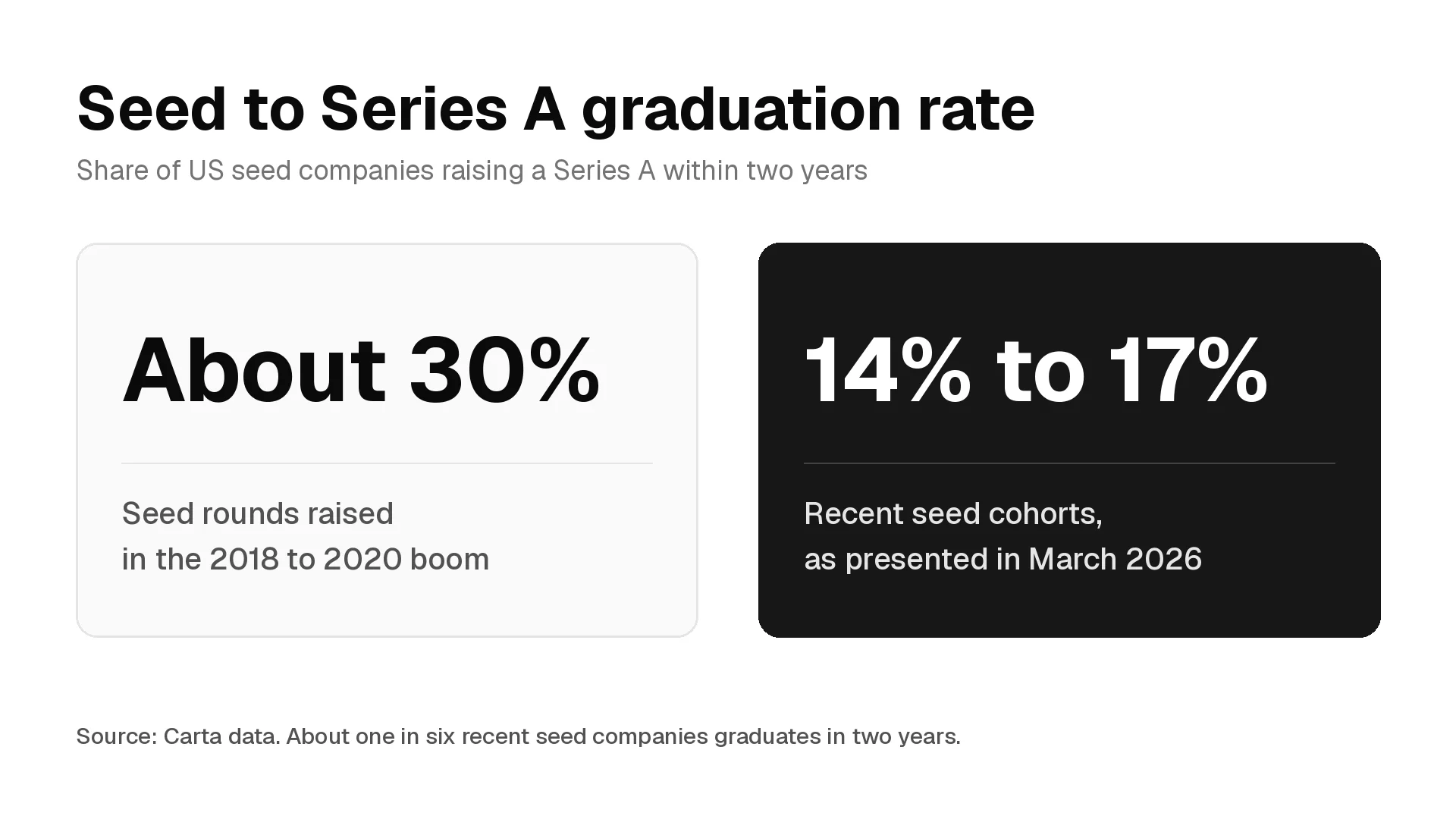
Seed to Series A graduation rates by cohort from Carta and Crunchbase, how long the jump takes, why rates fell after 2021, why published figures disagree, and how seed and Series A firms use the rate for reserves, LP reporting, portfolio reviews and interviews.
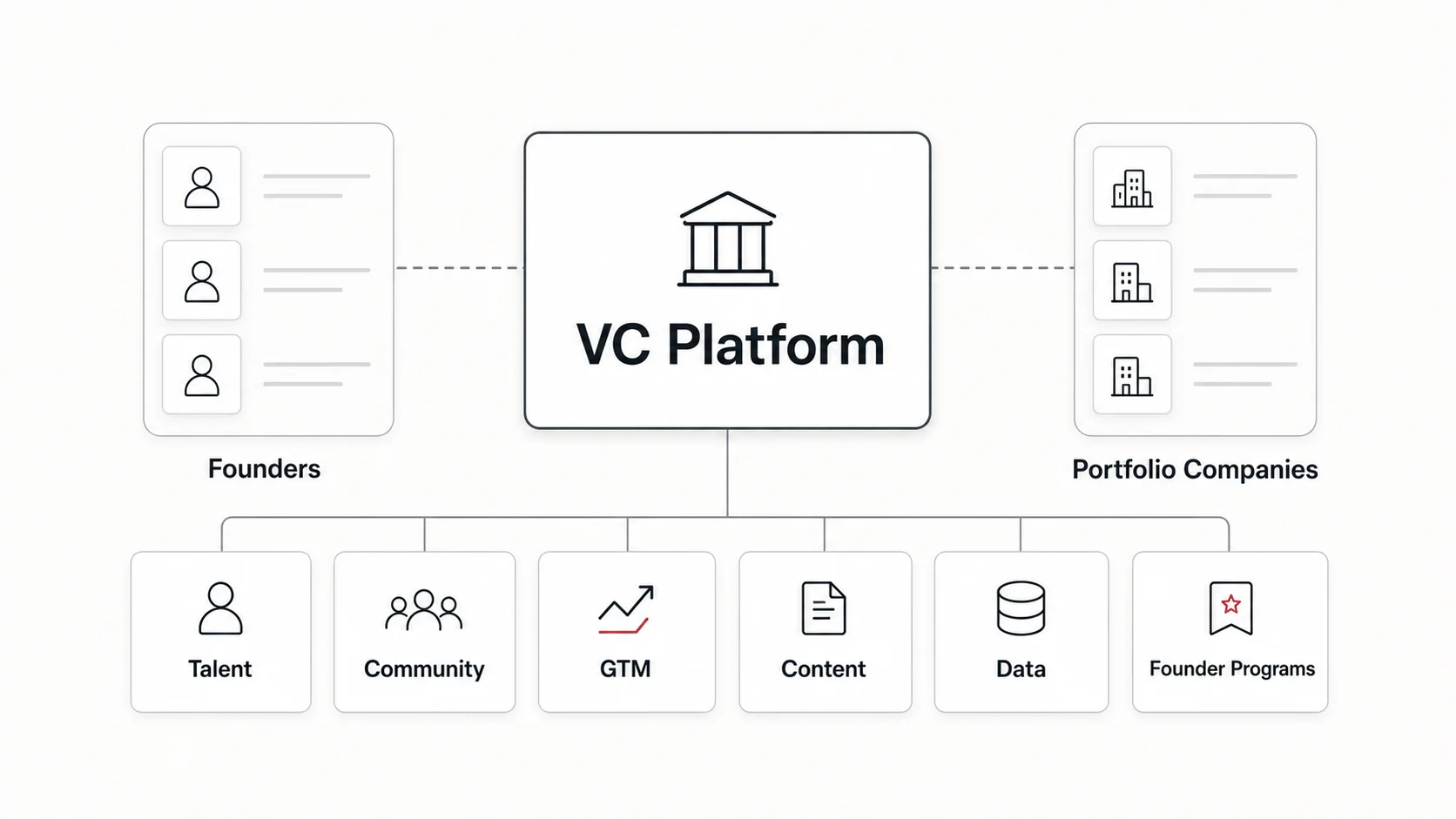
A venture capital platform role runs a VC firm's non-investing services for founders: talent, business development, community, marketing, and investment operations. Median platform pay is $165,000 base and $207,500 total cash.
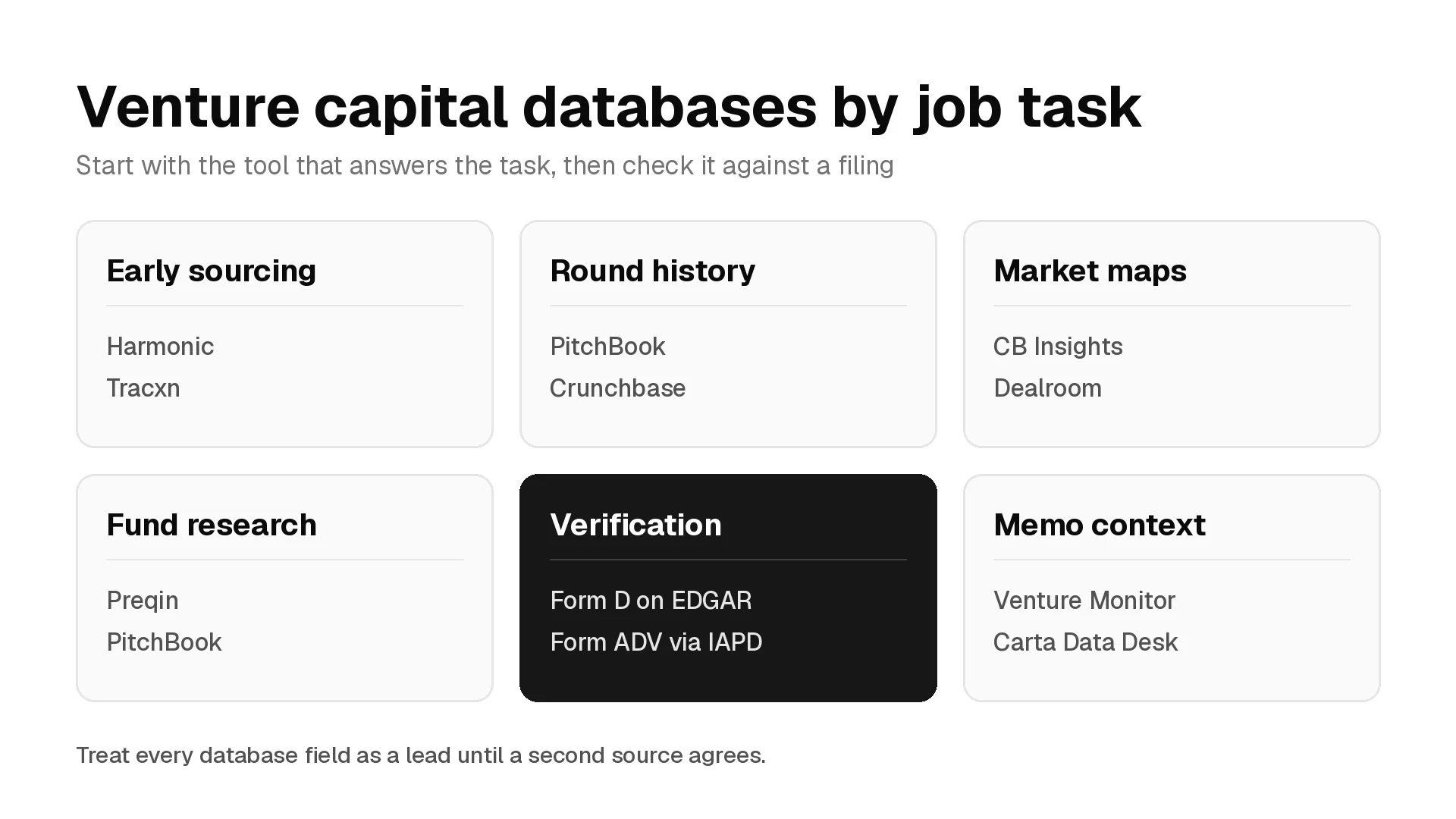
PitchBook, Crunchbase, CB Insights, Dealroom, Tracxn, Harmonic and Preqin compared by the VC task each one serves, with the free SEC filings that verify a record, a four-check round verification, student access limits and how database work reads in recruiting.