
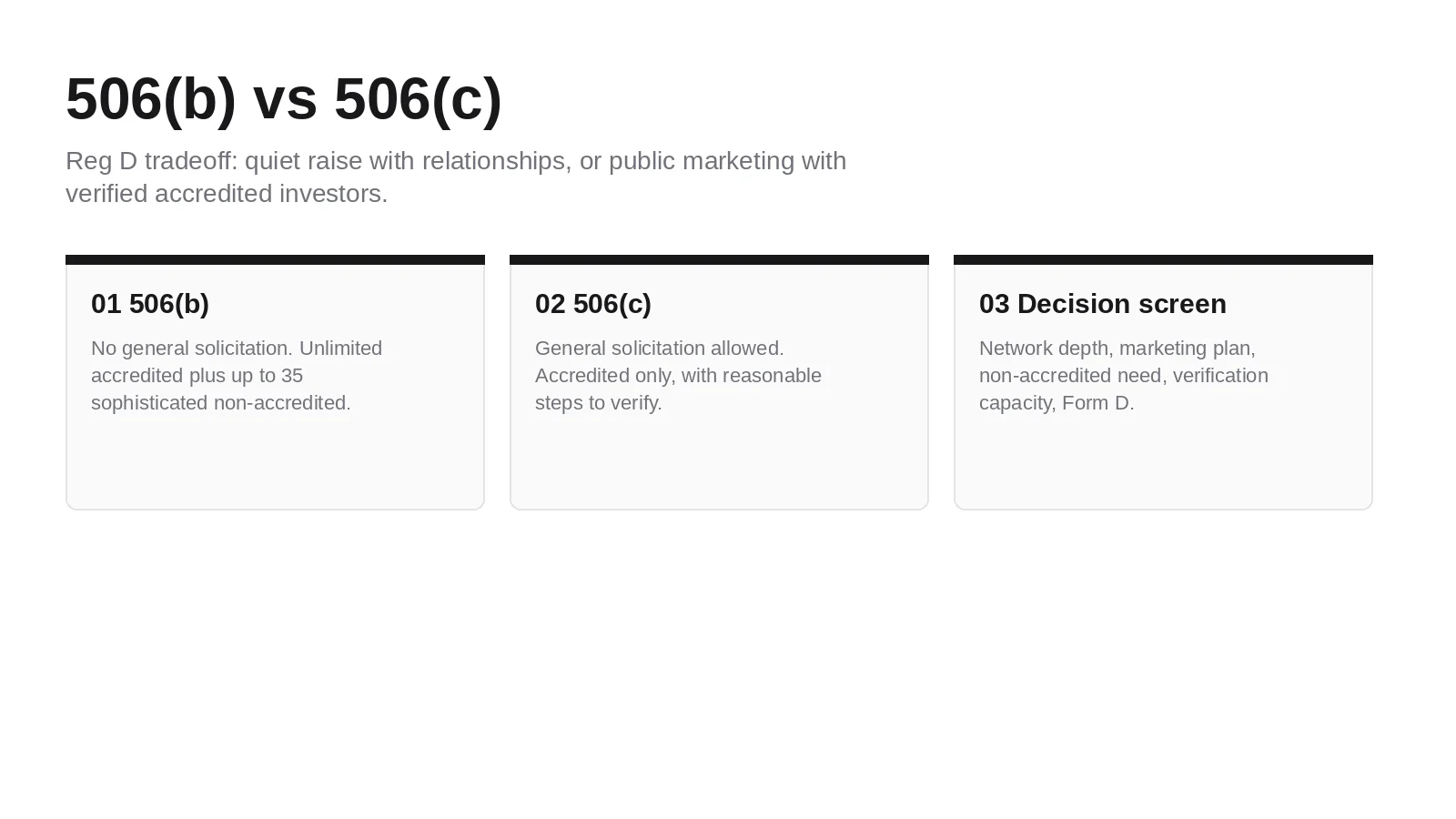
Rule 506(b) and Rule 506(c) are the two Regulation D safe harbors most private funds, SPVs, and startups use to raise unlimited capital without registering the offering with the SEC. The core tradeoff is simple. Rule 506(b) bans general solicitation and advertising, but accredited investors can usually self-certify and the issuer may include up to 35 sophisticated non-accredited purchasers. Rule 506(c) allows public marketing, but every purchaser must be an accredited investor and the issuer must take reasonable steps to verify that status.
Both paths still require a Form D notice after the first sale, still produce restricted securities, and still sit under federal anti-fraud rules. The choice is which side of the marketing-versus-verification tradeoff fits the raise.
What Rule 506(b) and Rule 506(c) are
Rule 506 sits inside Regulation D under the Securities Act of 1933. It is a safe harbor for private offerings. There is no federal dollar cap on either 506(b) or 506(c). Securities sold under either rule are restricted, so resale is limited unless another exemption or registration applies.
Rule 506(b) is the older path. It is a safe harbor under Section 4(a)(2). The issuer reaches investors privately. Many venture funds and company rounds still use it because the LP or angel list already exists.
Rule 506(c) came from the JOBS Act and lets the issuer broadly solicit and advertise, if every purchaser is accredited and the issuer verifies that status. Online fund platforms, public webinars, and open landing pages usually push a raise into 506(c).
For founders and fund teams, the exemption choice shapes outreach, onboarding friction, and what shows up on Form D. It does not replace counsel. It does decide which operating rules the team must follow before the first wire.
Side-by-side comparison
| Dimension | Rule 506(b) | Rule 506(c) |
|---|---|---|
| General solicitation / advertising | Prohibited | Permitted |
| Accredited investors | Unlimited | Unlimited (and required for every purchaser) |
| Non-accredited investors | Up to 35 sophisticated purchasers (with disclosure duties) | Not permitted |
| Accreditation standard | Reasonable belief; self-certification common | Reasonable steps to verify required |
| Pre-existing substantive relationship | Needed to keep outreach private | Not required for outreach |
| Form D | File within 15 calendar days of first sale | Same |
| State Blue Sky | Federal preemption of registration; state notices and fees still common | Same |
| Typical fit | Warm network, quiet fund or company round | Platforms, public marketing, cold accredited reach |
The table is the starting map. The sections below cover the traps that usually break a raise: public posts under a 506(b) claim, weak verification under 506(c), and a mid-raise switch after advertising has already started.
General solicitation and pre-existing relationships
Under Rule 506(b), the issuer cannot use general solicitation or general advertising to market the securities. Public ads, unrestricted websites that pitch the offering, cold email blasts, open social posts about the live raise, and many public seminar formats can count. The SEC looks at facts and circumstances, not at a single magic phrase.
A recognized way to stay private is to limit offers to people with a pre-existing, substantive relationship with the issuer or its agents. Pre-existing means the relationship existed before the offering began. Substantive means the issuer has enough information to evaluate the person's financial circumstances and sophistication. A LinkedIn connection, a purchased list, or a business card from a conference is usually not enough on its own.
Rule 506(c) exists for the opposite case. The issuer may advertise. That freedom does not waive anti-fraud rules, Form D, bad-actor checks, or verification.
Demo days sit in a gray zone. SEC Rule 148 creates a narrow carve-out for certain sponsored events. If the event or pitch falls outside that carve-out, a public pitch can look like general solicitation and push the team toward 506(c). Confirm the event facts with counsel before treating a demo day as 506(b)-safe.
Who can invest under each rule
Both rules allow an unlimited number of accredited investors. The accredited investor definition covers income and net-worth tests for natural persons, and separate tests for entities and certain licensed professionals. The SEC and Investor.gov publish the current thresholds and categories.
Rule 506(b) also allows up to 35 non-accredited purchasers in the relevant counting window, if each is sophisticated alone or with a purchaser representative. Including even one non-accredited investor triggers heavier disclosure duties, often closer to registered-offering style information. Many VC funds and SPVs avoid non-accredited checks for that reason, even though the rule permits them.
Rule 506(c) has no non-accredited slot. Every purchaser must be accredited. If a non-accredited check lands in a 506(c) round, the exemption is at risk for the offering.
Restricted securities apply under both rules. Investors should expect holding-period limits on resale.
How accredited investor verification works
Under Rule 506(b), the issuer must have a reasonable belief that a purchaser treated as accredited qualifies. A signed questionnaire and subscription representation are common. The issuer still cannot ignore red flags.
Under Rule 506(c), a checked box is not enough. The issuer must take reasonable steps to verify accredited status. The SEC describes this as principles-based. Non-exclusive methods include:
- Reviewing income documentation such as IRS forms for recent years, plus a representation about current-year expectations
- Reviewing recent asset and liability evidence for a net-worth test
- Obtaining a written confirmation from a registered broker-dealer, SEC-registered investment adviser, licensed attorney, or CPA that took reasonable steps within the prior three months
- In limited cases, relying on a prior verification by the same issuer plus a fresh investor representation, when the rule's conditions are met
In March 2025, SEC staff issued no-action guidance on high minimum investments as part of a principles-based verification approach. Under the facts in that letter, staff said it would not recommend enforcement where natural-person minimums were at least $200,000 and entity minimums were at least $1 million, with specified representations that the investment was not third-party financed for the purpose of meeting the minimum, and where the issuer lacked knowledge of contrary facts. That letter is staff guidance on particular facts. It is not a Commission rule and is not a universal safe harbor. Document the facts if counsel uses that path.
Third-party verification services are common on platforms. Cost and turnaround vary. The compliance point is the same: keep a file that shows the steps taken for each purchaser.
How to choose 506(b) or 506(c) for a VC fund or SPV
Use this screen before marketing starts and before Form D is drafted. Write the answers down so counsel, the GP, and the fundraising associate share one plan.
1. Map the investor list. Name the LPs, angels, or SPV participants already in hand. If the round can close from that list with private outreach, 506(b) is usually the lower-friction path.
2. Map the marketing plan. List every channel the team wants to use: public landing page, podcast, open webinar, social posts about the live raise, cold outbound, or a fundraising platform. Any channel that reaches people without a pre-existing substantive relationship points to 506(c).
3. Decide the non-accredited question. If a strategic non-accredited check must close into this vehicle, only 506(b) allows it, and disclosure costs rise. If the cap table must stay accredited-only, both rules work, and 506(c) remains available.
4. Pick the verification path. For 506(c), choose documentation review, professional letters, a platform verifier, or another counsel-approved principles-based method before the first close. Budget time for investor pushback on tax returns and statements.
5. Check bad actors and offering docs. Run covered-person diligence. Align the PPM or offering package, subscription agreement, and investor questionnaire with the chosen rule.
6. Plan Form D and state notices. File Form D within 15 calendar days after the first sale. Calendar Blue Sky notice filings where purchasers reside.
7. Treat advertising as a one-way door. Teams can often move from a quiet 506(b) plan to 506(c) if they have not already advertised, with amended filings and verification for later purchasers. After general solicitation has occurred, sliding back to 506(b) for the same offering is usually unavailable. Do not improvise a mid-raise switch without counsel.
After the screen, the team should be able to say in a few sentences which rule it is using, why, which channels are allowed, and how accreditation will be evidenced.
Browse venture firms on Venture Capital Careers or open roles across the board when comparing how funds and platforms staff fundraising and investor operations.
Form D, Blue Sky notices, and other shared rules
Form D is a notice filing, not an SEC approval of the deal. File it electronically after the first sale, generally within 15 calendar days. Amendments may be required when facts change.
Rule 506 securities are covered securities, so states generally cannot require full registration of the offering. States can still require notice filings, fees, and consent to service of process. Anti-fraud rules remain in force for every email, deck, and landing page.
Bad-actor disqualification under Rule 506(d) can make the exemption unavailable if the issuer or other covered persons have certain criminal, regulatory, or court events. Diligence belongs in the closing checklist, not after wires clear.
A private placement memorandum is not always a line-item legal requirement for accredited-only deals, but it is standard practice because anti-fraud liability does not disappear when the raise is exempt from registration.
Related Venture Capital Careers primers for deal documents and stage language live on term sheets, SAFE, convertible note, venture capital, and deal sourcing.
Frequently asked questions
What is the main difference between 506(b) and 506(c)?
Marketing versus verification. Rule 506(b) prohibits general solicitation and allows limited sophisticated non-accredited purchasers. Rule 506(c) permits general solicitation but limits the round to verified accredited investors.
Can a fund advertise under 506(b)?
No. Public advertising and general solicitation are incompatible with Rule 506(b). If the team needs those channels, use Rule 506(c) and complete verification.
Do non-accredited investors ever fit in a 506(c) raise?
No. Every purchaser in a Rule 506(c) offering must be accredited.
Is Form D required for both rules?
Yes. File Form D with the SEC after the first sale, generally within 15 calendar days. State notice filings may also apply.
Can the team switch from 506(b) to 506(c) mid-raise?
Sometimes, with counsel, amended filings, and verification going forward. Switching after public solicitation and trying to reclaim 506(b) for the same offering is the dangerous direction. Treat advertising as hard to unwind.
Related posts
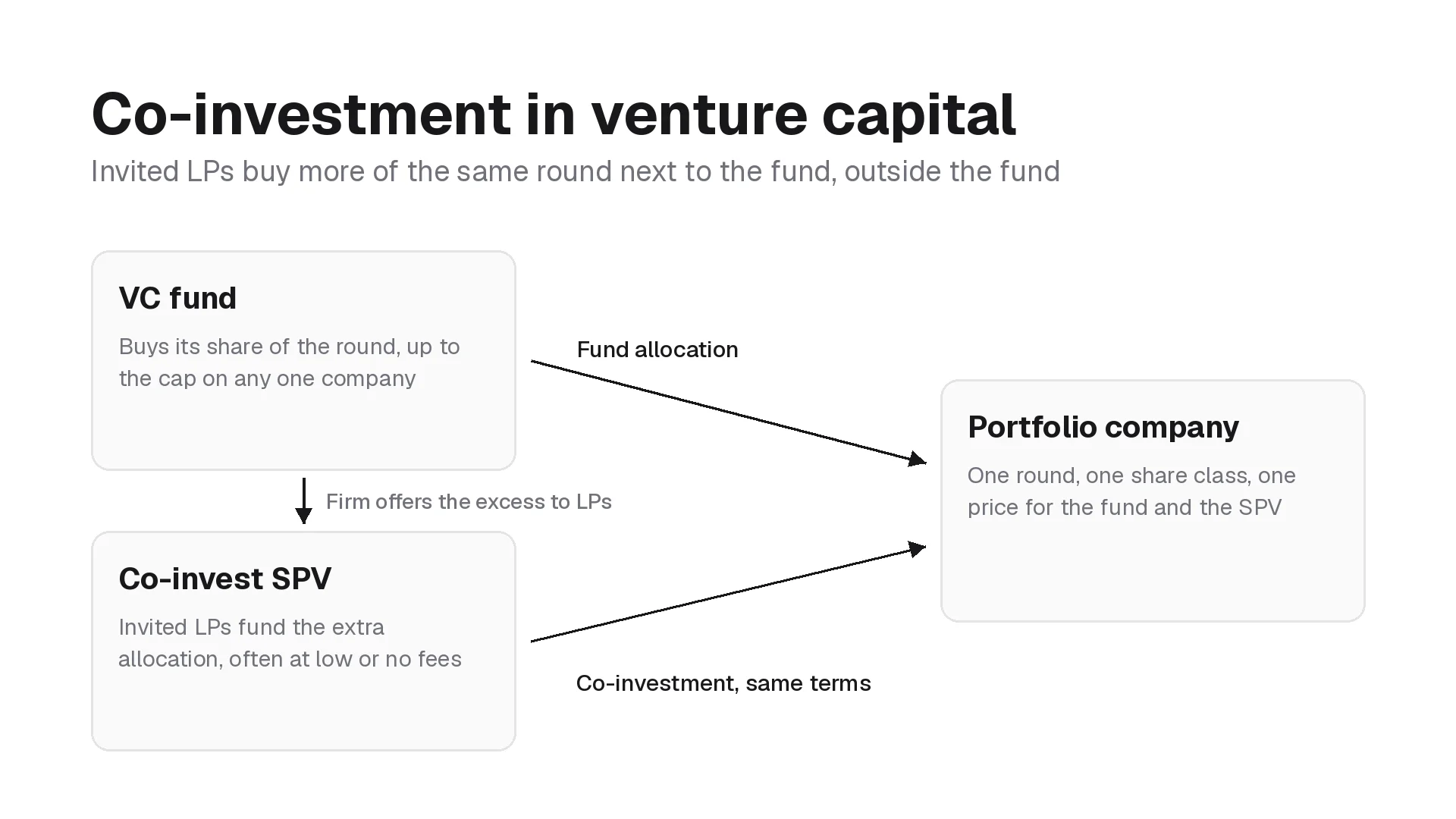
A venture capital co-investment lets LPs put money into one startup next to the fund, outside the fund, usually at lower fees. Here is how the offer works, what the terms cost, why late-stage venture co-investments carry extra risk, and what co-investment means for people who work at VC firms.
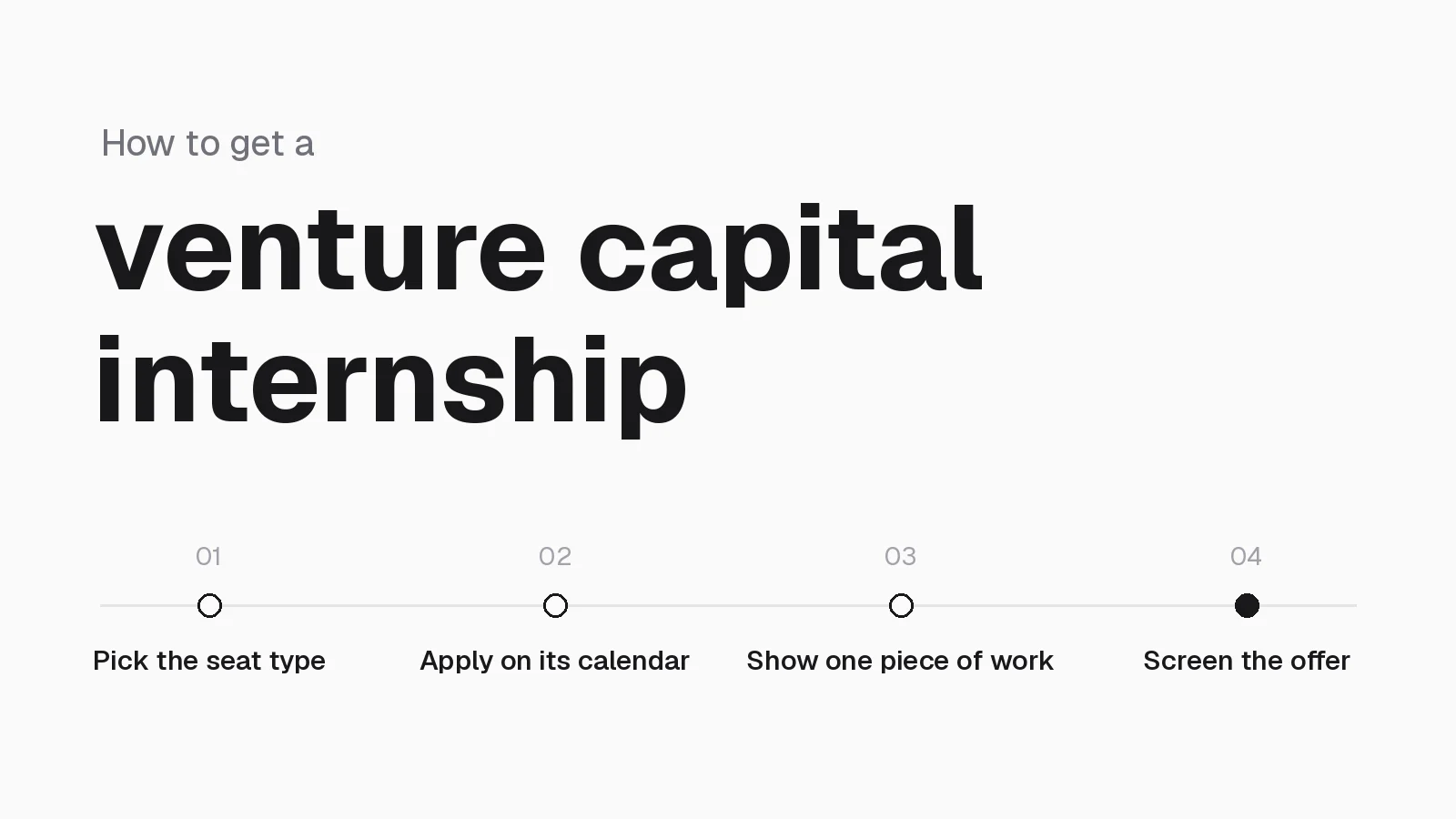
How to get a venture capital internship: the five internship types, which firms hire interns, when structured programs and small funds recruit, what interns are paid and when unpaid is legal, outreach with proof, interview questions, and how to screen an offer.
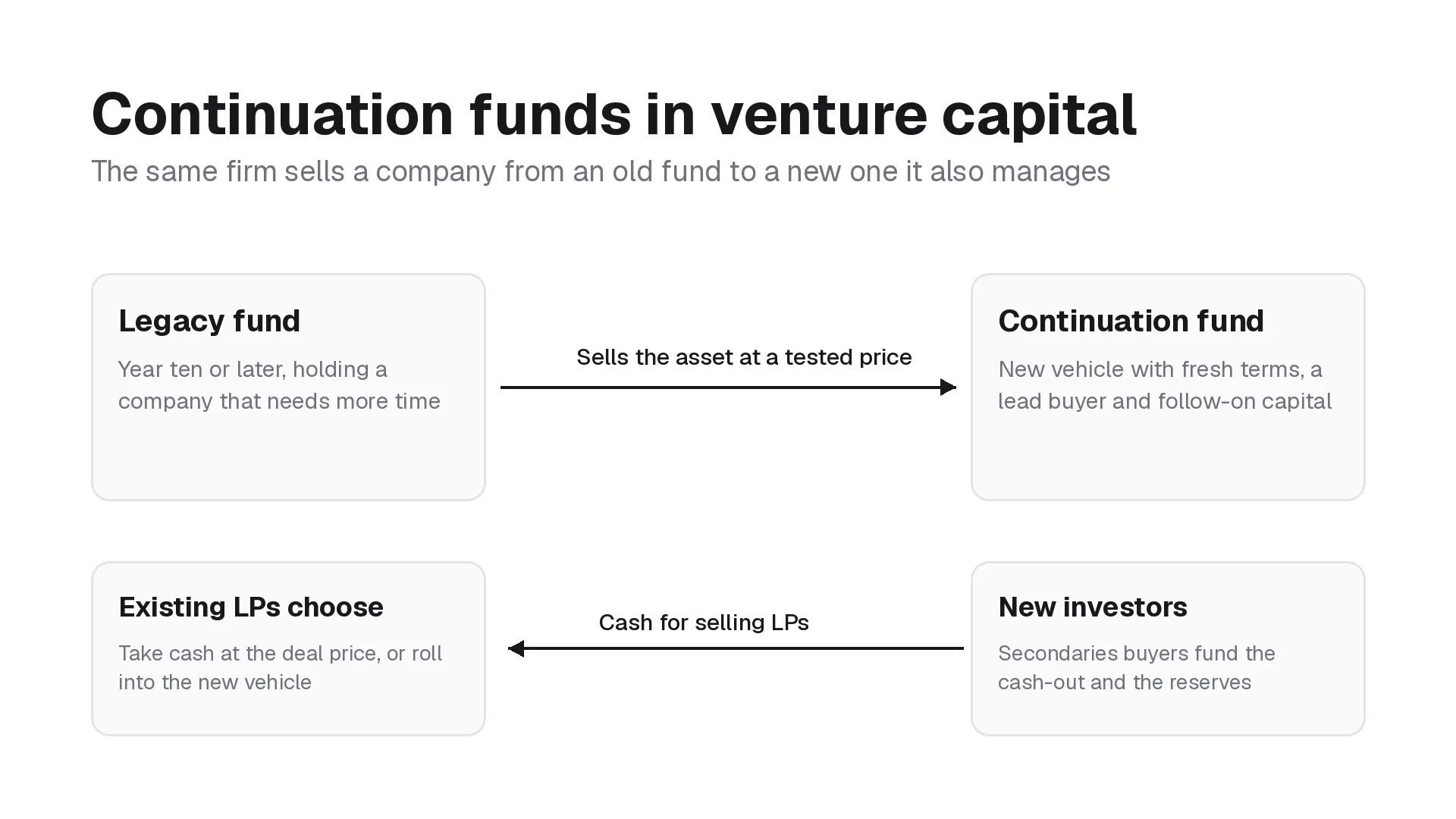
A continuation fund lets a VC firm sell a company from an old fund to a new vehicle it also manages, while LPs choose cash or a roll. Here is how the deal works, how price, fees and carry are set, and what it changes for people who work at the firm.