
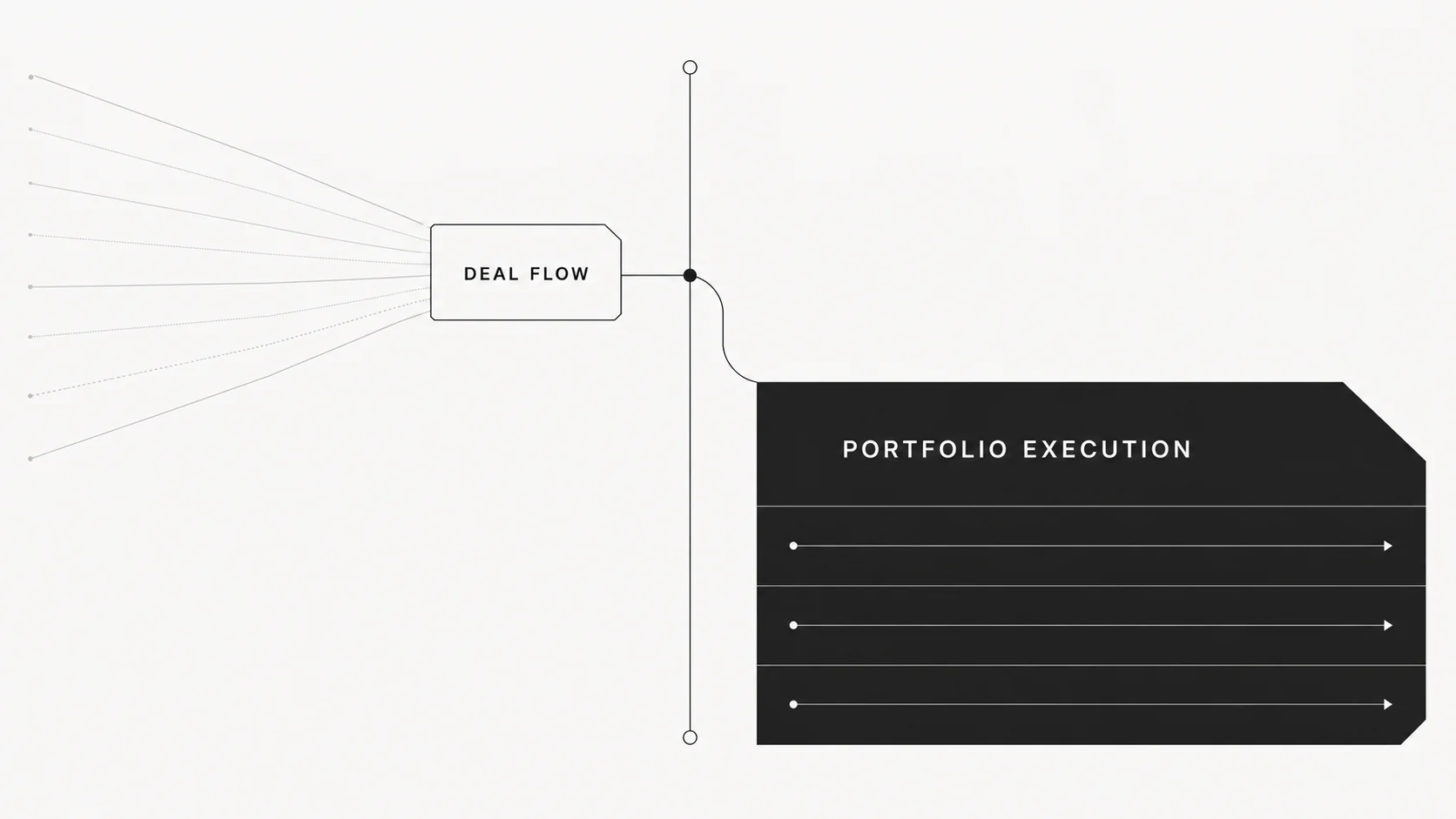
A venture partner usually extends a venture fund's investing reach: sourcing companies, developing a thesis, opening a sector or geography, and sometimes sponsoring deals. An operating partner usually extends the portfolio's execution capacity: helping founders hire, sell, build systems, or navigate inflection points.
That is the useful default, not a universal title rule. Some firms use venture partner as an umbrella label for senior specialists, including people whose work is mostly operational. Before choosing either role, verify the recurring work, decision authority, engagement model, and economics.
Venture partner vs operating partner at a glance
| Dimension | Venture partner | Operating partner |
|---|---|---|
| Core mandate | Expand investment access, judgment, or coverage | Improve execution across selected portfolio companies |
| Work timing | Mostly before and around an investment, with selective post-investment work | Mostly during diligence and after investment |
| Primary customer | Investment team and prospective founders | Portfolio founders and functional leaders |
| Recurring outputs | Qualified opportunities, thesis work, diligence, internal sponsorship, founder access | Assessments, playbooks, searches, workshops, operating plans, executive coaching |
| Investment authority | May recommend, sponsor, or vote; scope varies | Often advises diligence but may have limited formal investment authority |
| Portfolio involvement | Usually concentrated in sourced or domain-relevant companies | Usually the center of the mandate |
| Common background | Investor, founder, angel, scout, sector expert, ecosystem builder | Founder, functional executive, consultant, talent or go-to-market leader |
| Engagement model | Can be fractional, fund-specific, part-time, or full-time | Can be an employee, adviser, shared portfolio resource, or embedded operator |
| Economics to verify | Retainer or salary, deal or fund carry, attribution, vesting | Salary or retainer, fund carry, portfolio incentives, expenses, capacity limits |
| Strongest evidence | Repeatable access and investment judgment | Repeatable operating impact and founder trust |
Treat each row as a hypothesis. The title does not prove voting rights, time commitment, carry, or where the person spends the week.
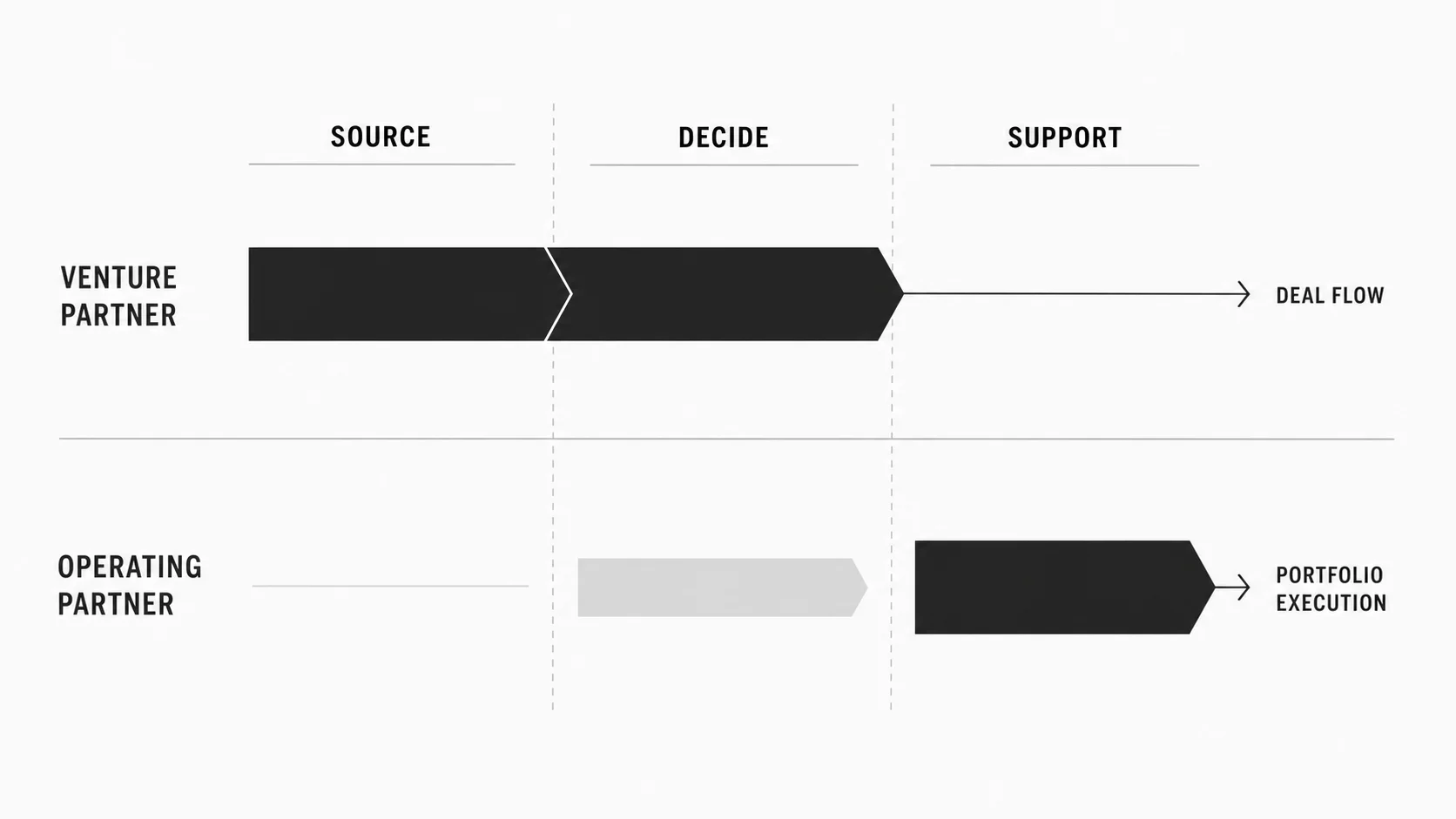
The cleanest distinction: source, decide, support
Map the fund's work into three loops:
- Source: find relevant companies, earn access, and develop a point of view.
- Decide: test the opportunity, run diligence, form conviction, and allocate capital.
- Support: help the company execute after investment and feed learning back into future decisions.
A venture partner usually concentrates on source and decide. An operating partner usually concentrates on support, while contributing operational judgment during diligence. The middle is where titles overlap: both may evaluate a management team, join founder meetings, or advise the investment committee.
The distinction becomes clearer when you ask who consumes the output. A venture partner's sourcing memo is usually for the investment team. An operating partner's hiring plan or go-to-market review is usually for the founder and portfolio team. One improves the firm's ability to choose; the other improves the portfolio's ability to execute.
What a venture partner actually owns
A venture partner is a senior investor or affiliate with a defined mandate. Visible's venture-partner guide illustrates how the label can cover several configurations, from sourcing and sector expertise to portfolio support. The practical question is not which type sounds most prestigious. It is what the person must deliver repeatedly.
Common venture-partner outputs include:
- qualified opportunities from a sector, geography, or founder network;
- a differentiated thesis and evidence that improves the firm's judgment;
- diligence on markets, teams, technology, or go-to-market questions;
- internal sponsorship for selected investments;
- access that helps the firm win competitive opportunities; and
- board or portfolio support where the partner has relevant expertise.
Authority can stop at an introduction, extend to leading diligence, or include an investment-committee vote. The adjacent venture partner versus general partner guide explains why the same title can sit at different points on the ladder from source to recommend, sponsor, vote, and commit.
The strongest candidates show a repeatable engine, not a contact list. They can explain why founders take their calls, how they qualify an opportunity, what judgment they add, and how their work becomes attributable inside a team.
What an operating partner actually owns
An operating partner turns experience into repeatable portfolio help. A broad reference definition describes operating partners as working with portfolio companies to create value across the investment lifecycle, while also distinguishing the role from a venture partner or entrepreneur in residence. Wikipedia's overview is useful as a starting taxonomy; a real VC mandate still needs to be defined firm by firm.
Typical operating-partner outputs include:
- a diagnostic of the company's highest-priority operating constraint;
- executive hiring, assessment, or organizational design;
- go-to-market, product, finance, talent, or international-expansion playbooks;
- workshops and peer groups that serve several portfolio companies;
- short, bounded projects with an owner, outcome, and handoff;
- founder coaching during difficult transitions; and
- diligence on whether an operating plan is credible before investment.
The role should not become an internal consultancy with unlimited demand. A strong design defines which companies qualify for help, how projects are prioritized, what the founder owns, and when the operating partner exits. The VCC operating-partner job description provides a fuller hiring template.
Operating partners also differ from platform leaders. Platform teams often build programs, communities, talent systems, or services used across the portfolio. An operating partner is more likely to carry senior judgment into company-specific work. The boundary can blur, so compare the mandate with the venture capital platform role.
Where the titles overlap—and where they should not
Three patterns explain most ambiguity:
- Distinct lanes: venture partners expand investing coverage; operating partners lead portfolio execution.
- Umbrella title: the firm calls several senior affiliates venture partners, including an operator whose real mandate resembles operating partner.
- Small-fund hybrid: one person sources, diligences, and supports companies because the team is lean.
A hybrid can work when the portfolio is focused and priorities are explicit. It fails when one person is accountable for deal flow and portfolio execution without enough time, budget, authority, or support for either.
Look for two red flags. First, the firm cannot name the primary customer of the role: investment partners, prospective founders, or portfolio leaders. Second, success depends on outcomes the person cannot control, such as portfolio-wide growth without founder agreement or sourcing targets without access to the investment process.
Which role fits your background?
Evidence beats pedigree. Use your background to identify which evidence you can produce now and which work loop you want to repeat.
| Background | Stronger venture-partner evidence | Stronger operating-partner evidence | Likely question to resolve |
|---|---|---|---|
| Founder or general manager | Proprietary founder network, market judgment, angel or board record | Cross-functional operating pattern, executive judgment, change leadership | Do you prefer choosing companies or helping them execute? |
| Functional executive | Sector access and diligence expertise | Repeatable playbook in talent, product, sales, marketing, finance, or operations | Can your expertise travel across companies and stages? |
| Angel, scout, or ecosystem builder | Attributable sourcing, selection discipline, trusted access | Founder support with concrete, repeatable outcomes | Does the firm need access, judgment, or hands-on capacity most? |
| Investor | Thesis, deals, diligence, boards, portfolio judgment | Pattern recognition translated into operating interventions | Do you want capital-allocation authority or a portfolio mandate? |
| Consultant or adviser | Domain thesis and executive network | Structured diagnostics, implementation, and handoff | Can you operate with founders rather than deliver recommendations only? |
| Community or talent leader | Network density and qualified introductions | Portfolio program design and executive placement | Is the role investment-facing, platform-facing, or company-facing? |
For a venture-partner interview, prepare a proof packet with a thesis, a qualified pipeline sample, two investment cases, founder references, and a clear account of attribution. For an operating-partner interview, bring a portfolio diagnostic, two playbooks, examples of cross-company pattern recognition, and references from leaders who implemented your work.
Authority and economics: verify the package, not the label
Neither title carries a universal compensation or authority package. Map authority explicitly: can you source, recommend, sponsor, vote, or legally commit the fund? Then map economics and obligations.
| Component | What to verify | Why it matters |
|---|---|---|
| Time | Weekly expectation, travel, boards, response time, exclusivity | A fractional title can hide full-time availability demands |
| Cash | Salary or retainer, benefits, expenses, review cycle | Employment and advisory arrangements are not directly comparable |
| Carry | Deal, fund, or pool base; vesting; forfeiture; attribution | A percentage is meaningless without its base and conditions |
| Investment authority | Sponsor, vote, follow-on, reserve, conflict process | Responsibility without authority creates predictable friction |
| Portfolio incentives | Eligibility, measurement, timing, downside, conflicts | Company-linked incentives can change priorities and require careful review |
| Resources | Budget, team, data, tools, external specialists | The mandate is only credible if it is resourced |
| Future funds | Continuation, reset, review, successor-fund treatment | A good package may apply to only one vehicle |
Carry is long-duration and contingent. Use the VCC carried-interest guide to understand the vocabulary, then have qualified legal and tax advisers review the actual documents. Do not infer economics from the title.
Ten questions before accepting either title
- What problem was this role created to solve? Ask for a specific gap, not “add senior bandwidth.”
- Who is the primary customer? The investment team, prospective founders, or portfolio leaders should be clear.
- What will I deliver each month or quarter? Request examples from the prior year or a written first-year plan.
- Where do I sit in source, decide, and support? Mark primary and secondary responsibility for each loop.
- What can I decide without another partner? Separate recommendation, sponsorship, vote, budget, and signature authority.
- How is work prioritized and attributed? Ask who assigns portfolio projects, records sourced deals, and resolves competing requests.
- What resources come with the mandate? Confirm team capacity, budget, data, tools, and access to external specialists.
- How do the economics work in downside cases? Review vesting, forfeiture, departure, fund performance, and conflicts—not only the headline.
- How will success be assessed? Use a balanced set of controllable outputs and longer-term outcomes.
- What changes in the next fund or after the first year? Put the review date, decision maker, and possible scope changes in writing.
Turn the answers into a one-page mandate: problem, customer, work loops, recurring outputs, decision rights, resources, economics, and review date. If the firm will not correct a material misunderstanding in that memo, the ambiguity is part of the offer.
How firms should design the role
Start with the work, then choose the title. A useful role specification has seven fields:
- Problem: the investment or portfolio constraint the hire will solve.
- Mandate: the role's primary lane in source, decide, and support.
- Customer: the people who use the role's output.
- Outputs: a short list of recurring deliverables.
- Authority: decisions, votes, budgets, and escalation paths.
- Resources: internal team, external budget, systems, and executive access.
- Measures: controllable leading evidence plus a small number of longer-term outcomes.
For a venture partner, a strong specification might emphasize a sector thesis, qualified opportunities, sponsored diligence, and founder access. For an operating partner, it might emphasize portfolio diagnostics, bounded interventions, executive searches, and reusable playbooks.
Avoid making one person accountable for both high-volume sourcing and open-ended portfolio support. If the fund needs a hybrid, cap the number of companies and name which loop wins when priorities conflict. Firms ready to hire can use those decisions to post a VC role with a clearer mandate.
How to prepare for interviews
Research the firm's strategy and team before polishing the title. Use the VCC companies directory to understand its stage, geography, focus, and existing partner mix. Then ask what is missing from the current system.
Venture-partner candidates should be ready to discuss how they build access, qualify a pipeline, form conviction, work inside an investment process, and share credit. Operating-partner candidates should show how they diagnose without taking over, prioritize across companies, earn founder trust, and leave behind capability rather than dependency.
Prepare stories in a decision format: situation, evidence, judgment, action, outcome, and what you would change. The VCC interview-question guide helps structure the preparation. Tailor your venture capital resume to the evidence required by the chosen lane.
Frequently asked questions
Is an operating partner a type of venture partner?
Sometimes a firm uses venture partner as an umbrella title that includes senior operators. More often, the titles describe different primary mandates: investment access and judgment for a venture partner, portfolio execution for an operating partner. Verify the work rather than relying on taxonomy.
Which role is more senior?
There is no reliable universal ranking. Either role can be highly senior, full-time, fractional, or fund-specific. Compare decision rights, accountability, economics, and access to the firm's leadership.
Do venture partners and operating partners make investment decisions?
A venture partner may recommend, sponsor, or vote on investments. An operating partner often contributes operational diligence and can influence a decision, but may not hold a formal vote. The committee charter and recent examples are better evidence than a title.
Do both roles receive carry?
They can. The relevant questions are which deal, fund, or pool the carry applies to; how it vests; when it can be forfeited; how attribution works; and whether it continues into later funds. No title guarantees a particular structure.
Can a former founder become either?
Yes. A founder with trusted access, market judgment, and investment evidence may fit a venture-partner role. A founder who can turn operating experience into repeatable help across companies may fit an operating-partner role. Preference for selecting investments versus supporting execution is often the better tie-breaker.
Can one person hold both roles?
Yes, especially at a smaller fund, but the mandate needs capacity limits and a conflict rule. Without them, urgent portfolio work can consume sourcing time, while new deals can crowd out commitments to founders.
The decision rule
Choose the work loop, authority, and evidence—not the title. Venture partner is usually the better fit when your edge is access, thesis, selection, or deal leadership. Operating partner is usually the better fit when your edge is diagnosing company constraints and helping teams execute repeatedly.
Write down what you will source, decide, and support; who consumes each output; which decisions you control; and how the economics attach to the work. That one-page mandate is more useful than a title comparison alone.
Research firms in the VCC companies directory, then compare current opportunities on the venture capital job board.
Related posts
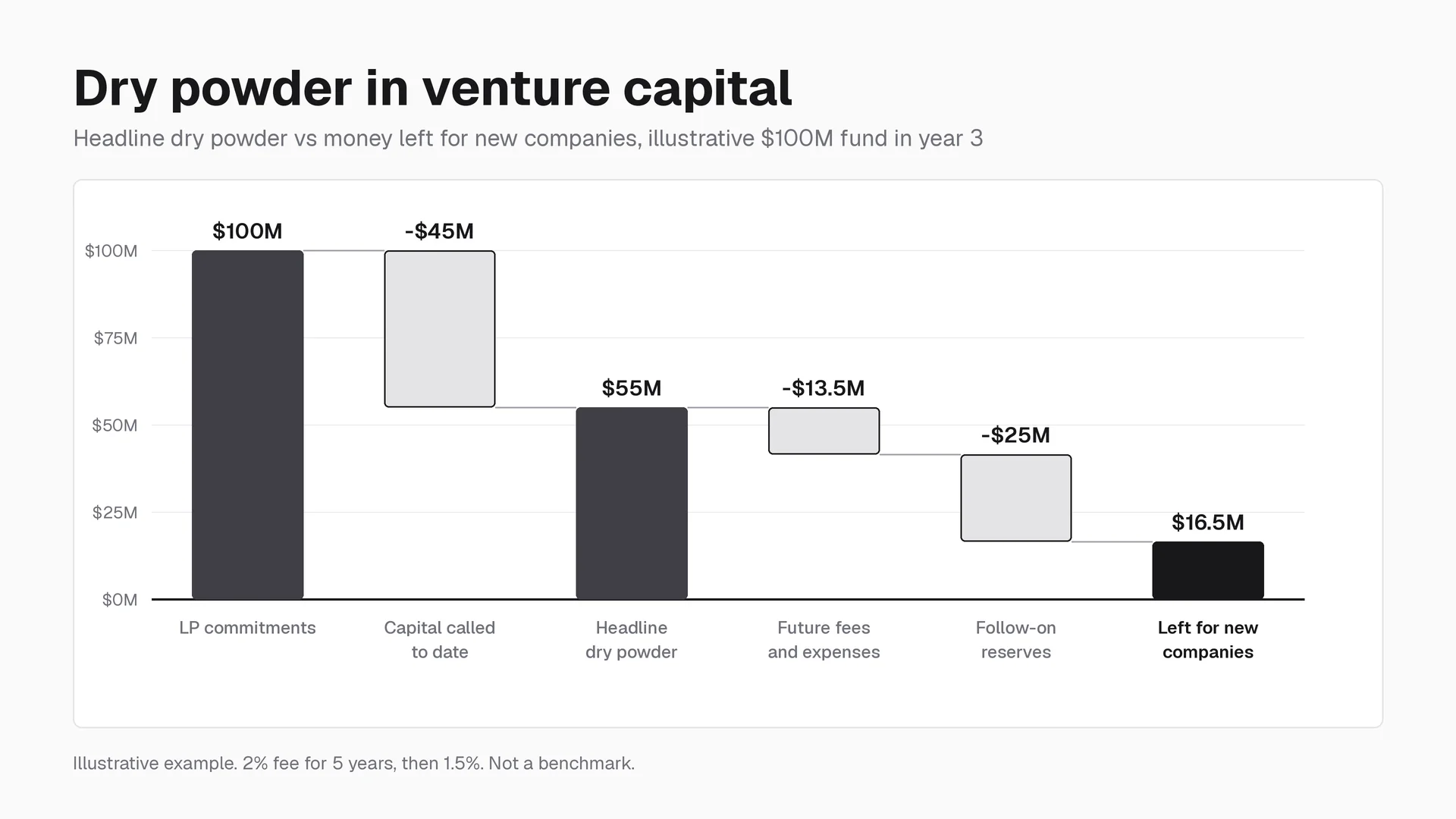
Dry powder in venture capital explained: the formula, a worked $100M fund example showing how little headline dry powder is left for new companies, current US and global data, and what a firm's dry powder tells you about hiring and the junior job.
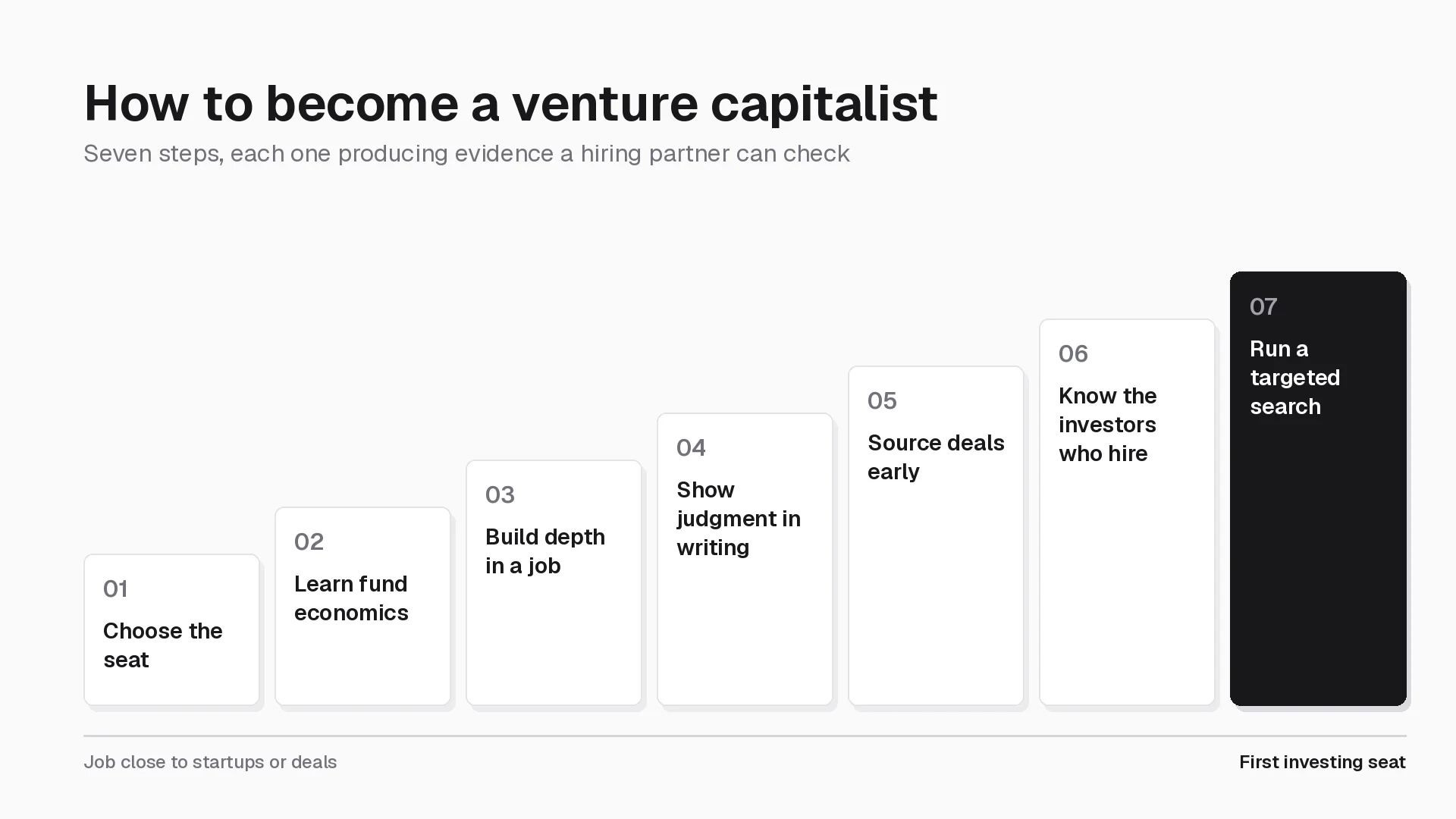
How to become a venture capitalist in seven steps: choose the seat, build depth, prove judgment in writing, source early, and run a targeted search. Includes entry paths by background, how fund size limits hiring, MBA placement data, and licensing.
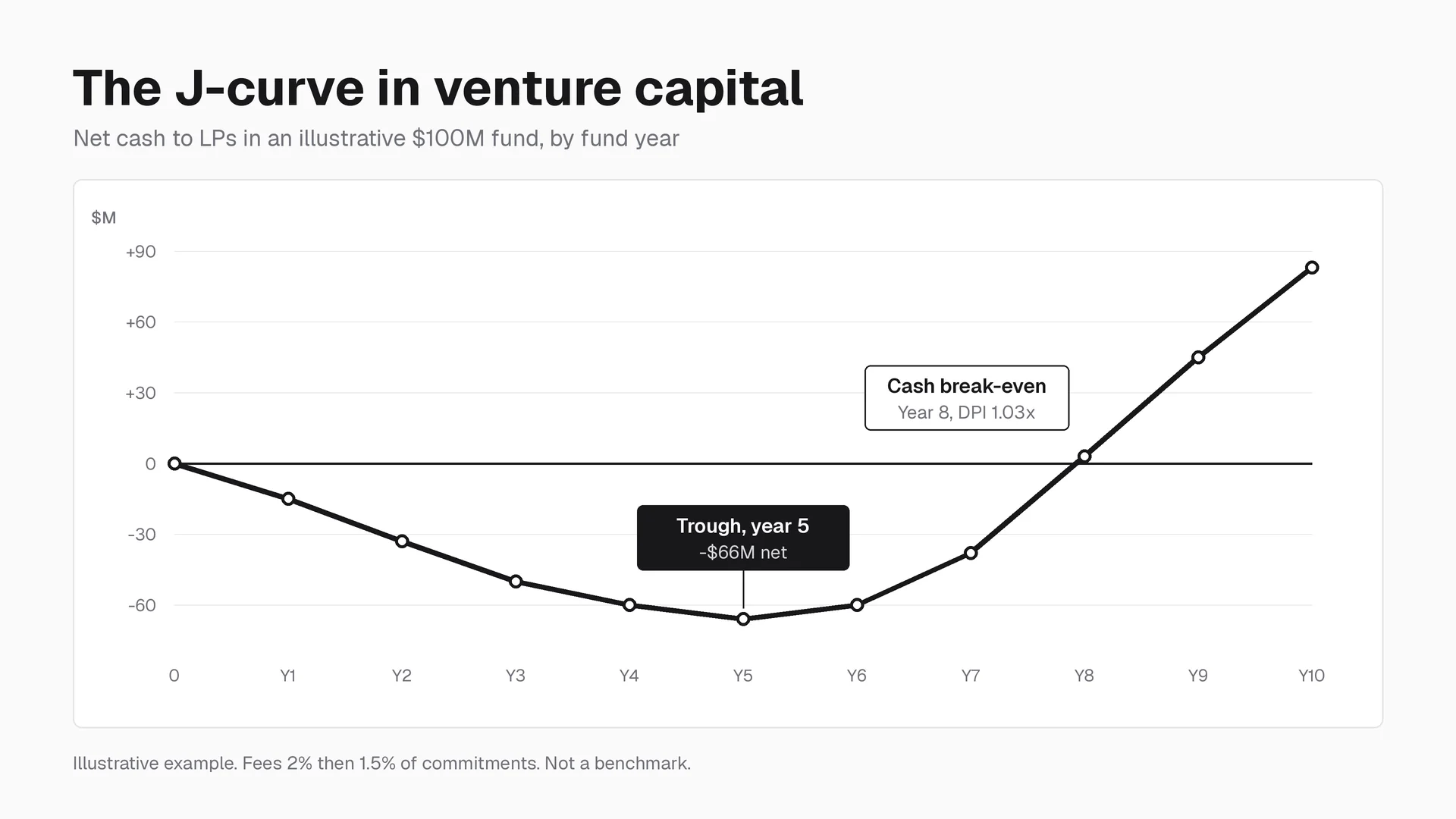
The J-curve in venture capital explained with a worked $100M fund example, current vintage data on DPI and IRR, a check for telling a normal trough from a weak fund, and what the curve means for VC carry, offers, and interviews.