How to Become a Venture Capital Analyst
A practical guide to the VC analyst role, realistic entry paths, proof-of-work, compensation, job search, and evaluating your first seat.

Becoming a venture capital analyst means winning one of the scarcest junior seats in private markets: a paid role supporting investment decisions at a fund that is usually small, slow to hire, and allergic to generic “passionate about startups” applications. The analyst title is also less standardized than candidates expect. Some firms hire true undergrad analysts. Many skip the title and call the first seat associate. A few use analyst for research or platform work that never touches a term sheet.
This guide is about that first investing-support seat: what the job actually is, when the analyst title is realistic, which backgrounds map cleanly, what proof-of-work makes you hireable, how to run a search, what pay looks like in ranges (not fantasies), and how to perform in the first ninety days if you get the job.
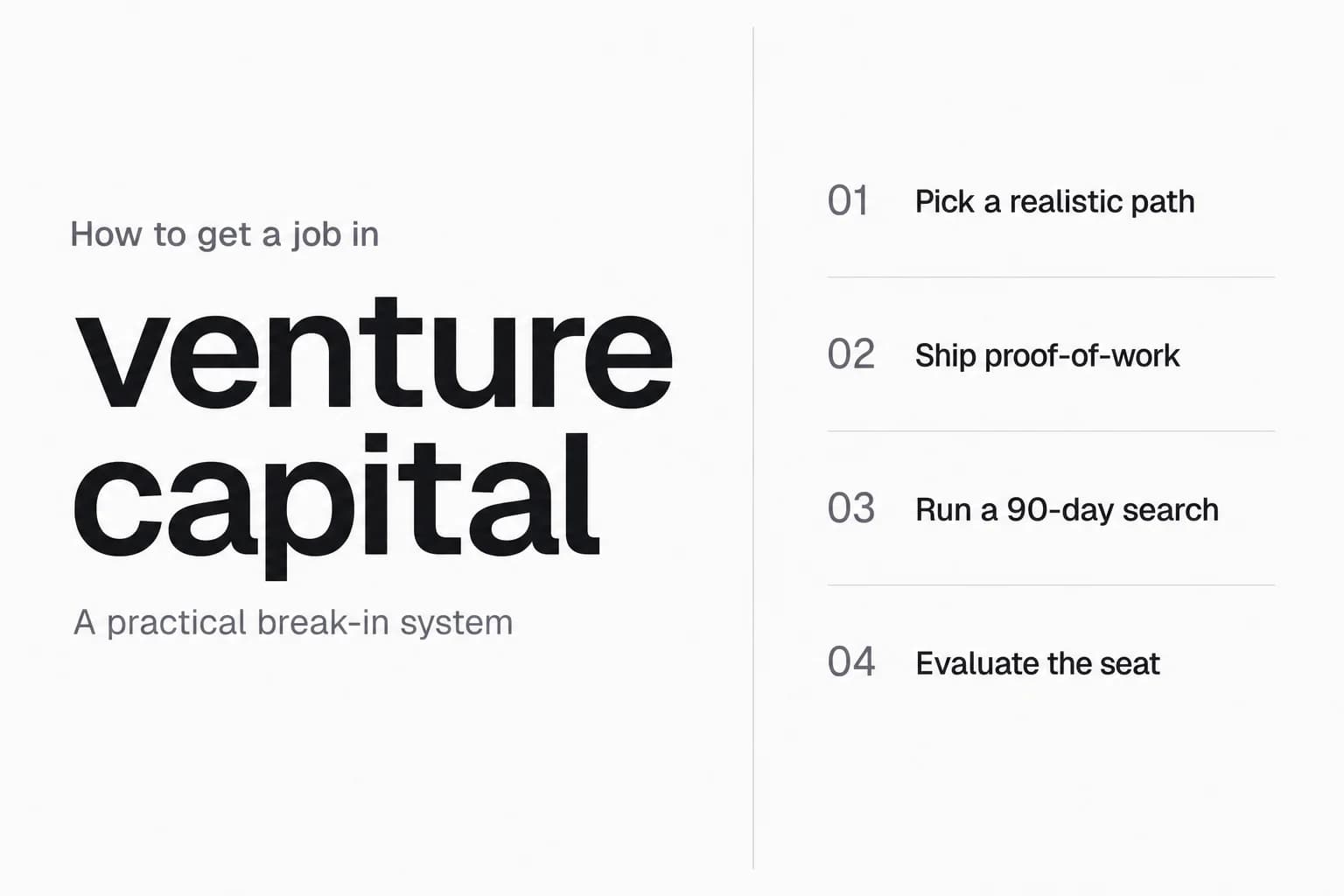
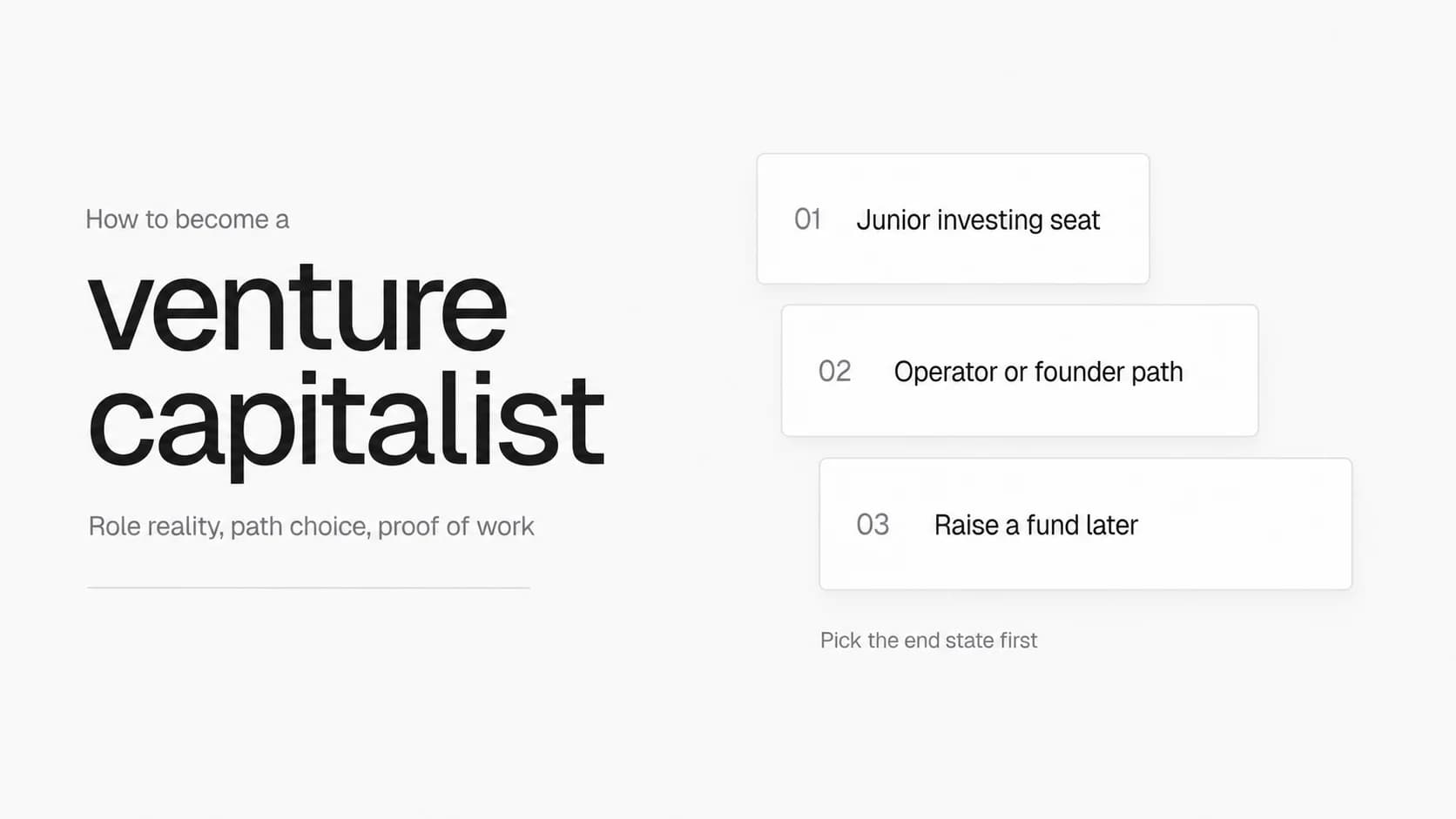
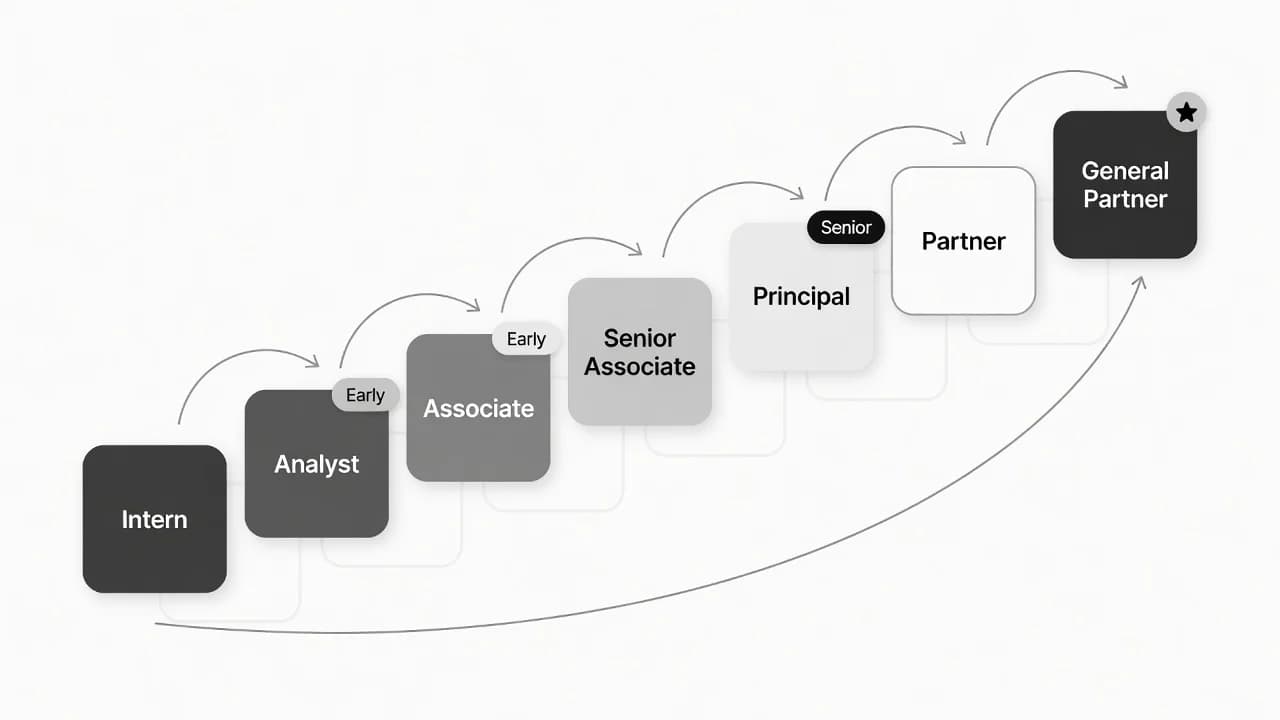
For the full ladder from junior investor to partner, use the venture capital career path. For a general break-in operating system across titles, use how to get a job in venture capital. For “become a VC” end states including partner and fund formation, use how to become a venture capitalist.
What a venture capital analyst actually does
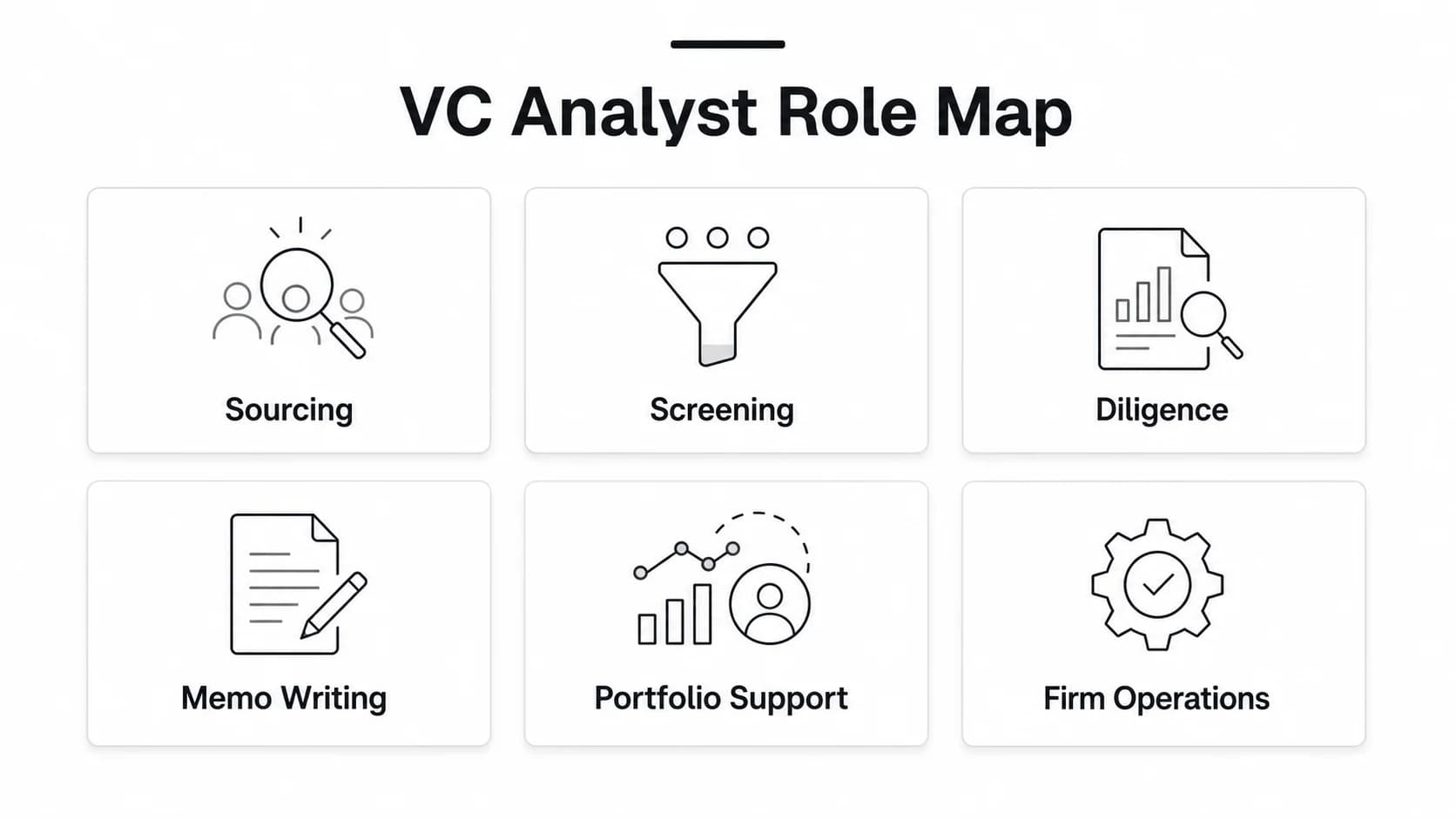
A venture capital analyst sits on the investment team and helps the firm find, filter, and underwrite companies. You rarely “own” a deal end to end. You expand partner capacity: research, first-pass screening, memo drafts, data room hygiene, meeting notes, market maps, and follow-ups that would otherwise die in a partner’s inbox.
Typical workstreams:
- Sourcing support. Build lists, track founders, draft outreach, staff events, and keep the pipeline honest.
- Screening. Read decks quickly. Flag thesis fit, obvious risks, and whether a partner should spend time.
- Diligence support. Market sizing drafts, competitor maps, customer reference logistics, metric checks, and due diligence workstreams under supervision.
- Writing. Internal notes and memo sections partners can reuse without rewriting from zero.
- Process and firm glue. CRM hygiene, IC pack assembly, calendar coordination, and portfolio update collection—unglamorous and decisive for trust.
- Learning reps. Shadow pitches and portfolio meetings so your taste improves faster than your title suggests.
What you usually do not do on day one: sole decision rights, board seats, or meaningful carried interest. Treat those as later-career outcomes, not analyst entitlements.
A realistic week
| Block | What good looks like |
|---|---|
| Pipeline | Update live opportunities; kill stale ones; surface 2–5 companies worth a partner glance |
| Deep work | One market map slice, memo section, or reference call set |
| Meetings | Shadow pitches; take notes that partners actually use |
| Ecosystem | One founder or operator conversation; one event or asynchronous community touch |
| Firm ops | CRM, follow-ups, IC materials without dropped balls |
Hours are often lighter than investment banking in pure desk time and heavier in always-on networking. If you need strict separation between work and life, junior VC is a poor fit even when the office calendar looks calm.
For a formal responsibility list firms post publicly, see the venture capital analyst job description.
Analyst vs associate (and why titles lie)
Do not optimize for the word “analyst.” Optimize for the work and the learning.
| Signal | Often means analyst | Often means associate / pre-MBA associate |
|---|---|---|
| Hiring bar | Direct from undergrad or very early career | 2–4 years banking, consulting, or operating |
| Ownership | Support and research monkey (in the useful sense) | Front-line filter; more founder contact |
| Deal voice | Limited | Stronger recommendation rights at some firms |
| Tenure | 2–3 years common, then MBA / startup / other fund | 2–4 years, then MBA / promote / leave |
| How common | Relatively rare, especially at tiny partnerships | More common junior label |
Decision rules:
- If you are still in school or 0–18 months post-grad with internship signal, analyst (or “junior associate”) is the honest target—when the firm uses that seat at all.
- If you already have banking, consulting, or meaningful startup ownership, target associate language even if you emotionally want “analyst.”
- If a firm is two partners and an EA, there may be no junior ladder. A scout, research contractor, or platform seat can be a better on-ramp than waiting for a phantom analyst req.
Read the team page and the job description. Ignore LinkedIn title inflation at peer funds when deciding what this firm will let you do.
Realistic paths by background
There is no single feeder. There are patterns that reduce friction.
| Background | Realistic first seat | Evidence that travels | Common trap |
|---|---|---|---|
| Undergrad (target school or strong internship stack) | Analyst where the seat exists; VC internship → full-time | Internships, research samples, founder network on campus | Assuming prestige alone converts; zero written judgment |
| Investment banking / PE | Analyst rare; associate more likely (esp. growth / later stage) | Modeling, process, diligence stamina | Sounding like banking in every founder conversation |
| Consulting | Associate or strategy-leaning junior seat | Structured problem solving, industry depth | No opinion on markets; generic “interested in startups” |
| Startup operator (product, growth, eng, GTM) | Early-stage associate more than classic analyst; sometimes platform | Shipped outcomes, domain reps, founder empathy | Assuming operating title maps 1:1 to investing title |
| Founder | Scout, specialist fund, emerging manager—not classic undergrad analyst | Pattern recognition, network, scars | Waiting only for brand-name analyst postings |
| Deep technical / academic | Specialist analyst/associate (bio, climate, AI infra) | Technical diligence edge | No commercial translation; no sourcing motion |
| Career switcher, no startup/finance | Longer path: operator job, CVC, research, thesis public work first | Domain spike you can prove | Paying for certificates as a substitute for proof |
Adjacent on-ramps that still count: VC internships, scout programs, founder’s office / chief of staff, talent roles at multi-stage firms, and corporate development into corporate venture.
If your background is far from the table, lengthen the timeline and build proof before you spray outreach. For internship-specific tactics, see how to get a venture capital internship.
Skills and proof-of-work firms hire for
Firms do not hire “someone who likes TechCrunch.” They hire someone who reduces partner load or expands access to founders.
Skills that show up in strong junior candidates
- Analytical floor — read a deck, notice when numbers do not hang together, build a simple model without theater.
- Written clarity — short memos partners will actually finish.
- Sourcing instinct — find companies worth a call before the crowd.
- Judgment — separate team quality from story quality; say no with reasons.
- Domain spike — enough depth in at least one area to ask non-obvious questions.
- Reliability — finished work, clean follow-up, no process drag.
- Founder empathy — especially at early stage.
Proof-of-work pack (ship before you ask for the seat)
- One-page investment thesis for a sector you actually watch.
- Market map with 15–40 companies, segmented usefully—not a logo collage.
- Two practice investment memos with a clear yes/no and risks.
- Notes from founder conversations that show what you learned.
- Target-fund list (20–40) with a right-to-win reason for each firm.
- Optional public signal: one post or project that demonstrates taste.
These artifacts matter more than another unstructured coffee chat. Practitioner guides that push thesis work, fantasy portfolios, and helping founders before asking for a job are pointing at the same idea: show the work.
Education, MBAs, and certifications
There is no required degree to become a venture capital analyst. Common undergrad backgrounds include finance, economics, computer science, engineering, and other fields that create either analytical tools or domain access. Elite school density is real at some brand funds and overstated as a universal rule.
An MBA is a common later bridge into associate seats. It is neither necessary nor sufficient for an analyst role and is usually the wrong instrument if you are still trying to win a first junior seat straight from undergrad.
Be skeptical of paid “VC certificates” marketed as a hiring key. Courses can teach vocabulary. They do not replace a thesis, a network, or a track record of finished work. If you study, prefer primary sources, NVCA-style model documents for term literacy, fund letters, and real founder conversations over certificates you plan to rank above experience on a resume.
How to break in: a 90-day analyst search
Treat the search like a part-time job. If you cannot put focused hours in weekly, extend the timeline rather than fake intensity.
Days 1–14: Positioning
- Decide whether you are chasing true analyst seats, pre-MBA associate seats, or both.
- Write the thesis one-pager and target-firm list.
- Rebuild your resume for VC readers—outcomes, judgment, domain—not chore lists. Use the venture capital analyst resume guide for structure.
- Draft two outreach variants: value-share and a sharp informational ask.
Days 15–45: Evidence and volume
- Ship market map + first memo.
- Run founder conversations weekly.
- Apply the week real fits appear.
- Track conversations booked, artifacts shipped, applications sent, intros earned.
Days 46–90: Convert
- Double down on the fund segment responding (stage, sector, geography).
- Practice interviews out loud (venture capital interview questions).
- Revisit whether a platform, research, or internship seat is a smarter on-ramp than waiting for a pure investing title.
Where openings show up
Warm paths still dominate many junior seats: partners you have helped, founders who will vouch for how you work, alumni, and operators who know culture fit. Public paths still matter enough to run in parallel.
How to use Venture Capital Careers without becoming an application spam machine
- Browse open roles on the VC job board and shortlist by title, stage, and mandate—not brand prestige alone.
- For each interesting firm, open the companies directory, read thesis and portfolio, and decide whether you have a right-to-win story.
- Apply where fit is real; in parallel, send value-first notes to relevant investors.
- Create a profile and alerts via sign up so new roles find you without living on the homepage.
Do not pin long-term notes to individual job URLs—roles expire. Keep firm names and role types. For board comparisons, see venture capital job boards. For the fuller weekly operating rhythm across all VC titles, stay on how to get a job in venture capital.
Outreach that earns replies: lead with one company or insight relevant to that investor’s thesis; be specific; ask for something small and clear; follow up once with new substance. Cold “can I pick your brain about breaking into VC?” is saturated.
Compensation: ranges, not fantasies
Junior VC pay is real and usually below top investment banking total compensation. Treat every figure as a range that moves with city, firm AUM, stage focus, and vintage—not a personal offer.
As a practical US benchmark on Venture Capital Careers’ own salary guide, analyst base often lands around $70,000–$115,000 with bonuses commonly in a roughly $5,000–$25,000 band—before city, firm size, and stage stretch the ends. Other public career guides show wider base spans (sometimes into the low six figures at larger or later-stage platforms) and still treat carry as rare at true analyst level. Do not underwrite your life on carry. Pre-MBA associate total cash is often materially higher when that seat exists. Compare multiple sources before you negotiate.
What matters more than the midpoint: whether the firm pays on time, whether bonus is real, whether any carry is contractual vs. “maybe later,” and whether the learning is worth two years of your compounding career.
First 90 days once you are hired
Breaking in is not the finish line. Early reputation inside a tiny partnership is sticky.
- Shadow aggressively. Use office hours for pitches and portfolio meetings. Do individual deep work off-peak so you are present when taste is being formed.
- Create leverage without being asked. Take unglamorous work off partners’ plates: follow-ups, CRM, reference scheduling, first-pass research.
- Read the documents. When you support a live deal, read full legal docs—not only the deck. Learn where terms actually bite.
- Build external presence. You often have more evening bandwidth than partners with families or travel. Be a useful face for the firm in the local founder community.
- Stay humble and precise. Speak up when you have a concrete edge (talent intro, campus signal, domain fact). Avoid performative opinions you cannot defend.
- Know every company in your partners’ coverage. Pattern recognition is the job.
If you treat the seat only as a logo for the next application, partners will feel it. If you treat it as an apprenticeship in judgment under time pressure, the next seat—inside or outside—gets easier.
How to evaluate an analyst offer
Say yes only if the learning and the people clear a high bar.
- Work mix: Will you touch live diligence and founders, or only slide formatting?
- Supervision: Who teaches you? How often do you get real feedback?
- Stage and mandate: Seed generalist vs. growth specialist changes the skill you build.
- Title honesty: Does “analyst” match the work, or is it a research/ops seat with investing cosplay?
- Promotion and attrition: Is there a path, or a hard two-year cliff with no internal seats?
- Economics: Base, bonus history, carry eligibility (usually limited), and relocation reality.
- Culture: Partner accessibility, weekend norms, how the firm treats founders.
- Brand vs ownership: A famous logo with no responsibility can lose to a smaller firm with real work.
Talk to two people who left if you can. Ask what they wish they knew at month three.
FAQs
Do I need an MBA to become a VC analyst?
No. Analyst seats are typically pre-MBA. An MBA is more often a bridge into associate or post-MBA investing roles later.
Is it smart to take a VC analyst job straight from undergrad?
Sometimes. You get pattern recognition and network early. You also skip higher-paying skill forges (IB, elite consulting, intense operating roles) that make some people stronger investors later. Take the seat if the firm is excellent and the work is real. Skip it if the role is mostly admin under a weak franchise.
Analyst or associate—which should I apply to?
Apply to the title the firm actually uses for your experience. Many strong junior jobs never say “analyst.”
Can engineers become VC analysts?
Yes—especially at specialist or technical funds—if you can translate technology into markets, customers, and written judgment. Pure engineering prestige without commercial curiosity rarely converts.
How long does it take?
For well-positioned candidates with artifacts and a network, a focused search can convert inside a few months. For career switchers without proof, plan in multi-quarter cycles while you build signal.
What should I study if I am still in school?
Finance fundamentals help. Domain depth helps more when it is real. Internships, founder projects, and writing samples beat collecting clubs you do not contribute to.
Next step
If you want the seat, stop collecting vague advice and run the system: pick the right junior title, ship proof, and work the market every week.
- Browse live roles on the VC job board
- Research funds in the companies directory
- Get alerts when new seats appear via sign up
Then deepen the weak link in your stack: analyst resume, interview questions, or the full get a job in VC operating plan.