
A vintage year is the year a venture capital fund starts putting its money to work, and it is the label investors use to group and compare funds that faced the same market. A 2021 fund, a 2017 fund, and a 2024 fund each bought companies at different prices and will try to sell them into different exit markets. That timing explains a large share of the gap between funds, so vintage is the first filter anyone applies before judging a fund's returns.
If you want a job at a VC firm, vintage tells you which fund you would be working for, how far along its return story is, and what your carry might be worth.
What a vintage year is
The vintage year marks the start of a fund's life. Most people define it as the year the fund begins deploying capital. Some sources tie it to the year the fund forms and holds its closing, and some data providers use the first capital call or the first investment.
The label sticks for the whole life of the fund. A fund that closed in late 2021 and made most of its investments in 2022 and 2023 is still a 2021 vintage in most reporting. That matters because a fund invests over several years and then spends several more harvesting. The venture capital fund lifecycle covers those phases.
Vintage applies to the fund, not the firm. One firm can run a 2016 fund, a 2019 fund, and a 2023 fund at the same time, each with different investors, different portfolios, and different economics for the team.
How vintage year gets assigned
There is no single legal rule. The year depends on which event the fund manager or the data provider treats as the start.
| Convention | What sets the year | Where you see it |
|---|---|---|
| First close | The year the fund holds its first closing with investors | Fund announcements, press releases |
| First capital call | The year investors first send cash | LP reporting, some benchmark datasets |
| First investment | The year the fund makes its first portfolio investment | Manager track records, pitch decks |
| Final close | The year fundraising ends | Less common, sometimes in marketing |
A fund with a first close in November and a first investment in February can show up as two different vintages in two databases. When you compare funds, check that both use the same convention. When a firm tells you its fund "is a 2022 vintage," ask which event they mean.
Why vintage year moves returns
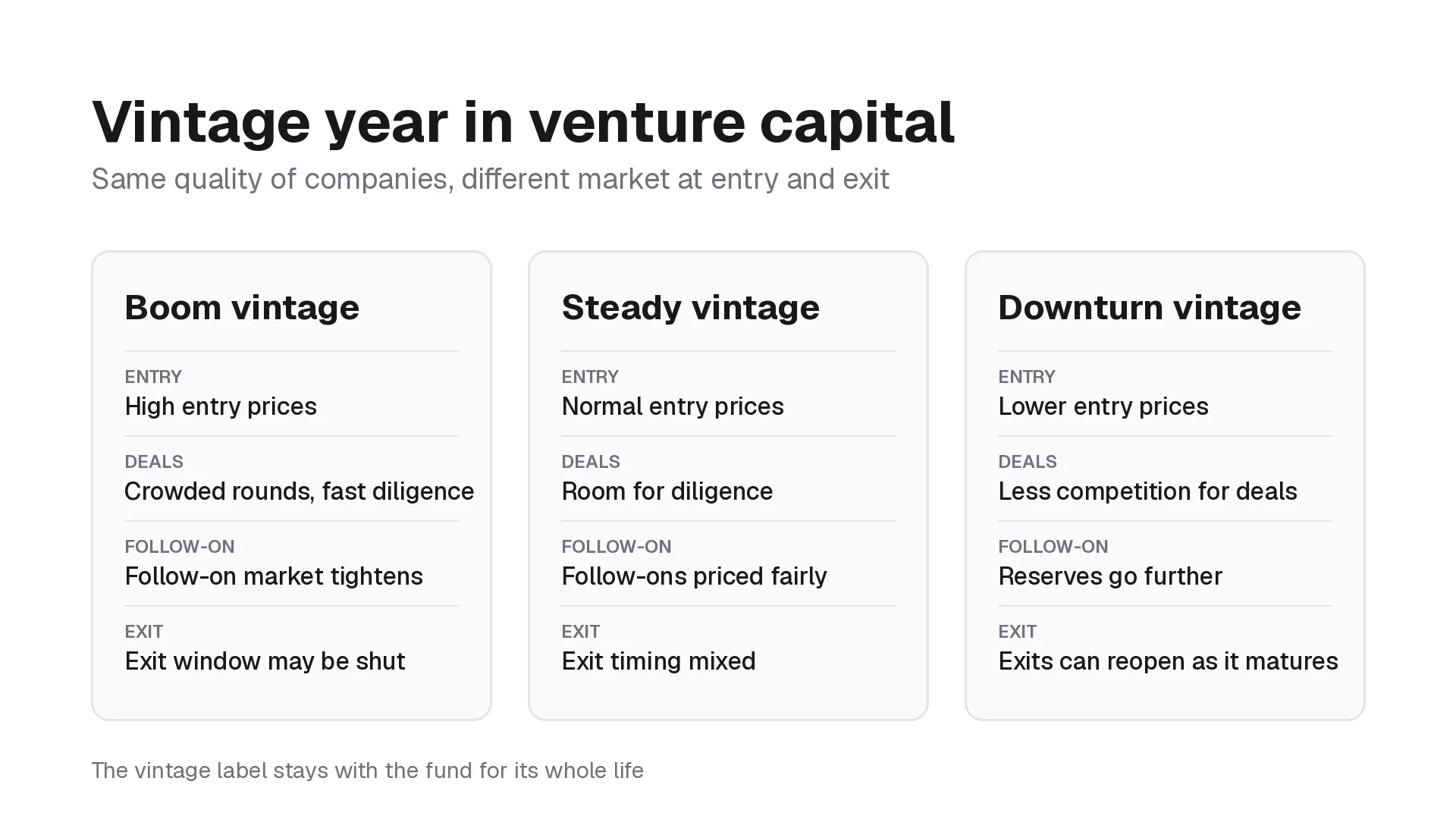
A fund's vintage locks in the market it buys into. Four conditions set at entry carry through the fund's life:
- Entry valuations. Funds investing at peak prices need bigger exits to make the same multiple.
- Competition for deals. Crowded years push up round sizes and shorten diligence.
- Follow-on capital. If later rounds dry up, the fund spends reserves defending companies instead of backing winners.
- Exit markets. IPO and M&A windows when the portfolio matures decide when paper value turns into cash.
The same quality of company can produce very different results depending on that sequence. Buy at high prices, then face a tight funding market and a closed IPO window, and returns stall even when the companies keep growing. Buy during a downturn, then sell into an open market, and similar businesses return much more.
Returns also cluster in a small number of years. Stepstone's analysis of more than 1,000 venture funds from vintages 2000 to 2022 found that 80% of returns came from five to seven of the 23 vintage years measured, across 5, 10, 15, and 20 year windows (Stepstone Group, The vintage year power law). That is the power law showing up at the level of years, not just companies.
Boom years are rarely the good ones. US venture funds raised $168 billion in 2021, 1.9 times the prior year, while valuations hit records, according to PitchBook figures cited in the same Stepstone report. Investors poured in after strong recent returns, which is exactly when entry prices were highest.
How to compare funds by vintage
A fund's returns only mean something next to funds of the same vintage. A 2024 fund with almost no distributions is normal. A 2015 fund with the same number is a problem.
Dakota's September 2026 benchmark set shows how far medians move by vintage (Dakota, Venture capital fund performance by vintage year):
| Vintage | Funds in sample | Median net IRR | Median TVPI | Median DPI |
|---|---|---|---|---|
| 2017 | 41 | 14.77% | 1.87x | 0.73x |
| 2019 | 59 | 11.11% | 1.50x | 0.20x |
| 2021 | 89 | 4.05% | 1.18x | 0.67x |
| 2022 | 92 | 5.40% | 1.10x | 0.16x |
| 2024 | 79 | 2.75% | 1.12x | 0.01x |
Two lessons come out of that table. Older vintages have had time to exit, so their DPI is higher. And the spread inside a vintage is wide: Dakota's 2022 net IRR range runs from about -20% to 81%, so the median hides as much as it shows.
Use these rules when you compare:
- Match the vintage, and the convention used to set it.
- Match the strategy. A seed fund and a growth fund from the same year are not peers.
- Read TVPI and markups for young funds, DPI for mature ones. The fund performance metrics guide defines each.
- Expect the early dip. Young funds sit in the bottom of the J-curve, so a low IRR in years one to four is not a verdict.
- Ask for quartile rank within the vintage, not a raw number.
Vintage diversification and pacing
Because no one can predict which year will be strong, limited partners spread commitments across vintages instead of trying to time the market. A pension or endowment commits to new funds every year or two so that it owns some good years and some bad ones. Distributions from older funds help pay capital calls on newer ones.
GPs feel this directly. A firm raising during a year when LPs are overcommitted to venture will have a harder fundraise, a smaller fund, or a delayed close. That is why fundraising cycles show up in hiring. The limited partner vs general partner guide explains who commits and who manages.
What vintage year means if you work at a VC firm
If you are joining a firm, vintage shapes the work you do, the carry you get, and how you should prepare for interviews.
Which fund pays you and which fund you work on
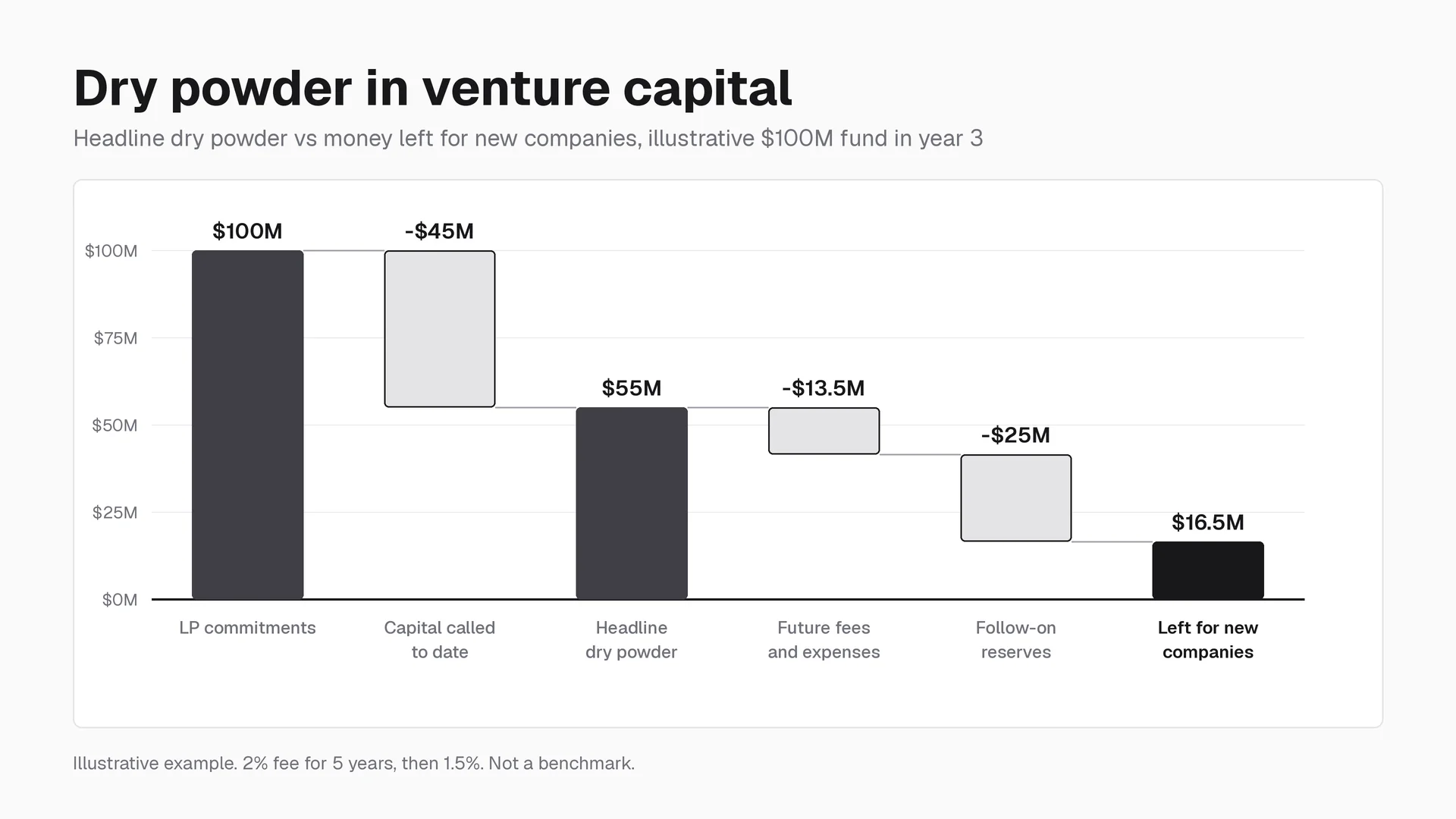
Your salary comes from management fees, and fees come from active funds. A firm with a new vintage that just closed has years of fee income and capital to deploy. A firm whose newest fund is four years old is likely mostly in reserves and getting ready to raise again. The dry powder guide shows how to estimate what is left to invest.
Junior roles at a firm with a fresh vintage lean toward sourcing and new deals. Roles at a firm late in its newest fund lean toward portfolio support and follow-ons, plus fundraising prep for the next fund.
What your carry is worth
Carry is usually granted fund by fund. An allocation in a strong vintage can be worth far more than the same percentage in a weak one, and the vintage you join may already be several years into its life. Ask which vintage your carry covers, whether you get points in the next fund, and how the current fund is tracking against its vintage peers. Carried interest covers the mechanics, and the associate offer negotiation guide covers how to raise it.
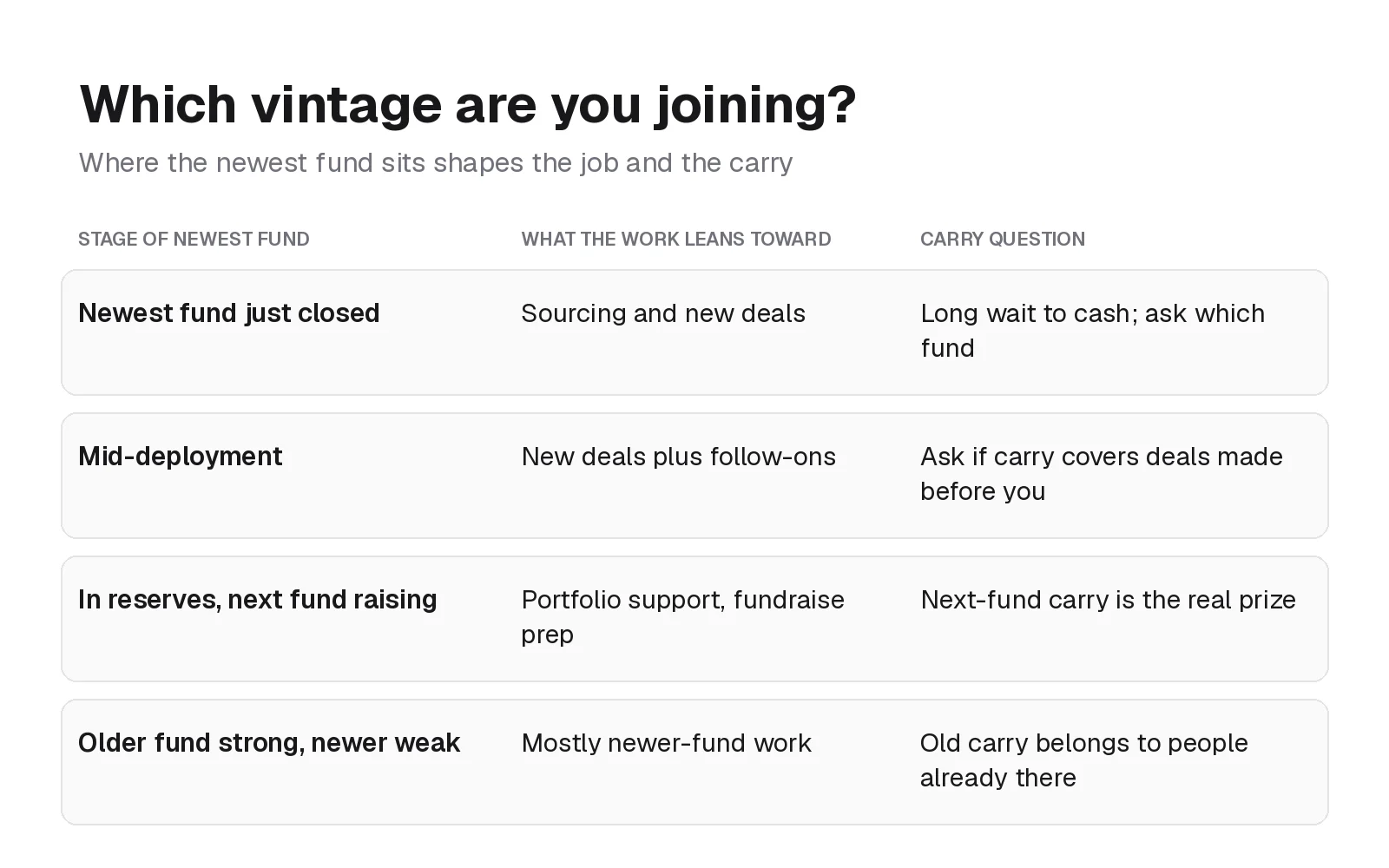
| Situation when you join | What it means for your carry | Question to ask |
|---|---|---|
| Newest fund just closed | Full investment period ahead, long wait to cash | Which fund and what percentage? |
| Newest fund mid-deployment | Some deals done before you arrived | Does my carry cover deals made before my start date? |
| Newest fund in reserves, next fund raising | Carry in the next fund is the real prize | When does the next fund close and am I in it? |
| Older vintage strong, newer weak | Old carry belongs to people already there | Is there a way to share in the stronger vintage? |
How to read a firm's vintages before you interview
You can build a rough vintage map from public information:
- List the firm's funds and their announced close dates from press releases and the firm's site.
- Note fund sizes. A sharp drop between funds can signal a hard fundraise.
- Check how many new investments the firm announced in the last 12 months versus follow-ons.
- Estimate where the newest fund is in its life: deploying, in reserves, or raising.
Then bring a specific question to the interview: "Fund IV closed in 2023. Is the team still writing new checks from it, or are you raising Fund V?" It shows you understand how the business runs. You can browse firm pages on Venture Capital Careers companies to start the list.
How to talk about vintage in an interview
A common question is "How would you evaluate a fund's performance?" A strong answer opens with vintage:
"First I'd find the vintage and compare only with funds from that year and strategy. For a young fund I'd look at TVPI and whether markups come from rounds led by outside investors. For a mature fund I'd focus on DPI. Then I'd ask where it ranks by quartile in its vintage, because the spread within a year is wider than the gap between average years."
The VC interview questions guide has more fund-economics questions to practice.
Common questions about vintage year
Is vintage year the same as the year a fund was founded?
Not always. Vintage refers to the fund, not the firm, and most definitions use the start of investing or the first close. A firm founded in 2010 can have a 2024 vintage fund.
Why do recent vintages look bad?
Recent funds have had little time to exit companies, so DPI is near zero and IRR is low or negative. That is the normal shape of a young fund, not a sign it is failing.
Are downturn vintages always better?
Downturn years often come with lower entry prices, which helps. But returns also depend on whether exit markets open when the portfolio matures. Lower prices raise the odds of a good vintage without guaranteeing one.
Does vintage year matter for a job search?
Yes. It tells you whether the firm is deploying a new fund or raising its next one, which shapes the work, hiring plans, and the value of any carry you are offered.
Next steps
Use vintage as your first question when you look at any firm. Map the funds, figure out which one you would work on, and ask how your carry ties to it. Then look at open roles on Venture Capital Careers, browse firms hiring now, and create a free account to get new VC jobs as they post.
Related posts
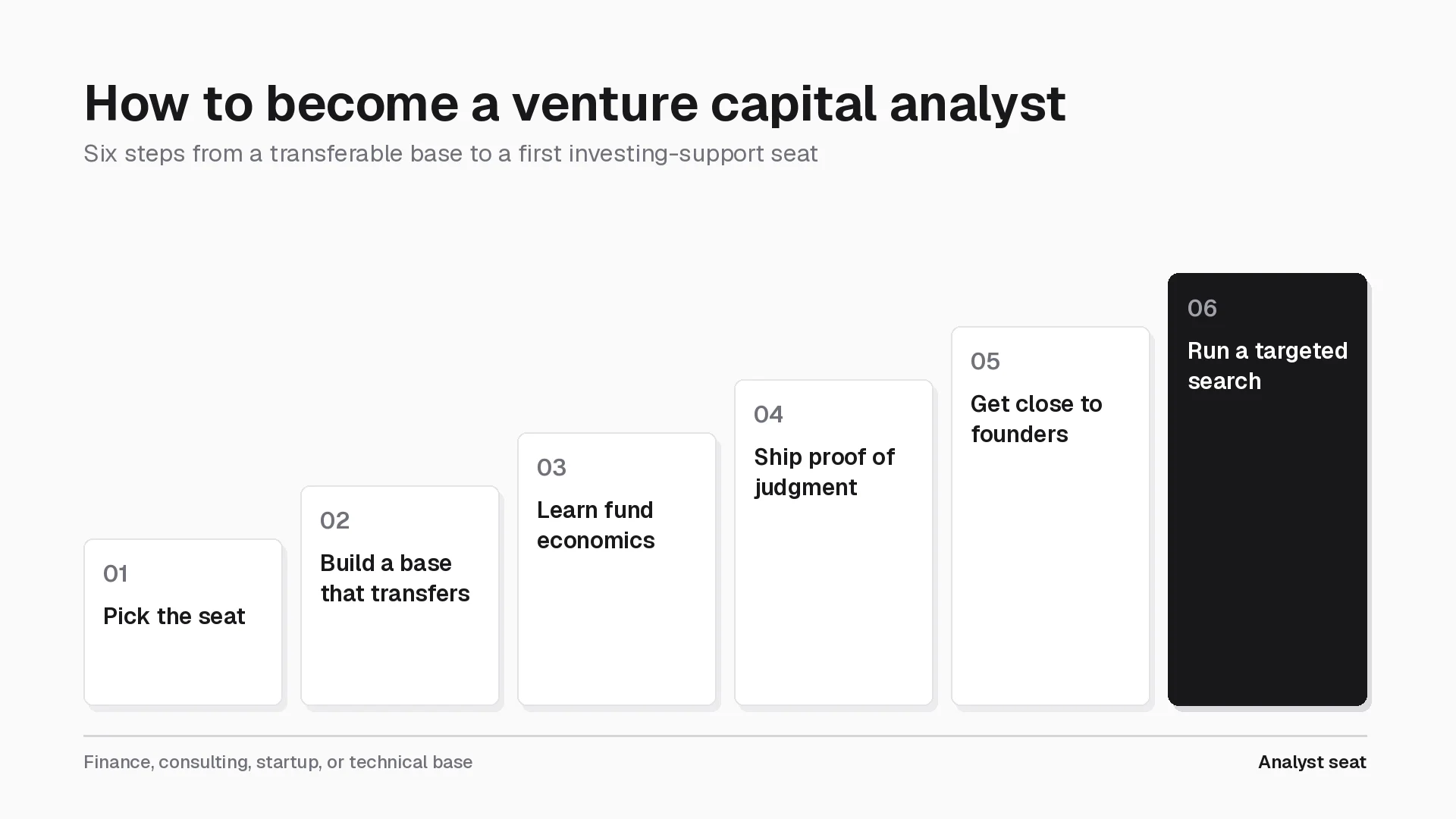
How to become a venture capital analyst in six steps: pick the seat, build a transferable base, ship proof of judgment, and target the firms that still hire analysts. Includes entry routes, interviews, salary, and exit paths.
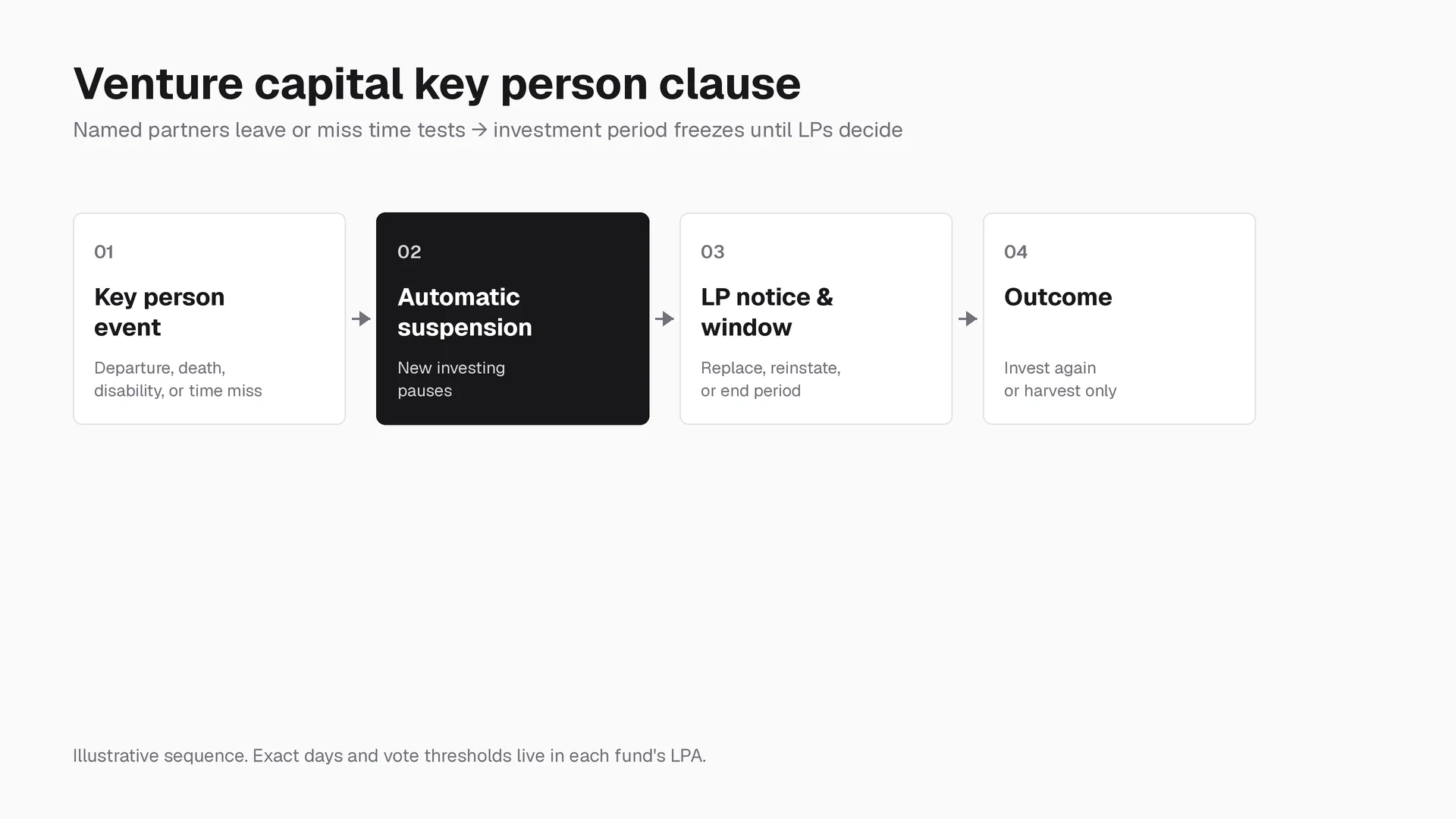
A key person clause names the partners a venture fund depends on and can freeze new investing if they leave. Here is how the trigger works, what still happens during a suspension, and what it means for your job search and seat.
Dry powder in venture capital explained: the formula, a worked $100M fund example showing how little headline dry powder is left for new companies, current US and global data, and what a firm's dry powder tells you about hiring and the junior job.