
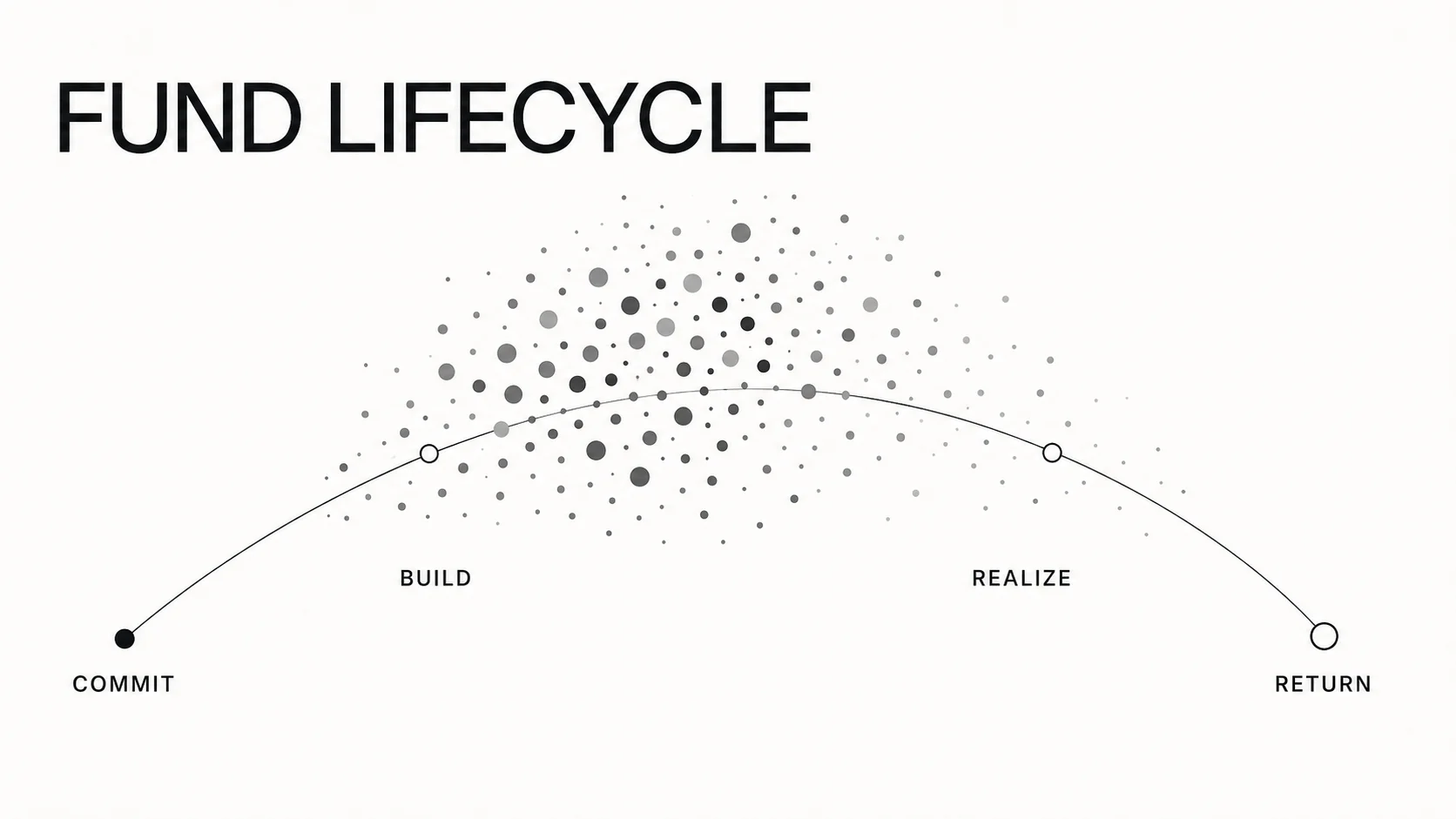
A venture capital fund lifecycle is the finite path a fund follows from formation and limited-partner commitments to investments, portfolio support, exits, distributions, and final closure. A common model is a roughly ten-year term, often with extension options, but the limited partnership agreement (LPA) controls the actual timeline and powers.
That is not the same as a startup's pre-seed, seed, Series A, and later financing rounds. Those stages describe the company's capital journey. The fund lifecycle describes the vehicle supplying capital.
The VC fund lifecycle at a glance
| Phase | Common timing | GP objective | Capital activity | LP output | Evidence you can observe |
|---|---|---|---|---|---|
| Formation and fundraising | Before launch through final close | Define the thesis, build the fund, and secure commitments | GP commitment, organizational expenses, initial capital calls | LPA, subscription documents, diligence materials, close notices | Fund announcement, target/final close, stated strategy, initial team |
| Investment period | Often the first 3–5 years | Build the portfolio at an intentional pace | New investments, fees, expenses, reserves established | Capital-call notices, quarterly reports, portfolio updates | New-deal cadence, initial checks, ownership pattern, portfolio count |
| Portfolio management and follow-ons | Begins with the first investment and can run for the fund's life | Protect and grow portfolio value | Follow-on checks, support costs, valuation changes | Valuation, fee, performance, and portfolio reporting | Follow-ons, board work, executive hiring, reserves deployed |
| Realizations and distributions | Can begin early; usually becomes more important later | Convert portfolio value into cash or securities and return proceeds | Exit proceeds, write-offs, distributions | Distribution notices, realized performance, tax and audit outputs | Acquisitions, IPOs, secondary sales, DPI movement |
| Extensions and wind-down | Near the contractual end of the term | Resolve remaining assets and close the vehicle responsibly | Final expenses, tail-asset sales, final distributions | Extension consents/notices, final accounts, dissolution records | Fewer remaining holdings, extension decisions, final exits |
The timing is deliberately approximate. A seed fund, growth fund, evergreen vehicle, or corporate venture program may behave differently. Even within a traditional closed-end VC fund, the phases overlap.
The venture capital fund structure explains the fund, GP, management company, and LP entities. The lifecycle explains what those entities are doing at a particular point in time.
Why the lifecycle is not a straight line
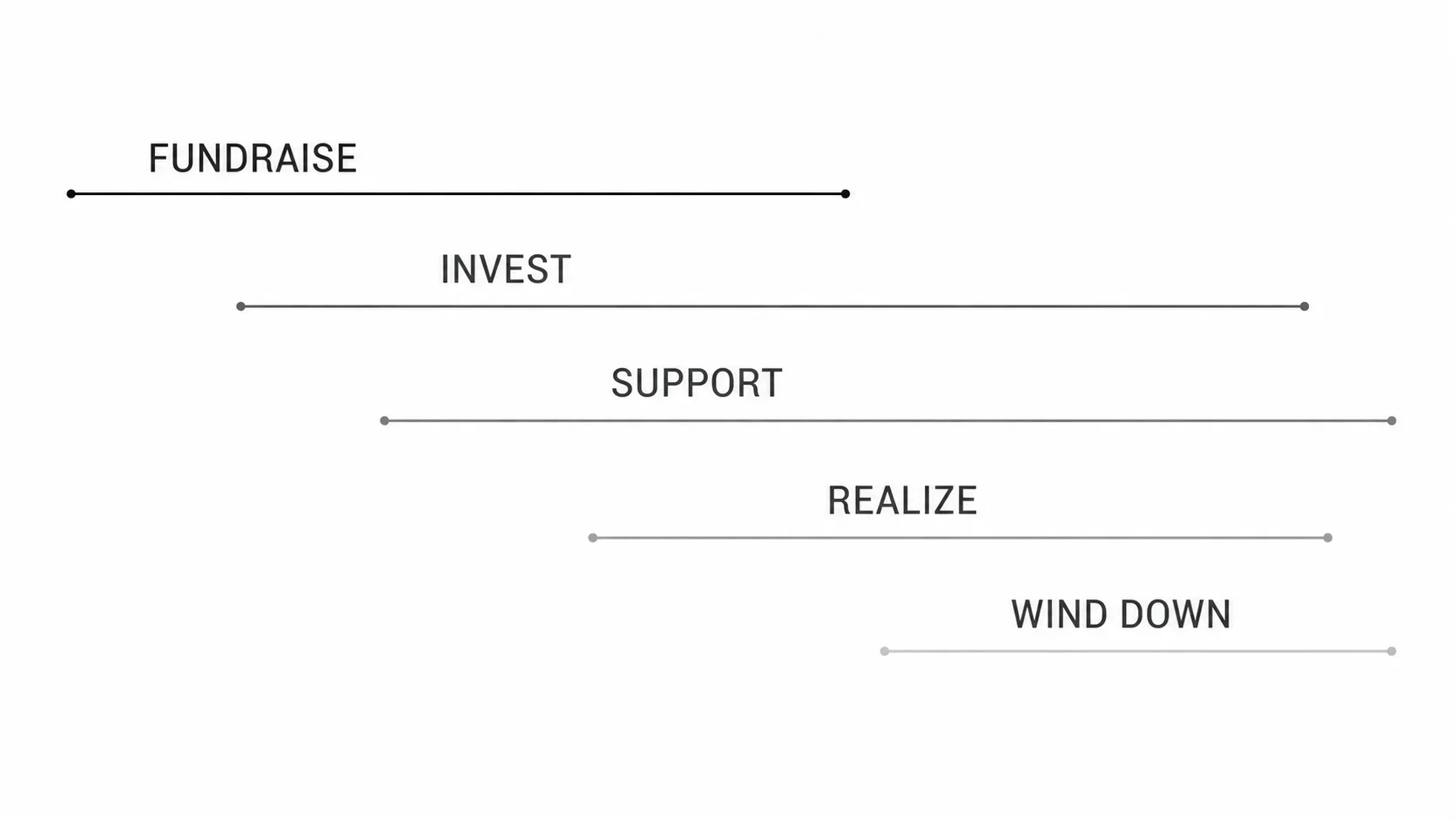
The clean phase diagram is useful, but it can create the wrong mental model. A fund does not finish fundraising, switch completely to investing, finish investing, and then wait for exits.
Several activities overlap:
- A GP may start making investments after a first close while fundraising continues toward a final close.
- Portfolio support begins as soon as the first deal closes.
- Follow-on investments can continue after the new-investment pace slows.
- An acquisition can return capital during the investment period, while another company remains private beyond the original fund term.
- The firm may raise its next fund before the current fund has produced many exits.
A mature firm therefore runs several clocks at once. Imagine a team that is realizing exits from Fund I, managing reserves and boards for Fund II, and fundraising and making initial investments from Fund III. The brand is one firm; the legal mandates, capital pools, performance records, and remaining timelines are different.
That overlap changes the work. A partner may pitch LPs in the morning, join a portfolio-company board call at midday, and negotiate a new deal that afternoon. An associate may model a Fund III investment while updating a Fund II reserve recommendation. Finance may issue capital calls for one vehicle and distributions for another.
The practical question is not only “What stage does this firm invest at?” It is “Which fund and vintage is making this decision, and where is that vehicle in its lifecycle?”
Phase 1: Formation and fundraising
Before a fund can write a check, the GP has to turn an investment thesis into a vehicle that LPs can underwrite. That means setting the strategy, target size, portfolio construction, economics, governance, and operating plan.
The legal documents matter because they define the actual lifecycle. The LPA typically governs matters such as the fund term, investment period, extensions, capital calls, distributions, fees, conflicts, and LP rights. Subscription documents admit investors, while side letters may grant negotiated rights to particular LPs. Counsel should determine the appropriate structure and terms.
The AngelList fund explainer describes an important cash-flow distinction: VC funds commonly accept capital commitments and call that capital over time as investments require it. A $100 million fund does not necessarily hold $100 million in cash on day one.
Fundraising also creates a repeatable information system. The ILPA Emerging Manager Toolkit includes examples of the documents that support the relationship across a fund's life: an LPA, subscription agreement, capital-call and distribution notices, fee reporting, quarterly reporting, and a due-diligence questionnaire.
A first close gives the GP enough committed capital to begin operating under the fund documents. Later closes add LPs until the final close. During that overlap, the team may be fundraising and investing at the same time.
The work splits across the firm:
- Partners and investor relations build the track-record narrative, meet LPs, negotiate terms, and own the close.
- Investment professionals turn the fund's investment thesis into a pipeline and demonstrate that the strategy is executable.
- Finance and operations coordinate entities, vendors, onboarding, budgets, notices, controls, and reporting.
The phase ends operationally when fundraising closes, but the promises made to LPs continue to constrain every later decision.
Phase 2: The investment period
The investment period is the contractual window in which a fund normally makes new portfolio investments. A common range is three to five years, but the LPA controls the definition, permitted exceptions, and what happens after the period ends.
The visible workflow is familiar:
- Build deal flow through networks, outbound research, founders, co-investors, and market work.
- Screen the company against the fund's stage, sector, geography, check size, and return requirements.
- Run venture capital due diligence and convert the evidence into an investment memo.
- Take the recommendation through the investment committee.
- Call capital as needed, close the investment, and hand the company into the portfolio-management cadence.
The fund-level decision is broader than “Do we like this company?” A defensible approval also asks:
- Does the deal fit this vehicle's mandate?
- How much investable capital remains after fees, expenses, and existing obligations?
- What ownership can the fund obtain now, and what dilution is likely?
- How much should be reserved for follow-ons?
- Does the check create concentration or pacing risk?
- Is there enough time and team capacity to support the company?
Those questions belong in a coherent venture capital portfolio strategy. Fast deployment is not automatically good execution. Deploying too slowly can leave the fund behind its mandate; deploying too quickly can exhaust capital before the team has learned from the first cohort or before attractive opportunities emerge.
The investment period usually ends before the fund itself ends. After it closes, the GP may still make permitted follow-ons, pay expenses, support portfolio companies, and pursue exits. “No longer making many new investments” does not mean “inactive.”
Phase 3: Portfolio management and follow-ons
Portfolio management starts with the first investment, not after the last new deal. It includes board work, founder support, executive recruiting, customer and investor introductions, valuation reviews, risk monitoring, LP reporting, and decisions about follow-on capital.
The scarce resource is not only cash. Partner attention, platform capacity, and the remaining life of the fund also matter. A portfolio review should therefore connect company-level progress to fund-level choices:
- Which companies have earned another check?
- Which positions need protection, and which would only consume reserves?
- What milestones would change the recommendation?
- How do new valuations affect NAV and reported performance?
- Where is the team spending time, and is that consistent with expected fund value?
A follow-on investment is not an automatic vote of confidence. It competes with every other use of reserve capital. The decision should compare the company's new evidence, ownership impact, downside risk, and fund-level opportunity cost.
Fund age can also change what the vehicle can offer. A 2025 working paper from researchers at the Bank of Israel, Warwick, and Wharton found that investments made earlier in a fund's life were more likely in their sample to reach successful exits. The authors examine financing capacity, monitoring horizon, and startup-fund matching as possible channels. That is not a universal rule that every younger fund is better, but it makes fund age a legitimate diligence question. Read the research paper.
Founders can ask how much follow-on capacity remains, whether the fund is still inside its investment period, who will own the board relationship, and how the firm handles companies that need more time. Candidates can ask the same questions to understand whether a role is mainly sourcing new deals, supporting an existing portfolio, or triaging mature positions.
Finance and operations keep the record consistent. Capital activity, valuations, fees, performance metrics, and LP reports must reconcile. The venture capital fund accounting workflow covers that control system in more depth.
Phase 4: Realizations, distributions, and the next fund
Realization converts a portfolio position into cash or distributable securities. Common routes include an acquisition, IPO, secondary sale, or partial liquidity event. A write-off also resolves a position, but without a positive return.
Exits do not arrive on a schedule that matches a presentation slide. A strong company may remain private for years; a weaker company may sell early; market conditions can close an IPO window. The GP's job is to manage the available choices without confusing the fund's need for liquidity with the company's best strategic outcome.
When proceeds arrive, the fund applies its governing distribution mechanics. LPs receive distribution notices and updated performance reporting. Measures such as DPI show realized value returned, while TVPI also includes remaining unrealized value. The VC fund performance metrics article explains how to read those measures, and the carried-interest guide covers the GP's performance economics.
Realizations also influence the next fund. LPs want evidence that marks can become distributions, that the GP followed the mandate, and that the team can manage a growing platform. This is why fundraising for Fund III may overlap with exits and portfolio work in Funds I and II.
The overlap can create tension. Senior investors must keep supporting existing companies while meeting prospective LPs and sourcing for a new vehicle. A firm's ability to allocate attention across those obligations is part of its operating quality, not an administrative detail.
Phase 5: Extensions and wind-down
Near the contractual end of the fund term, the portfolio may still contain private companies. The GP cannot assume that every remaining asset will produce a clean exit before a fixed date.
The governing documents determine the available options and approval process. Depending on those terms and circumstances, the GP may:
- request an extension to give remaining holdings more time;
- sell a position in a secondary transaction;
- distribute securities in kind;
- write off an asset with no expected recovery;
- use a continuation solution with appropriate valuation, conflict, and consent processes; or
- complete an available exit and distribute the proceeds.
An extension is not a new investment period by default. It is usually a controlled way to manage tail assets and finish the vehicle. The team still has to value holdings, report to LPs, pay remaining expenses, complete audits and tax work, manage conflicts, make final distributions, and dissolve entities when obligations are satisfied.
A disciplined wind-down answers five questions:
- Which assets and liabilities remain?
- What authority does the LPA give the GP, LP advisory committee, and LPs?
- What is the most defensible path for each tail asset?
- How will value, fees, conflicts, and timing be communicated?
- What records, filings, distributions, and entity actions are required to close?
The legal, tax, accounting, and regulatory details vary by fund and jurisdiction. The useful operating principle is stable: late-stage fund work is active portfolio and stakeholder management, not passive waiting for the clock to run out.
What the lifecycle changes for VC careers
A job title tells you less than the funds behind it. Two associate roles can have the same title while one is building a new portfolio and the other is managing follow-ons across mature funds.
| Team | Formation and fundraising | Investment period | Portfolio and realizations | Extension and wind-down |
|---|---|---|---|---|
| Partners / investor relations | Thesis, LP meetings, terms, closes | Investment decisions, founder relationships, portfolio construction | Boards, follow-ons, exits, LP updates, next fund | Extension decisions, conflicts, tail-asset outcomes |
| Investment team | Market maps, pipeline proof, fundraising analysis | Sourcing, diligence, memos, IC, closing | Monitoring, reserve analysis, exit support, performance narratives | Tail-asset analysis and final portfolio work |
| Platform / talent | Define support model and resource plan | Onboard founders and build repeatable services | Recruiting, go-to-market, community, executive support | Focus support on remaining high-value needs |
| Finance / operations | Entities, vendors, budgets, onboarding, controls | Capital calls, payments, books, valuations, reporting | Quarterly closes, audits, distributions, performance and LP data | Final reporting, distributions, filings, records, dissolution |
The work also compounds across vintages. A finance manager may close several funds with different fee bases and reporting calendars. A platform lead may support companies from multiple funds. An investment professional may source for the newest vehicle while monitoring companies held by older ones.
Before accepting a role, ask:
- Which funds, vintages, and legal entities would I support?
- Is the newest fund still fundraising, actively investing, or mostly reserved for follow-ons?
- How much of the role is new-deal work versus portfolio work?
- Who owns LP reporting, valuation, reserves, and exit analysis?
- Does the team have older tail funds or an active extension?
The venture capital career path explains how titles progress. The platform-role guide and fund-accounting article go deeper on non-investment work. The lifecycle tells you which version of those jobs the firm needs now.
How to identify a firm's lifecycle before joining or taking its capital
Do not infer lifecycle position from a famous logo or a single fund-size announcement. Build a small evidence file:
- Find the latest close. Was it a first close, an interim close, or a final close?
- Record the vintage. When did the fund start investing?
- Compare new and follow-on activity. Is the team building a portfolio or mostly supporting existing positions?
- Check the stated strategy. Stage, sector, geography, check size, ownership, and reserve policy determine how capital should move.
- Map active older funds. Recent exits, board seats, and mature holdings reveal work that the newest fund announcement does not.
- Ask about role scope. Does the job support one vehicle, several vintages, or the whole management platform?
- Ask who owns the operating outputs. Capital calls, valuations, LP reports, reserves, distributions, and extensions need named owners.
- Test the support promise. A founder should understand remaining capital and partner capacity; a candidate should understand which lifecycle problems the team is hiring them to solve.
Use the Venture Capital Careers companies directory to build a firm shortlist, then verify material details against each firm's current materials. When you can explain the relevant fund and phase, browse open venture capital roles and read the responsibilities in that context.
Frequently asked questions
How long is a typical venture capital fund lifecycle?
A traditional closed-end VC fund often targets roughly ten years, sometimes with one or more extension options. The actual term, investment period, and extension rights come from the fund documents.
What is the difference between a VC fund lifecycle and startup funding stages?
The fund lifecycle follows the investment vehicle from fundraising to closure. Startup funding stages—pre-seed, seed, Series A, and later rounds—follow the company. A single fund may invest in many companies at the same stage while each company moves through its own financing timeline.
Can a VC fund invest after its investment period?
Often it can make permitted follow-on investments and pay existing obligations, but the exact authority and limits depend on the LPA. A closed investment period usually restricts new portfolio investments; it does not make the fund inactive.
Why do VC firms raise a new fund before the old one ends?
The old fund may need years to support companies and realize exits after its new-investment period ends. A new vehicle lets the firm continue making new investments under a separate mandate while older funds mature.
What happens to companies still held when the fund term expires?
The GP follows the fund documents and applicable approvals. Options may include an extension, secondary sale, distribution in kind, write-off, continuation solution, or an available company exit.
Does every venture capital fund follow the same lifecycle?
No. Strategy, jurisdiction, vehicle type, LPA terms, market conditions, and portfolio outcomes all matter. Evergreen funds and corporate venture programs can have different capital and time constraints from a traditional closed-end partnership.
Read the firm through its funds
Fund lifecycle position changes the capital available, the decisions in front of the team, and the work a new hire or investor will encounter. Map the firm's active vintages before relying on its headline strategy. That one step makes job descriptions, portfolio activity, follow-on behavior, and fundraising announcements much easier to interpret.
Related posts
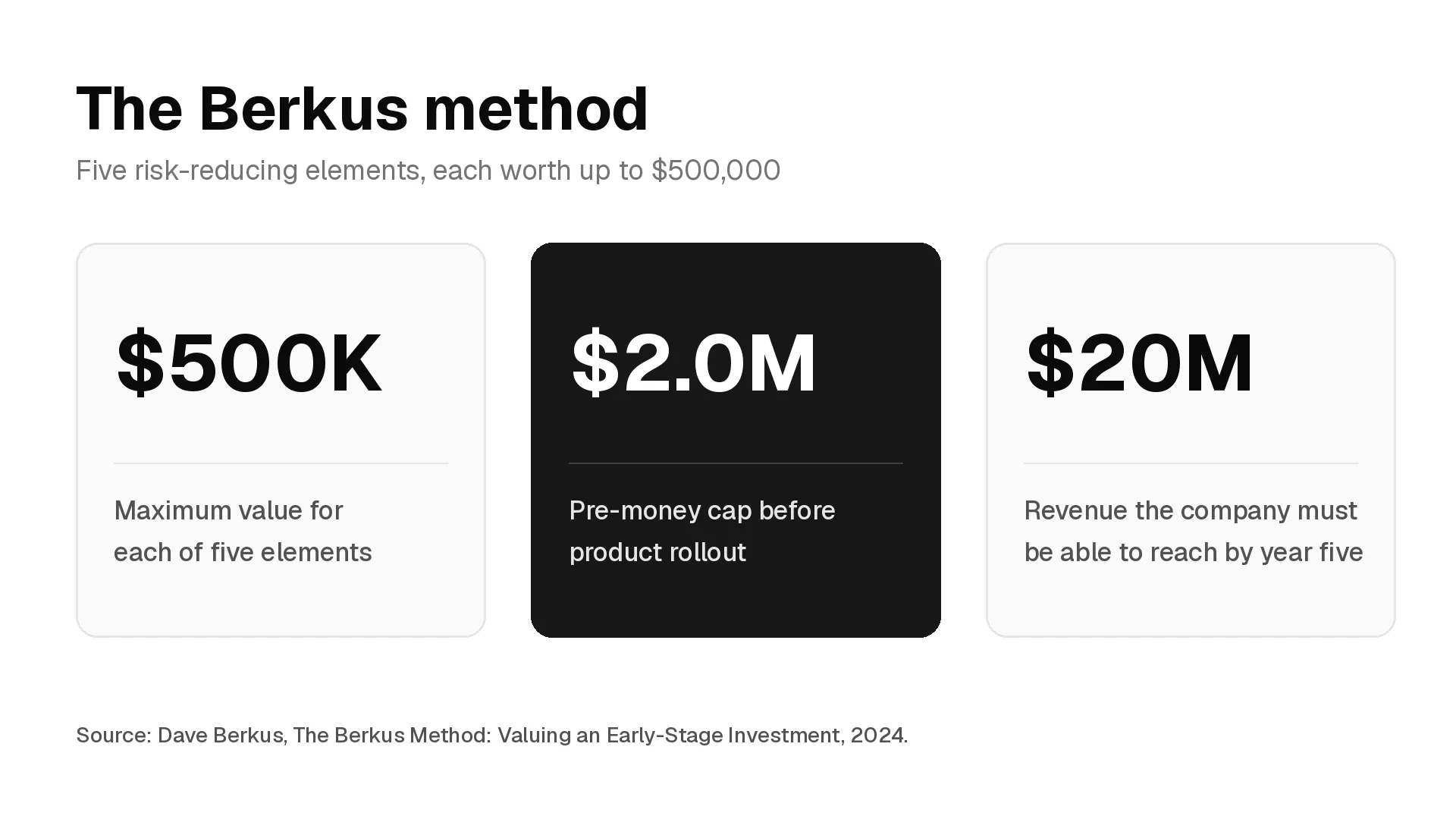
How the Berkus method values a pre-revenue startup, how to score each of the five elements, a worked example with ownership and 10x checks, how the $500,000 caps compare with current seed prices, and how VC analysts use it in memos and interviews.
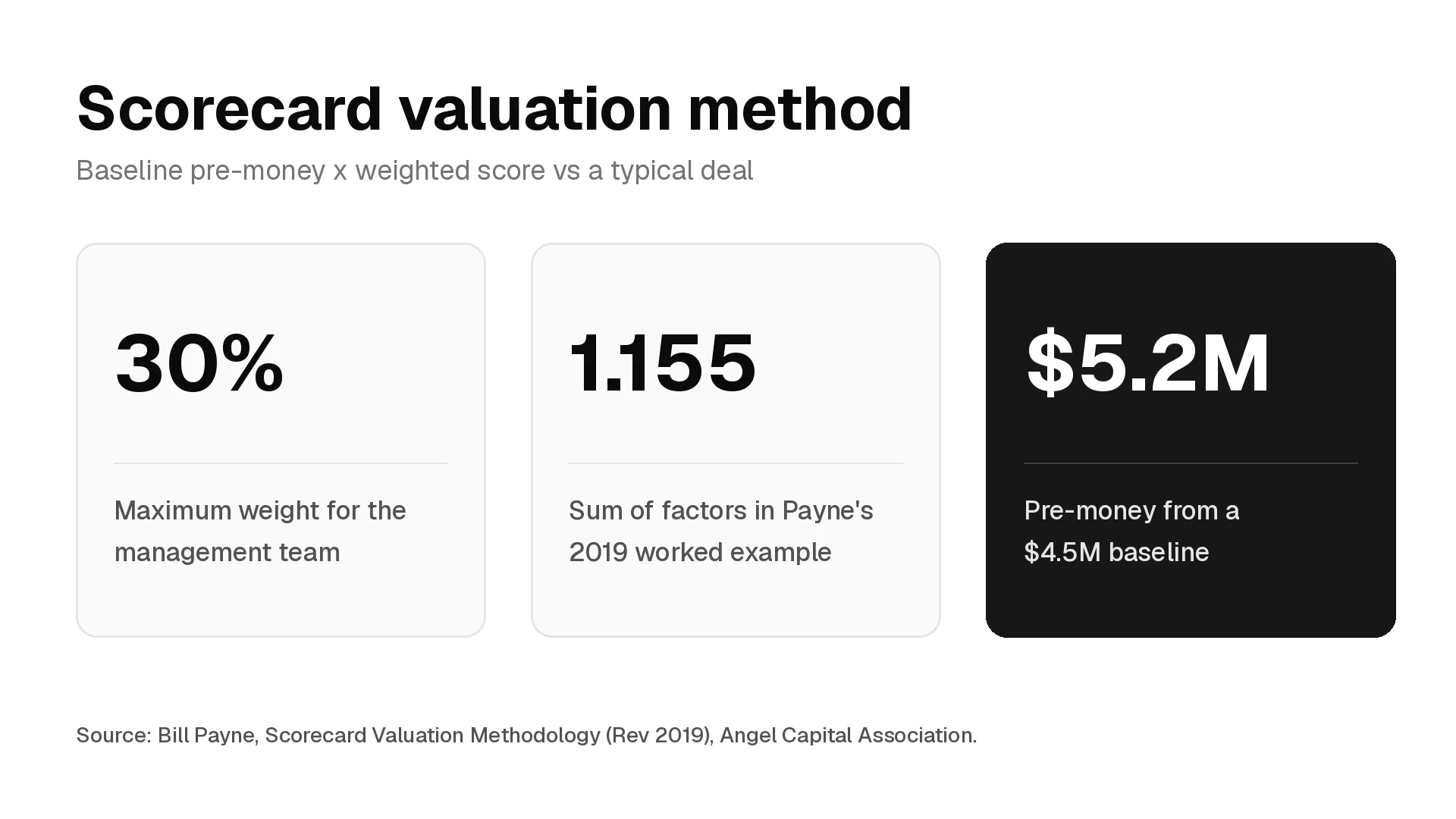
How the scorecard valuation method works, Bill Payne's seven factor weights, his worked example with the arithmetic checked, how to choose the baseline with current seed data, how sensitive the answer is, and how VC analysts use it in memos and interviews.
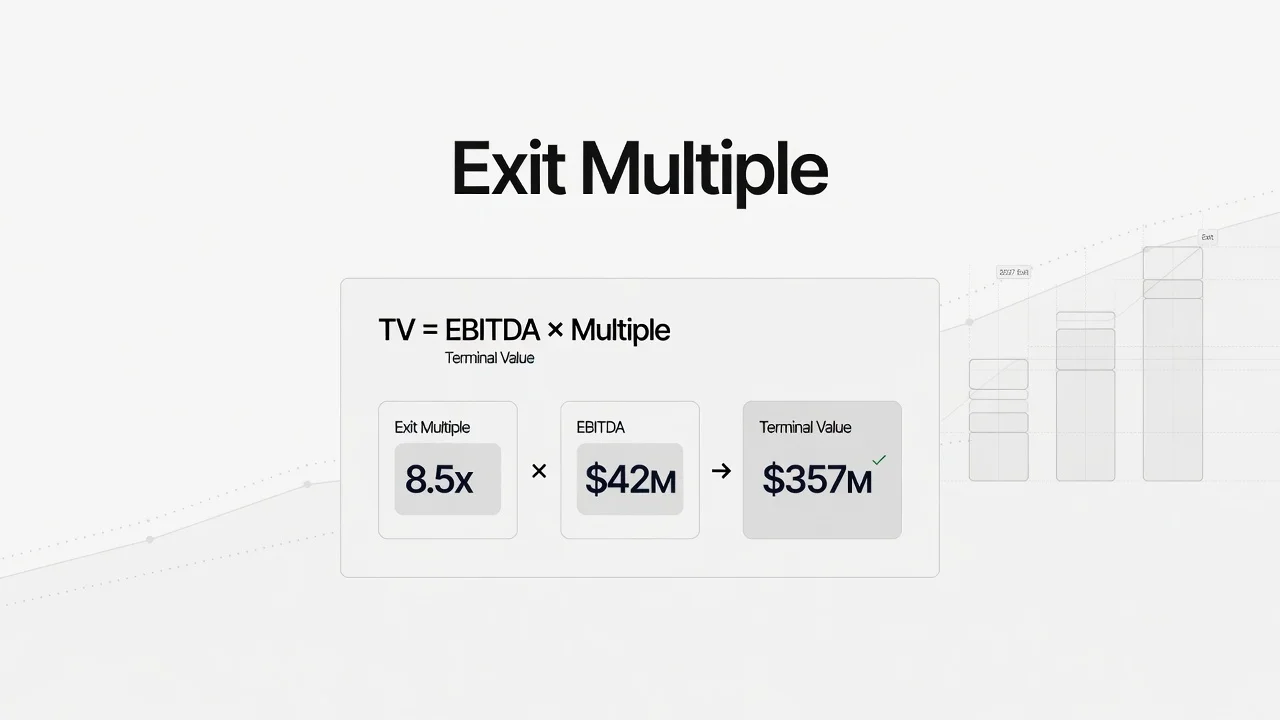
Exit multiple formula, a worked DCF terminal value example with a sensitivity grid, the implied growth cross-check, January 2026 industry multiples, and how VC investors use exit multiples.