
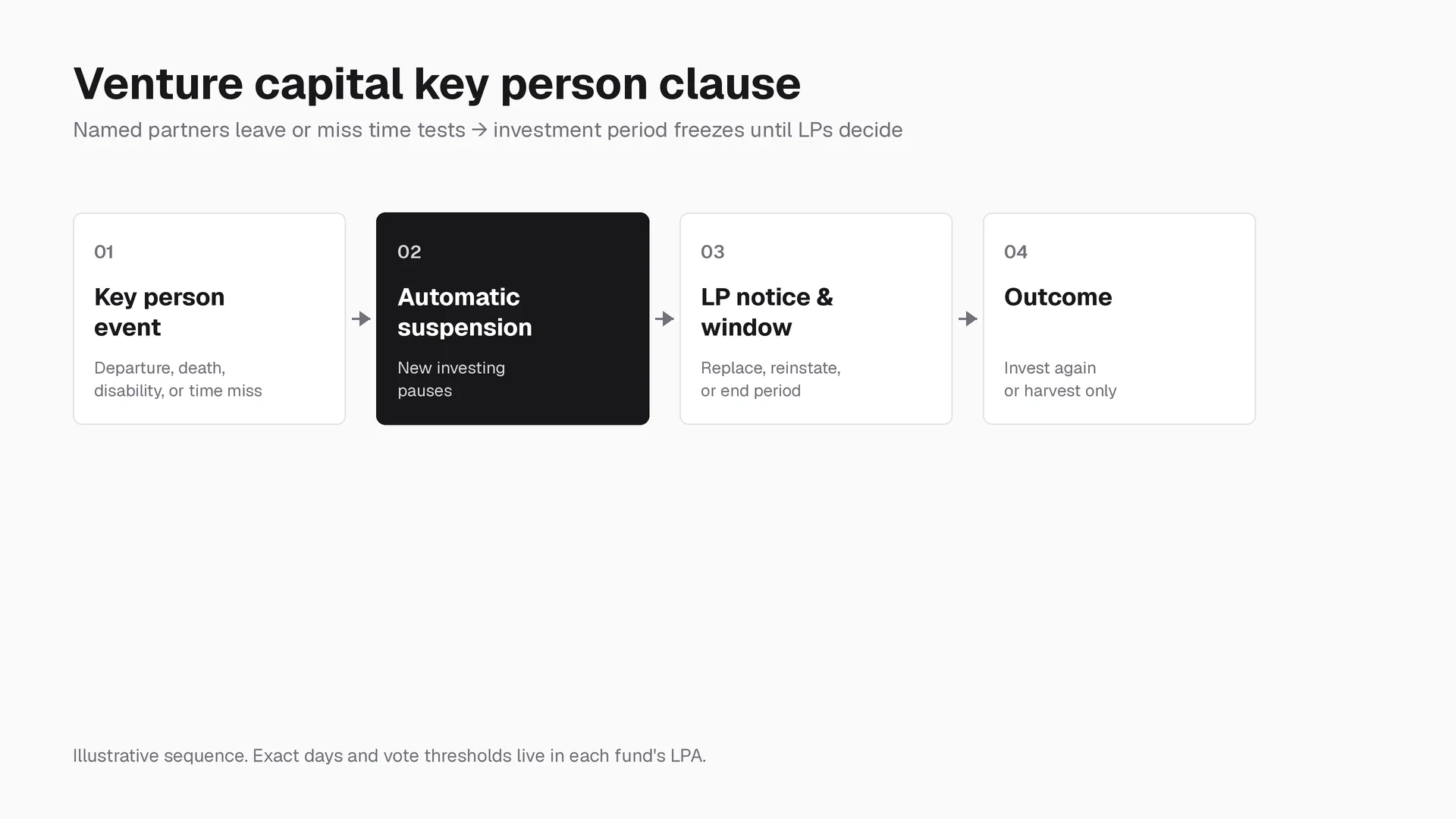
A key person clause in a venture fund's limited partnership agreement names the individuals the fund depends on and can automatically suspend new investing if those people leave, die, become disabled, or stop meeting a defined time commitment. The fund does not disappear overnight. New deals usually freeze while limited partners decide whether to reinstate the team, approve a replacement, or let the investment period end.
If you want a job at a venture firm, this clause is not trivia. It tells you how concentrated the franchise is in a few names, what happens to hiring and sourcing if a partner exits, and which diligence questions separate a durable platform from a one- or two-person bet.
Who gets named and what triggers a key person event
The limited partnership agreement (LPA) lists one or more key persons, usually founding or senior partners whose judgment, network, and time the LPs underwrote. Some funds name two people. Larger platforms may name several sector heads. The meaningful number is not the length of the list. It is the minimum who must remain active for the fund to keep investing normally.
A key person event is the contractual trigger. Common triggers include:
| Trigger | What it usually means |
|---|---|
| Departure | A named person resigns, is terminated, or otherwise leaves the GP |
| Death or disability | The named person can no longer perform the role |
| Reduced time commitment | The person falls below a stated share of business time (often framed as "substantially all" or a percentage test) |
| Change of control (in some LPAs) | Key persons lose control of the GP or drop below a carry-entitlement threshold |
"Key man clause" is the older label for the same idea. Most current drafting and ILPA materials use key person.
ILPA's Principles 3.0 treat a key person (or for-cause) event as governance baseline: LPs should get prompt notice of personnel changes that can affect fund performance, and a key person event should automatically suspend the investment period rather than wait for LPs to organize a vote just to pause new deals.
What happens when the clause fires
The usual sequence:
- Automatic suspension of the investment period. The GP generally cannot call capital for new portfolio companies without LP or LP advisory committee (LPAC) consent allowed by the LPA.
- Notice to LPs. The GP must tell investors that a key person event occurred.
- Remediation window. LPs (sometimes through the LPAC, sometimes by a vote of LPs in interest) decide whether to waive the event, approve a replacement key person, or let the suspension become permanent.
- Outcome. Reinstate and keep investing, or end new investing and manage the existing portfolio toward exits.
ILPA Principles 3.0 recommend that the suspension become permanent within 180 days unless a defined supermajority of LPs affirmatively votes to reinstate. Actual LPAs vary on days and vote thresholds. The ILPA Model Limited Partnership Agreement shows one concrete drafting pattern for Key Person Event and automatic suspension of the commitment period. Always read the fund's document rather than assuming any model number.
Related but separate tools include for-cause removal of the GP and no-fault removal or early termination rights. Those are different votes with different standards. Do not treat "key person event" as a synonym for "LPs fired the manager."
What the fund can still do during a suspension
A suspension freezes expansion, not the legal existence of the fund.
During a typical key person suspension the GP can often still:
- Manage and support existing portfolio companies
- Complete investments the fund was already legally committed to make (often with LPAC consultation)
- Pay fund expenses and service indebtedness as the LPA allows
- Continue some reporting and LP communication duties
What usually stops:
- New platform investments that were not already committed
- Using recycling, borrowing against uncalled commitments, or other workarounds to keep deploying as if nothing happened, unless the LPA expressly allows it
The same ILPA Principles 3.0 guidance is explicit that, after a key person suspension, the GP should not otherwise use fund assets (including recycling or borrowing against fund assets or uncalled commitments) to make new investments or other expenditures unless the LPA says so. The Principles also note that an interim clawback test should be considered when a key person event occurs.
Fee treatment during suspension is deal-specific. Some agreements step management fees down toward invested capital rather than committed capital. Do not assume fee continuity from a blog summary.
Key person clause vs key-person insurance (and other wrong senses)
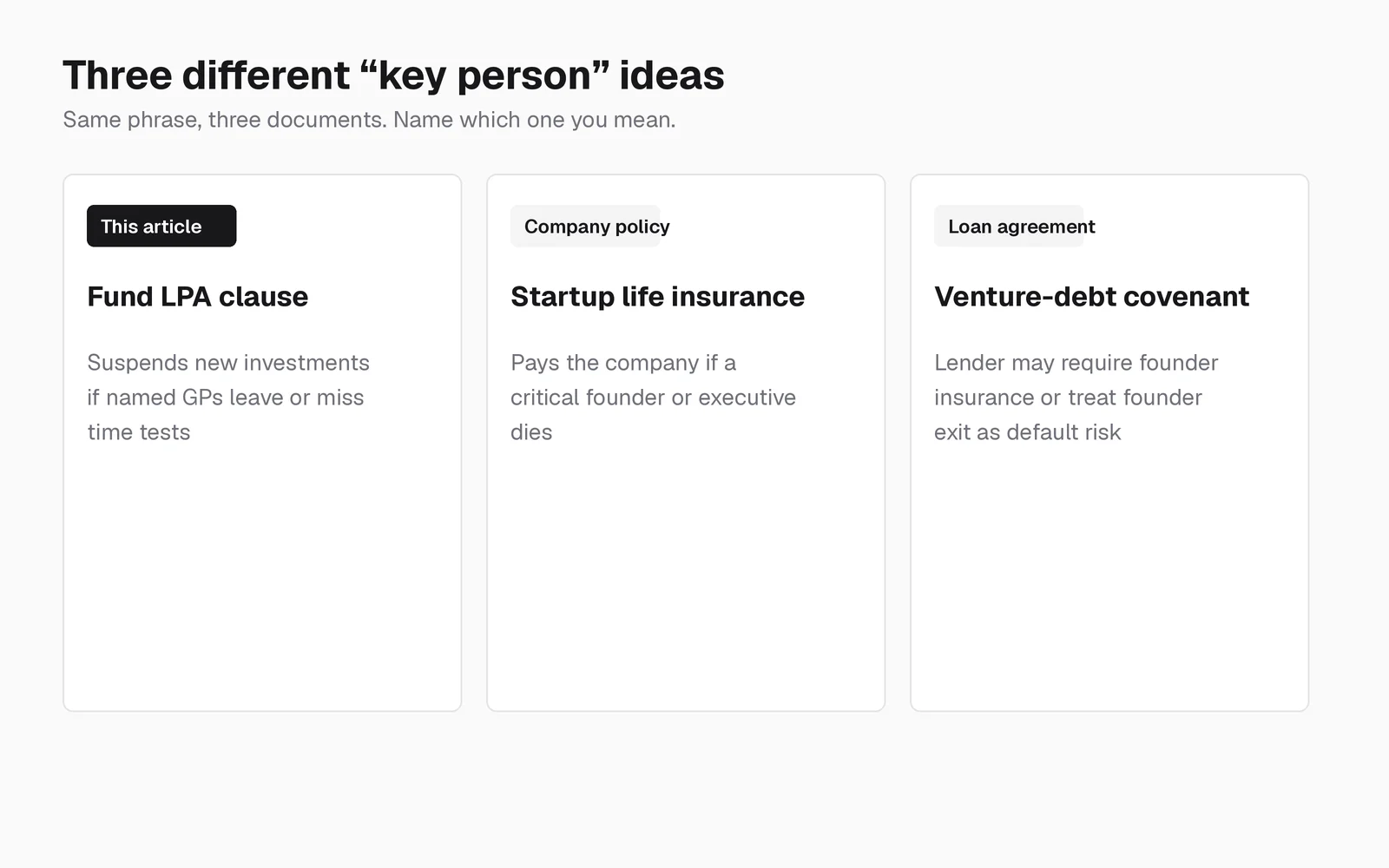
Search results sometimes mix three different ideas:
| Concept | Where it lives | What it does |
|---|---|---|
| Key person clause (this article) | Fund LPA between GP and LPs | Can suspend the fund's ability to make new investments if named GPs leave or stop meeting time tests |
| Key-person life insurance | Startup or company policy | Pays the company (or sometimes a lender) if a critical founder or executive dies |
| Venture-debt key-person covenant | Loan agreement | Can require founder insurance or put the loan in default if a named founder leaves |
If you are interviewing for a role at a VC firm, you almost always mean the LPA clause. If a founder asks you about "key person" on a term sheet or debt diligence, they may mean insurance or a lender covenant. Name which document you are talking about before you answer.
What the clause means if you work at a VC firm
For analysts, associates, principals, platform staff, and fund ops, a key person event is an operating shock, not only an LP legal event.
Sourcing and IC slow or stop. If new investments are suspended, the calendar that justified your headcount changes. Screening inbound, running first meetings, and packing IC memos for *new* deals can go near zero while portfolio work, follow-ons that remain permitted, and LP reporting spike.
Hiring pauses. Firms hire against dry powder and an active investment period. A frozen investment period is a common reason open associate or analyst searches quietly stall, even if the careers page still lists the role.
Your mentor may be the trigger. If the partner who hired you is a named key person and leaves, you can keep your job while the franchise you joined is under review. Title continuity is not the same as mandate continuity.
Carry and vesting questions get sharper. A suspension does not automatically cancel employee carry grants, but timing of realizations, team reallocation of the GP pool, and departure terms all get more sensitive. Use the carried interest guide for pool mechanics; ask counsel or the firm for your grant documents when a key person event is live.
Smaller funds feel it more. A two-partner seed fund that names both partners concentrates continuity risk. A multi-stage platform with several named sector leads can lose one partner and still have a bench. That difference shows up in how scary a headline departure is for junior seats.
How to evaluate key-person risk before you join a firm
Before you accept an offer, treat key-person design as firm diligence, not only LP diligence.
- Who would LPs name? Ask, carefully, which partners are treated as essential to the current fund. You may not see the LPA, but partners can usually say whether the franchise is "two names" or "a broader team."
- Does the pitch deck match the economic center of gravity? If every hero deal traces to one partner who is about to fundraise a personal brand vehicle, concentration risk is higher than the slide count suggests.
- How deep is the bench under the named people? Who actually runs diligence, boards, and talent support when a partner is out for a quarter?
- Multi-fund time splits. "Substantially all business time" across a family of funds can still leave little attention for the specific vehicle you are joining.
- Recent partner turnover. Departures are normal. Patterns of unexplained exits, public splits, or stalled funds are not.
- What happens to open roles if a senior person leaves? A direct question in late-stage diligence. Vague answers are data.
- Fund age and dry powder. A fund early in its investment period with a thin key-person slate is a different risk than a mature fund mostly in harvest. Pair this with the fund lifecycle and dry powder explainers when you map timing.
For how LP and GP roles fit together, see limited partner vs general partner. For entity layers around the GP, see venture capital fund structure.
How to explain the key person clause in a VC interview
Short answer you can say out loud:
"A key person clause names the partners the LPs underwrote. If those people leave or stop meeting the time commitment in the LPA, new investing usually suspends automatically while LPs decide whether to reinstate the team, approve a replacement, or end the investment period. The fund still owns and manages existing companies. It just cannot keep deploying as if nothing changed."
Strong follow-ups if they push:
- "Suspension is not the same as dissolving the fund."
- "ILPA's Principles favor automatic suspension and a time-boxed path to permanence unless LPs affirmatively reinstate."
- "I would separate that from key-person life insurance on a startup founder, which is a different document and a different risk."
Avoid:
- Claiming every VC fund uses the same 180-day clock or the same vote threshold
- Saying the clause "fires the GP"
- Inventing statistics about how often events occur
Frequently asked questions
Does a key person event end the fund?
Usually no. It suspends the investment period. Existing portfolio companies remain. If LPs do not reinstate or approve a replacement within the LPA's window, new investing can end permanently and the fund manages toward exits.
Can the fund still make follow-on investments during a suspension?
Often yes for existing portfolio companies, subject to the LPA. New platform deals are what typically stop. Read the specific agreement.
Is every partner a key person?
No. Only the people named in the LPA (and any approved replacements) are key persons for that clause. A firm can have partners who are economically important internally without being named.
What is the difference between a key person event and for-cause removal?
A key person event is usually about continuity of named people and time commitment. For-cause removal is about defined bad acts (fraud, material breach, gross negligence, and similar). Remedies and vote thresholds differ.
Do employees see the LPA?
Juniors often do not. You can still ask intelligent questions about team concentration, succession, and what would happen to hiring if a senior partner left. Partners who refuse any discussion of continuity are telling you something.
Should I worry more at an emerging manager?
Concentration risk is usually higher when two people *are* the franchise. That is not an automatic reason to avoid the seat. It is a reason to underwrite the people and the bench with eyes open, and to understand how your role is funded if new investing pauses.
Next steps
Map the firm's recent funds and partner roster on the companies directory, then browse open venture capital roles at firms still in an active investment period. Create a job alert so you see new seats when funds reopen hiring after a close. For the broader ladder around these seats, read the venture capital career path guide and how to become a venture capitalist.
Related posts
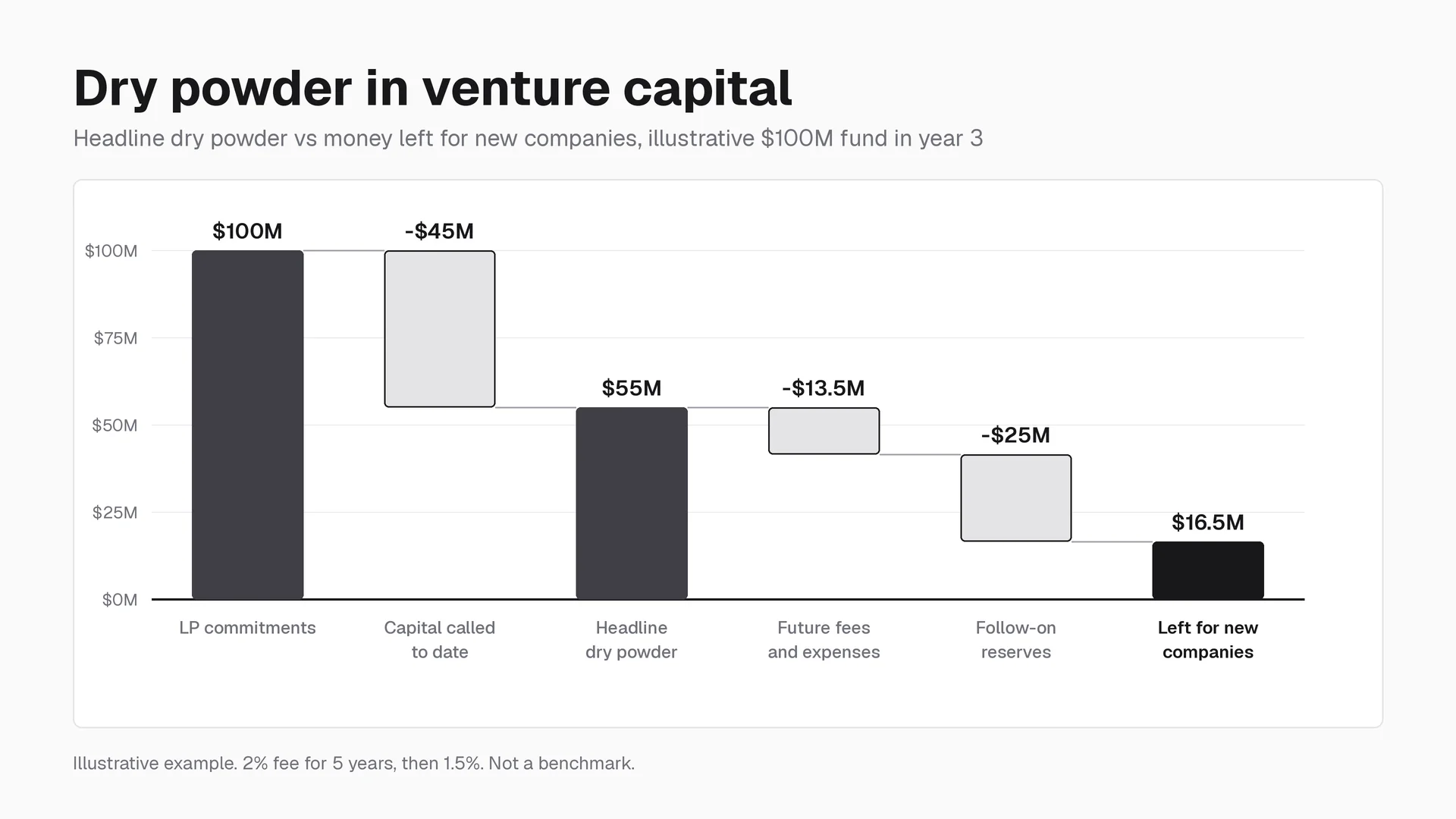
Dry powder in venture capital explained: the formula, a worked $100M fund example showing how little headline dry powder is left for new companies, current US and global data, and what a firm's dry powder tells you about hiring and the junior job.
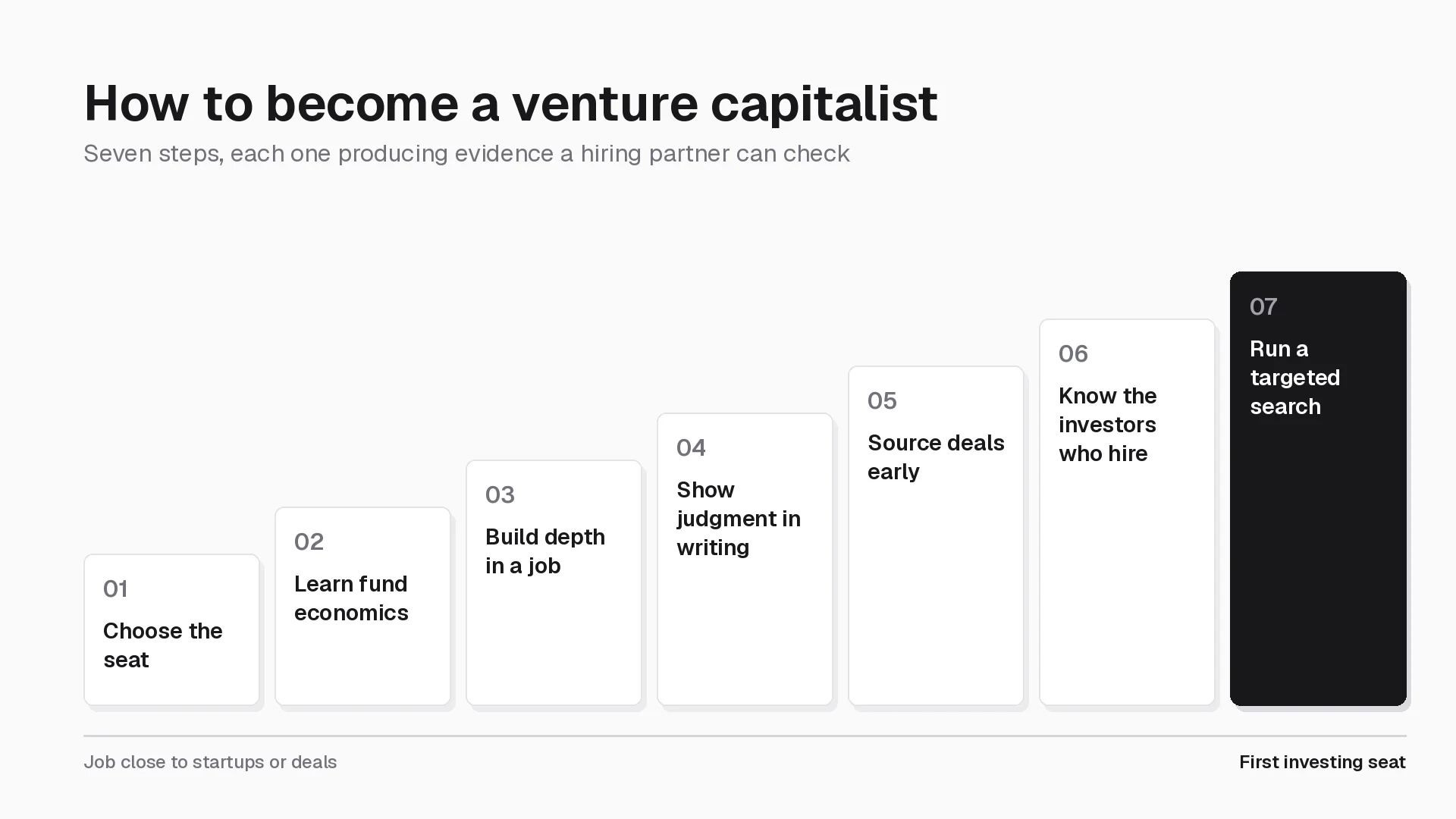
How to become a venture capitalist in seven steps: choose the seat, build depth, prove judgment in writing, source early, and run a targeted search. Includes entry paths by background, how fund size limits hiring, MBA placement data, and licensing.
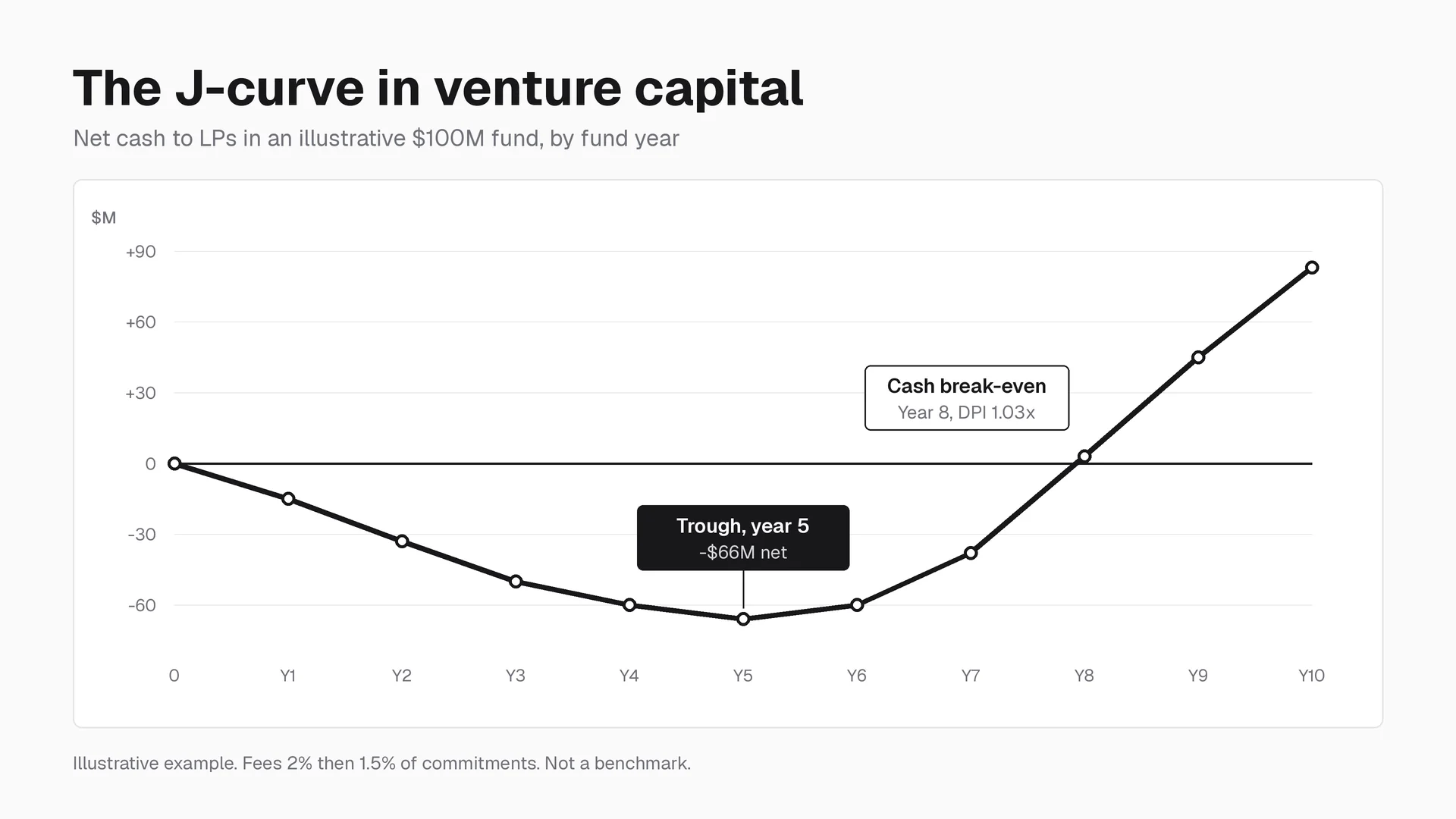
The J-curve in venture capital explained with a worked $100M fund example, current vintage data on DPI and IRR, a check for telling a normal trough from a weak fund, and what the curve means for VC carry, offers, and interviews.