
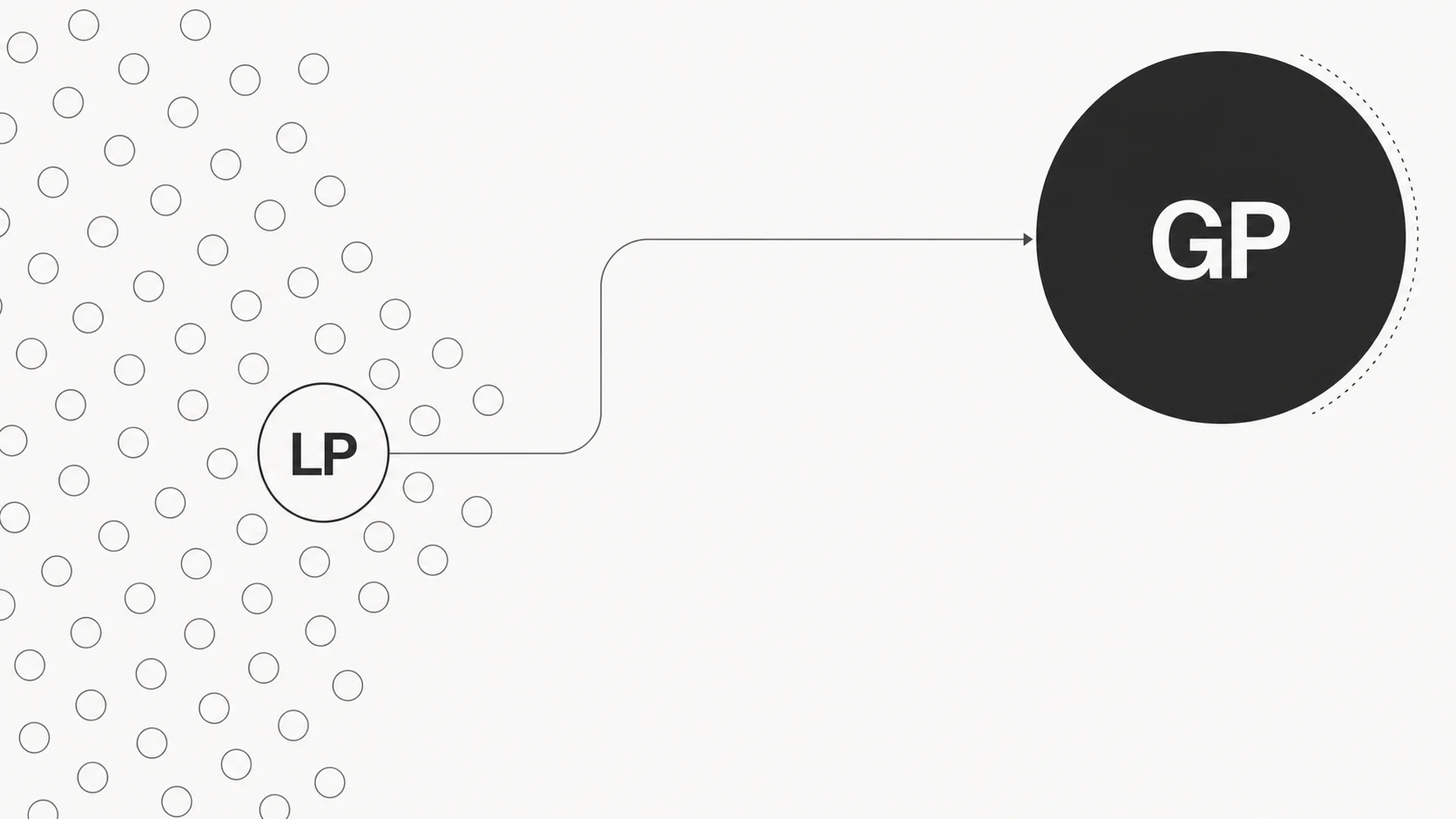
In a venture capital fund, limited partners (LPs) commit the capital and general partners (GPs) control how the fund invests it. LPs are typically institutions, family offices, funds of funds, corporations, or individuals. The GP is the manager responsible for fundraising, investment decisions, portfolio oversight, reporting, and exits.
That shorthand is useful, but incomplete. LPs are usually excluded from day-to-day investment management, yet they negotiate the fund's mandate and retain important information, consent, advisory, and remedy rights. A GP controls the fund, but that authority is bounded by the limited partnership agreement (LPA), side letters, law, and fiduciary or contractual duties.
The practical rule is simple: the GP manages; the LPs govern through the documents rather than by picking individual deals.
Limited partner vs general partner at a glance
| Dimension | Limited partner (LP) | General partner (GP) |
|---|---|---|
| Primary contribution | Commits capital to the fund | Provides investment judgment, management, team, and usually a GP commitment |
| Day-to-day role | Generally passive | Active fund manager |
| Investment decisions | Does not normally select individual investments | Sources, diligences, approves, and manages investments under the fund mandate |
| Governance | Negotiates the LPA; may hold consent, advisory-committee, information, removal, or transfer rights | Exercises management authority and administers the fund under the documents |
| Economics | Receives its share of distributions after fees, expenses, and the agreed waterfall | Receives management fees through the manager and may earn carried interest after waterfall conditions |
| Liability | Usually limited to agreed commitments, subject to law and conduct | The GP entity bears broader responsibility; modern structures often use a limited-liability entity as GP |
| Time horizon | Capital is illiquid for the fund's multi-year life | Builds, invests, manages, realizes, and often raises successor funds over many years |
| Core diligence question | Are the mandate, fees, reporting, conflicts, and remedies acceptable? | Can the team produce returns while honoring the mandate and maintaining LP trust? |
The LPA is more authoritative than any generic comparison. Two funds can use the same labels while granting different rights, charging different expenses, applying different waterfalls, and handling conflicts differently.
The entities behind the labels
A venture fund is commonly organized as a limited partnership, but the visible firm name may sit above several legal entities:
- the fund, which holds the portfolio and receives LP commitments;
- the general partner entity, which has authority over the partnership;
- the management company or investment manager, which employs the team and receives the management fee; and
- parallel funds, feeders, co-investment vehicles, or special-purpose vehicles when the strategy requires them.
“GP” can therefore mean the legal general-partner entity, the management team acting through it, or a senior professional called a general partner. Those meanings overlap but are not identical. A person with a GP title does not necessarily own the GP entity, and an LLC or other limited-liability entity often serves as the legal GP.
This distinction matters when discussing liability and economics. The legal GP may carry the partnership's management authority, while management fees flow to a separate manager and carried-interest interests sit in another entity. For the broader map, see the venture capital fund structure guide.
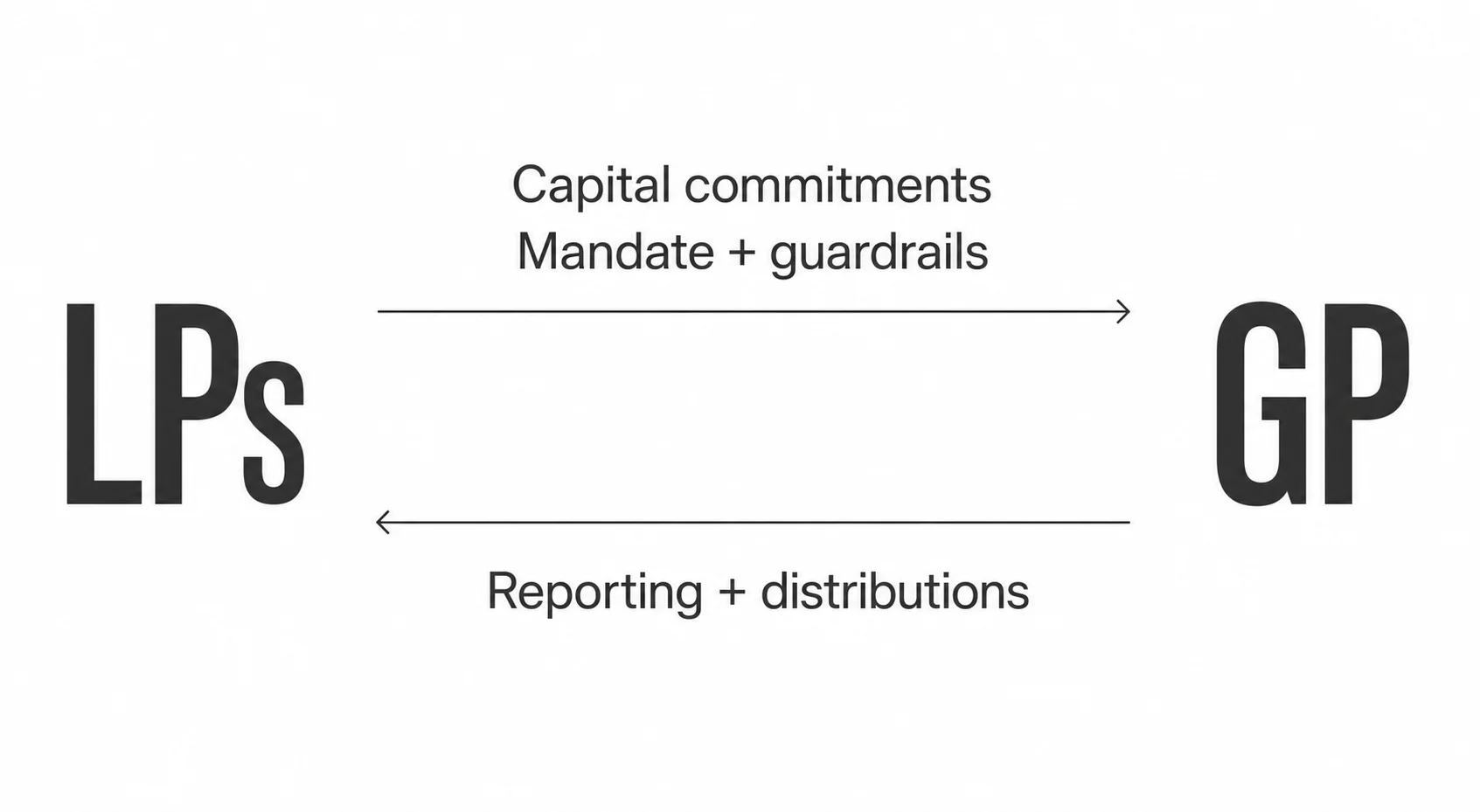
How capital moves between LPs and the GP
An LP commitment is not usually transferred in full on day one. Instead, the GP issues capital calls as the fund needs cash for investments, fees, expenses, and reserves.
A simplified operating loop looks like this:
- Commitment: each LP signs the subscription documents and agrees to fund up to a specified amount.
- Capital call: the GP requests part of that commitment under the LPA's notice and use rules.
- Deployment: the GP invests, pays permitted expenses, and reserves capital for follow-ons.
- Reporting: the GP provides financial statements, capital-account information, portfolio updates, and other required disclosures.
- Distribution: proceeds from realizations move through the agreed waterfall and are distributed to LPs and carried-interest recipients.
- Recycling or recall: the LPA may allow certain proceeds to be reinvested or recalled, within defined limits.
This is why “LPs invest money and GPs invest companies” is too loose. LPs make a contractual commitment; the GP controls the timing and permitted use of called capital. The obligations continue across the venture capital fund lifecycle, including periods when exits are slow and distributions are limited.
What the general partner is responsible for
The GP owns the fund-level outcome. Its work extends far beyond approving startups:
- Fundraising: define the strategy, market the fund, run diligence, negotiate terms, and close commitments.
- Investment: build a pipeline, lead diligence, negotiate terms, make decisions through the investment committee, and size initial checks.
- Portfolio construction: manage concentration, ownership targets, reserves, follow-ons, and pacing.
- Portfolio oversight: support founders, take board roles, monitor risk, and decide how to respond when companies miss plan.
- Operations: oversee valuations, audits, tax reporting, capital calls, distributions, compliance, and service providers.
- LP relations: report performance, explain material developments, manage advisory processes, and maintain trust between fundraising cycles.
- Realizations: evaluate secondary sales, acquisitions, IPOs, write-offs, extensions, and wind-down decisions.
The GP has discretion, not a blank check. The strategy, concentration limits, investment period, recycling rules, key-person provisions, conflicts process, and other restrictions in the fund documents shape what it can do.
What limited partners can—and cannot—control
LPs do not normally vote on each startup investment. Giving every investor a deal-level approval right would make the fund slow, undermine delegated management, and blur the legal separation between passive capital and active control.
But “passive” does not mean powerless. Depending on the LPA and side letters, LP rights may include:
- regular financial, portfolio, fee, and capital-account reporting;
- consent over amendments or other reserved matters;
- a limited partner advisory committee (LPAC) that reviews conflicts, valuations, or other specified issues;
- key-person and investment-period suspension mechanisms;
- removal, termination, or no-fault divorce provisions;
- transfer, withdrawal, excuse, or exclusion rights in defined circumstances;
- most-favored-nation or side-letter rights for eligible investors; and
- access to meetings, reference materials, and records subject to confidentiality limits.
The ILPA Principles organize strong private-fund governance around alignment, governance, and transparency. They are industry guidance, not a substitute for the signed LPA.
An LP should distinguish four levels of influence:
| Level | Example | What it is not |
|---|---|---|
| Information | Quarterly reports, annual meeting, capital-account statements | Authority to direct the portfolio |
| Consultation | GP seeks views on a market, conflict, or extension | A binding vote unless documents say so |
| Consent | Approval required for a defined amendment or reserved matter | General management power |
| Remedy | Suspension, removal, termination, or transfer right after a trigger | A routine investment-selection process |
How LPs and GPs make money
LPs seek investment returns from the portfolio. The GP's economic package usually combines a management fee, carried interest, and returns on its own capital commitment. The exact percentages and sequencing are fund-specific; do not infer them from market shorthand.
Management fee
The management company generally receives a contractual fee to pay salaries, systems, diligence, travel, compliance, and other firm costs. The fee base may change over the fund's life—for example, from commitments during the investment period to invested capital or another measure later.
Carried interest
Carry is a share of investment profits allocated to the GP's carry vehicle after the LPA's distribution waterfall is applied. Relevant terms can include return of capital, preferred return, catch-up, deal-by-deal versus whole-fund mechanics, escrow, clawback, and tax distributions. The venture capital carried-interest guide explains the mechanics in more detail.
GP commitment
The GP or its affiliates usually invest capital alongside LPs. The commitment is intended to align incentives, but the meaningful question is how it is funded, allocated among partners, financed, and treated when a professional joins or leaves.
LP net return
LPs receive distributions net of the fund's fees, expenses, and carried interest under the waterfall. Gross portfolio performance is therefore not the same as the LP's net outcome.
Liability and tax: use the right caveats
In a traditional limited partnership, the GP has broader responsibility for partnership obligations while an LP's liability is generally limited. Delaware law, for example, states that a limited partner is not liable for partnership obligations unless it is also a GP or crosses specified control boundaries; it separately gives the GP management authority and broader liabilities. See Delaware Code §17-303 and §17-403.
That does not automatically mean individual investment professionals expose all personal assets. Funds commonly appoint an LLC or another limited-liability entity as the legal GP. Guarantees, indemnities, misconduct, contract terms, jurisdiction, and entity separateness can change the analysis. Treat “the GP has unlimited liability” as a description of a legal default—not a complete answer about who ultimately bears a claim.
US partnerships generally file an information return and pass reportable tax items through to partners. The IRS partnership guidance explains Form 1065 and Schedule K-1 at a high level. An LP can owe tax on allocated income even when cash distributions differ, while tax-exempt and non-US investors may negotiate structures for their own constraints.
Fund documents and advice from qualified counsel and tax professionals control. A blog comparison cannot resolve a specific investor's liability or tax treatment.
Ten questions to ask before signing an LPA
Whether you are evaluating a fund as an LP, joining an emerging manager, or interviewing for a fund-operations role, reduce the structure to ten questions:
- What exactly is the investment mandate? Check stage, geography, sector, concentration, reserves, follow-ons, and prohibited investments.
- When can the GP call, recycle, or recall capital? Separate commitment size from expected timing and cash management.
- Which fees and expenses can each entity charge? Include broken-deal costs, organizational expenses, consultants, travel, and fee offsets.
- How does the distribution waterfall work? Model return of capital, preferred return if any, carry, catch-up, escrow, and clawback.
- What reporting arrives, in what format, and when? Ask about valuations, portfolio detail, fees, ESG or impact metrics, and capital accounts where relevant.
- How are conflicts handled? Identify affiliate transactions, cross-fund investments, continuation vehicles, allocations, and LPAC jurisdiction.
- What triggers key-person or investment-period suspension? Test who is essential and what happens if they leave.
- What can LPs approve or remedy? Map amendments, extensions, removal, termination, no-fault divorce, and voting thresholds.
- How do transfers, defaults, excuses, and exclusions work? These provisions matter when circumstances change.
- Which terms live outside the main LPA? Review subscription documents, side letters, management agreements, and policies together.
A strong fund is not one where LPs manage every decision. It is one where delegated authority, accountability, economics, and remedies are explicit before capital is called.
What the LP/GP split means for a venture capital career
The structure determines where the work sits.
GP-side investing roles focus on thesis, sourcing, diligence, investment decisions, portfolio work, and fundraising. Senior professionals may also own LP relationships, firm economics, hiring, compliance oversight, and the next fund.
Fund operations, finance, and investor-relations roles translate the LPA into capital calls, reporting, valuations, audit support, K-1 coordination, side-letter tracking, LP communication, and data rooms. These roles are not administrative afterthoughts; they keep delegated authority credible.
LP-side roles underwrite managers rather than individual startups. They assess team, strategy, attribution, portfolio construction, governance, terms, operations, and whether a fund belongs in the institution's broader allocation.
Do not confuse a fund LP with a venture partner. “Limited partner” describes an investor's legal/economic position in the fund; “venture partner” is a flexible professional title at or around a VC firm.
To see how firms describe current mandates, research managers in the Venture Capital Careers companies directory and compare roles on the VC job board.
Frequently asked questions
Is an LP an owner of the venture capital firm?
Usually not. An LP owns a partnership interest in a particular fund. That does not normally give it ownership of the management company or VC firm brand.
Can an LP also be a GP?
An individual or institution can hold interests in different capacities, and the GP often commits capital to its own fund. The documents and entity structure must distinguish the roles, rights, and conflicts.
Who gets paid first, LPs or the GP?
The LPA's waterfall decides. Many structures return specified capital and possibly a preferred return before carried interest is fully allocated, but venture funds vary. Management fees are separate contractual payments, not the same as carry distributions.
Do LPs choose the startups in a VC fund?
Normally no. The GP selects and manages investments within the mandate. LPs may have consultation, consent, conflict-review, or excuse rights without approving each deal.
Are LPs liable if the fund loses money?
LPs can lose the capital they contributed and may remain obligated to fund uncalled commitments. Liability beyond that depends on the governing law, documents, conduct, and any separate agreements.
What is the main document between LPs and the GP?
The limited partnership agreement is central, but it is not the only document. Subscription agreements, side letters, management agreements, advisory-committee terms, and policies can materially affect the relationship.
The bottom line
LPs supply committed capital and negotiate the boundaries. The GP exercises investment authority and is accountable for the portfolio, fund operations, reporting, and realizations. Neither role can be understood from a one-line definition: the real relationship lives in the entities, LPA, side letters, waterfall, reporting package, and operating behavior.
When evaluating a fund or a career opportunity, ask where capital, authority, economics, liability, and accountability actually sit. Those answers matter more than the labels.
Related posts
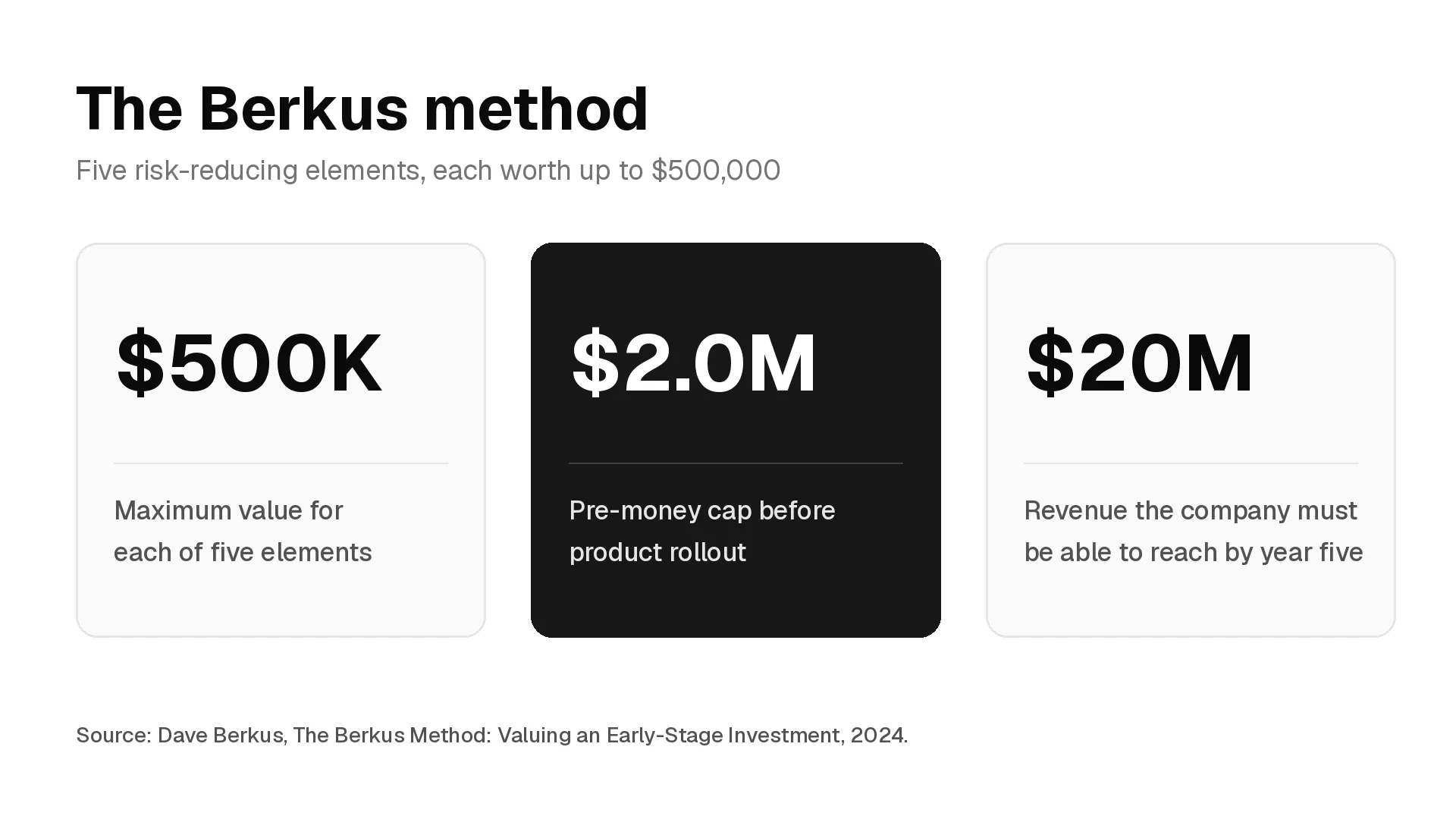
How the Berkus method values a pre-revenue startup, how to score each of the five elements, a worked example with ownership and 10x checks, how the $500,000 caps compare with current seed prices, and how VC analysts use it in memos and interviews.
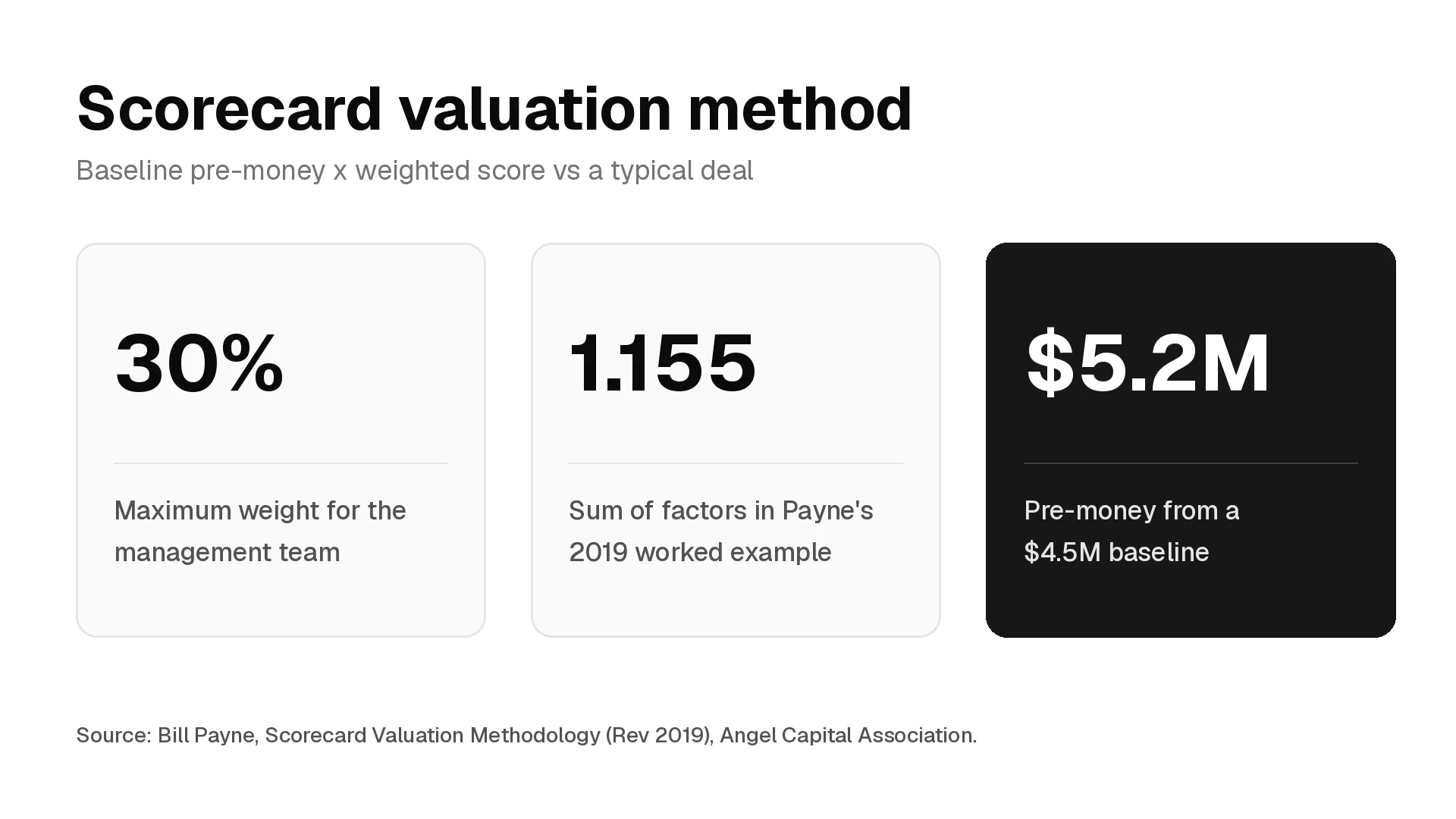
How the scorecard valuation method works, Bill Payne's seven factor weights, his worked example with the arithmetic checked, how to choose the baseline with current seed data, how sensitive the answer is, and how VC analysts use it in memos and interviews.
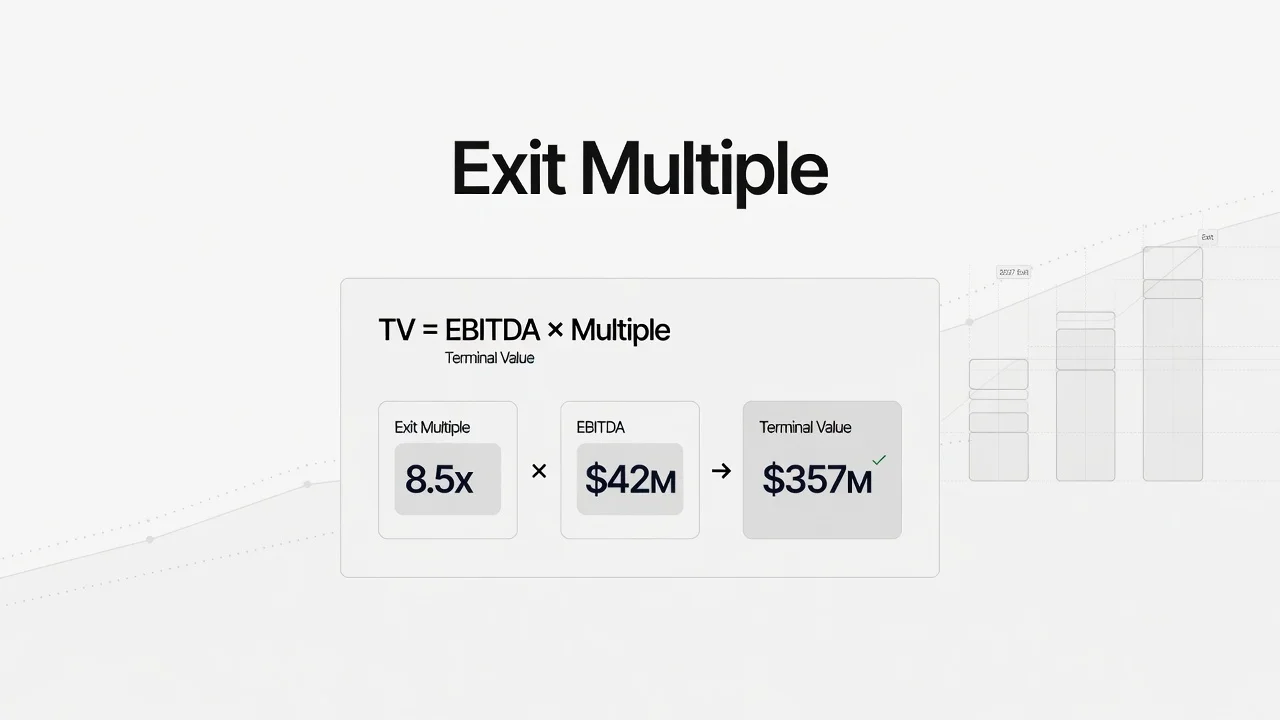
Exit multiple formula, a worked DCF terminal value example with a sensitivity grid, the implied growth cross-check, January 2026 industry multiples, and how VC investors use exit multiples.