

New Zealand’s venture capital market includes broad technology investors such as Icehouse Ventures, Blackbird, GD1 and Movac, alongside specialist funds focused on deep tech, climate and food systems. The 15 managers below have a live website and a stated mandate to back New Zealand companies or founders.
They are not ranked by size or quality. “Best” depends on the company’s stage, sector, geography and support needs—or, for a candidate, the kind of investing work and team environment being targeted. Fund mandates change, so treat the stage labels as a starting point and confirm the current position on each firm’s website.
New Zealand venture capital firms at a glance
| Firm | Broad entry point | Focus | New Zealand presence | Best fit |
|---|---|---|---|---|
| Icehouse Ventures | Pre-seed onward | New Zealand-founded technology | Auckland | Founders who want a local manager able to continue investing as the company scales |
| Blackbird | Pre-seed, seed and Series A; follow-on later | Technology, sector-agnostic | Auckland and Australia | Ambitious Australian or New Zealand founders building for global markets |
| GD1 | Inception to Series B | New Zealand technology | Auckland | Early-stage companies that need support bridging local traction and global growth |
| Movac | Early growth and expansion | New Zealand technology | Wellington and Auckland | Kiwi technology businesses with traction and international scale potential |
| Altered Capital | Venture and growth | Broad, with a New Zealand bias | Auckland | Companies seeking a flexible investor that can lead or follow |
| Nuance Connected Capital | Seed allocation, Series A and B | Deep tech | Auckland / Tauranga network | IP-led Kiwi companies solving global problems |
| Outset Ventures | Early stage, with later opportunity capital | Deep tech | Auckland | Technical founders who benefit from labs, community and specialist capital |
| Pacific Channel | Early stage through Series A and beyond | Science and advanced engineering | Auckland | Science-led companies in health, climate, food and industrial technology |
| WNT Ventures | Seed to Series A | Deep tech | Tauranga and Auckland | Founders commercialising defensible technology at an early stage |
| Matū | Early stage | Science and deep tech | New Zealand | Research-linked teams needing active governance and commercialisation support |
| Quidnet Ventures | Seed | Deep tech | Auckland | Frontier-science founders seeking hands-on operating and international support |
| Motion Capital | Early stage | Climate and decarbonisation | Auckland | Founders whose commercial model can produce measurable climate impact |
| Cultivate Ventures | Growth-oriented venture | Food, fibre and agritech | Auckland and Christchurch | Companies improving New Zealand’s agricultural and food systems |
| Phase One Ventures | Early stage | Technology; product and growth | New Zealand | Founders who value an operator community and incubator-plus-fund model |
| Punakaiki Fund | Revenue-generating growth | New Zealand technology, including SaaS | Auckland | Established high-growth companies seeking patient evergreen capital |
The table is a market map, not a fundraising target list. A firm may be active while a particular fund is between investment periods, reserved for follow-ons or operating under a narrower mandate than its main website suggests. Verify before outreach.
Use the Venture Capital Careers companies directory to continue researching firms and their profiles.
Generalist and multi-stage venture capital firms
Icehouse Ventures
Icehouse Ventures backs New Zealand-founded technology companies across a wide span of stages, from pre-seed to pre-IPO. That lifecycle model matters: a company can enter early and potentially retain the same local investor relationship through later rounds.
The firm is a practical starting point for broad Kiwi technology rather than one narrow sector. Founders should still check the specific fund and team relevant to their round; a multi-fund platform does not mean every vehicle invests at every stage. Candidates will find investing, portfolio support, community and fund-operations work around the core investment team.
Blackbird
Blackbird invests in founders with a strong Australian or New Zealand connection and prefers to make its first investment at pre-seed, seed or Series A. Its public positioning is deliberately long-term: it aims to start early and continue backing companies through subsequent rounds.
That makes Blackbird relevant to Kiwi founders building technology for global markets, even when the eventual company footprint extends well beyond New Zealand. For candidates, the firm’s investment notes, founder programs and portfolio content provide unusually rich material for understanding how its team evaluates ambition, technical risk and founder-market fit.
GD1
GD1 is a New Zealand technology investor with an inception-to-Series-B focus and a particular emphasis on helping companies cross from local validation into global markets. It is generalist by sector but concentrated on ambitious technology businesses.
The distinction is useful for founders who need more than a first cheque: GD1 presents itself as a high-conviction partner with global networks and a willingness to lead pivotal rounds. Candidates should study its portfolio by theme rather than assuming “generalist” means thesis-free; the work still requires a view on market structure, product defensibility and international scaling.
Movac
Movac is a long-standing New Zealand technology investor with teams in Wellington and Auckland. Its portfolio and current positioning lean toward Kiwi businesses that have established a credible product and are ready to scale, rather than raw idea-stage experimentation.
Movac is therefore more relevant when a company can show an operating base, management depth and a plausible path to large international revenue. The exact entry point varies by fund and opportunity, so founders should verify the live mandate rather than relying on historical deals.
Altered Capital
Altered Capital manages venture, private-equity and international co-investment strategies. Its venture portfolio has a New Zealand bias, while its broader platform can take flexible positions and lead or follow transactions.
That flexibility is the point, but it also means founders and candidates need to identify which Altered strategy they are actually researching. A venture role, growth investment and control-oriented private-equity transaction demand different diligence, ownership expectations and operating skills.
Deep-tech and science-focused VC firms
New Zealand has an unusually visible group of managers built around science commercialisation. These firms are not interchangeable. Some enter before a company has a repeatable commercial model; others prefer later technical and market proof. Their teams may spend more time on intellectual property, regulatory pathways, manufacturing, scientific validation and grant or university relationships than a software generalist would.
Nuance Connected Capital
Nuance Connected Capital backs Kiwi deep-tech companies addressing global problems. Its stated mandate centers on Series A and B, with a portion available for seed investments, across advanced engineering, science, intellectual property and related frontier technologies.
Nuance is a better fit when the technical advantage can travel internationally and the team wants help building offshore connections. It is not simply a broad seed fund with a deep-tech label; the later-stage emphasis changes the evidence expected around commercialisation and market entry.
Outset Ventures
Outset Ventures combines a deep-tech fund with specialist laboratory space and a founder community in Auckland. The platform supports companies moving from technical development toward commercial scale, while its opportunity strategy can continue backing breakout portfolio companies later.
The physical infrastructure is a meaningful differentiator for founders building in energy, materials, aerospace, industrial technology or life sciences. Candidates should expect the work to cross investment analysis, technical diligence and ecosystem building rather than resemble a pure software deal team.
Pacific Channel
Pacific Channel invests in science and advanced-engineering companies, with themes spanning health, sustainable food systems, climate and industrial innovation. It has operated across multiple stages, including the difficult early period when technical risk remains high and commercial evidence is incomplete.
The best fit is a company whose core advantage comes from defensible science or engineering—not a conventional startup using standard technology in a new market. That distinction shapes diligence, time horizons and the kind of external experts the investment team needs.
WNT Ventures
WNT Ventures is an early-stage deep-tech investor with a current seed-to-Series-A orientation. Its focus includes areas such as materials science, advanced manufacturing, climate technology, animal health and medical technology.
WNT is relevant when a founder needs an investor comfortable engaging before all commercial questions are resolved. Its technology-incubator roots also make commercialisation support part of the model, not an optional add-on after the cheque.
Matū
Matū invests in New Zealand science and deep-tech startups through an active, hands-on model. The team emphasizes governance, executive support, intellectual property and capital raising, drawing on links across research and scientific networks.
That makes Matū a strong research target for university spinouts and IP-rich companies that need help converting technical progress into a venture-scale business. It also means candidates with scientific or commercialisation experience may have a different point of entry than candidates coming only from generalist finance.
Quidnet Ventures
Quidnet Ventures is a seed-stage New Zealand deep-tech manager. Its public mandate covers areas such as physical sciences, medical devices, agritech, software and financial technology where technical expertise can support a global business.
Quidnet’s positioning is explicitly hands-on and internationally oriented. Founders should assess whether that operating network matches the company’s next technical and commercial milestones, while candidates should study how the portfolio moves from scientific insight to product-market evidence.
Specialist and model-led investors
Motion Capital
Motion Capital invests in companies that can help decarbonise the economy. The thesis is commercial as well as environmental: the business must be able to create meaningful climate impact and an attractive venture outcome.
For founders, a climate label alone is not enough. The relevant questions are whether the technology changes a high-emissions system, whether customers will pay, and whether the company can scale beyond a small local market. Candidates should be prepared to connect impact logic with unit economics and industry structure.
Cultivate Ventures
Cultivate Ventures focuses on companies transforming New Zealand’s food and fibre sector. Its themes include farm automation, food processing, logistics, next-generation farming, sustainable agriculture, energy and predictive technology.
This is a sector-led mandate rather than a generic technology fund. Domain knowledge, industry distribution and adoption cycles matter as much as software or scientific novelty. It is most relevant to businesses whose growth is tied directly to agricultural production, food systems or rural infrastructure.
Phase One Ventures
Phase One Ventures combines an early-stage fund with a founder community and product-and-growth incubator. It connects startup operators with companies that are still establishing product-market fit, then can invest in teams showing strong progress.
The hybrid model suits founders who value structured operating support before or alongside institutional capital. It also creates a different career profile: community, product, growth and founder-development work can sit closer to the investment process than at a conventional fund.
Punakaiki Fund
Punakaiki Fund is an evergreen investor in high-growth New Zealand technology companies. Its current founder criteria emphasize businesses with meaningful revenue, and the evergreen structure allows it to hold and reinvest without a standard fixed-life fund clock.
Punakaiki should not be treated as a pre-seed fund. It is more relevant once a technology company has demonstrated commercial traction and is raising to accelerate growth. For candidates, the evergreen model changes portfolio management, liquidity planning and the balance between new deals and follow-on work.
Organizations that support New Zealand VC but are not ranked as firms
Several important names in the market do not fit the same category as the 15 managers above. Keeping the categories straight prevents wasted outreach and weak employer research.
NZGCP, Elevate and Aspire
New Zealand Growth Capital Partners is a Crown entity operating two different capital programs. Aspire NZ Seed Fund invests directly into early-stage companies alongside private investors. Elevate NZ Venture Fund is a fund-of-funds: it allocates capital to venture managers that then invest in companies.
That means a founder may encounter Aspire in a syndicate, while a manager may receive capital from Elevate. Neither relationship makes “Elevate” interchangeable with a normal startup-facing VC firm. Candidates researching public-market-development roles may find NZGCP relevant, but the work is distinct from joining a private fund’s deal team.
NZ Super Fund and New Zealand Private Capital
NZ Super Fund provides governance and oversight for the public venture-capital initiative that operates as Elevate. It is an institutional investor, not a conventional early-stage firm taking startup pitches through a partner team.
New Zealand Private Capital is the industry association for private-capital participants. Its member network, research and events are useful for mapping the market, but the association itself is not a venture fund.
Angel networks, accelerators and innovation agencies
Angel groups invest or syndicate individual members’ capital, while accelerators exchange structured support—and sometimes capital—for participation in a program. Callaghan Innovation has supported research, development and commercialisation, but it should not be presented as a private VC firm.
These organizations can still be valuable. They may supply the first external capital, help a company become investment-ready, or connect founders to fund managers. The mistake is treating every provider of startup support as the same type of investor.
How to choose a New Zealand VC firm
Start with fit, not brand recognition. A focused shortlist of five relevant firms is more useful than sending the same pitch to every name above.
1. Confirm the first-cheque stage
A pre-seed company and a revenue-generating growth company need different investors. Check the current fund page, recent first investments and language such as “first institutional cheque,” “Series A lead” or “growth.” Historical portfolios can be misleading because a firm may now be investing from a different vehicle.
2. Match the actual thesis
“Technology” can mean general software, frontier science, climate infrastructure or food systems. A specialist fund may understand the technical and regulatory path better, but it will also test whether the company genuinely belongs inside that thesis.
3. Check geography and portfolio conflicts
Confirm what qualifies as a New Zealand connection and whether the firm already backs a direct competitor. Portfolio overlap is not always disqualifying, but it should be surfaced before sensitive information enters a data room.
4. Understand follow-on capacity and support
Some managers are built to enter early and reserve capital through later rounds. Others concentrate on one stage or operate an evergreen model. Ask what happens after the first cheque and what support is actually delivered: recruiting, international introductions, governance, technical experts or hands-on product work.
5. Verify the live mandate
Fundraising cycles change. A firm can remain active while its current capital is reserved for follow-ons, or it may be raising a new vehicle rather than making new investments. The official site and a recent investment announcement are better evidence than an undated database entry.
How to research New Zealand VC firms as a candidate
Firm research should produce an investment point of view, not a memorized list of portfolio logos.
1. Map the team. Separate partners and investors from platform, finance, operations and community roles. A small fund may combine these functions; a larger platform may hire specialists. 2. Read recent investment notes and portfolio news. Identify what the team appears to value at the point of investment and how it describes risk. 3. Choose one thesis area. Develop a view on a sector the firm covers, including a market shift, an investable question and one reason the consensus may be wrong. 4. Study two portfolio companies. Be ready to discuss the original investment logic, current milestones and the next hard question—not just what the companies sell. 5. Check for live roles. Do not infer hiring from team growth or an old job post. Browse open venture capital roles and verify the application path on the employer’s site.
Candidates still choosing between investing, platform and fund-operations work can use the venture capital career path to compare responsibilities, then follow the more detailed process for getting a job in venture capital.
Frequently asked questions
What are the largest venture capital firms in New Zealand?
There is no single durable ranking. “Largest” can refer to assets under management, the size of one fund, capital deployed in New Zealand, portfolio count or team size. Those measures can point to different firms and change as new funds close. Icehouse Ventures, Movac, GD1 and Blackbird are among the prominent broad technology investors, but readers should use current official disclosures for any size comparison.
Which New Zealand VC firms invest at pre-seed?
Icehouse Ventures and Blackbird publicly position themselves to invest from very early stages. GD1 also describes an inception-to-Series-B mandate, while specialist managers such as WNT, Matū, Outset, Quidnet and Phase One work with early-stage companies under more specific technical or program models. Current fund scope matters, so verify before pitching.
Is NZGCP a venture capital firm?
NZGCP is a Crown entity that manages venture-capital programs. Aspire invests directly into early-stage companies alongside other investors, while Elevate is a fund-of-funds investing into venture managers. It is an important part of the ecosystem, but it is not the same operating model as a private VC firm.
Where can I find venture capital jobs in New Zealand?
Use a VC-specific job board, monitor firms’ official career pages, and follow portfolio and ecosystem news for team changes. Venture Capital Careers aggregates open venture capital roles and provides firm and career research resources. Always apply through the live employer-approved path rather than an expired listing.
The useful next step is to narrow the market, not collect more names. Choose the stage and sector that fit, verify five managers against their current websites, and then tailor the outreach or career research to how each firm actually invests.
Related posts
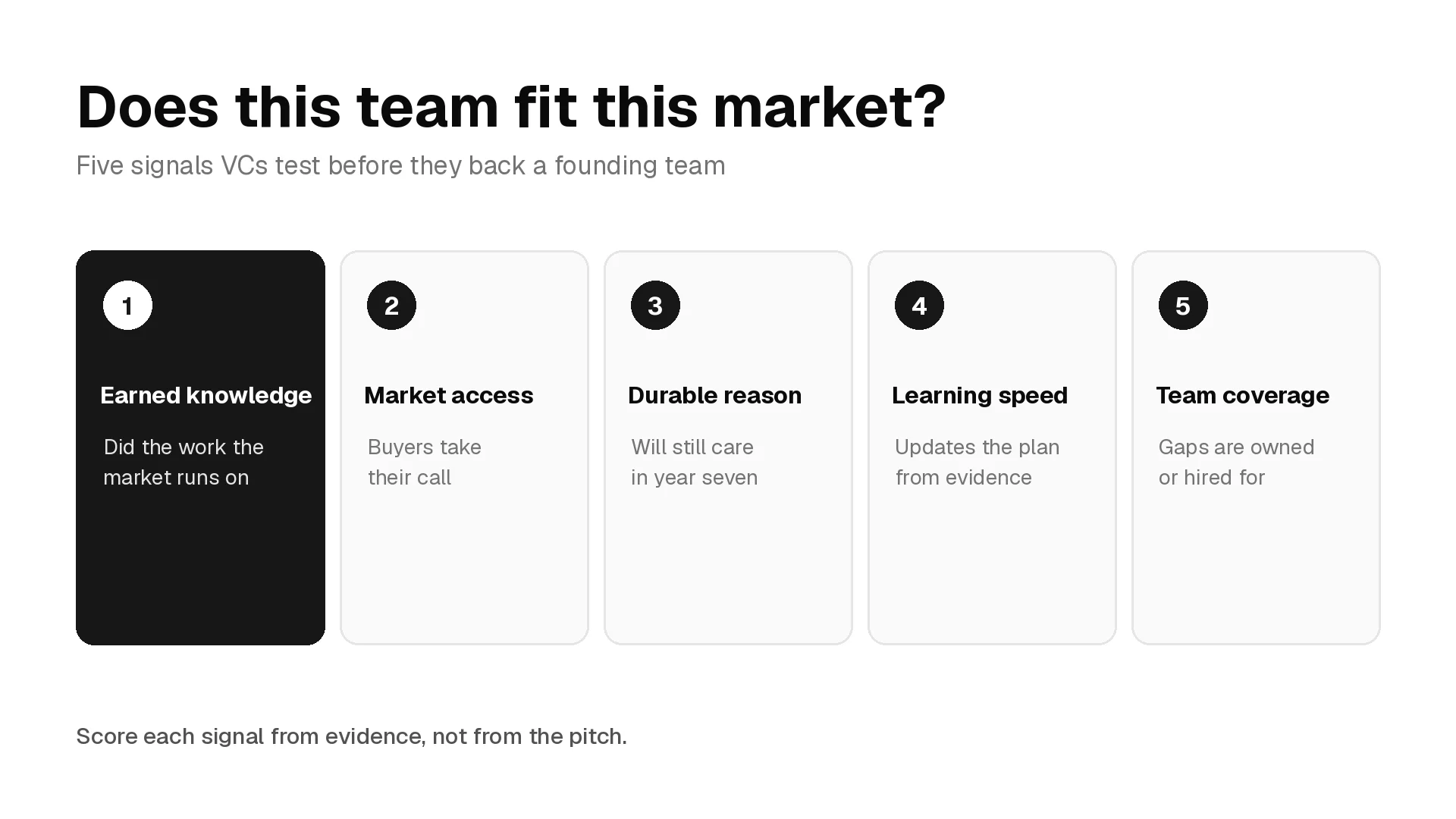
Founder-market fit is the match between what a founding team knows, can access and cares about, and what its market demands. How VCs weigh it, test it with evidence, score it, and write it into a memo or interview answer.
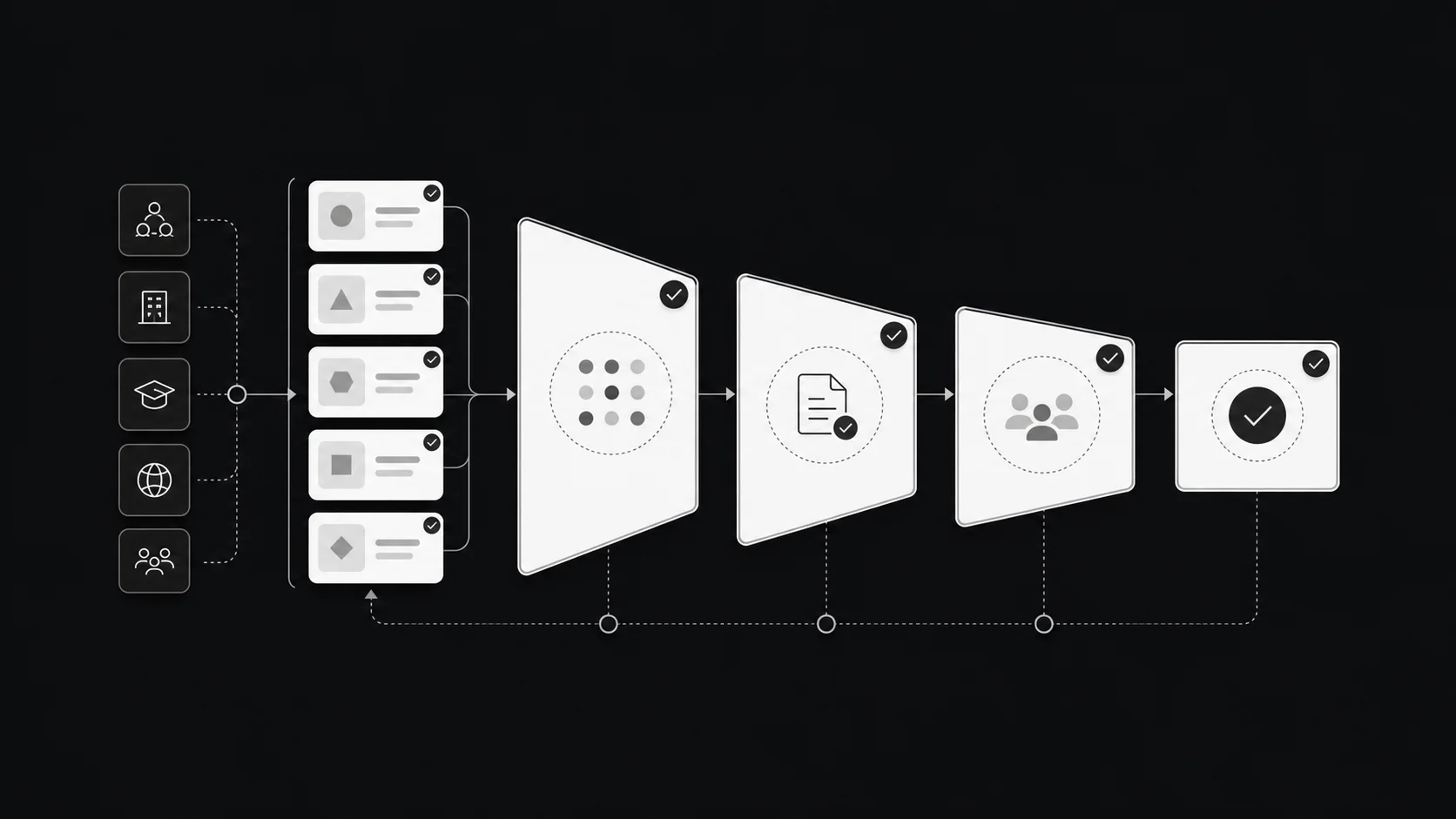
Deal flow is the stream of investment opportunities a venture firm receives and the funnel that sorts them. For every deal closed, firms consider about 101 companies.
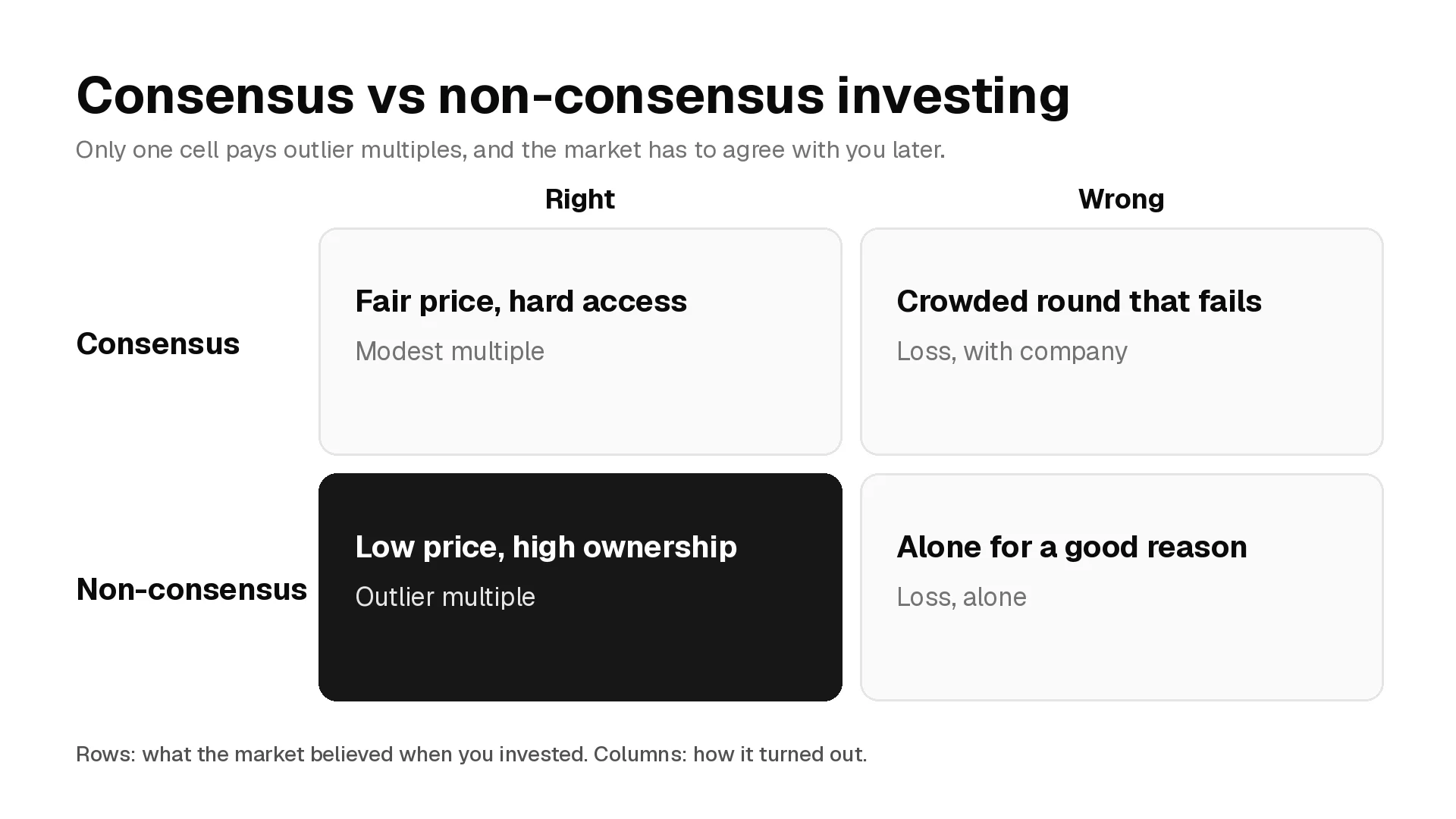
Non-consensus investing means backing a company most investors have passed on or not yet seen, for a reason you can state and test. How the 2x2 works, why firms drift toward consensus, how investment committees vote, and how analysts and associates bring a non-consensus deal.