
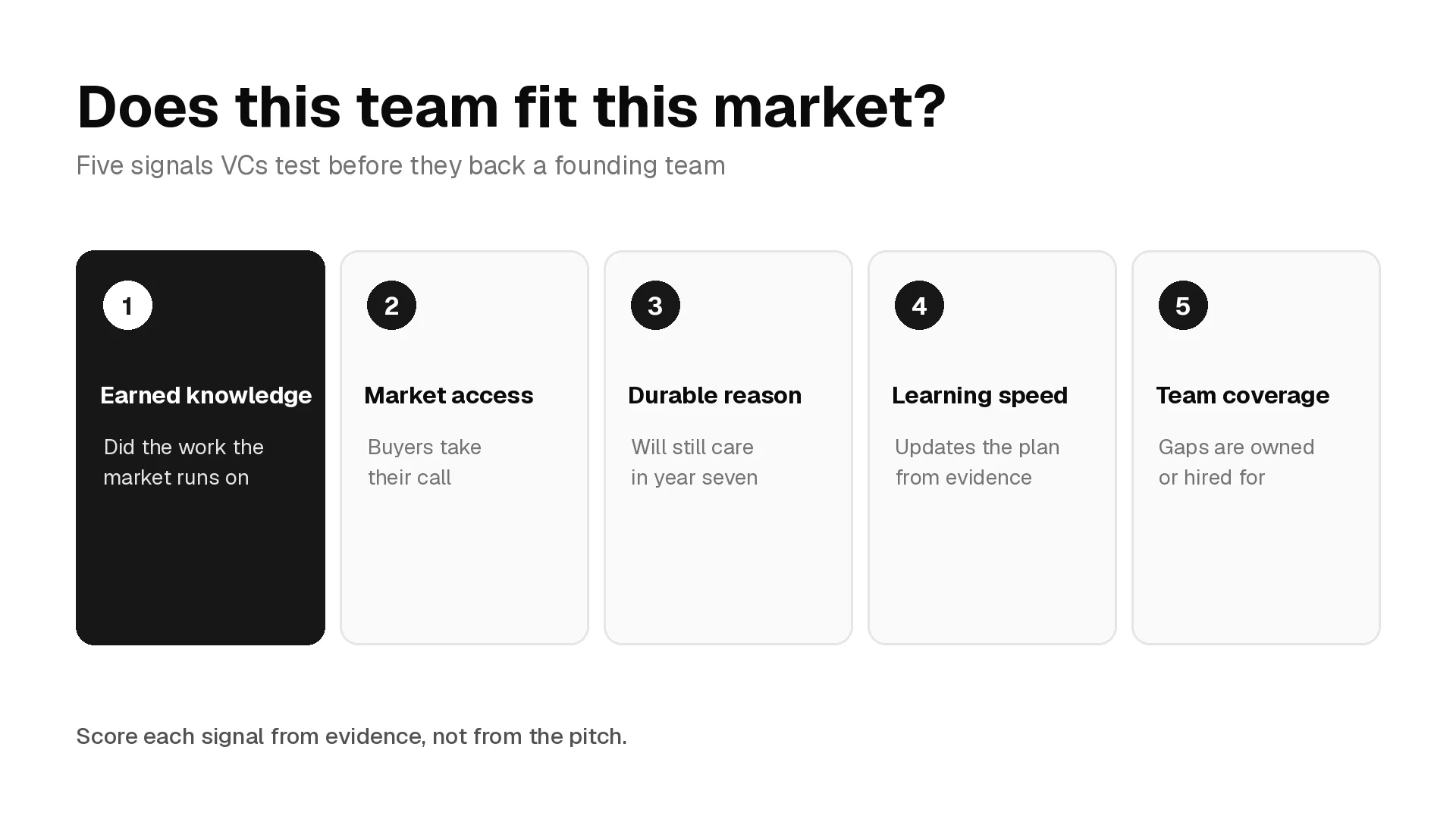
Founder-market fit is the match between what a founding team knows, can access, and cares about, and what its specific market demands. Early-stage investors lean on it because there is little product or revenue to judge yet. In a survey of 885 venture capitalists, 95% of firms named the management team as an important factor in choosing investments and 47% ranked it the single most important one, ahead of business model, product, market, and valuation.
For analysts and associates, founder-market fit is a working judgment. You meet the team, test what they claim to know, call references, and write a paragraph in the memo that a partner will push on. The useful question is narrow. Why is this team more likely than any other team to win this market?
What founder-market fit means
Founder-market fit describes a team's advantage in one market. It does not measure general talent. A strong engineer who has never sold to hospitals has weak fit with hospital software, however capable they are. A former nurse manager who ran scheduling for three hospital units may have strong fit with the same product.
The term entered startup vocabulary through a 2011 post by investor Chris Dixon, Founder/market fit, which credits the phrase to David Lee. Dixon argued it was the best predictor of whether a startup would reach product/market fit, and defined it as founders who have a deep understanding of the market they are entering. He made two further points that still matter for anyone judging a team. Fit can be developed through work, research, or test projects. And fit is often overestimated, because wanting a product yourself is different from knowing how to build and sell it in that market.
In practice, investors break the idea into a few questions:
- Does the team know something about this market that most smart outsiders do not?
- Will the people who buy, sell to, or regulate this market take the team seriously?
- Is the team's reason for being here strong enough to last through years of setbacks?
- Does the team learn fast inside this market, and can it show where it changed its mind?
- Does the team as a whole cover what the market will demand of it?
Why VCs weigh founder-market fit so heavily
At seed and Series A, most of the evidence an investor would like does not exist yet. Revenue is small, the product will change, and the market sizing is a model. The team is the one input that is present on day one, so investors spend a large share of their judgment there.
One large survey puts numbers on this. Paul Gompers, Will Gornall, Steven Kaplan, and Ilya Strebulaev, in a study published as an NBER working paper, asked 885 institutional venture capitalists at 681 firms what drives their investment decisions.
| Factor | Important factor | Most important factor |
|---|---|---|
| Management team | 95% | 47% |
| Business model | 83% | 10% |
| Product | 74% | 13% |
| Market | 68% | 8% |
| Valuation | 56% | 1% |
| Fit with the fund | 50% | 14% |
| Industry | 31% | 6% |
The weight on the team is not uniform. Early-stage firms ranked the team most important 53% of the time, against 39% for late-stage firms. Healthcare investors were the outlier, at 32%, with product ranked most important by 34% of them. The same VCs also credited the team most often when explaining outcomes. Team was the most important factor for 56% of firms looking at their successes and 55% looking at their failures.
The authors note a tension worth keeping in mind. Earlier research by Kaplan, Sensoy, and Strömberg, which they cite, found that in successful VC-backed companies the business tends to be more stable than the management team. Investors say they back the jockey, but the horse often outlasts the original riders. Founder-market fit is the part of the team judgment that ties the jockey to this particular race, which is one reason it carries more weight than raw talent.
The signals behind founder-market fit
Every founder pitch claims fit. The investor's job is to separate the claim from the evidence. The table below pairs what founders usually say with what would actually change your view.
| Signal | What founders say | Evidence that counts |
|---|---|---|
| Earned market knowledge | "I know this industry." | They describe a specific broken step, who owns it, and why past fixes failed, in detail an outsider could not get from reports |
| Market access | "We have strong relationships." | Named buyers who took a meeting, paid for a pilot, or introduced a peer, and can be called |
| Durable reason | "I'm passionate about this." | Years spent near the problem, including after a setback, and a reason that survives a bad quarter |
| Learning speed | "We iterate fast." | A dated record of what they believed, what they learned, and what they changed |
| Team coverage | "We have a great team." | The hardest job this market demands, such as enterprise sales, regulatory approval, or hardware supply, has a named owner |
The survey data points the same way. When the same VCs were asked which qualities matter most in a management team, ability came first and industry experience second. Passion, prior startup experience, and teamwork followed, each marked by about half of respondents.
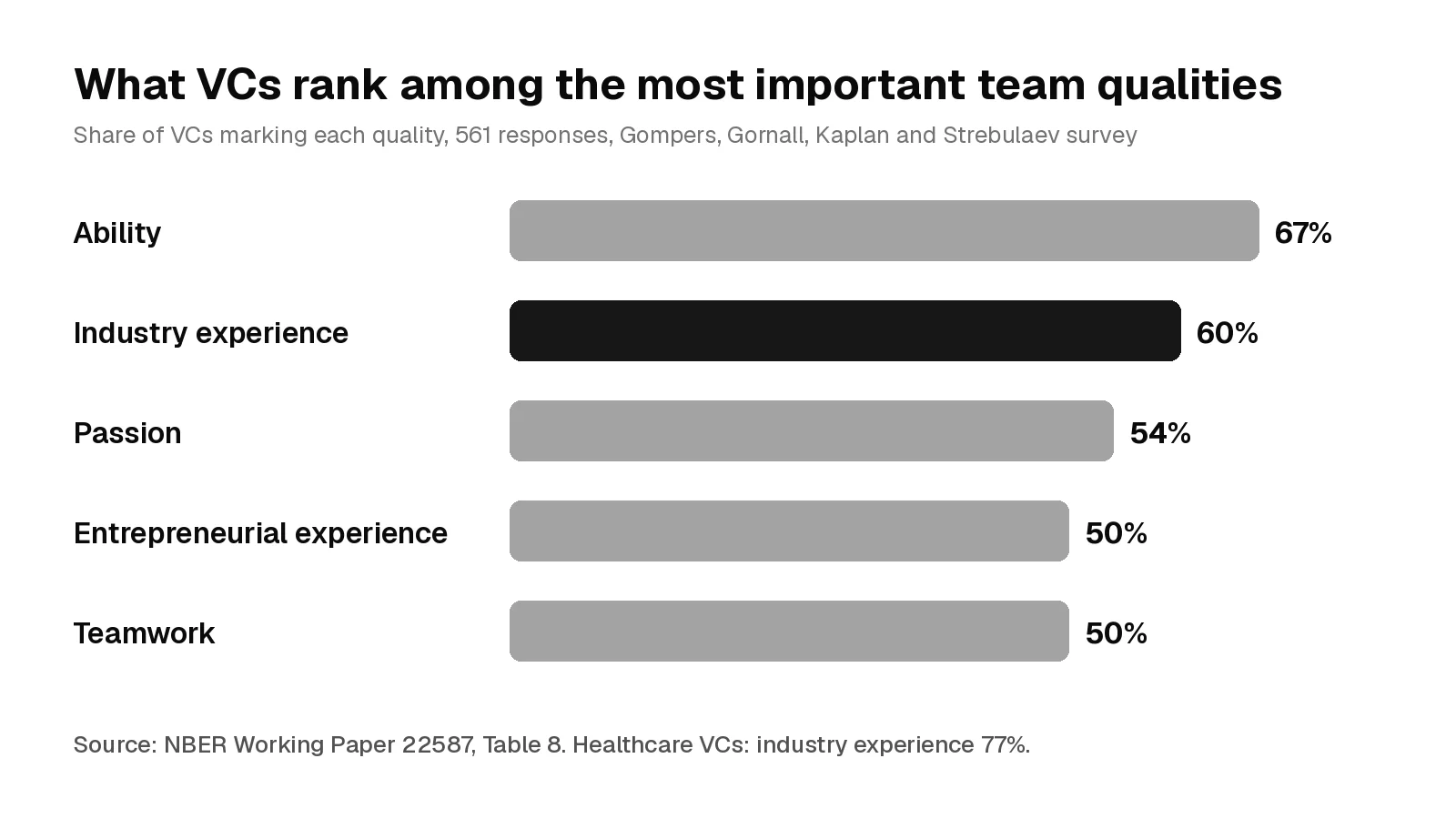
The sector splits matter for fit. Healthcare investors marked industry experience 77% of the time, against 54% for IT investors. Passion ran the other way, 60% among IT investors and 42% among healthcare investors. In markets where regulation, clinical evidence, or long sales cycles decide outcomes, experience inside the market counts for more than energy.
Earned market knowledge
This is the core of founder-market fit. A founder with earned knowledge can tell you which part of the workflow breaks, what it costs the buyer, who signs the contract, and what the last three vendors got wrong. Borrowed knowledge sounds like a market report read aloud. Test it by asking for the second-level detail. If the founder says hospitals lose money on scheduling, ask which role builds the schedule today, what tool they use, and what happens when a nurse calls in sick.
Access the market will grant
Some markets are open to anyone with a good product. Others, such as banking, defense, healthcare, or industrial buyers, are gated by trust, certifications, or relationships. In gated markets, access is part of fit. Ask who the first ten customers will be by name, and how the founder reached the ones already engaged.
A durable reason to stay
Venture-backed companies take years to build, and most go through near-death moments. Investors look for a reason the founder will stay when the company is struggling. Personal experience with the problem is common, but it is not the only kind. A founder who has spent five years in a market and keeps returning to the same unsolved problem has a reason that will outlast a hype cycle.
Speed of learning in this market
Markets change after the investment, and the original plan rarely survives. Fit includes how quickly the team turns contact with customers into better decisions. Ask what they believed six months ago that they no longer believe. A founder who cannot answer has either not been talking to customers or is not updating.
A team that covers the gaps
Fit belongs to the whole founding team. A technical founder in a sales-heavy market can have strong fit if a cofounder has sold to the same buyers before. Dixon's advice to founders, to list honestly what they cannot do and recruit for it, is also a useful test for investors. Ask the founders what the company will be worst at, and who owns it.
How the weight changes by stage and sector
Founder-market fit carries the most weight when there is the least other evidence. As a company produces revenue, retention, and unit economics, the team is judged more by what it has done than by what it knows.
| Situation | Weight on founder-market fit | What carries more weight as evidence grows |
|---|---|---|
| Pre-seed and seed | Highest. Often the main reason to invest | Early customer pull, quality of the first hires |
| Series A | High, tested against early traction | Repeatable sales, retention cohorts |
| Series B and later | Lower. Execution record matters more | Growth efficiency, management depth, valuation |
| Healthcare and life sciences | Industry experience weighs heavily; product and data often decide | Clinical or regulatory evidence |
| Enterprise and regulated markets | Access and buyer trust are part of fit | Signed contracts, sales cycle length |
| Consumer | Insight into user behavior and distribution | Engagement, organic growth |
| Deep tech and hardware | Technical depth plus the ability to commercialize | Technical milestones, supply partners |
The survey splits support the stage pattern. Early-stage firms ranked the team most important more often than late-stage firms, 53% against 39%, and late-stage firms put more weight on valuation and business model. The sector rows are judgment informed by those splits. A firm's own thesis can move the weights, which is why candidates should read how a firm describes its focus before an interview. The companies directory is a good place to start.
How VCs test founder-market fit
Investors test founder-market fit across the whole process. A first impression starts the file. Evidence from later meetings, customer calls, and references either confirms it or overturns it. The work sits inside the broader venture capital due diligence process.
In the first meeting
Ask questions that only someone with earned knowledge can answer well:
- Walk me through how your buyer handles this problem today, step by step.
- Who has tried to solve this before, and why did it not work?
- What do you know about this market that most investors get wrong?
- Who were your first five customer conversations with, and how did you reach them?
- What did you believe six months ago that turned out to be wrong?
- What will this company be worst at, and who owns that?
Listen for specifics. Names of roles, tools, contract terms, and failure stories are good signs. Market-size figures and general claims about "a huge opportunity" are not evidence of fit.
Between meetings
Check the founder's claims against the market. Talk to two or three buyers the founder did not introduce. Ask whether the problem matches the founder's description and whether they would take a meeting from this team. Compare the founder's account of competitors with what you learn from the market. A venture capital market map helps you see who else is attacking the problem and what backgrounds those teams have.
References
References are where fit claims get confirmed or quietly fall apart. In the Gompers survey, the average firm called 10 references before investing. Early-stage firms called 8 on average and late-stage firms 13. The average deal took 83 days to close, with 118 hours of due diligence.
Mix on-list and off-list references. Former managers and colleagues can confirm what the founder actually did in the market. Customers and partners can confirm whether the market trusts them. Useful questions include what the founder was known for in that role, what they were weakest at, and whether the reference would buy from or work for them again.
A founder-market fit scorecard
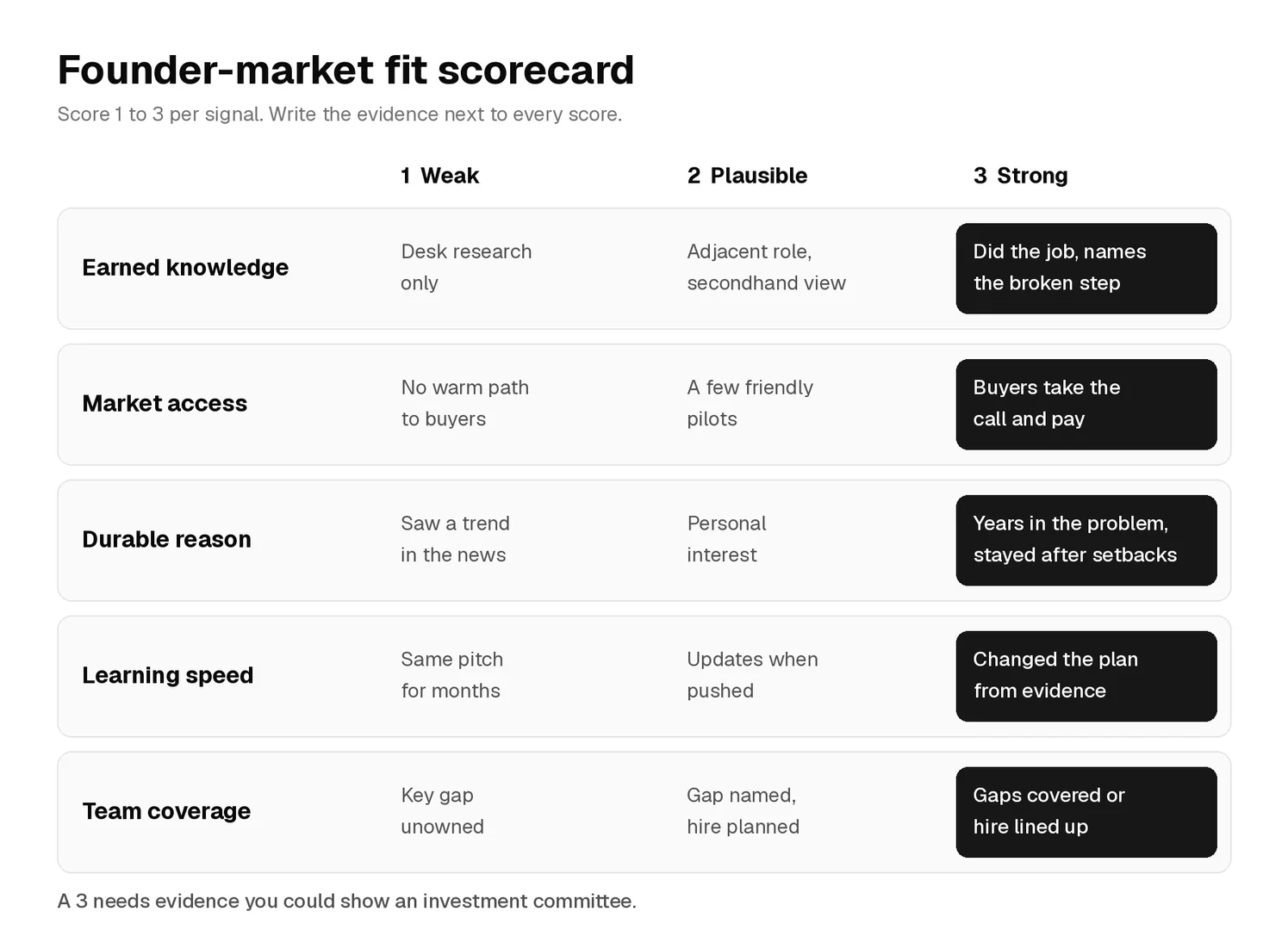
A scorecard does not make the decision. It forces you to write down evidence for each part of the judgment, so a partner can see where your view comes from and where it is thin. Score each signal from 1 to 3 and put the evidence next to every score.
| Signal | 1. Weak | 2. Plausible | 3. Strong |
|---|---|---|---|
| Earned market knowledge | Desk research only | Adjacent role or secondhand view | Did the job and can name the broken step |
| Market access | No warm path to buyers | A few friendly pilots | Buyers take the call and pay |
| Durable reason | Saw a trend in the news | Personal interest | Years in the problem, stayed after setbacks |
| Learning speed | Same pitch for months | Updates when pushed | Changed the plan from evidence and can show it |
| Team coverage | Key gap unowned | Gap named, hire planned | Gaps covered or a credible hire lined up |
Three rules keep the scorecard honest:
- A 3 needs evidence someone else can check, such as a reference, a customer call, or a document. A good story earns a 2 at most.
- Do not add the scores into one number. A team with 3s everywhere except market access in a gated market has a specific risk that a total of 13 would hide.
- Adjust the weights to the market. Access matters more in regulated and enterprise markets, and technical depth matters more in deep tech.
Most scorecards stop at the score. The useful output is the list of 1s and 2s, because each one becomes a diligence question or a risk in the memo.
Founder-market fit vs product-market fit
The two terms describe different things at different times. Founder-market fit is about the team before the evidence exists. Product-market fit is about customer demand once a product is in the market.
| Dimension | Founder-market fit | Product-market fit |
|---|---|---|
| Question | Is this team well placed to win this market? | Do customers want this product enough to pull it from you? |
| When it matters most | Before and just after launch | After launch, before scaling |
| Evidence | Background, access, references, learning record | Retention, organic demand, sales cycle, willingness to pay |
| Who judges it | Investors, early hires, early customers | The market |
| Can it change? | Yes, through work in the market and hires | Yes, through product changes and pivots |
Strong founder-market fit raises the odds of reaching product-market fit, which was Dixon's original claim, but it does not guarantee it. Once a company has strong product-market fit, investors care less about the founders' backgrounds and more about whether they can scale what is working.
Fit can make up for thin early traction, which is why many pre-seed rounds are mostly bets on the team. It rarely makes up for a market that is too small or a product nobody uses. And fit can be built. Founders without a background in a market can earn it by working inside it, selling to it before raising, or adding a cofounder who has lived there.
Where founder-market fit assessments go wrong
Pedigree stands in for fit
A famous employer or school on a resume says something about general ability. It says little about whether the founder knows this buyer, this workflow, or this regulator. When the evidence column of the scorecard holds only logos, the score reflects pedigree. Investors who rely on resemblance to past winners make this mistake most often, a problem covered in depth in pattern matching in venture capital.
Insiders can be blind too
Deep industry experience can carry the industry's assumptions with it. A founder who spent a decade at an incumbent may build a better version of the incumbent's product when buyers want something different. Test insiders on what they think their old employer gets wrong, and whether customers agree.
Passion is read as fit
Every founder in a pitch meeting is enthusiastic. Enthusiasm tells you the founder wants this company to exist. It does not tell you they can build it. Dixon's warning applies here. Liking a product category is not the same as knowing how to win in it.
Fit with yesterday's market
A founder's knowledge can describe the market as it was five years ago. If the buyer, the technology, or the regulation has shifted, old expertise can mislead. Ask what has changed in the market since the founder last worked in it.
Scoring one founder instead of the team
A charismatic CEO can dominate the meeting and the memo. The market will test the whole team, especially on whatever the company must do best, whether that is selling, building, or getting approval. Score the whole team against the market's hardest job.
Treating an unusual background as weak fit
Some of the strongest fit comes from paths investors rarely see, such as a frontline worker who lived the problem or a founder from a market other funds ignore. These teams often look like poor fit to an investor scanning for familiar resumes. When the evidence is strong and the market has passed, the deal may be a non-consensus investment worth making.
Writing founder-market fit into an investment memo
Most memos have a team section. Weak ones list biographies. Strong ones state why this team wins this market, show the evidence, and name the gaps. A partner reading the venture capital investment memo should be able to argue with each claim.
A structure that works:
- The fit claim. One sentence on why this team is better placed than others to win this market.
- Evidence. Two to four specific points, each tied to a source such as a reference, customer call, or document.
- Scorecard summary. The five signals with scores and one line of evidence each.
- Gaps and mitigants. What the team lacks and how it will be covered, through a hire, a board member, or a milestone.
- What would change our view. The reference result or milestone that would lower the score.
An example paragraph, using an invented company:
The founders have strong fit with hospital staffing software. The CEO ran nurse scheduling for 400 staff across three units for six years and can describe each step of the current process and where it fails. Two of the five customer calls we made without founder introductions confirmed the problem and said they would pilot. The CTO built scheduling systems at a workforce software company. The main gap is enterprise sales into hospital systems. Neither founder has closed a contract above $100,000, and we would make a VP of Sales hire with health system experience a condition of the next round. A reference check that contradicted the CEO's account of her scheduling role would lower our earned-knowledge score from 3 to 2.
Keep the example's style and replace every fact with your own diligence. Never put an unchecked founder claim in the evidence list.
Founder-market fit in VC interviews and case studies
"How would you assess this founding team?" comes up in first-round screens, pitch-a-company prompts, and the venture capital case study interview. Interviewers want to see you judge a team against a market with evidence. Reciting a definition earns little.
A four-part answer frame:
- Define fit for this market. Say what the market demands, such as clinical trust, enterprise sales, or technical depth.
- Name the evidence you have and the evidence you would get, including references, customer calls, and the founders' learning record.
- Name the gap. Every team has one, and spotting it shows judgment.
- Tie it to the decision. Say whether fit is strong enough to carry the deal at this stage, or what would need to be true.
A sample answer, for a seed-stage company selling compliance software to community banks:
For community banks, the hard part is getting a compliance officer to trust a new vendor with an exam on the line. So I would look first for earned knowledge and access. The CEO was a compliance officer at two banks, which is strong if references confirm what she owned. I would call two banks she did not introduce to test whether they would take a meeting. The gap is the technical side. The CTO has not built software for regulated data before, so I would ask how they plan to pass a bank's security review. At seed, I would invest if the references and customer calls hold up, and I would make a security hire the first use of funds.
Answers to avoid:
- Listing the founders' employers and schools as if that settles it.
- Calling the founders "passionate" without saying why that matters in this market.
- Scoring fit without naming a single gap.
For more practice, work through common venture capital interview questions, and see how team judgment fits into the full process in how venture capitalists make investment decisions. Judging founders is one of the core venture capital skills, and it starts at deal sourcing, where you decide which teams get a first meeting at all.
Frequently asked questions
Who coined founder-market fit?
Chris Dixon popularized the term in a 2011 post titled Founder/market fit and credited the phrase to David Lee. It was framed as the founder-side counterpart to Marc Andreessen's product/market fit.
Can a first-time founder have founder-market fit?
Yes. Fit comes from knowledge of and access to a market. Founding a company before is a separate signal. In the Gompers survey, prior entrepreneurial experience was marked by 50% of VCs as among the most important team qualities, below ability at 67% and industry experience at 60%.
Does founder-market fit matter at Series B and later?
Less than at seed. By then the company has a record, and investors judge the team mostly on execution, growth efficiency, and depth of management. Fit still matters when a company enters a new market or product line.
Can a team without domain experience raise venture capital?
Yes, especially in markets where insight into users or technology matters more than industry relationships. Such teams usually need stronger early traction, an experienced cofounder or early hire, or evidence they have earned knowledge by selling into the market.
How many references do VCs call?
In the Gompers survey, the average firm called 10 references before investing. Early-stage firms averaged 8 and late-stage firms 13.
Is founder-market fit the same as team quality?
No. Team quality covers general ability, leadership, and teamwork. Founder-market fit asks whether those qualities match the specific demands of one market. A strong team can still have weak fit with a market it does not know.
Next steps
Read how individual firms describe their stage and sector focus in the companies directory before you interview. When you are ready to apply, browse investing roles on the Venture Capital Careers job board, or create an account to get new roles by email.
Related posts
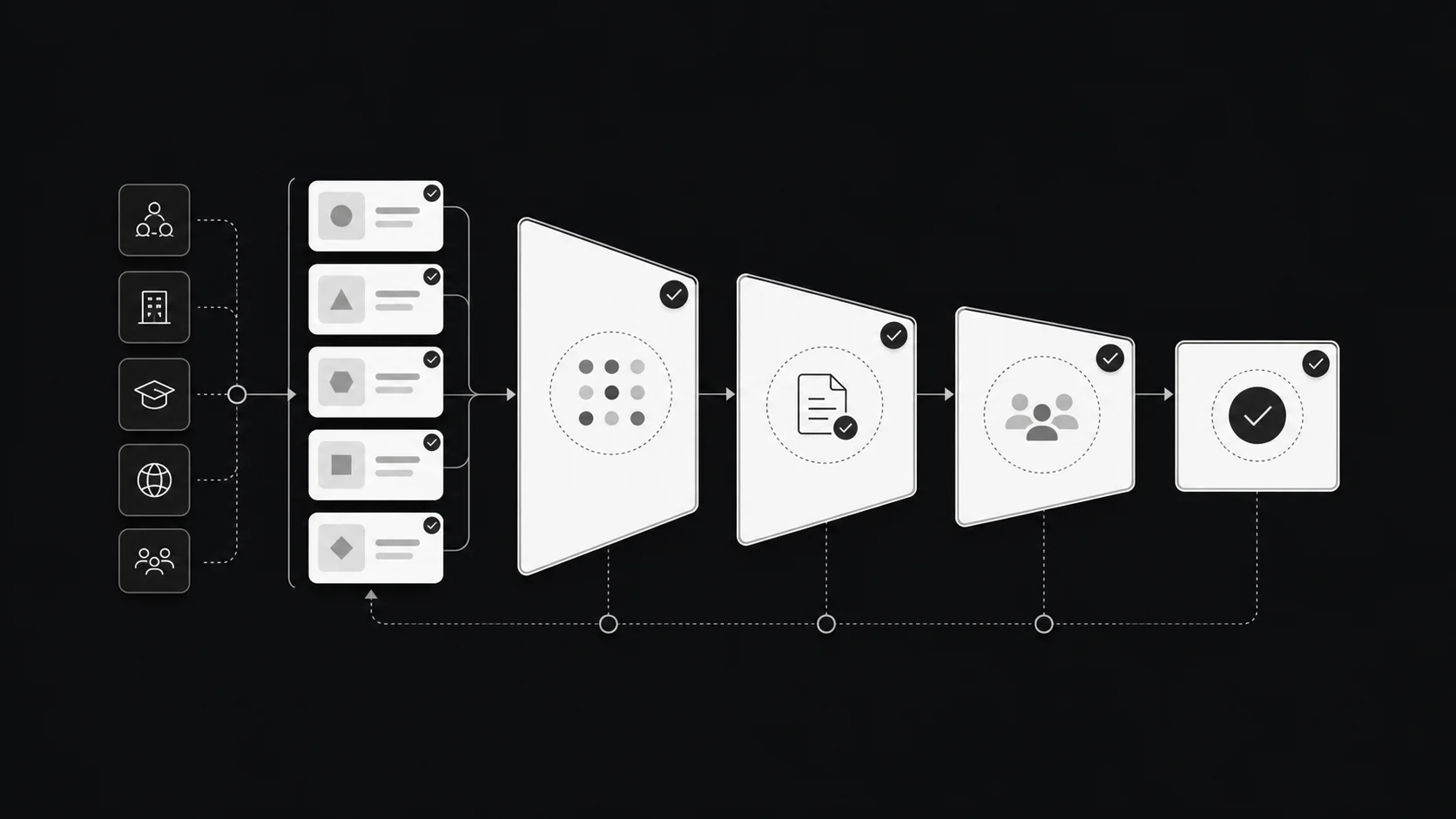
Deal flow is the stream of investment opportunities a venture firm receives and the funnel that sorts them. For every deal closed, firms consider about 101 companies.
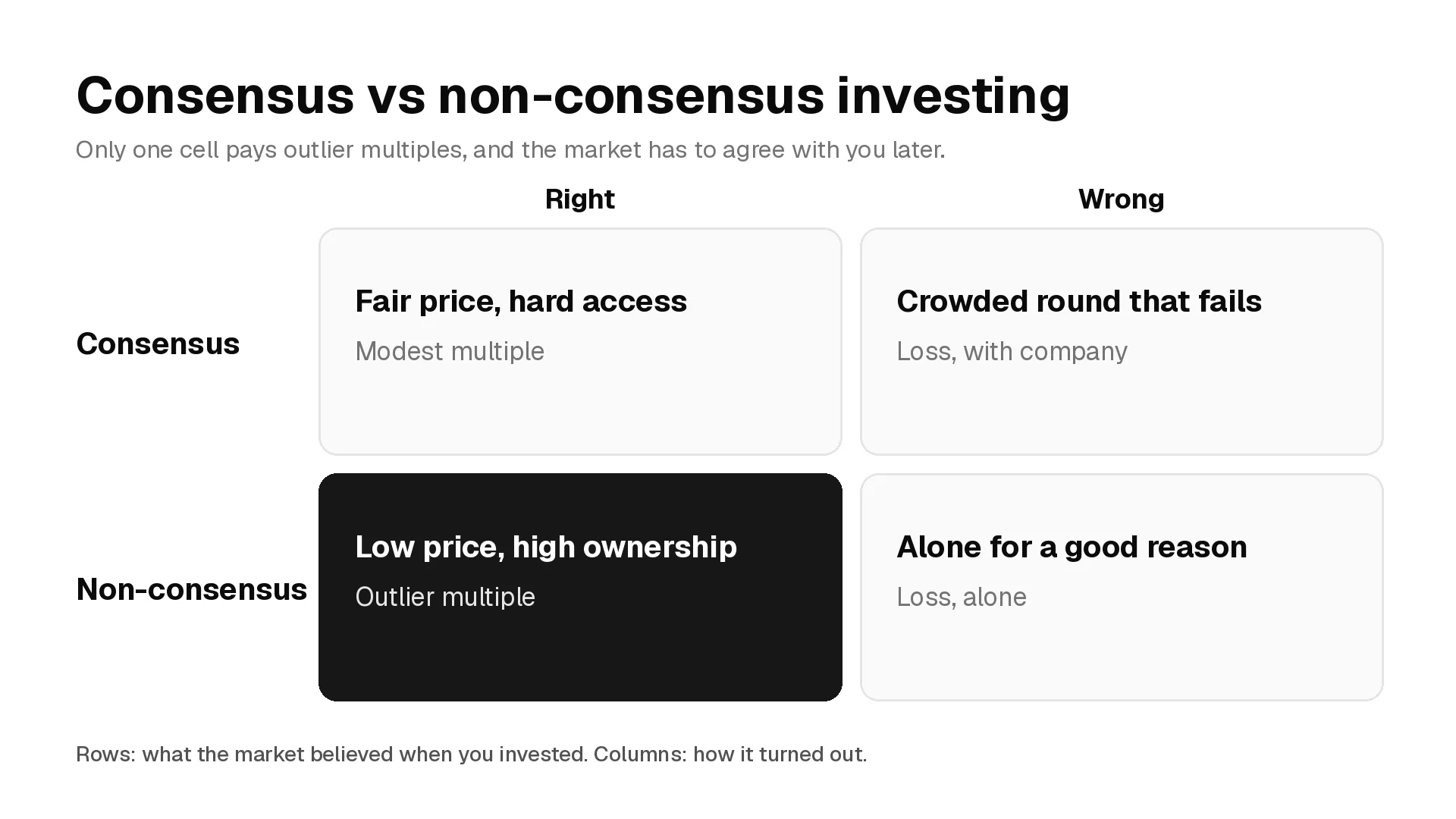
Non-consensus investing means backing a company most investors have passed on or not yet seen, for a reason you can state and test. How the 2x2 works, why firms drift toward consensus, how investment committees vote, and how analysts and associates bring a non-consensus deal.
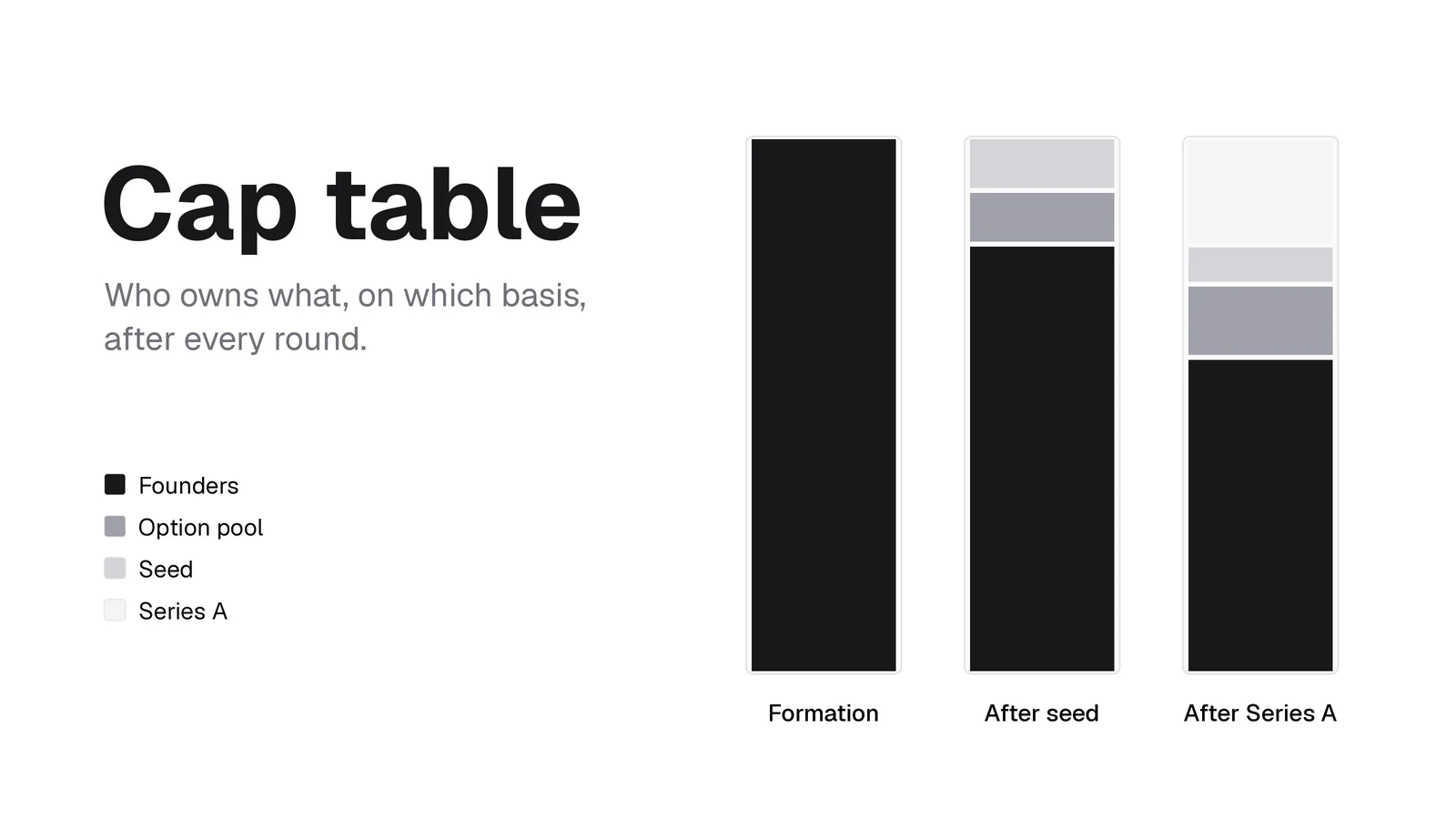
A cap table records who owns a company's shares, options, warrants, and convertible securities, and what percentage each holder owns on a stated basis.