
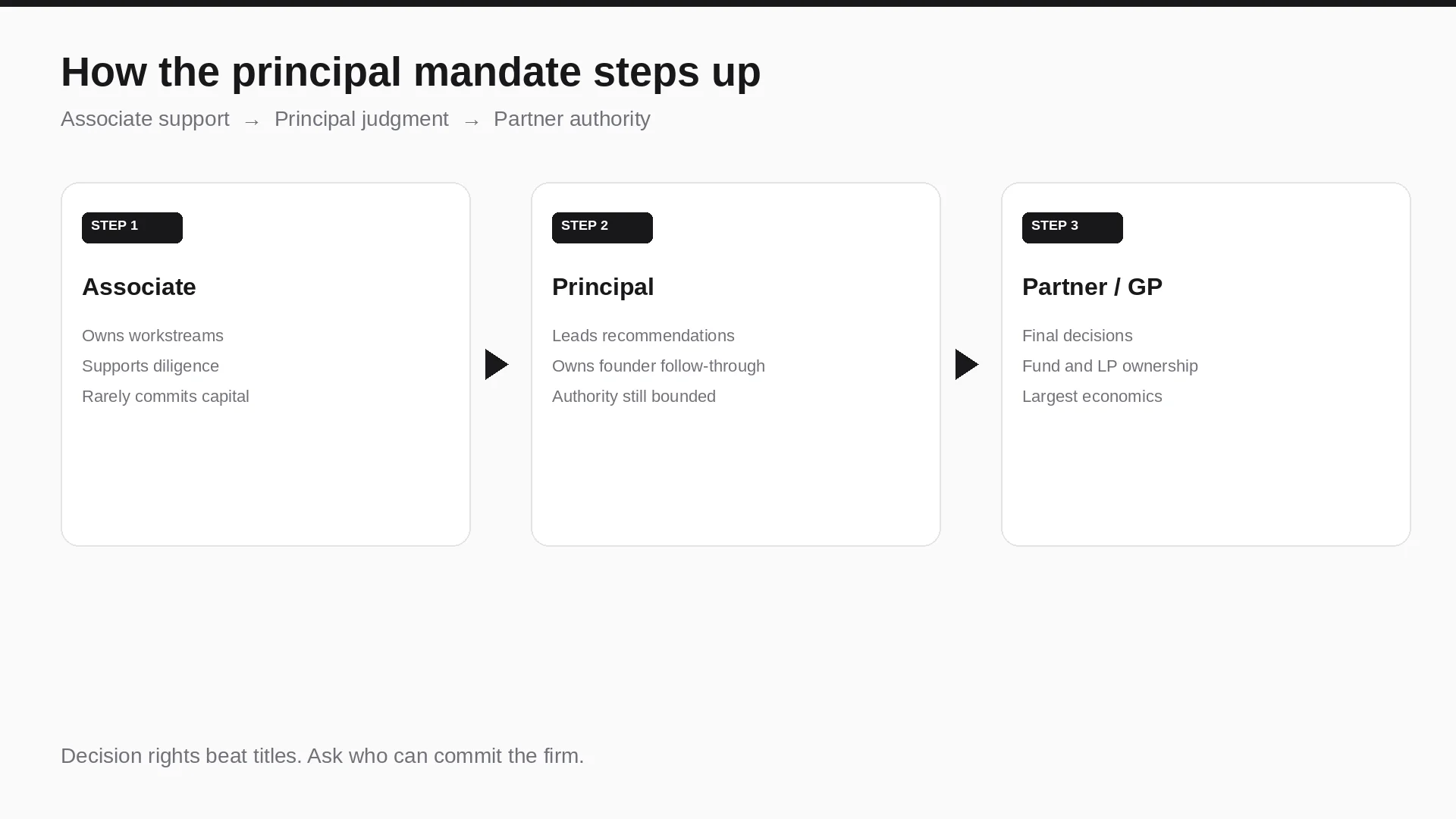
A venture capital principal is the first senior investing seat at many funds. The job is to originate opportunities, lead diligence and deal execution, and own portfolio follow-through while still operating under partnership approval. It is not a junior associate role with a nicer LinkedIn title, and it is not a general partner seat with softer branding.
If you are still building your first investing reps, start with how to get a job in venture capital or the venture capital career path. If you already ship associate-level work and want the next mandate, this page is the landing map. Employers writing a posting should use the principal job description instead of treating this how-to as a hiring template.
What a venture capital principal actually owns
The useful default is ownership of judgment, not ownership of the fund.
Principals typically:
- Build a sourcing engine that produces thesis-fit companies, not meeting volume
- Design diligence, inspect junior work, and turn evidence into an investment recommendation
- Lead term-sheet work within an approved range and keep a live deal moving to close
- Stay close to portfolio companies after the check, including board observer or director work when the firm assigns it
- Coach analysts and associates and raise the quality of memos, pipeline reviews, and sector coverage
What principals usually do not do, unless the documents say so:
- Approve every investment the firm makes
- Own fundraising and LP relationships as a core job
- Set firm strategy and partnership economics
Think in check-writing language. Who can commit the firm, and who can only recommend? Titles such as vice president, director, and junior partner often sit in the same band. Believe the mandate.
Principal vs associate vs partner
Compare decision rights, not masthead language.
| Dimension | Associate | Principal | Partner / GP |
|---|---|---|---|
| Primary job | Research, diligence, sourcing support, execution | Origination, judgment, deal leadership, portfolio ownership | Fund strategy, final decisions, fundraising, partnership leadership |
| Deal autonomy | Owns defined workstreams | Designs and leads the process with Partner oversight | Sets approval boundaries and commits the firm |
| Investment committee | Prepares analysis; may present sections | Leads the recommendation; vote varies by firm | Holds formal decision authority in most firms |
| Founder relationship | Supports meetings and follow-up | Often the day-to-day senior investor | Owns the highest-stakes relationship |
| Board work | Limited; sometimes observer exposure | Observer or director depending on mandate | Commonly director or senior sponsor |
| Economics | Salary and bonus; carry rare or thin | Salary, bonus, and usually more meaningful carry | Management-company economics and the largest carry |
For the employer-facing version of this table, stay with the principal job description. For how teams hand work around, use venture capital team structure.
Two ways in: promote from associate or enter laterally
Most people become principals one of two ways.
Promote from associate. You already know the firm, the IC style, and the portfolio. Partners promote you when they trust your judgment under uncertainty, not when you have merely survived two more years. You need sourced or heavily attributed deals, clean recommendations, and portfolio work that did not create silent messes.
Enter laterally. Senior operators, product leaders, founders, and experienced investors sometimes skip the junior ladder and join as principal when their sector edge and founder trust are already visible. The bar is higher on day one. You must show investment judgment, not only operating scars. A startup operator path or product manager path can support this move when the evidence is dated and specific.
Rare cases enter principal from another fund's senior associate or principal seat. Title matching across firms is unreliable. Compare IC vote, board rights, and carry denominator before you call it a step up.
If your real goal is a fractional affiliation or portfolio execution seat, you may want how to become a venture partner or how to become a venture capital operating partner instead.
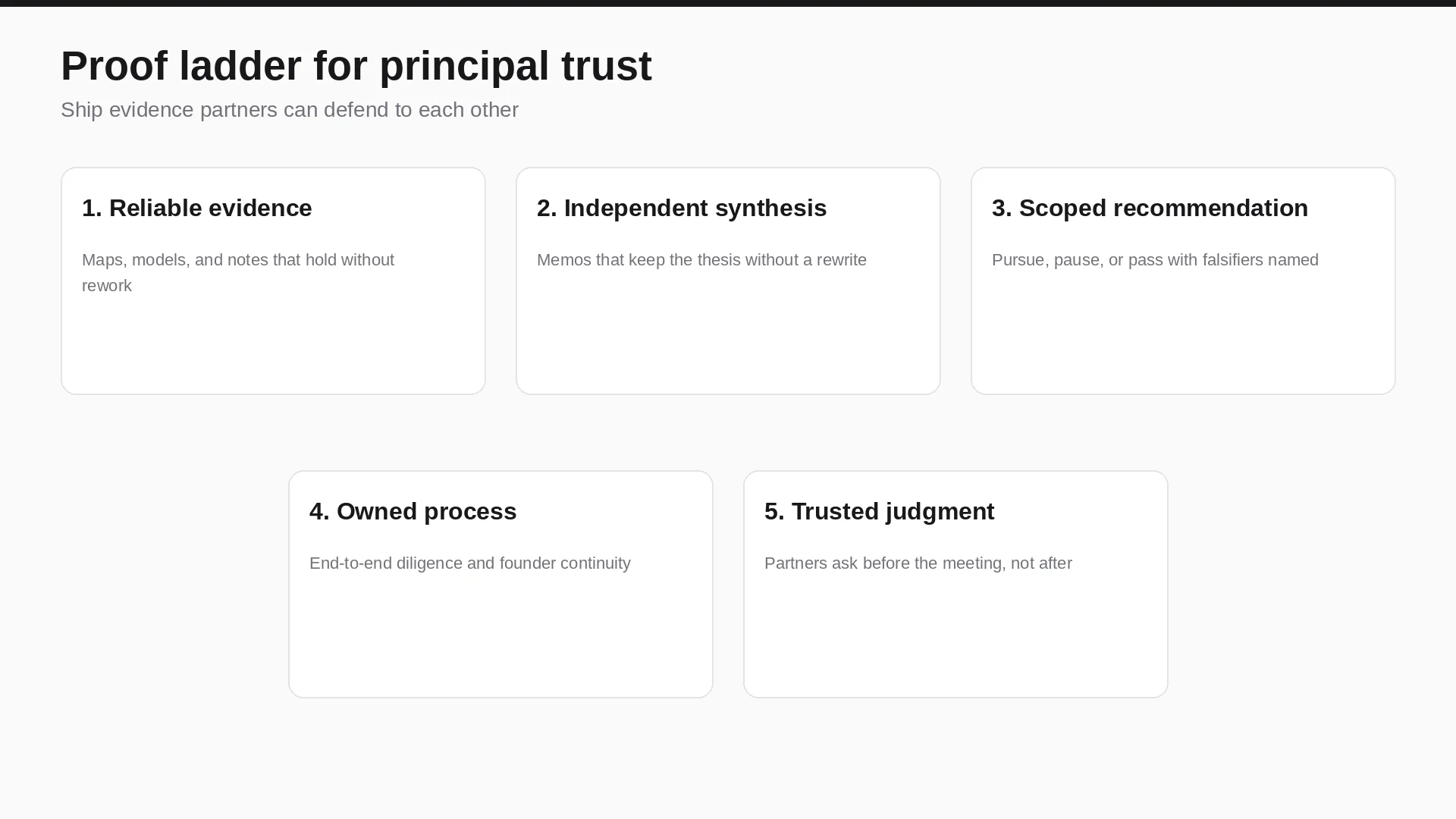
Proof ladder from associate work to principal trust
Partners rarely promote on tenure. They promote on evidence they can defend to each other.
Use this ladder as a self-audit:
- Reliable evidence. Your market maps, models, and reference notes hold up without constant rework.
- Independent synthesis. You can turn a messy diligence week into a clear memo without a partner rewriting the thesis.
- Scoped recommendation. You can recommend pursue, pause, or pass, and name the two or three facts that would change your mind.
- Owned process. You can run diligence end-to-end, coordinate counsel and specialists, and keep the founder relationship intact.
- Trusted judgment. Partners ask for your view before the meeting, not only for your slides during it.
Ship proof, not vibes:
- Two or three decisions you can unpack: one pursued, one declined, one that changed after new evidence
- A short list of companies you originated or heavily shaped, with honest attribution
- Founder references who will say you follow through
- Written work that looks like an investment memo, not a pitch deck
- A sourcing method you can repeat, not a single lucky intro (deal sourcing)
A 90-day plan for an associate targeting principal usually looks like this: pick one sector wedge, publish or circulate one sharp market map, lead one live diligence workstream without hiding behind the partner, and ask for one board or portfolio responsibility with a clear success test.
How funds hire and promote principals
There is no campus process for this seat.
Internal promotion favors people who already sit in the room. External hiring favors people partners already trust on companies they own or want to own. Cold applications still happen through the VC job board, but warm proof beats a polished resume.
What partners actually test:
- Can you originate without a brand-name firm's inbound machine?
- Can you make a decision when the data is incomplete?
- Can you lead a junior teammate without turning every task into a status meeting?
- Will founders still want you after bad news?
- Does adding you dilute the partnership's carry for a good reason?
Promotion to partner is a separate bar. Incremental valuation marks help. Real exits help more. Firm expansion and new funds often matter as much as personal grind, because each new partner splits economics.
How the seat pays
Do not reverse-engineer wealth from the word principal.
Cash usually combines base salary and a bonus. Carry usually starts to matter here more than it did as an associate, but the percentage is meaningless until you know the denominator, vesting, departure treatment, and which vehicles it covers. Read the carried interest explainer for vocabulary, then have advisers read the documents. For market context by role, use the venture capital salary guide rather than treating one posting as the market.
Expect wide spreads by fund size, city, and strategy. Seed funds can pay less cash and give earlier responsibility. Larger platforms can pay more cash and keep tighter approval rights. Model carry as uncertain, illiquid, and long-dated.
Questions to settle before you accept
A principal interview runs both ways. Get answers in writing where it counts.
- Does the principal vote in IC, recommend only, or present only?
- What investment, term, reserve, or signature decisions can you make without further approval?
- How does the firm define a sourced deal, and how is shared credit assigned?
- Which board or observer seats come with the role, and what is the portfolio load?
- What Analyst or Associate support sits behind you?
- What exactly does the carry figure measure, and how do vesting and departure work?
- What must be true for promotion to Partner, who decides, and how have prior principals progressed?
- How do fund deployment pace, reserves, and fundraising outlook affect the seat over the next 24 months?
Compare answers to the written offer and to what former employees say. Research stage and sector fit in the companies directory before you fall in love with a logo.
When the principal title is a trap
Walk when the story does not match the mandate.
- Partner-track without criteria. A timeline with no milestones, no prior promotions, and no available partnership economics is marketing.
- Associate work at principal pay. If you only prepare materials and never lead recommendations, the title is inflation.
- Sourcing-only seat sold as investing. Meeting volume without diligence ownership will not compound into GP trust.
- Carry theater. A large-looking percentage of an undefined pool, with harsh departure terms, is not upside.
- No junior support and no authority. Full ownership of grunt work plus zero decision rights is a grind, not a step up.
- Wrong seat entirely. If the work is portfolio execution, you may want an operating partner mandate. If the work is fractional coverage, you may want a venture partner affiliation.
Frequently asked questions
Is principal higher than associate in venture capital?
Usually yes. Principal sits above associate and below partner at most institutional funds. VP and director titles can overlap the same band. Compare decision rights.
Can you become a principal without being an associate first?
Yes. Lateral hires happen when sector judgment and founder trust are already proven. It is uncommon relative to internal promotion, and the first-year bar is higher.
Do principals get carried interest?
Often yes, more than associates and less than partners. The useful question is not "do I get carry" but which vehicles, what denominator, and what vests if you leave.
How long does associate-to-principal take?
There is no reliable standard. Some people move in a few years on clear attribution. Others never move because the firm is not expanding or their judgment is not trusted. Ask for examples from that partnership.
Is principal the same as junior partner?
Sometimes the work overlaps. Junior partner can mean more authority or economics than a typical principal, or it can be branding. Read the IC vote, check rights, and carry documents.
Should I take a principal title at a tiny fund over an associate seat at a stronger platform?
It depends on attribution, mentorship, and what you will own in 24 months. A broader associate seat can beat a hollow principal title. Use the questions above and compare real openings on the job board.
Next step on Venture Capital Careers
If the mandate is clear:
- Browse open roles on the Venture Capital Careers job board
- Research funds by stage and sector in the companies directory
- Create a candidate profile at /auth/join
- Read the principal job description before interviews so you can test authority language
- Use the career path for ladder context and the salary guide for cash and carry framing
The principal seat rewards people who can be trusted with judgment before they are trusted with the firm. Earn the evidence, then demand a mandate that matches the title.
Related posts
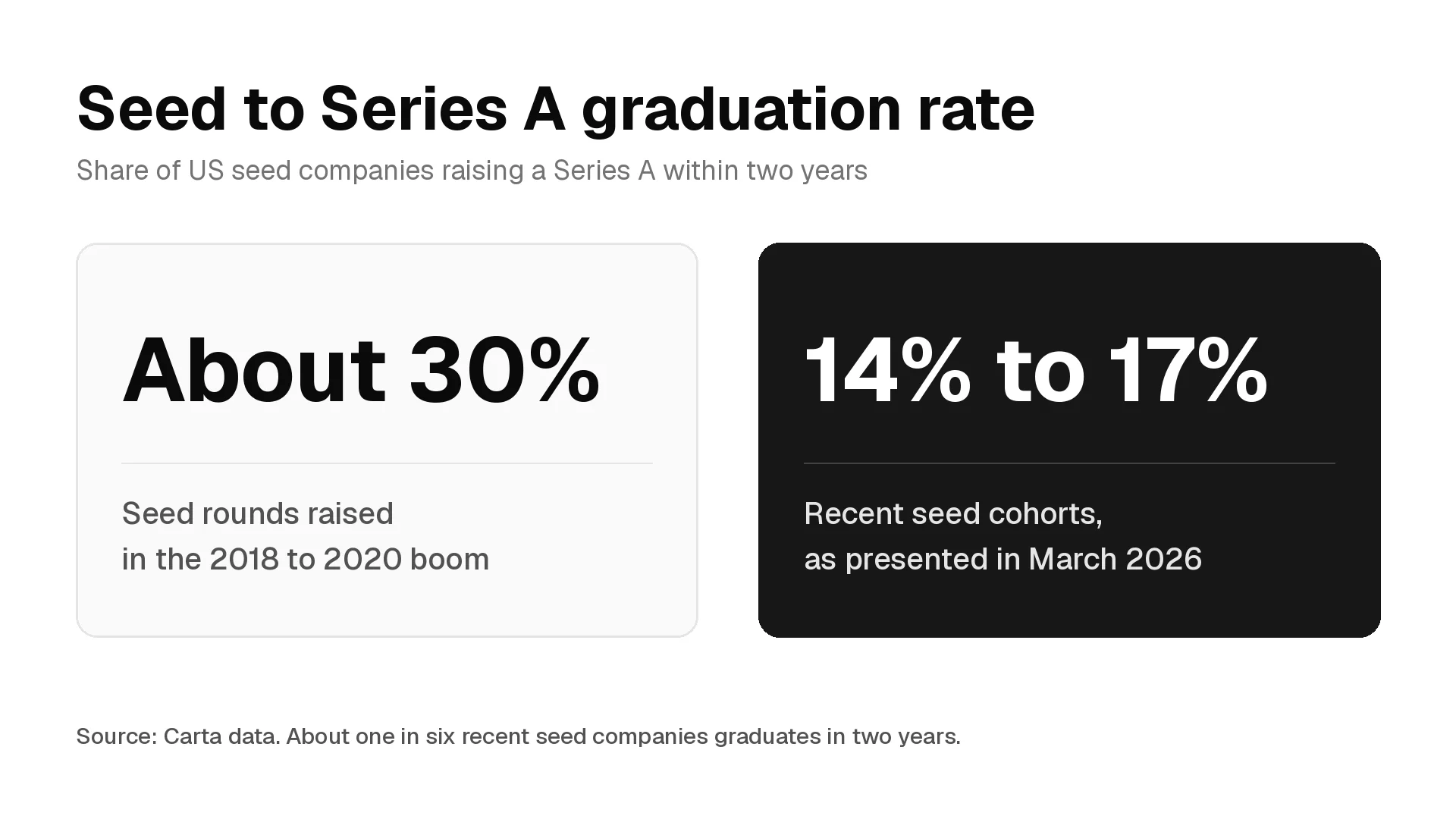
Seed to Series A graduation rates by cohort from Carta and Crunchbase, how long the jump takes, why rates fell after 2021, why published figures disagree, and how seed and Series A firms use the rate for reserves, LP reporting, portfolio reviews and interviews.
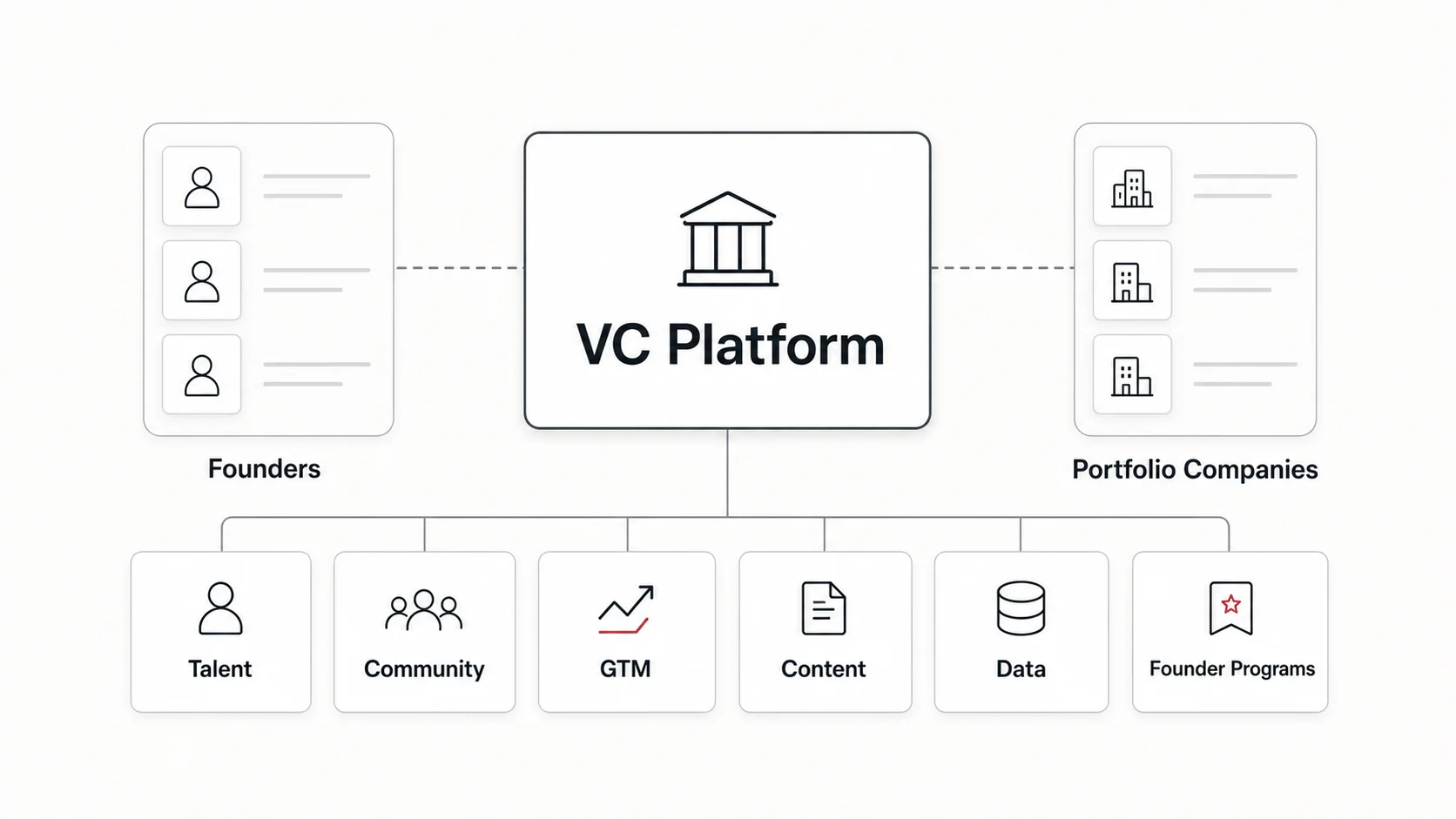
A venture capital platform role runs a VC firm's non-investing services for founders: talent, business development, community, marketing, and investment operations. Median platform pay is $165,000 base and $207,500 total cash.
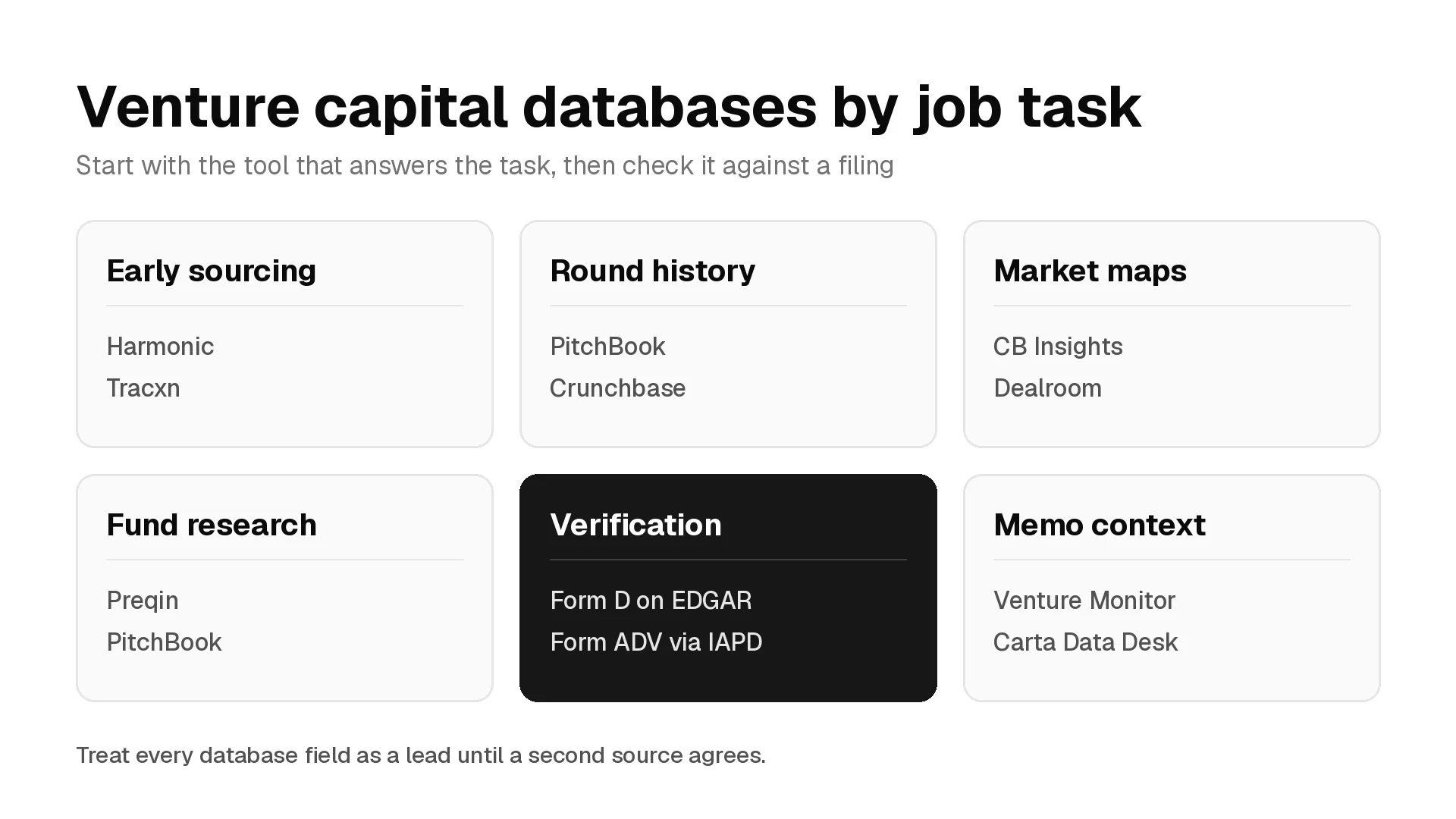
PitchBook, Crunchbase, CB Insights, Dealroom, Tracxn, Harmonic and Preqin compared by the VC task each one serves, with the free SEC filings that verify a record, a four-check round verification, student access limits and how database work reads in recruiting.