
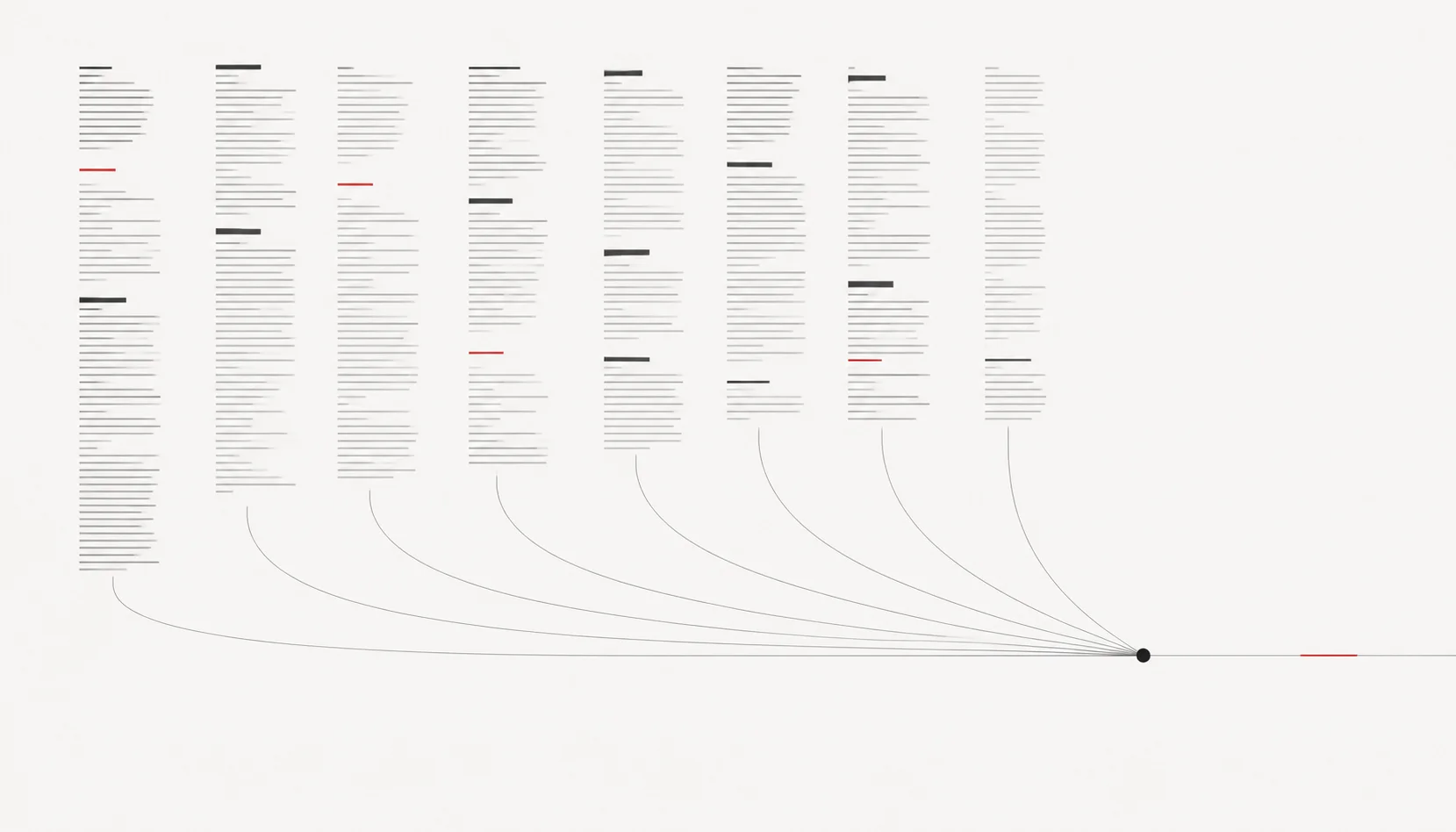
The best venture capital blogs are First Round Review for operator diligence, a16z for emerging-technology theses, Bessemer Atlas for cloud benchmarks, NFX for seed-stage frameworks, Tomasz Tunguz for software and AI signals, USV for firm-level thinking, Greylock Greymatter for enterprise AI, VCStack for fund operations, and The VC Factory for fund mechanics.
Do not read all nine every day. Build a small stack in which each source does a different job, then turn what you read into a memo, market-map update, diligence question, or interview point. All nine selections below had accessible public archives when checked on August 10, 2026.
The best venture capital blogs at a glance
| Venture capital blog | Best for | What to extract | Good first output | Main caveat |
|---|---|---|---|---|
| First Round Review | Operator diligence | How strong teams actually build, hire, sell, and manage | Diligence question bank | Founder and operator lens, not a market-news source |
| a16z | Emerging technology theses | Market structure, technical shifts, and investable categories | One-page sector thesis | The publisher is an investor with active portfolio and fundraising interests |
| Bessemer Atlas | Cloud benchmarks and roadmaps | Metrics, category maps, and operating patterns | Benchmark sheet | Strongest in Bessemer's core sectors rather than the whole market |
| NFX Essays | Seed-stage frameworks | Network effects, marketplaces, growth loops, and founder-market fit | Sourcing screen | Primarily a seed-investor and founder lens |
| Tomasz Tunguz | Software and AI signals | Fast quantitative observations on companies, infrastructure, and capital | Weekly signal log | High cadence and a concentrated software/AI focus |
| USV Writing | Firm-level thesis development | How a partnership connects technology shifts to long-duration themes | Thesis-change log | Conceptual pieces can be less immediately tactical |
| Greylock Greymatter | Enterprise AI and company building | Buyer behavior, product strategy, and founder/operator conversations | Market interview brief | Portfolio and firm perspective needs independent corroboration |
| VCStack Blog | Fund operations and emerging managers | Fund tooling, process design, LP reporting, and portfolio operations | Fund workflow map | Contributor and vendor incentives vary by article |
| The VC Factory | Fund mechanics and investment psychology | Portfolio construction, IC process, cognitive bias, and VC careers | IC checklist | A specialist, single-publisher point of view rather than a broad newsroom |
Blogs are only one part of a serious information diet. Use venture capital newsletters for scheduled delivery, VC podcasts for long-form conversations, and venture capital books for durable foundations.
How to choose a VC blog
A famous author is not enough. A useful source should change how you investigate a company, market, founder, or fund.
Use five tests:
- Is the public archive active? Check the latest post and the previous few entries. One new post after a long gap does not establish a reliable cadence.
- Does the source have an information advantage? Operator interviews, portfolio data, technical expertise, or repeated exposure to a category can justify attention.
- Can you name the source's incentive? Firm publications support brand, founder relationships, and thesis positioning. Vendor publications may support a product category. Independent writers may optimize for audience growth. Incentives do not invalidate the work, but they shape what is emphasized.
- Can the insight transfer into investor work? Prefer sources that improve sourcing, market mapping, diligence, memo writing, portfolio support, or fund operations.
- Does it complement your other sources? Three blogs repeating the same AI consensus are less useful than one operator source, one thesis source, and one specialist or independent source.
The strongest reading stack is deliberately unbalanced in format but balanced in evidence. A firm thesis can tell you what investors believe. An operator interview can test whether that belief matches company-building reality. Primary sources—product documentation, customer evidence, filings, datasets, and direct conversations—should decide whether the thesis survives.
1. First Round Review: best for operator diligence
First Round Review publishes detailed accounts of how startup leaders approach product-market fit, hiring, management, go-to-market, and company building. Its public archive includes tactical interviews and step-by-step playbooks rather than short market commentary.
For an aspiring investor, the value is not memorizing founder advice. It is building a better diligence question bank. When an article explains how a company found product-market fit, extract the decisions, evidence, failure modes, and sequencing. Then ask how those patterns would look in a company you are evaluating.
What to produce: a five-question operator diligence checklist. Separate questions a founder can answer with a story from questions that require evidence, such as retention cohorts, implementation time, pipeline conversion, or organizational design.
Limitation: the publication is strongest on operating craft. Pair it with a market or fund source before drawing an investment conclusion.
2. a16z: best for emerging technology theses
a16z maintains a large public archive across AI, enterprise, fintech, bio and health, crypto, consumer, and American Dynamism. In 2026, it continued publishing market maps, adoption analysis, technical explainers, and investor perspectives across those topic hubs.
Use a16z to understand how a well-resourced multi-stage firm frames a category. Record the proposed market shift, enabling technology, bottleneck, buyer, and value-capture layer. Then look for what would falsify the thesis. If an argument assumes rapidly falling model costs, for example, identify which businesses become stronger and which lose pricing power if that assumption fails.
What to produce: a one-page thesis with five fields—change, beneficiary, constraint, proof point, and disconfirming signal. That structure is more useful in an interview than repeating a firm's headline.
Limitation: a16z is an active investor and publisher. Treat its work as an informed point of view, not neutral market research, and check portfolio exposure when relevant.
3. Bessemer Atlas: best for cloud benchmarks and sector roadmaps
Bessemer Atlas combines sector roadmaps, operating playbooks, portfolio perspectives, and recurring cloud research. Its 2026 archive included work on AI infrastructure, robotics, vertical AI, and healthcare, alongside the long-running cloud material for which Bessemer is known.
Atlas is particularly useful when a market thesis needs a quantitative spine. Pull out definitions, segment boundaries, benchmark logic, and operating assumptions. Do not transplant a public-company or growth-stage benchmark directly onto an early-stage startup; write down the stage, business model, and cohort conditions that make a comparison valid.
What to produce: a benchmark sheet with the metric, reference group, company stage, why it matters, and one reason the comparison may break.
Limitation: coverage reflects Bessemer's sectors, portfolio, and platform expertise. It is deep, but it is not a neutral census of every venture category.
4. NFX Essays: best for seed-stage frameworks and network effects
NFX Essays is strongest when you need frameworks for network effects, marketplaces, growth loops, founder psychology, and seed-stage company building. The archive remained active in 2026 and frequently connects a conceptual model to a founder decision.
Use NFX before sourcing or first-pass screening. Translate a framework into observable evidence: what network node is being added, what interaction creates value, what causes retention, and what prevents the network from fragmenting? A named framework is not evidence that a moat exists.
What to produce: a sourcing screen with three positive signals, two failure conditions, and one question that only a customer or user can answer. The venture capital deal-sourcing process becomes more precise when a thesis produces explicit filters.
Limitation: NFX writes from a seed-focused founder and investor perspective. Later-stage economics and categories without network dynamics may need different sources.
5. Tomasz Tunguz: best for software and AI market signals
Tomasz Tunguz publishes frequent, compact analysis on AI infrastructure, software economics, public-company performance, capital markets, and venture investing. The archive was active through August 7, 2026 when checked.
The high cadence makes the blog useful as a signal scanner. Avoid turning every post into a thesis. Instead, log the observation, the underlying data or event, the affected company set, and what would make it strategically important. Repeated signals over several weeks are more useful than one surprising chart.
What to produce: a weekly signal log with three columns: new fact, possible implication, and next verification step. After four weeks, promote only recurring or decision-relevant signals into a market map.
Limitation: the current feed is heavily concentrated in AI and software. If your target sector is healthcare services, climate hardware, consumer, or defense, pair it with a domain-specific source.
6. Union Square Ventures Writing: best for firm-level thesis development
Union Square Ventures Writing publishes essays from across the partnership. Its public feed was active in July 2026, with pieces connecting technology and markets to themes such as data, infrastructure, and networked systems.
USV is useful for studying how a venture firm develops ideas over time. Read across several partners and several years rather than treating one post as the firm's complete thesis. Note when the vocabulary, boundary, or causal claim changes. That evolution can reveal which signals caused investors to update their view.
What to produce: a thesis-change log with the original belief, new evidence, updated belief, and portfolio or sourcing implication.
Limitation: many pieces are conceptual. Pair them with company-level evidence before turning a theme into an investment recommendation.
7. Greylock Greymatter: best for enterprise AI and company building
Greylock Greymatter brings together investor perspectives, founder conversations, and operator discussions. The current archive emphasizes enterprise AI, durable product advantages, buyer adoption, and the mechanics of building category leaders.
Use Greymatter to prepare for market and customer conversations. Extract the claimed buyer pain, deployment constraint, incumbent response, and durable advantage. Then convert those points into an interview guide for a customer, founder, or industry expert.
What to produce: a ten-question market interview brief grouped into pain, current workflow, adoption barrier, budget owner, and switching trigger.
Limitation: portfolio stories and firm perspectives naturally emphasize successful patterns. Seek counterexamples and non-portfolio customer evidence.
8. VCStack Blog: best for fund operations and emerging managers
VCStack Blog covers the operating layer of venture: fund administration, investment process, tooling, LP reporting, portfolio support, decision speed, and emerging-manager infrastructure. Its current archive also includes sector deep dives and contributor essays.
This is useful for candidates who understand company analysis but have not seen how a fund actually moves information. Map the handoffs from sourcing to screening, diligence, investment committee, portfolio monitoring, and LP reporting. Operational questions often distinguish a thoughtful platform, finance, or investing candidate from someone focused only on deals.
What to produce: a fund workflow map naming the decision, owner, input, output, and failure mode at each stage.
Limitation: article authors and commercial relationships vary. Check the byline and whether a piece is educational, contributed, or closely tied to a vendor before relying on a recommendation.
9. The VC Factory: best for fund mechanics and investment psychology
The VC Factory Essays focuses on fund math, portfolio construction, investment committees, decision biases, founder evaluation, and VC careers. Its specialist archive is useful when you want to connect financial mechanics with the human judgment that shapes venture decisions.
Use it to stress-test an investment process. When an essay describes an IC practice or cognitive bias, translate it into a control: what evidence must be written down, who should make the counter-case, and which decision should be revisited after new information?
What to produce: an IC checklist that separates thesis, evidence, open questions, counter-case, ownership, and follow-up date. Compare that structure with a full venture capital investment memo.
Limitation: this is a specialist point of view rather than a multi-author research desk. Use the frameworks as prompts and corroborate factual claims independently.
Build a three-source VC blog stack
Start with three sources, not nine. Add a fourth only when you can name the missing job.
For venture capital interview preparation
- First Round Review for operator examples and diligence questions.
- a16z or USV for a clearly stated investment thesis.
- The VC Factory for fund mechanics and investment process.
Each week, write one operator insight, one market claim, and one fund-level implication. Use those notes to strengthen answers to venture capital interview questions and to prepare for a VC case-study interview.
For a sector thesis
- Bessemer Atlas for roadmaps and benchmark logic.
- Tomasz Tunguz for fast software and AI signals.
- NFX for a seed-stage business-model or network framework.
Choose a domain-specific replacement when the sector sits outside software. The goal is one structural source, one current signal source, and one company-formation framework.
For fund operations or an emerging-manager role
- VCStack for workflows and tooling questions.
- The VC Factory for portfolio construction and IC mechanics.
- USV Writing for how a partnership expresses and updates a thesis.
Map the information flow across the fund, then identify where a role creates leverage: faster screening, better diligence records, clearer portfolio reporting, or stronger LP communication.
Turn VC blog reading into proof of work
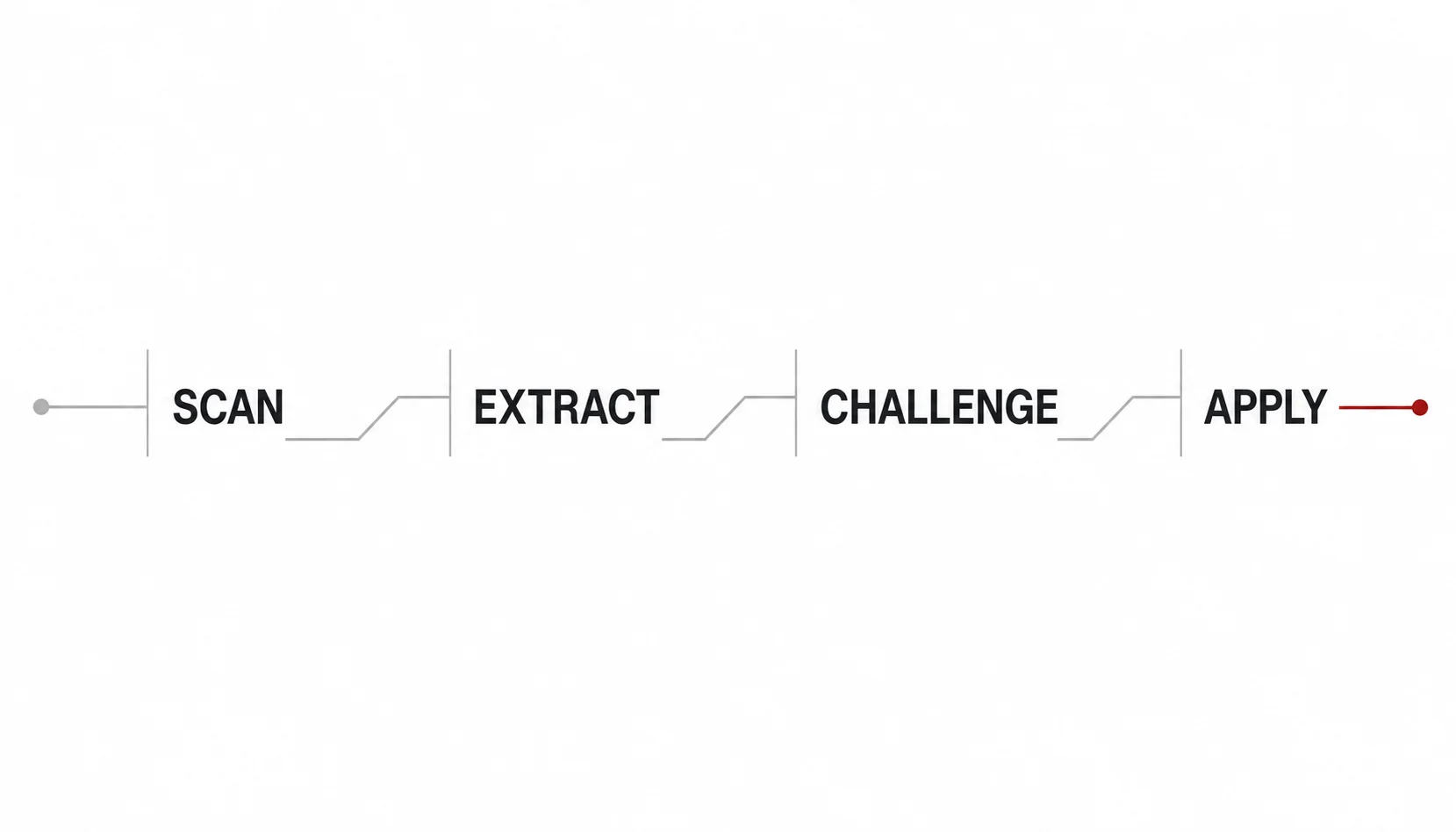
1. Scan
Read titles, summaries, and opening claims. Save only items tied to a live question: a target sector, company, investment framework, interview, or fund workflow.
2. Extract
Capture one claim and the evidence offered for it. Keep the author's conclusion separate from the underlying fact, dataset, interview, or example.
3. Challenge
Find the incentive, assumption, missing comparison, and strongest counterpoint. A firm blog may be directionally right while still emphasizing a category it invests in. An operator story may be instructive without being representative.
4. Apply
Turn the note into a decision or artifact. Update a venture capital market map, add a diligence question, revise a sourcing screen, or write one paragraph of an investment memo.
Use this four-line template:
Claim: What does the author believe is changing?
Evidence: What observable fact, data, or example supports it?
Counterpoint: What incentive, assumption, or evidence could weaken the claim?
Application: What company, market, diligence question, or fund decision changes next?
One strong note per week is enough. After six weeks, you should have a small body of evidence that shows how you think—not a folder of unread bookmarks.
Common mistakes when following VC blogs
Treating firm content as neutral research
Firm blogs can be unusually informed because investors see companies and markets repeatedly. They also support reputation, thesis positioning, portfolio companies, and founder relationships. Record the incentive and verify important claims elsewhere.
Following only famous personalities
Reputation can identify a valuable archive, but it cannot guarantee current relevance. Check where the author writes now, how recently, and whether the subject matches your goal.
Saving without synthesizing
A large reading queue creates the feeling of work without a usable output. Require every saved article to earn a note, question, or deletion.
Confusing cadence with signal
Daily commentary is useful for pattern recognition only if you review patterns. A slower operator deep dive may create a better interview example or diligence question.
Using blogs as primary evidence
Blogs help you discover claims. Investment work should move closer to the source: customer conversations, company materials, product usage, hiring patterns, regulatory filings, technical documentation, and original datasets.
Frequently asked questions
Which venture capital blog is best for beginners?
Start with First Round Review for operator understanding, one firm publication such as a16z or Bessemer Atlas for market theses, and one specialist source aligned with your goal. Three complementary sources are more useful than a list of twenty.
Are venture capital firm blogs biased?
They have a point of view and commercial incentives, which is different from being unusable. Firm blogs can offer deep pattern recognition and proprietary access. Check portfolio exposure, separate evidence from conclusion, and look for a credible counter-case.
How many VC blogs should I follow?
Three is a strong starting point: operator evidence, market thesis, and specialist or independent analysis. Add another only when it fills a named gap and remove sources that repeatedly produce no useful notes.
What happened to classic VC blogs such as AVC?
Some famous archives remain valuable but are no longer current at their original URL. AVC states that Fred Wilson moved new writing to an onchain publication in 2024 and does not plan to keep posting there regularly. Use classic archives for durable mental models, then verify where the writer publishes now before calling the source active.
Can reading VC blogs help with interviews?
Reading helps only when it changes your work. A concise thesis, market map, diligence question bank, sourcing screen, or memo section gives an interviewer something concrete to evaluate. Once those artifacts are ready, research venture capital firms and browse open venture capital roles where your sector knowledge and operating perspective are relevant.
The best VC blog stack is small, current, and argumentative. Read sources that disagree in useful ways, trace important claims to primary evidence, and ship one defensible piece of work each week.
Related posts
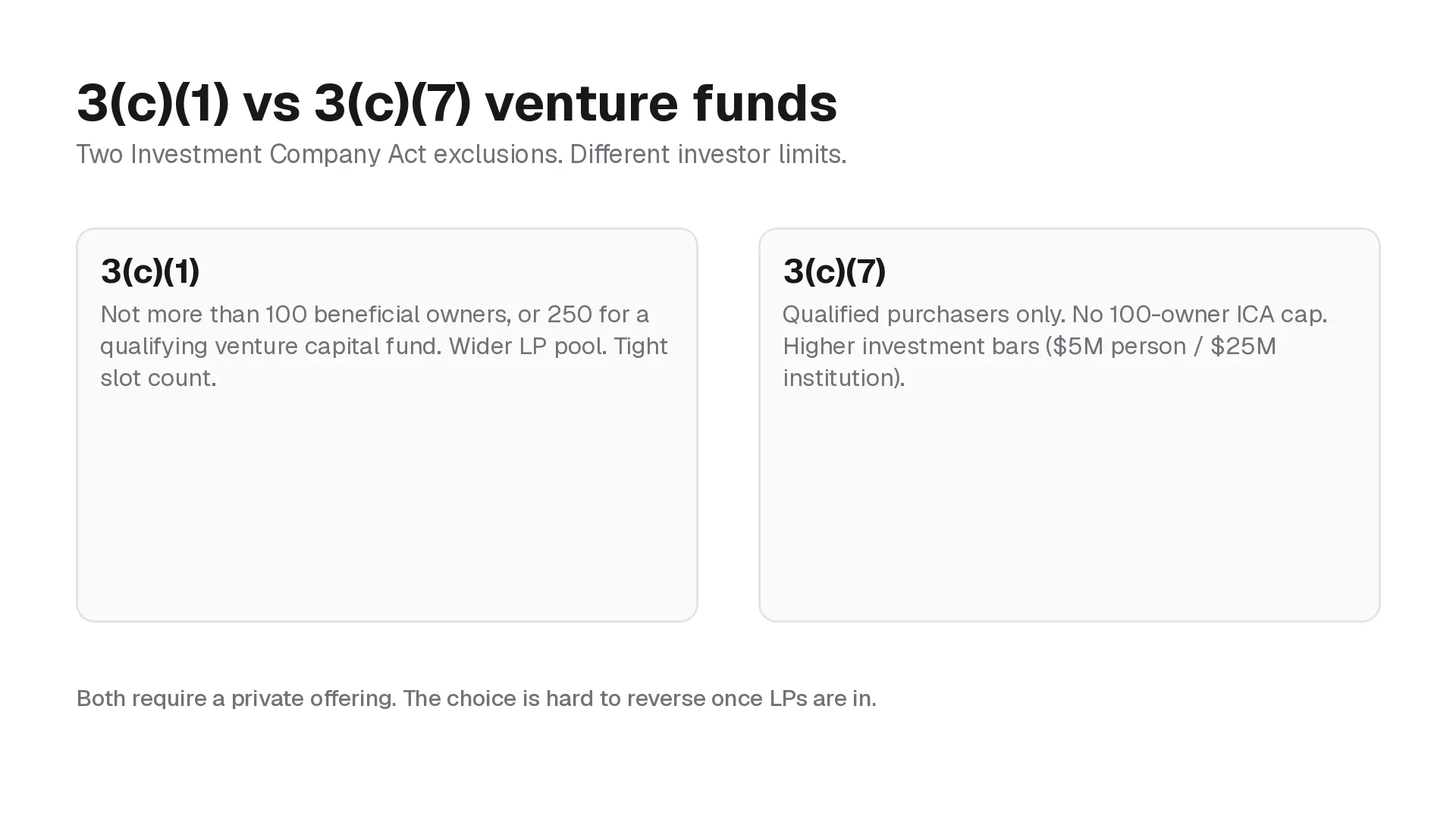
U.S. venture funds usually avoid Investment Company Act registration through 3(c)(1) or 3(c)(7). One caps how many people can own the fund. The other admits only qualified purchasers. Here is the difference, a worked slot example, and what it means for people who work at VC firms.
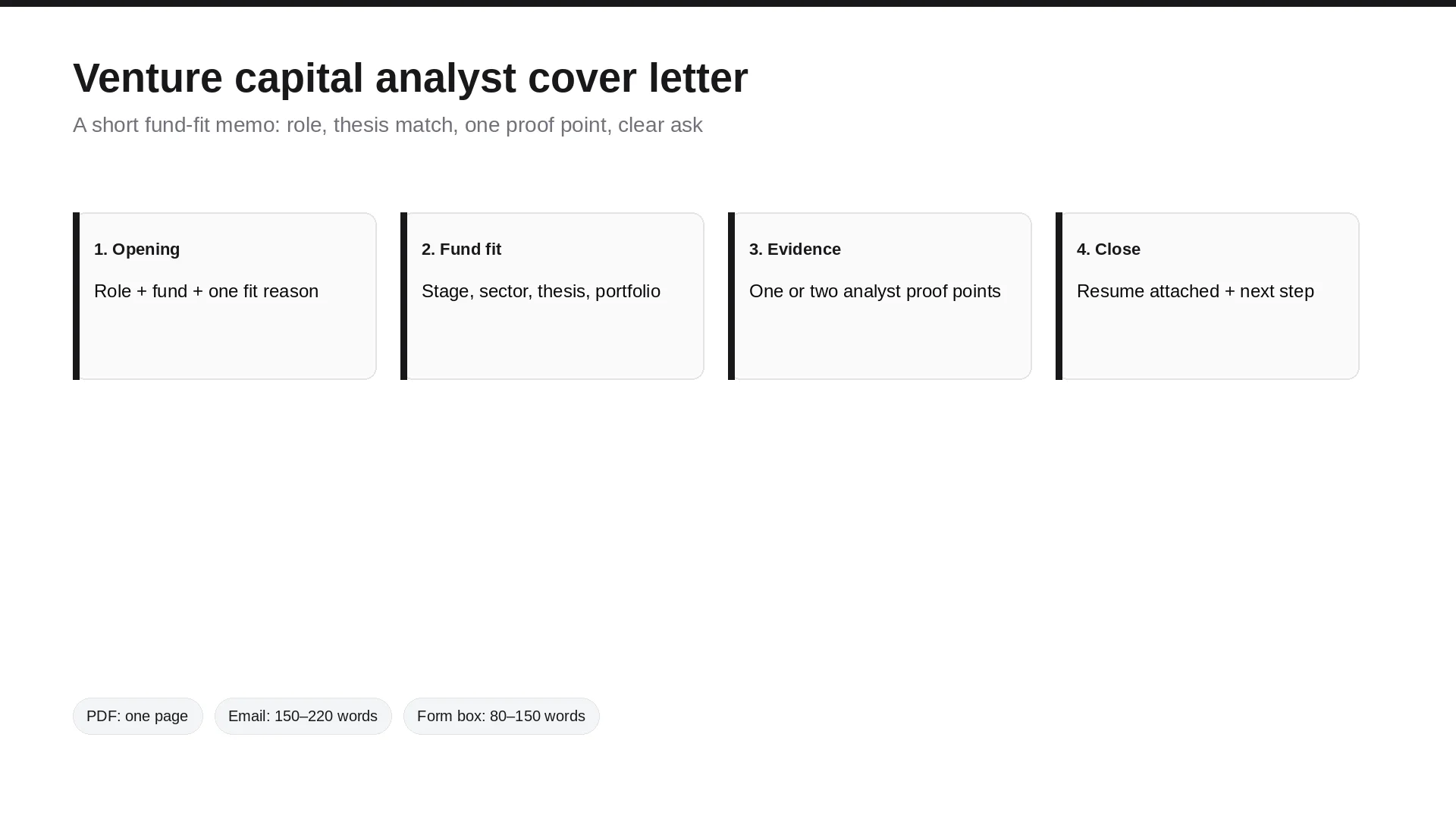
Write a concise VC analyst cover letter that ties your background to fund fit, sourcing, research, and investment analysis. Includes a template, sample letter, channel lengths, alternate application prompts, and checklist.
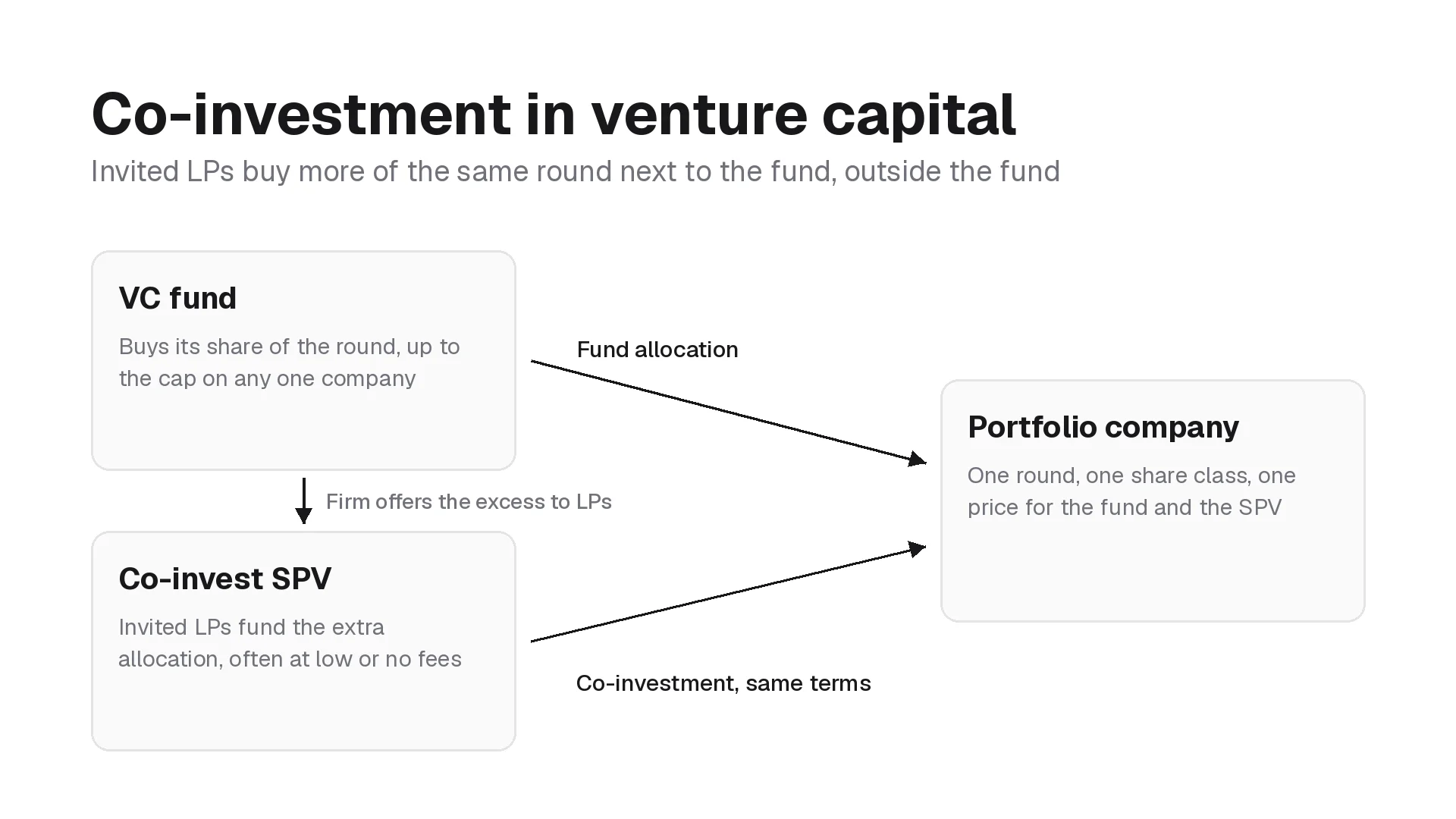
A venture capital co-investment lets LPs put money into one startup next to the fund, outside the fund, usually at lower fees. Here is how the offer works, what the terms cost, why late-stage venture co-investments carry extra risk, and what co-investment means for people who work at VC firms.