Venture Capital Networking: How to Build Relationships and Break Into VC
Learn how to network into venture capital with a practical system for finding the right people, starting useful conversations, and turning relationships into role opportunities.
Venture capital networking is the process of building useful relationships with investors, founders, operators, recruiters, and other candidates before you need a referral or interview. The goal is not to collect coffee chats. The goal is to become a credible person in the VC ecosystem before a role opens.
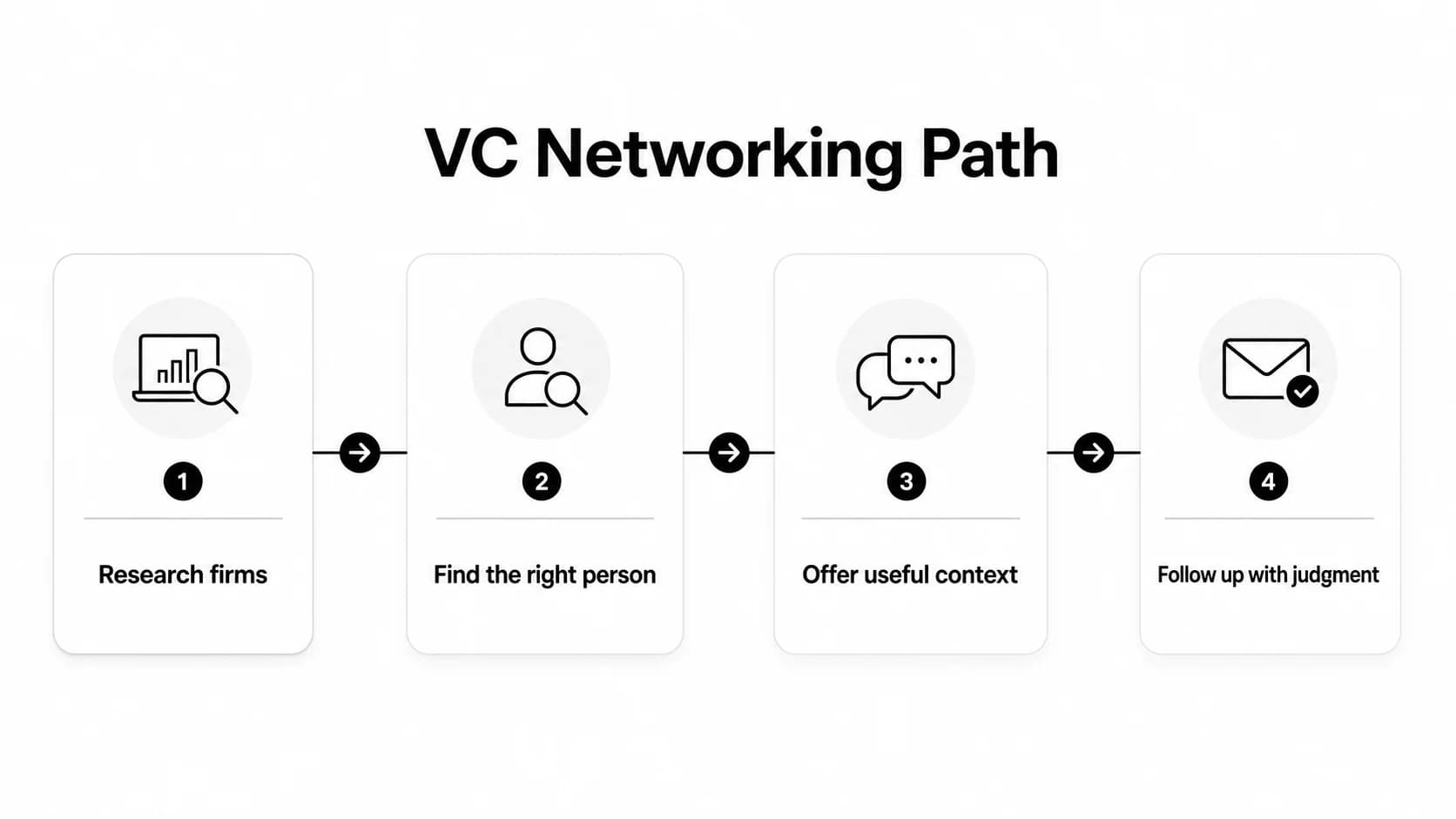
If you want to network into venture capital, start with a focused list of firms, learn what each firm invests in, contact the right person for your question, bring one useful observation to the conversation, and follow up with context. Done well, networking helps you find hidden roles, earn warm referrals, sharpen your investment judgment, and avoid sending generic applications into a narrow market.
What venture capital networking is really for
Networking in VC is different from networking in larger finance or consulting markets. Many venture firms are small. Some hire only one analyst or associate at a time. Many roles are never widely posted, and hiring managers often trust referrals because the work depends on judgment, founder empathy, and market curiosity.
That does not mean networking is a shortcut around competence. A weak candidate with many calls is still a weak candidate. Networking works when it lets people see evidence that you already think and act like someone who belongs near startups and investors.
Good VC networking should help you do four things:
- Learn how a specific firm invests.
- Understand what different VC roles actually do.
- Build a reputation for useful thinking.
- Create warm paths into conversations when roles appear.
The best approach is simple: be specific, be useful, and keep the relationship alive without forcing a job ask too early.
Build a target list before you ask for calls
Do not start by messaging every investor you can find. Start by building a target list of firms where your background, geography, stage interest, and sector curiosity make sense.
Use the Venture Capital Careers companies directory to research firms by market and role relevance. Then sort potential contacts into three groups.
| Target group | Who belongs here | Why it matters |
|---|---|---|
| Warm contacts | Alumni, former colleagues, founders you know, investors who share a community | Highest response odds and best context for a real introduction |
| Relevant cold contacts | Investors who cover your sector, stage, geography, or prior operating area | Best fit for thoughtful outreach if you bring a specific reason |
| Aspirational contacts | Senior partners or high-profile investors with no obvious connection | Useful later, but rarely the best first ask |
For each firm, write down:
- fund stage and check size;
- sectors or themes they discuss publicly;
- recent investments;
- team members closest to your background;
- open roles or recent hiring signals;
- one question you could ask that is not answered on the website.
That preparation changes the tone of the outreach. Instead of asking someone to explain venture capital from scratch, you can ask about a specific role, theme, investment pattern, or skill gap.
Who to contact at a VC firm
The right person depends on the reason for the conversation.
| Contact | Best reason to reach out | Use caution when |
|---|---|---|
| Analyst or associate | Learning the day-to-day work, recruiting process, sourcing expectations, interview prep | Asking for hiring authority they may not have |
| Senior associate or principal | Understanding role expectations, deal work, promotion path, and what the firm values | Sending generic "pick your brain" messages |
| Partner or GP | Discussing a specific thesis, founder perspective, portfolio company, or warm referral | Asking for entry-level career advice with no context |
| Platform or talent leader | Learning about portfolio support, talent workflows, and open operating roles | Treating platform as the same as investing |
| Founder backed by the firm | Understanding how the fund supports companies and what investors are like after close | Asking founders to lobby for you before trust exists |
Junior investors are often the best starting point for candidate-specific questions. They remember the process, know what the work feels like, and can tell you which skills matter. Partners can be valuable, but only when you have a clear reason that fits their work.
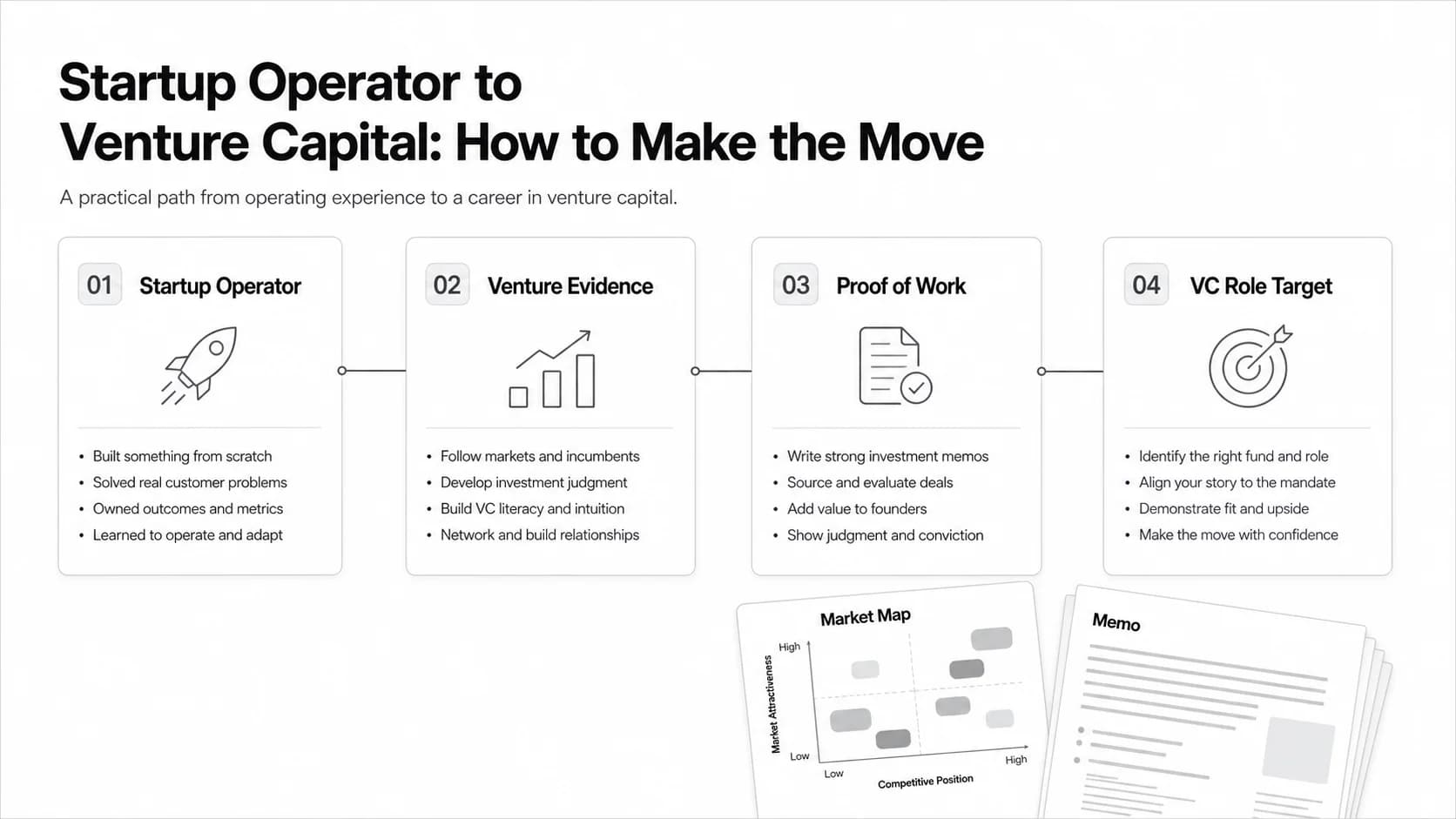
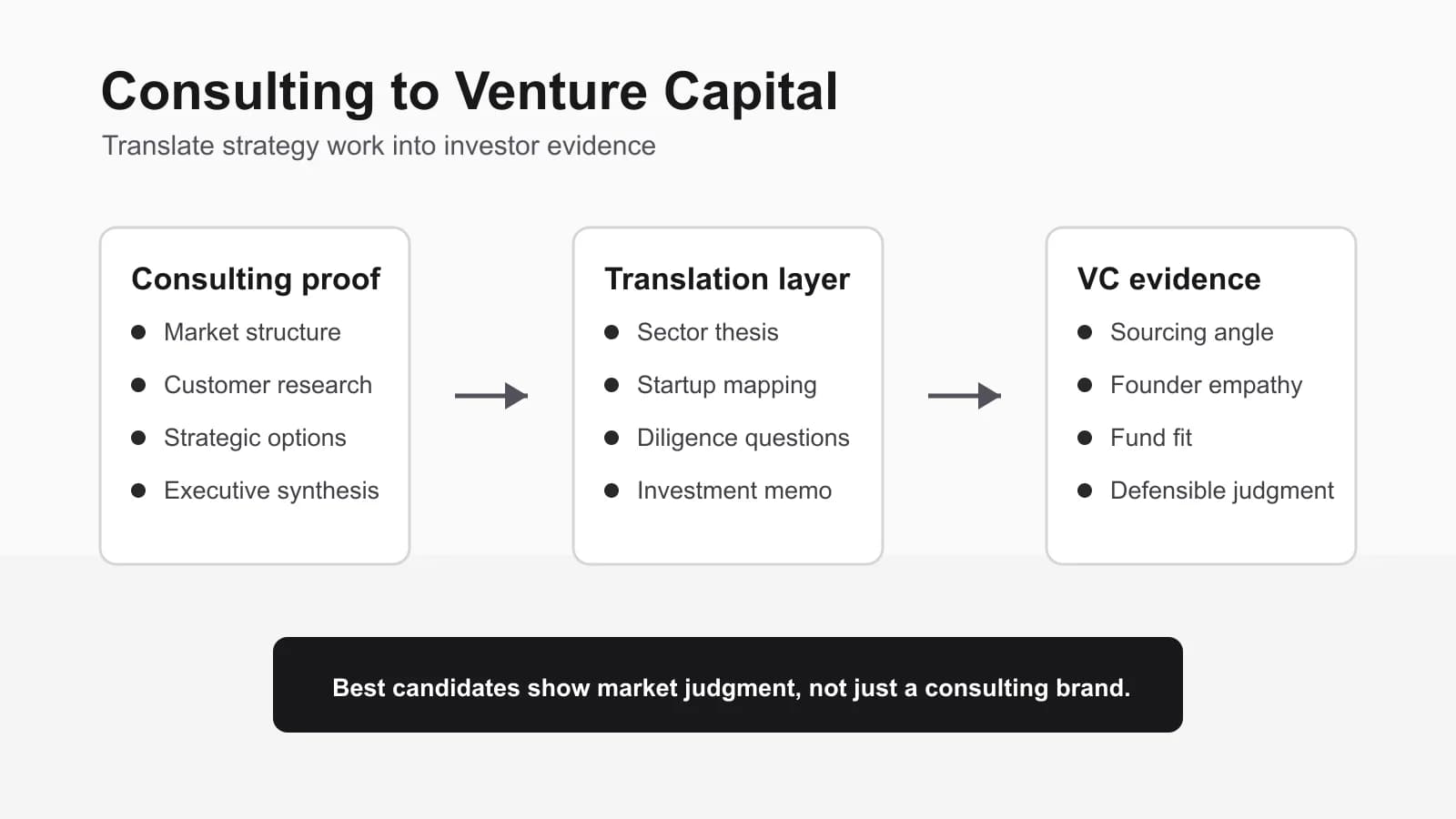
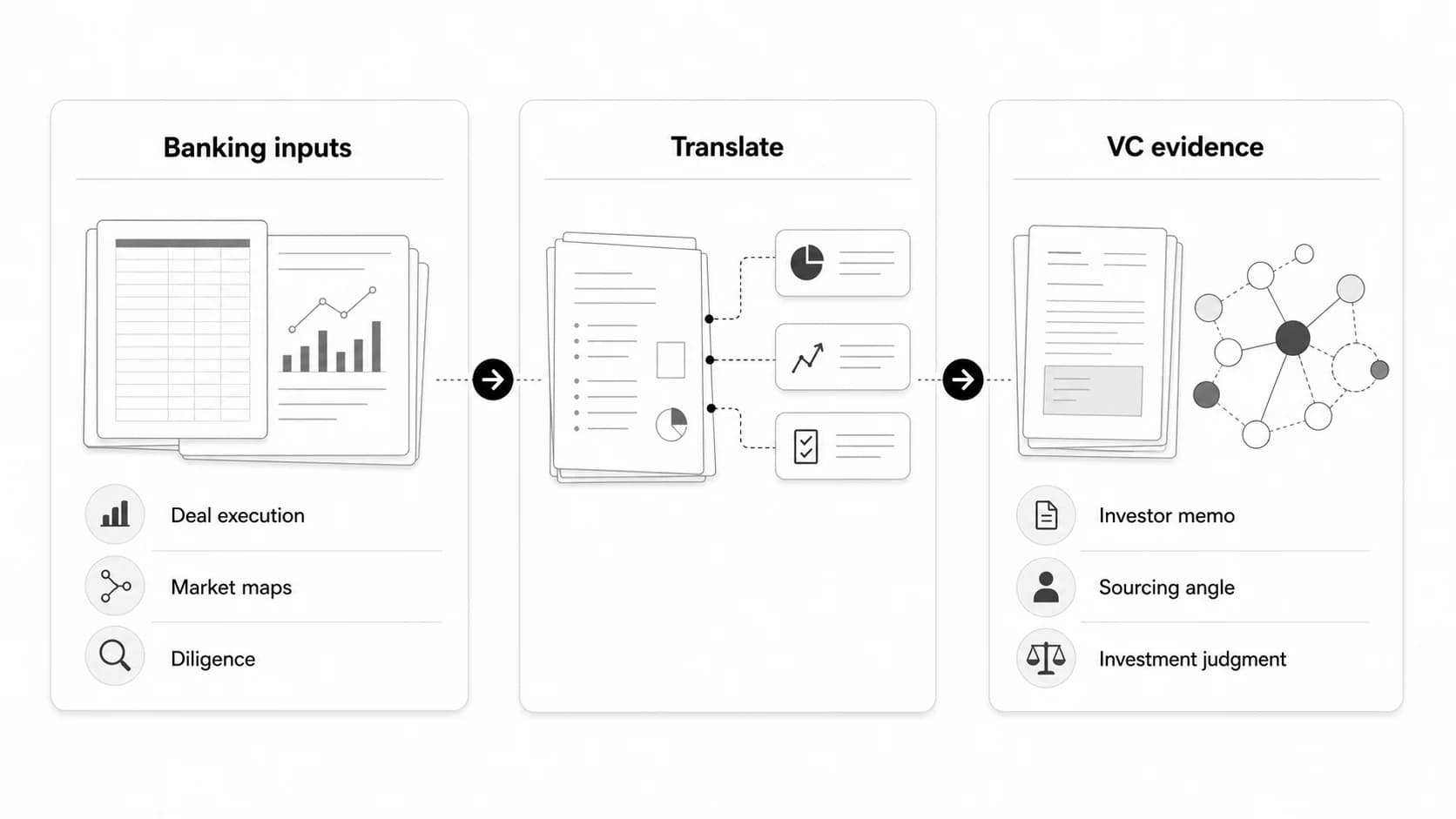
If you are changing careers, choose contacts who can understand your bridge. A startup operator should speak with investors who know that sector. A banker should speak with growth or later-stage investors who value transaction experience. A consultant should target firms where market mapping, diligence, and strategic analysis matter.
What to say when you reach out
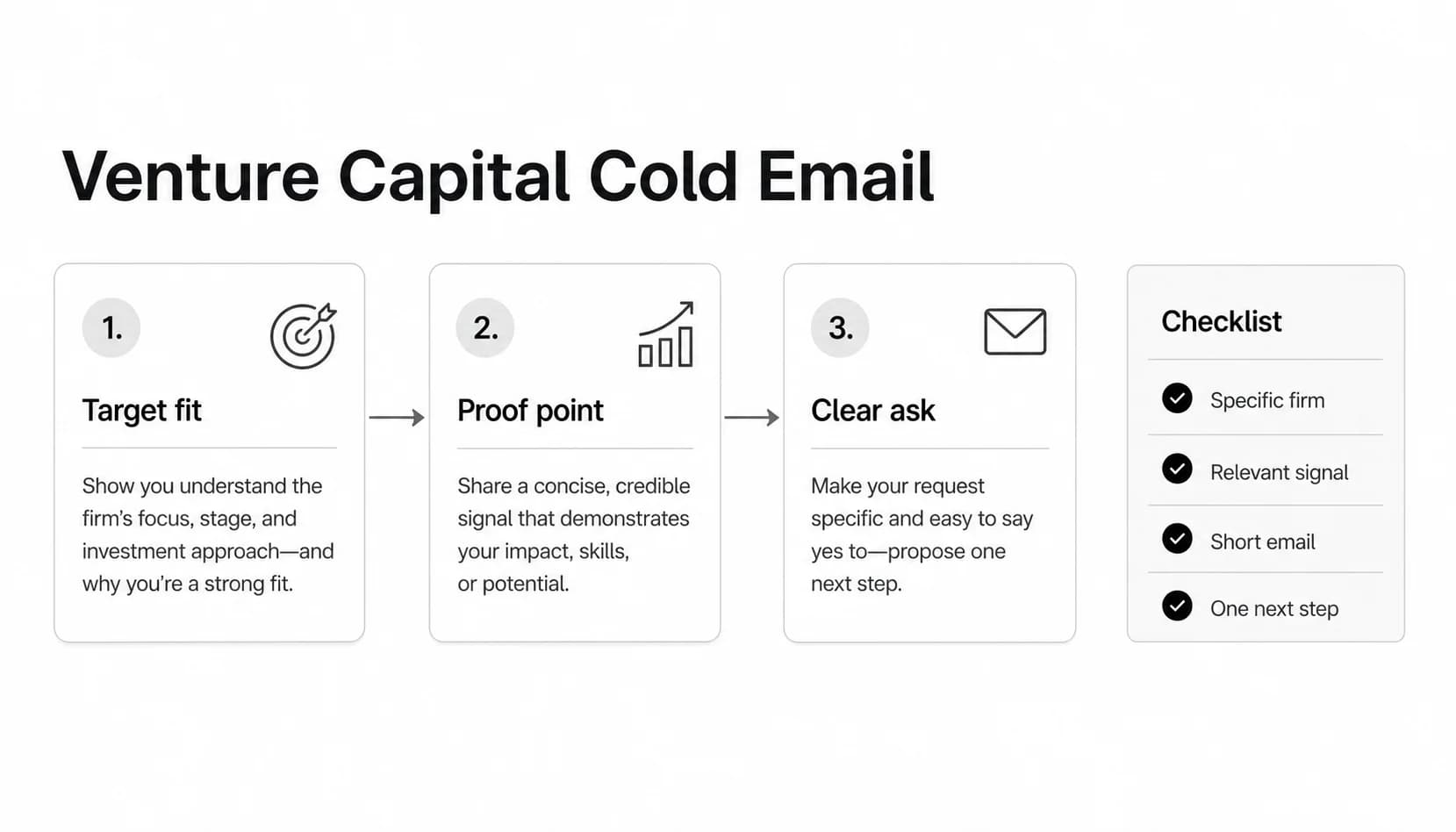
A good VC networking message has three parts: why this person, why now, and what would make the conversation useful.
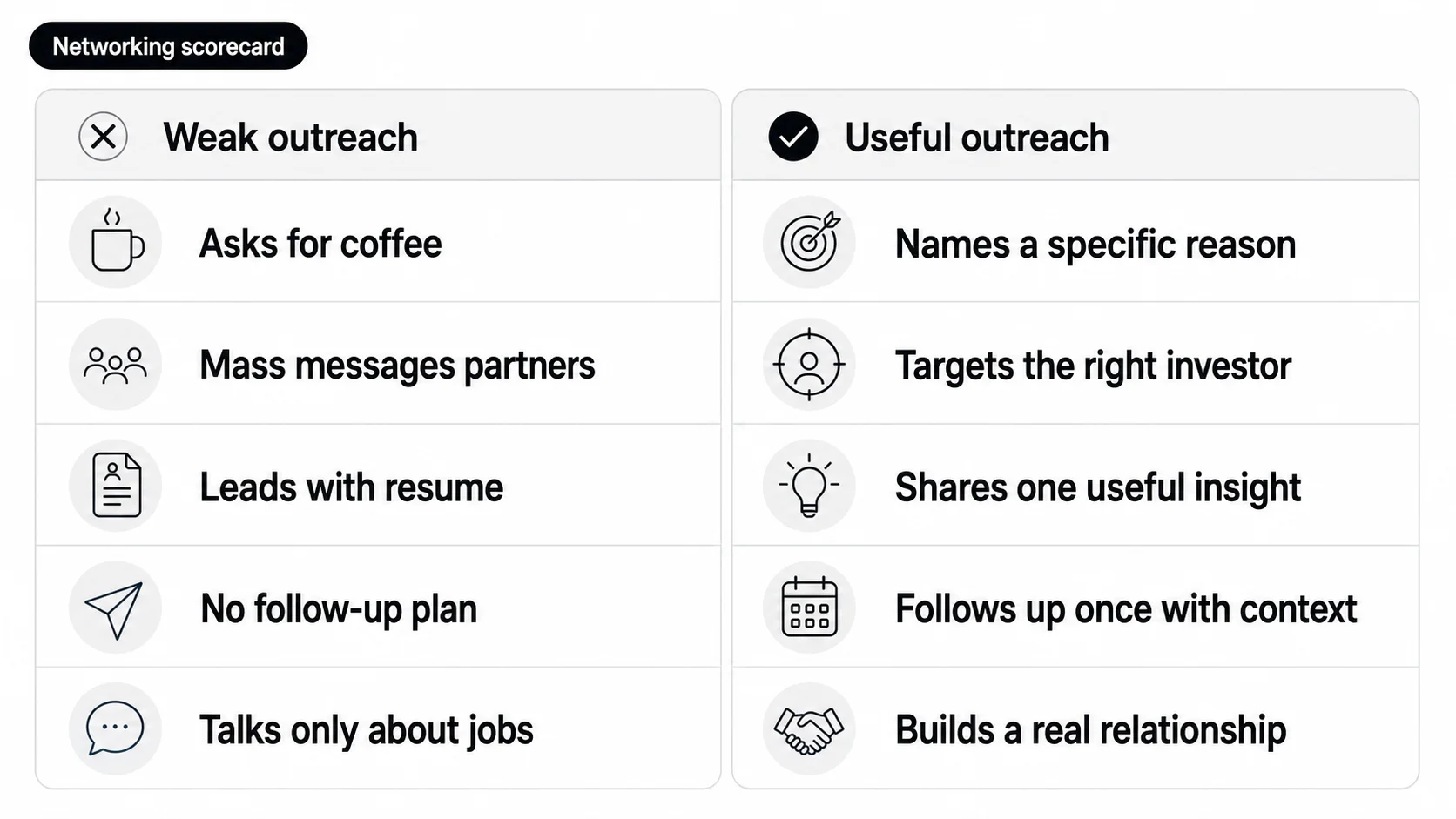
Weak outreach sounds like this: "I am interested in VC and would love to pick your brain."
Useful outreach sounds more like this: "I saw your recent work around vertical software and noticed your portfolio has several founder-led companies selling into healthcare. I have been working on provider workflow software and am trying to understand how seed investors evaluate wedge quality. Would you be open to a brief call?"
The second version works better because it gives the investor a reason to believe the conversation will be specific.
For templates, use the venture capital networking email guide. Keep this article focused on the broader strategy: who to contact, what to bring, and how to turn the relationship into a real path.
What to ask on a VC networking call
Your first call should not be an interview and should not be a disguised job ask. Treat it as a short research conversation where you are trying to understand the firm, the role, and the market.
Good questions include:
- What kinds of candidates tend to do well in this role?
- What does sourcing look like at your firm?
- How do junior investors build conviction before they have a long track record?
- Which parts of the job surprised you after joining?
- What skills should I build before applying to a role like yours?
- Are there sectors where a candidate with my background could be especially credible?
- What would make a cold outreach note or application stand out in a bad way?
Bring one point of view to the call. It can be a short market observation, a company you think is interesting, a question about a recent investment, or a pattern you noticed in the firm's portfolio. You do not need to sound like a partner. You do need to show that you are already practicing the work.
After the call, write down what you learned. Track the firm, contact, themes discussed, next step, and whether the person offered to make an introduction. A messy spreadsheet is fine. Memory is not.
How to follow up without sounding transactional
Most candidate networking fails after the first call. The candidate sends a thank-you note, disappears, and then returns months later asking for a referral.
A better follow-up system has three layers.
First, send a same-day thank-you note. Mention one specific idea from the conversation and any next step you promised.
Second, follow up only when you have a reason. That reason might be a relevant company, a market note, a role opening, a founder introduction, or an article that connects to the person's investing focus. Do not send empty "just checking in" messages every month.
Third, make the job ask when the relationship can support it. If the person has given advice, replied more than once, or helped you understand the firm, it is reasonable to ask whether they would be comfortable pointing you to the right hiring contact. If you barely know them, ask for advice on the process before asking for a referral.
Follow-up should make the other person feel that their time compounded, not that it triggered an obligation.
A weekly VC networking system
Networking works best as a weekly operating cadence, not a burst of panic after a job post appears.
Use this simple weekly system:
| Weekly action | Target | Output |
|---|---|---|
| Research firms | 5 firms | Add thesis, stage, team, and hiring notes |
| Send thoughtful outreach | 3 to 5 people | Personal messages with a specific reason |
| Have conversations | 1 to 2 calls | Notes, next steps, and relationship context |
| Share something useful | 1 person | Company idea, market note, intro, or resource |
| Review roles | 1 session | Check the VC job board and update targets |
The numbers are intentionally modest. Quality matters more than volume. Ten generic messages are worse than three relevant ones.
As roles appear, use your networking notes to decide where to apply. If a firm is hiring and you have already spoken with someone there, send a concise note that connects your prior conversation to the role. If you have not spoken with anyone, use the role as a reason to research the firm and find a relevant contact.
Common VC networking mistakes
The first mistake is asking for too much too early. A stranger is unlikely to refer you after one generic message. Earn trust before asking them to spend reputation.
The second mistake is confusing seniority with usefulness. A partner is not always the best first contact. A current associate may give you more honest and practical advice about interviews, sourcing, and firm culture.
The third mistake is showing no market curiosity. Venture capital is not just a job category. It is a way of thinking about markets, founders, risk, and timing. If you cannot discuss one market or company thoughtfully, networking calls will stay shallow.
The fourth mistake is treating every firm the same. A seed fund, growth fund, corporate venture arm, and platform-heavy fund may all use different hiring criteria. Your outreach should reflect those differences.
The fifth mistake is failing to prepare application materials. Networking can open doors, but your resume, writing sample, case study, or interview performance still has to carry you through the process. Pair networking with the venture capital resume guide and VC case study interview guide.
How VCC readers can use the workflow
Use Venture Capital Careers as the research layer for your networking process.
Start with the companies directory to identify firms that match your background and interests. Then use the VC job board to track open roles and understand which titles are actually hiring. If you want alerts and a candidate profile, use candidate sign-up.
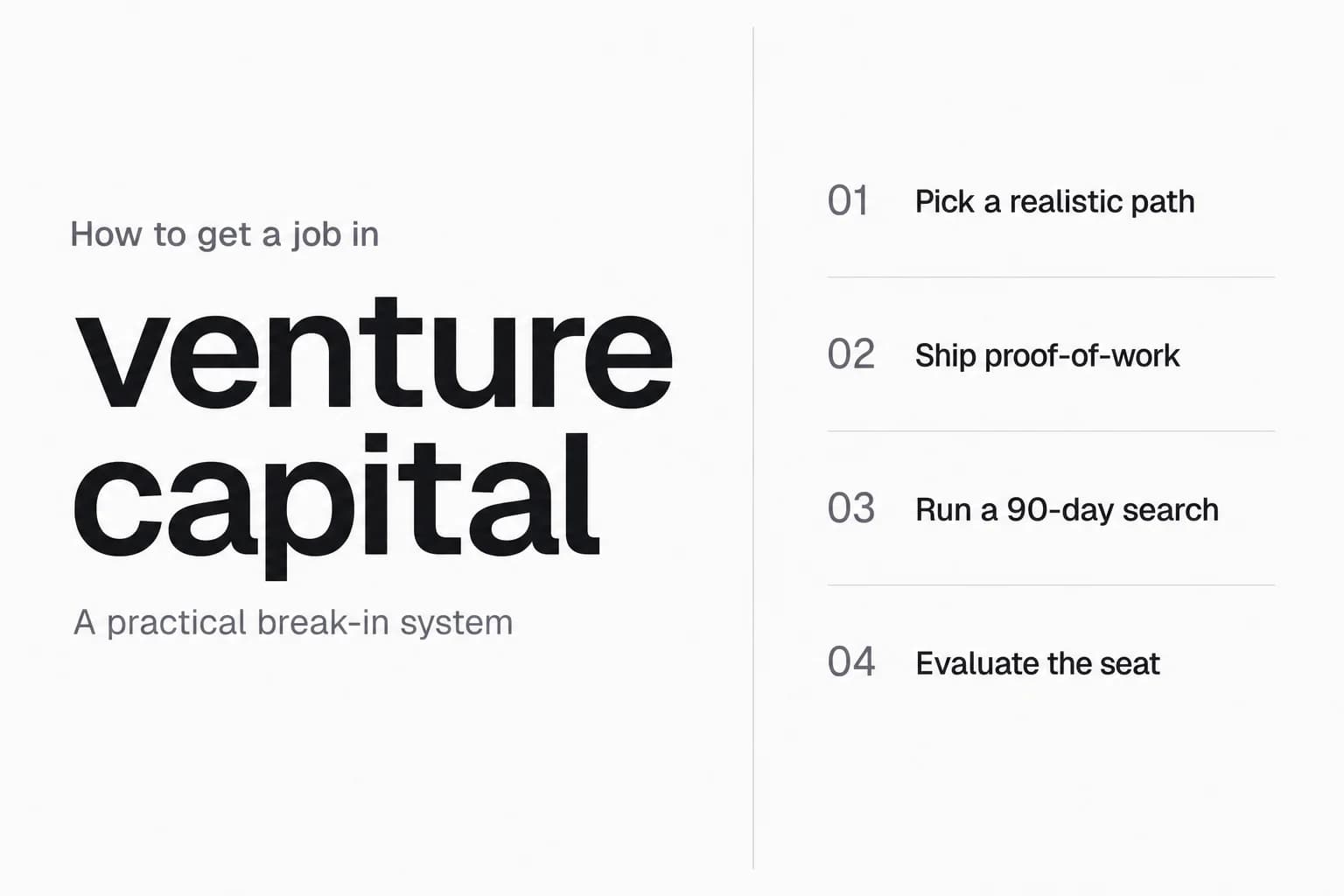
For broader context, read the venture capital career path guide before deciding which roles to target. If you need the broader job-search playbook, use the guide on how to get a job in venture capital.
The workflow is straightforward:
- Research firms before outreach.
- Contact the right person for the question.
- Bring one useful observation.
- Track the conversation.
- Follow up when you have context.
- Apply when the role and relationship line up.
FAQ
How many VC networking calls do I need?
There is no magic number. A useful target is one or two good calls per week for several months. The goal is not volume. The goal is to build enough specific relationships that you understand the market, hear about roles earlier, and become a credible candidate when a firm is ready to hire.
Should I contact partners or junior investors?
Start with the person closest to your question. Junior investors are usually better for role and interview context. Principals can help with expectations and hiring process. Partners are best when you have a clear thesis, sector overlap, founder connection, or warm introduction.
Can I network into VC without a finance background?
Yes, but you need a credible bridge. Operators can bring sector knowledge, customer empathy, or startup-building experience. Consultants can bring market mapping and diligence. Founders can bring company-building judgment. Your networking should make that bridge obvious.
What should I send after a networking call?
Send a short thank-you note with one specific takeaway. If you promised something, include it. Later, follow up only when you have a reason: a relevant company, market note, role opening, introduction, or update on advice they gave you.
Should I ask directly for a job?
Ask directly only when there is a real role or a clear hiring signal. Earlier in the relationship, ask for advice on fit, process, and skills. Once the contact understands your background and the role is relevant, it is reasonable to ask whether they can point you to the right hiring person.
Turn networking into real VC opportunities
VC networking is not about becoming visible to everyone. It is about becoming useful and credible to the right small set of people.
Build a focused target list, prepare before each conversation, ask better questions, follow up with context, and connect the relationship to real roles when timing makes sense. That discipline will do more for your VC job search than a large number of shallow coffee chats.