
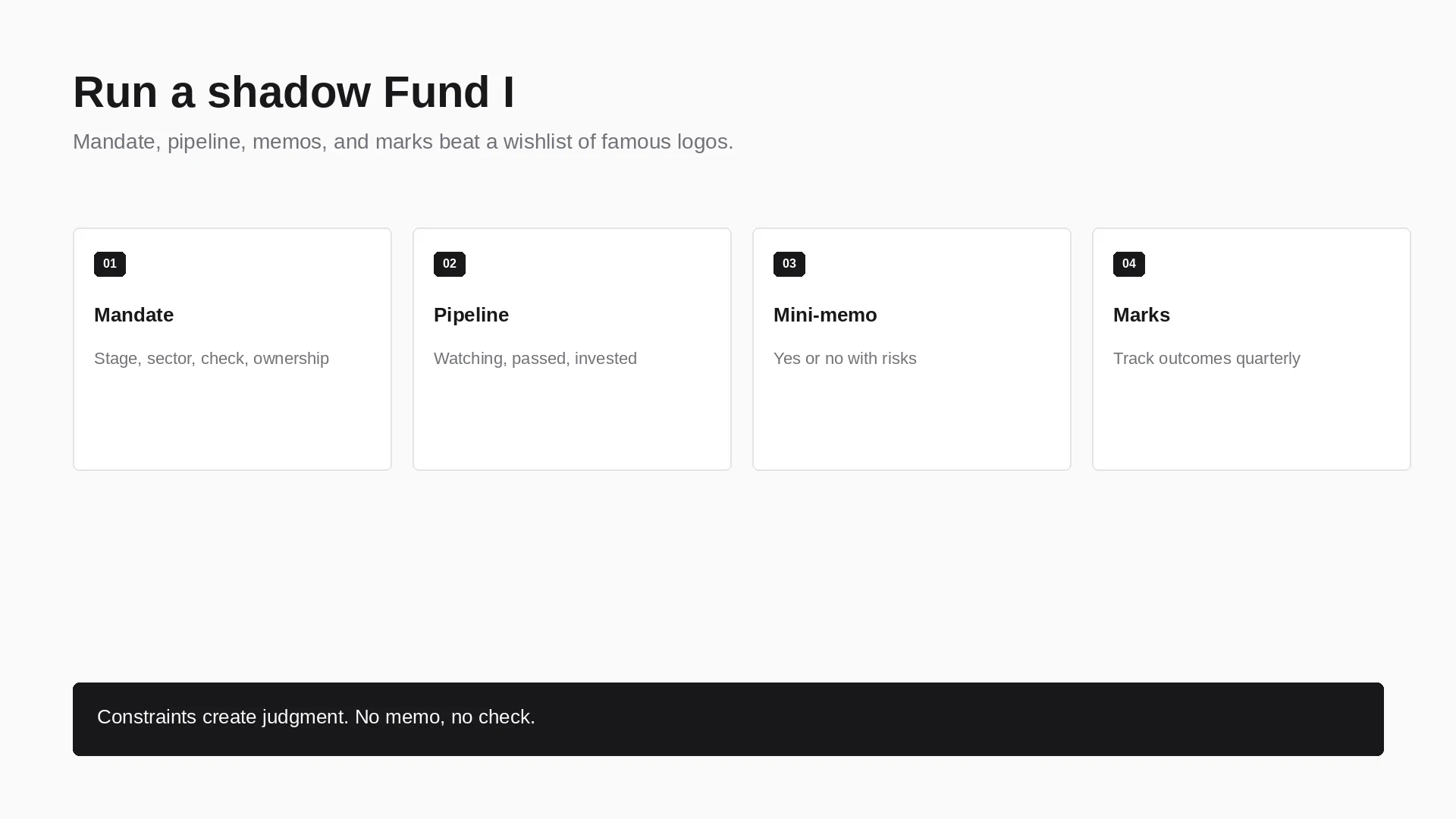
A fantasy VC portfolio is a structured practice fund you run without writing real checks. You set a mandate, source companies, write invest-or-pass memos, track marks, and review outcomes on a fixed cadence. Done well, it is hiring evidence. Done poorly, it is a wishlist of famous logos.
Firms hire people who reduce a partner's workload or expand their option set. A fantasy portfolio shows whether you can operate with constraints, form a view under sparse information, and update that view when the world moves. That is closer to the job than another coffee chat without substance.
This guide is the operating system: mandate, construction rules, pipeline, memos, marks, quarterly reflection, public vs private choices, and how to use the work in interviews. For the wider break-in process, use how to get a job in venture capital. For memo craft depth, use the investment memo guide.
What a fantasy VC portfolio is (and what it is not)
A fantasy portfolio is a shadow Fund I. You pretend you manage a fixed pool of capital with stage, sector, check size, and ownership targets. Every "investment" must fit those constraints. Every pass should leave a short reason. Over months, the artifact becomes a record of judgment, not a mood board.
It is not:
- A list of companies you wish you had bought after they became household names
- An undated Google Doc of "interesting startups" with no decisions
- A substitute for real deal sourcing practice or founder conversations
- Proof that you would have returned a fund (power-law outcomes take years)
It can sit beside angel checks if you write them. Cash is optional. Discipline is not.
Why hiring managers care
Junior seats are scarce. Partners cannot underwrite every claim on a resume. They look for evidence that you already behave like someone who owns a slice of the funnel.
A strong fantasy portfolio signals:
- You can define a thesis and live inside it
- You source before you opine
- You separate watching from investing
- You write a clear yes or no with risks
- You revisit decisions when new information appears
That packet travels in interviews, fellowship applications, scout conversations, and value-first outreach. It does not replace relationships or domain depth. It makes those conversations shorter because there is something concrete to react to.
The hiring-grade scorecard
Before you add another company, decide what "good" looks like for a partner who skims for five minutes.
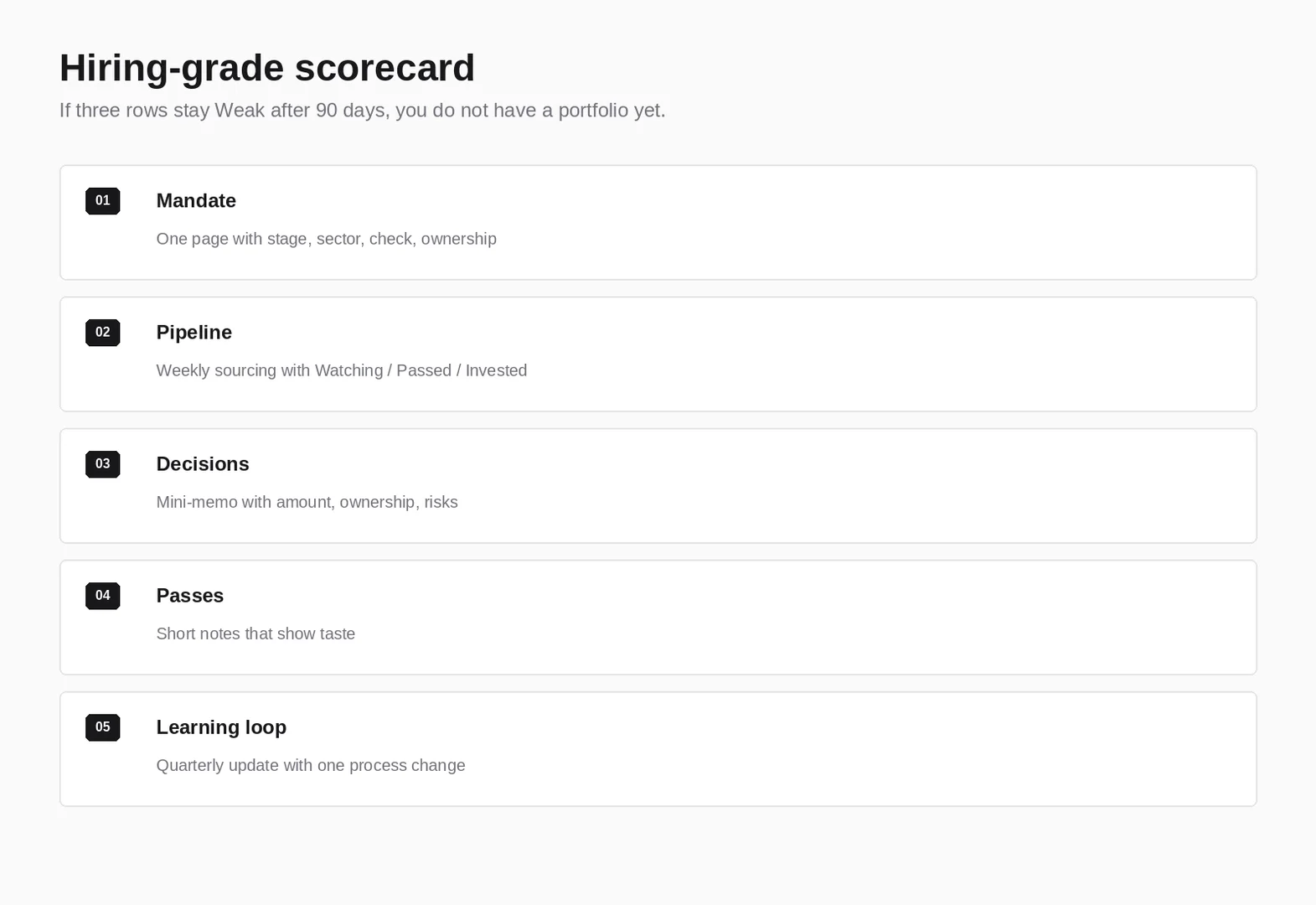
| Signal | Weak | Hiring-grade |
|---|---|---|
| Mandate | "I like startups" | Stage, sector, check, ownership, and geography written in one page |
| Pipeline | Random bookmarks | Weekly sourcing with Watching / Passed / Invested statuses and sources |
| Decisions | Logo collecting | Mini-memo with invest amount, ownership target, and explicit risks |
| Passes | Silent ignores | Short pass notes that show taste, not FOMO avoidance |
| Learning loop | Never revisited | Quarterly update with markups, misses, and one lesson you changed |
If three or more rows stay Weak after 90 days, you do not have a portfolio yet. You have homework.
Define your Fund I mandate
Write the mandate before you open a tracker. Constraints create judgment. Without them, every hot round feels like a fit.
Include:
- Fund size (example: $10M practice fund)
- Check size range
- Stage focus (pre-seed, seed, Series A)
- Sector or customer wedge
- Geography
- Target ownership or maximum dilution you will accept in the exercise
- Reserve policy for follow-ons
Everything you invest in must fit. If a company is interesting but outside mandate, put it in Watching or Pass with a note. Do not expand the mandate mid-deal to rescue a crush.
Pick a wedge you can actually cover. A "everything AI" fund with no customer or workflow focus produces shallow memos. A narrower lens produces comparable reps, which is how pattern recognition forms. For how seats differ by stage once you are ready to apply, see the venture capital career path.
Set portfolio construction rules
Real funds do not only pick companies. They build a book. Decide construction rules up front:
| Rule | Example for a practice seed book |
|---|---|
| Core positions | 20–30 companies over the fund life |
| Deployment pace | 1–2 new investments per month |
| Reserves | 40–50% held for follow-ons |
| Follow-on policy | Double down only when thesis markers clear; otherwise pass |
| Concentration | Cap any single name at a fixed % of the practice fund |
These numbers are scaffolding, not gospel. The point is that you feel scarcity. Scarcity forces prioritization. Prioritization is the job.
Build a pipeline you can defend
Use a simple spreadsheet or database. Columns that matter:
- Company
- Sector / wedge
- Stage
- Geography
- Source (how you found it)
- Status: Watching / Passed / Invested
- Date of last update
- Link to memo or pass note
Source weekly. Press roundups are fine for practice volume, but they are not enough on their own. Add founder conversations, product usage, community lists, and outbound research so your Source column is not 100% "TechCrunch." Over time, that column tells you which channels produce companies you actually want to own.
Non-obvious picks beat famous logos. A fantasy book full of household names teaches little and reads like hindsight. Prefer early companies where public data is thin and your reasoning has to do work.
Write a mini-memo before every check
No memo, no check. Keep it short enough that you will actually finish it.
Minimum fields:
- Problem and why now
- Product and distribution hypothesis
- Team evidence you can observe
- Market shape and competition
- Business model sketch
- Key risks and what would change your mind
- Decision: invest or pass, check size, ownership target
You do not need private data to practice. Public scraps plus clear assumptions beat fake precision. When you lack a number, state the assumption and the range.
For fuller memo structure when a live process asks for a take-home, use the venture capital investment memo guide. Fantasy memos should stay lighter so volume stays high.
Track marks, ownership, and outcomes
Log what you can observe:
- Round date and size
- Valuation or a bounded estimate when undisclosed
- Your practice check and ownership
- Later rounds, shutdowns, or clear stall signals
- Notes on what you got right or wrong
Valuation disclosure is often incomplete. A bounded estimate from round size and typical dilution bands is enough for practice. You are training judgment about trajectory and thesis fit, not building audited NAV.
Maintain a one-page dashboard: invested names, entry context, status, and the last lesson. If you cannot summarize the book in two minutes, the system is too messy to help you in an interview.
Reflect on a quarterly cadence
Once a quarter, write a short LP-style update to yourself:
- New investments and why
- Passes you still endorse
- Names that marked up or down on public signals
- One process change for next quarter
- One thesis update (narrower, wider, or abandoned)
The update is where fantasy becomes learning. Without it, you only collect screenshots of enthusiasm.
Public vs private track record
Public posting can create accountability and inbound conversations. It can also create noise or pressure to sound certain before you are ready.
Publish when:
- Your mandate is stable for at least a month
- Memos show a point of view, not summaries
- You can discuss misses without rewriting history
- You want founders or investors to find the work
Keep it private when:
- You are still learning vocabulary and would rather get reps than audience
- Your employer or current role limits what you can say
- You are tempted to optimize for virality instead of accuracy
A private packet that is crisp still wins interviews. A public thread that is vague does not.
How to use the portfolio in interviews and outreach
Treat the portfolio as a working session starter, not a trophy.
In interviews:
- Bring one invested name and one pass that fit the firm's stage and sector
- Be ready to defend price and ownership assumptions
- Show a quarterly lesson that changed your process
- Ask how the firm records credit and follow-on decisions so you can map your practice to their language
In outreach:
- Lead with one company or insight that matches the investor's stated focus
- Offer the memo or a three-slide version, not a request to "pick your brain"
- Follow up once with a new data point, not a bump
For question banks and case formats, use venture capital interview questions. For message structure, the cold email templates help after you have something worth sending.
Common failure modes
Wishlist mode. Only companies that already won. Fix: require early-stage, non-obvious names inside mandate.
Infinite Watching. No invest or pass decisions. Fix: time-box Watching to two weeks, then decide.
Memo theater. Ten-page decks nobody asked for. Fix: one-page mini-memos and higher volume.
Mandate drift. Every crush expands the strategy. Fix: write Pass with "outside mandate" as a valid reason.
No learning loop. Never revisit marks. Fix: calendar the quarterly update.
Public cosplay. Posting takes without process. Fix: private reps first, then selective publishing.
Confusing the artifact with the job search. A portfolio without applications and firm research stalls. Fix: run the 90-day break-in plan in parallel once the scorecard is Strong.
FAQ
Does a fantasy portfolio actually help you get hired?
It helps when it shows constrained judgment and writing quality. It does not help when it is a logo list or an AI-generated memo dump. Partners react to specific decisions they can argue with.
How many companies should be in it?
Enough to show pattern recognition without becoming noise. For a practice seed book, aiming toward 20–30 invested names over a fund-life simulation is a useful target. Quality of decisions beats headcount.
Do I need real money?
No. Angel checks add network and skin in the game if you can do them carefully. Most candidates should start with fantasy structure, then add cash only when they can underwrite responsibly.
How is this different from a market map?
A market map organizes a sector. A fantasy portfolio forces capital allocation under constraints. You need both. Maps without decisions stay academic.
Should I share it publicly?
Only after the scorecard is Strong and you can discuss misses cleanly. Private excellence beats public vagueness.
How long before it is useful in interviews?
Plan in months, not weekends. Many candidates have a usable packet after 8–12 weeks of weekly sourcing and memo cadence. Faster is possible if you already had domain depth and deal flow.
Next steps on Venture Capital Careers
- Write your one-page Fund I mandate today.
- Build the tracker and ship two mini-memos this week.
- Research funds that match your wedge in the companies directory.
- Browse open roles on the Venture Capital Careers job board once your scorecard leaves Weak.
- Create alerts via sign up so you see seats while the practice fund runs.
- Keep the break-in companion at how to get a job in venture capital for outreach and applications, and how to break into venture capital without an MBA if that path fits.
A fantasy portfolio will not invent a seat that does not exist. It will make you look like someone who already does the work when a seat opens.
Related posts
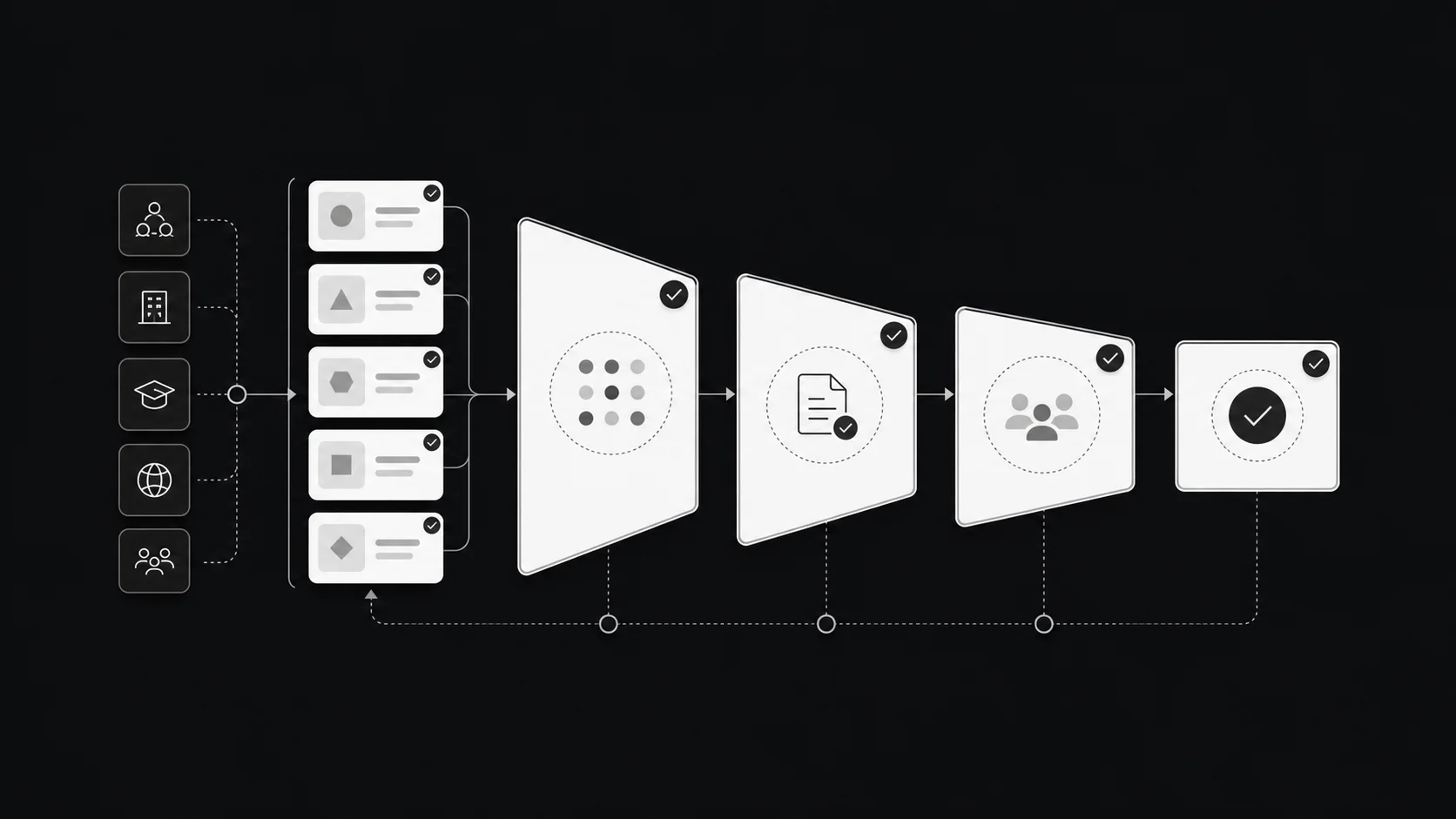
Deal flow is the stream of investment opportunities a venture firm receives and the funnel that sorts them. For every deal closed, firms consider about 101 companies.
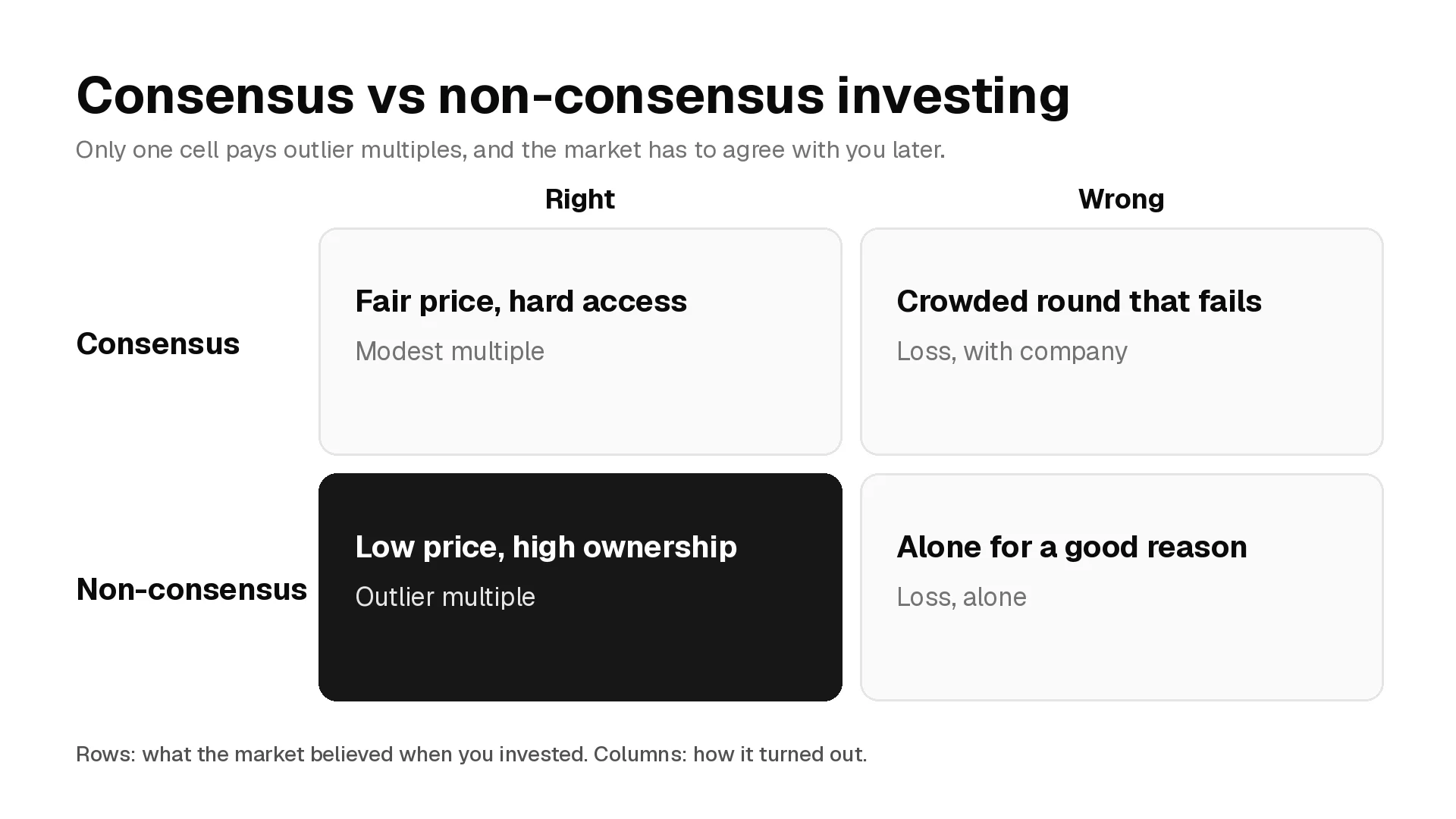
Non-consensus investing means backing a company most investors have passed on or not yet seen, for a reason you can state and test. How the 2x2 works, why firms drift toward consensus, how investment committees vote, and how analysts and associates bring a non-consensus deal.
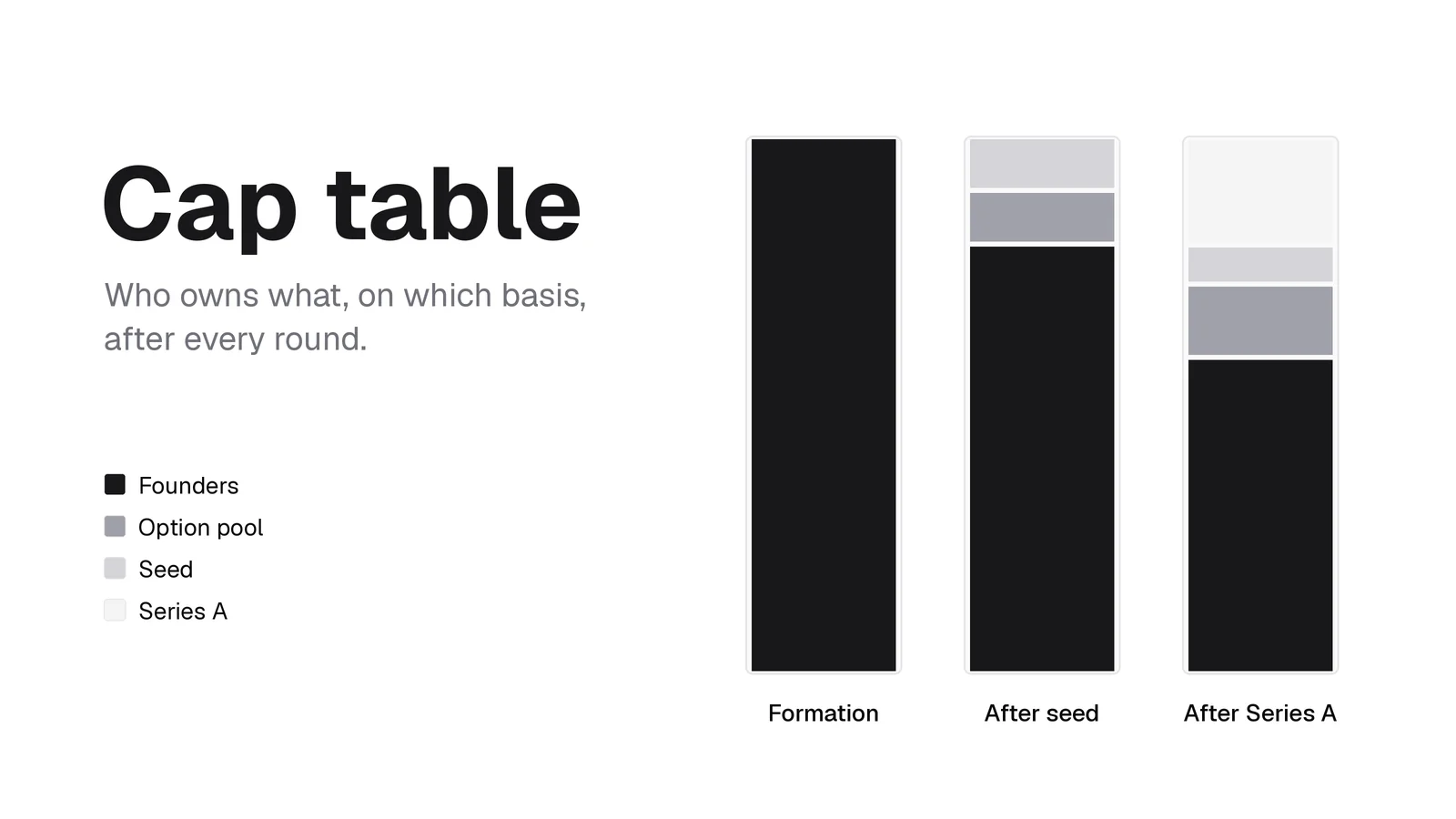
A cap table records who owns a company's shares, options, warrants, and convertible securities, and what percentage each holder owns on a stated basis.