

A venture capital board observer attends a portfolio company's board meetings, receives agreed board materials, and contributes to discussion—but does not hold a director's formal vote. The observer's influence comes from preparation, judgment, and relationships, not statutory authority.
That distinction is the job. A strong observer helps the board see around corners without behaving like a shadow director. A weak one creates another reporting channel, crowds the room, or mistakes access for control.
Board observer vs board director vs information rights
Board-observer rights are usually contractual. They may appear in an investor rights agreement, stockholders agreement, or side letter, and the contract defines who may attend, which materials they receive, when they can be excluded, and when the right ends. A director's authority and duties arise from corporate law and the company's governing documents. Information rights usually provide reporting without a seat in the room.
| Dimension | Board observer | Board director | Information rights only |
|---|---|---|---|
| Attend board meetings | Usually, subject to the agreement | Yes | No automatic attendance right |
| Receive board materials | As the agreement provides | Broad access as a director | Only specified reports |
| Vote on board decisions | No | Yes | No |
| Fiduciary duties | Generally not by virtue of the observer role, but facts and jurisdiction matter | Yes | Generally no board duties |
| Can be excluded | Often for privilege, conflicts, trade secrets, or sensitive competition issues | More limited and fact-specific | Not applicable |
| Primary value | Information, context, and influence | Formal governance and accountability | Monitoring with lower boardroom access |
The cleanest mental model is: a director decides, an observer informs, and an information-rights holder monitors from outside the room.
The boundaries are not universal. The Harvard Law School Forum's Skadden analysis explains that observers usually lack a formal vote and that their access, confidentiality obligations, and exclusions depend on contract. Jurisdiction and conduct can change the legal analysis, so companies and investors should have counsel review the actual arrangement.
Observer rights are often negotiated alongside other term-sheet provisions. A lead investor may receive a director designation right, while another significant investor receives an observer seat. A firm may also pair a partner's director seat with an observer role for an associate or principal.
What a VC board observer actually does
The role has four practical jobs.
- Build context. Understand the company's operating plan, cash position, hiring constraints, customer pipeline, financing path, and material risks well enough to recognize what changed.
- Improve the questions. Surface assumptions, missing alternatives, and second-order effects without turning every discussion into an investment memo defense.
- Connect resources. Offer targeted recruiting, customer, financing, or functional help that the fund can actually deliver.
- Close the loop. Track commitments made by the investor, follow up quickly, and preserve one clear communication channel with management.
The observer is not there to rerun the fund's investment committee inside the portfolio company's boardroom. The investment decision has already happened. The board's task is to govern the company in front of it.
The best observers are opinionated but not performative. They distinguish between a question that improves a decision and a question designed to demonstrate intelligence. They also know when their fund's portfolio perspective is useful—and when it is merely anecdotal.
Before the meeting: turn the board pack into a decision map
Reading every slide is not the same as preparing. Start by converting the board pack into five questions:
| Review question | What to look for |
|---|---|
| What changed since the last meeting? | Variance from plan, new risks, updated assumptions, missed milestones |
| What decisions does management need? | Explicit approvals, strategic choices, hiring or financing tradeoffs |
| What looks inconsistent? | Metrics that disagree, unexplained cohort changes, cash and hiring plans that do not reconcile |
| Where can the fund add value? | One or two specific introductions, hires, benchmarks, or financing actions |
| What requires care? | Privileged advice, conflicts, competitively sensitive information, personnel matters |
Write a one-page decision map, not a second board deck. For each agenda item, record the decision required, your two best questions, and any follow-up your firm can own.
If you want an agenda item added, raise it with the chair or CEO early. Cerity Partners' practitioner guidance recommends doing this in advance rather than surprising the room. The same principle applies to sharp questions: pre-wire the CEO or director when the topic is sensitive, complicated, or likely to consume time.
Preparation also means checking your own conflicts. A corporate venture observer, an investor with competing portfolio companies, or a firm evaluating a new deal in the same market may need narrower access. Do not wait for the chair to discover the conflict mid-meeting.
During the meeting: use the traffic-light rule
Observer influence is mostly judgment about when to speak. Use three modes.
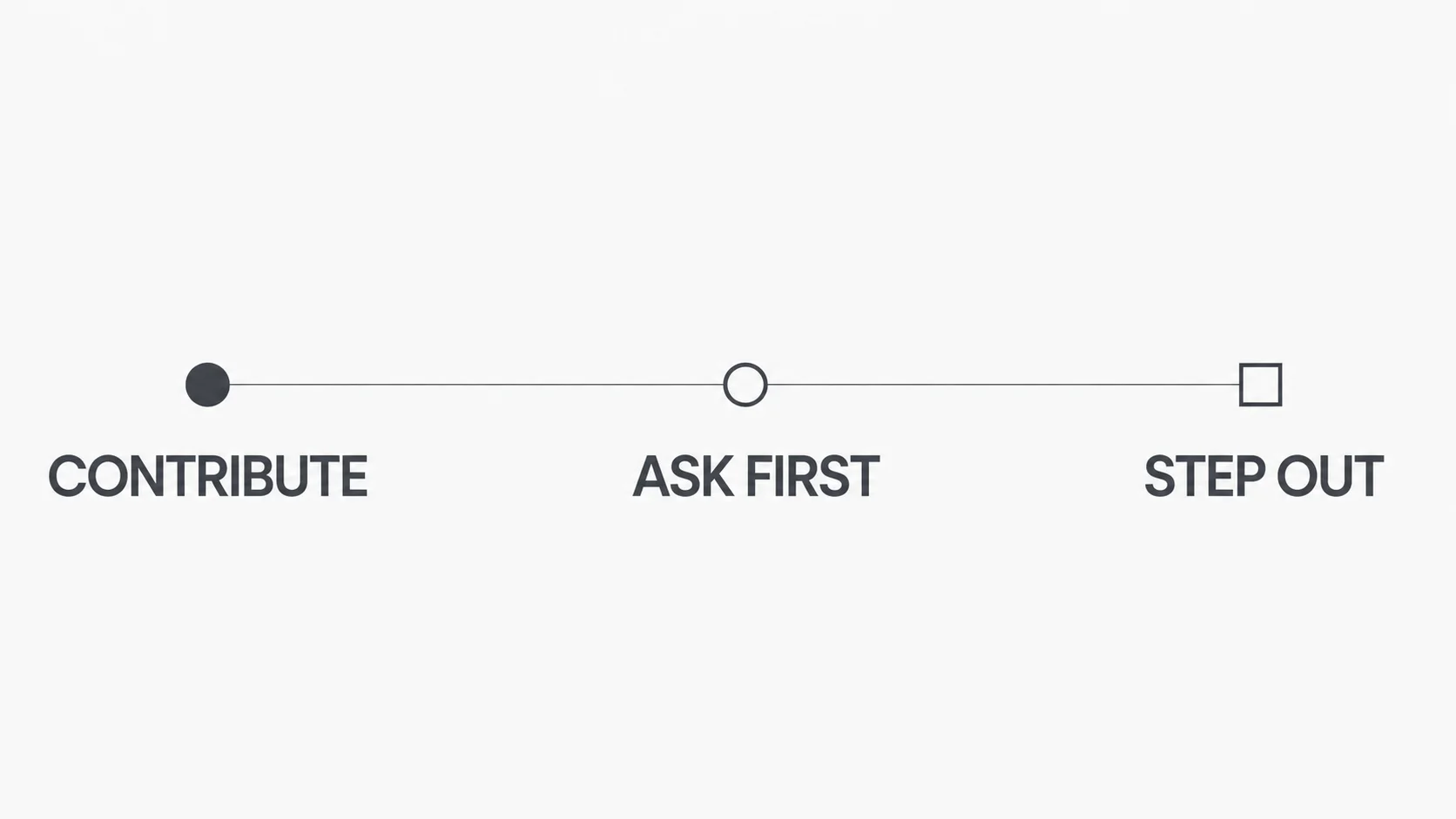
Green: contribute
Contribute when the topic matches your expertise, you can clarify a decision, or you can offer evidence the board does not already have. Keep interventions short. State the observation, why it matters, and the question or action it implies.
Good: “The hiring plan assumes the sales cycle stays at 60 days, but the cohort slide shows 84. Which assumption should drive the cash plan?”
Weak: “At another portfolio company, we did the opposite.”
Amber: ask first
Ask before pushing into ambiguous territory: a topic outside the agenda, a request for more sensitive detail, a discussion where your appointing investor has a competing interest, or a commitment that requires approval from your partnership or corporate parent.
Useful phrases include:
- “Would it help to pressure-test that assumption now, or should we take it offline?”
- “I may have a conflict on this topic. Would you prefer I step out?”
- “I can explore that introduction, but I need to confirm internally before committing.”
Red: step out
Step out when the company asks you to under the observer agreement, especially for privileged legal advice, a conflict involving your appointing investor, trade secrets, competitively sensitive information, or a discussion about claims between the company and the investor.
Observers do not share a director's automatic legal position. The Harvard/Skadden analysis explains that agreements commonly allow exclusions to protect privilege, manage conflicts, and limit access to sensitive information. A recusal is a governance control, not a personal slight.
After the meeting: close the loop without creating a second management channel
Within one business day, maintain a short follow-up ledger:
| Item | Owner | Due date | Communication channel |
|---|---|---|---|
| Investor introduction | Observer | Friday | Email through agreed company contact |
| Benchmark request | Company CFO | Next week | Board portal or CFO thread |
| Financing scenario | Lead director and CEO | Before next meeting | Scheduled working session |
Separate company actions from investor actions. Follow through on your own commitments first; nothing erodes observer credibility faster than offering help in the room and disappearing afterward.
Avoid creating a parallel management hierarchy. If the board asks the CEO for a revised plan, do not independently direct the VP of Finance. Route requests through the CEO, chair, lead director, or another agreed contact. One board decision should create one operating message.
For fund-level monitoring, convert the meeting into the few facts that matter for your firm's portfolio review process: material changes, next financing needs, support requests, and risks. Do not circulate the full board pack beyond the people and systems authorized to receive it.
What the observer agreement should make explicit
A good working relationship cannot repair a vague agreement when the company is under stress. The agreement should address:
- Who appoints and may replace the observer.
- Which board and committee meetings the observer may attend.
- Notice, board-pack, minutes, and information rights.
- Whether the observer may participate or only attend.
- Confidentiality, permitted internal sharing, and data-security expectations.
- The company's right to withhold materials or exclude the observer for privilege, conflicts, trade secrets, competition concerns, or other agreed reasons.
- Whether the observer can bring advisers or another colleague.
- Expense reimbursement, if any.
- The minimum ownership threshold, time limit, financing event, IPO, sale, or other sunset trigger.
- What happens when the observer changes employers or the investor transfers its position.
These are negotiation topics, not boilerplate to copy blindly. Allen Latta's financing overview notes that observer rights commonly sit in the investor rights agreement and may terminate at an IPO, sale, later financing, or another negotiated point. The company and investor should use qualified counsel for the relevant jurisdiction and facts.
How associates and principals can use the assignment
An observer seat can be one of the highest-leverage development assignments in venture capital. It exposes junior investors to the distance between an attractive investment memo and the messy sequence of operating decisions that follows.
Use the assignment to build evidence in four areas:
- Pattern recognition: Which early signals preceded a miss, a successful hire, or a financing problem?
- Board judgment: Which questions changed the decision, and which merely added noise?
- Founder trust: Did management proactively call you because your involvement was useful?
- Execution: Which recruiting, customer, or financing commitments did you actually deliver?
Record learning without copying confidential company material into personal notes. The goal is a better judgment process, not a private archive.
If you are assessing firms where this kind of portfolio work is part of the role, use the Venture Capital Careers companies directory to research investment teams and the VC job board to browse open roles. The broader venture capital associate job description explains how portfolio support fits alongside sourcing and diligence.
Common failure modes
Treating access as status
An observer seat is a service role, not a badge. Humility earns more influence than announcing the fund's ownership position.
Hijacking the agenda
If every portfolio analogy becomes a 10-minute detour, management will stop sharing uncertainty. Bring one useful pattern, explain its relevance, and return the discussion to the company.
Speaking for the firm without authority
Never promise follow-on capital, a customer contract, a hire, or a corporate-parent action you cannot approve. Say what you will investigate and when you will respond.
Mishandling confidential information
Do not assume that attendance permission equals unlimited internal sharing. Follow the agreement and the fund's information-security process.
Becoming a shadow director
Observers may have significant soft power. Holloway's founder-oriented discussion warns that observers can change board dynamics even without a vote. Do not direct employees, count yourself in votes, or use informal influence to bypass the board's formal process.
Board observer checklist
Before accepting the role:
- Read the observer agreement and confidentiality terms.
- Confirm who you represent, what you may receive, and when you may be excluded.
- Identify conflicts across the fund, corporate parent, and portfolio.
Before each meeting:
- Turn the board pack into a one-page decision map.
- Pre-wire sensitive questions and proposed agenda additions.
- Choose one or two concrete ways your firm can help.
During the meeting:
- Speak when you improve the decision.
- Ask before entering sensitive or off-agenda territory.
- Step out promptly when privilege or conflict requires it.
After the meeting:
- Log owners and deadlines.
- Deliver investor commitments quickly.
- Use the agreed channel and protect company information.
Frequently asked questions
Can a venture capital board observer vote?
No. A board observer generally does not have a formal vote on board resolutions. The observer can still influence discussion by asking questions, offering expertise, and providing investor context.
Does a board observer owe fiduciary duties?
In the United States, an observer generally does not owe director fiduciary duties solely because of the observer role, but the contract, jurisdiction, and person's actual conduct matter. Obtain legal advice for the specific arrangement.
Can a company exclude a board observer from a meeting?
Usually yes when the agreement permits it. Common reasons include protecting attorney-client privilege, managing a conflict, or limiting access to trade secrets or competitively sensitive information.
Is a board observer a board member?
No. An observer may attend and participate under a contract, but is not elected or appointed as a voting director merely by holding observer rights.
Do board observers get paid?
Compensation is not inherent to the role. VC professionals commonly serve as part of their fund responsibilities. Any compensation or expense reimbursement should be addressed explicitly and reviewed for conflicts.
Influence is earned between the votes
The observer role works when everyone understands its limits. The company grants access; the investor brings judgment and resources; the observer contributes without confusing influence with authority.
Prepare around decisions, speak with discipline, accept recusals without drama, and close every commitment. That is how a non-voting seat becomes valuable to both the portfolio company and the fund.
Related posts
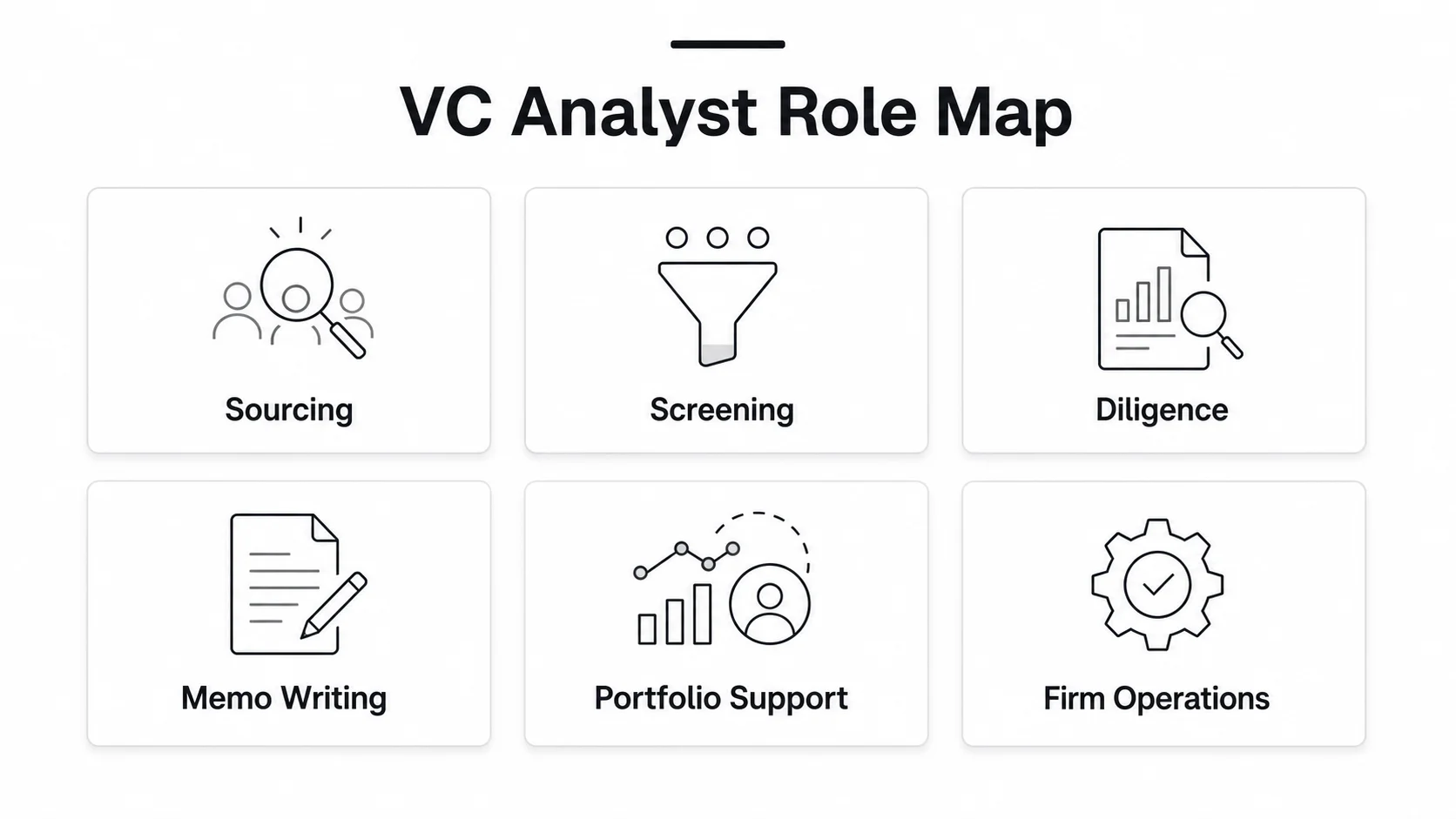
Copy-ready VC analyst job description template with responsibilities, skills, sourcing vs diligence seat signals, interview scorecard, and how candidates should read a posting.
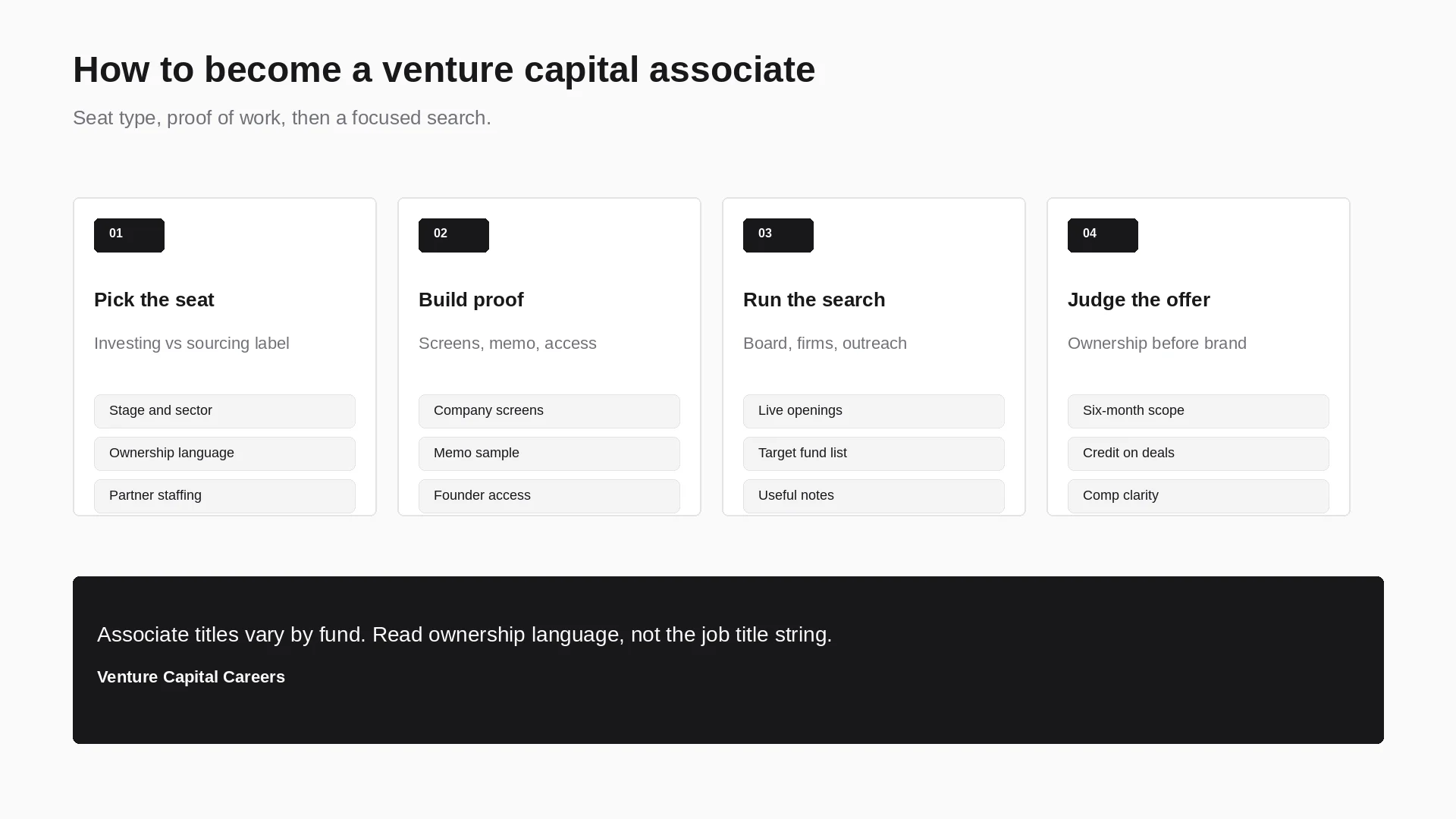
A practical guide to becoming a venture capital associate: what the seat is, which paths convert, how to prove you can do the work, and how to screen real associate openings.
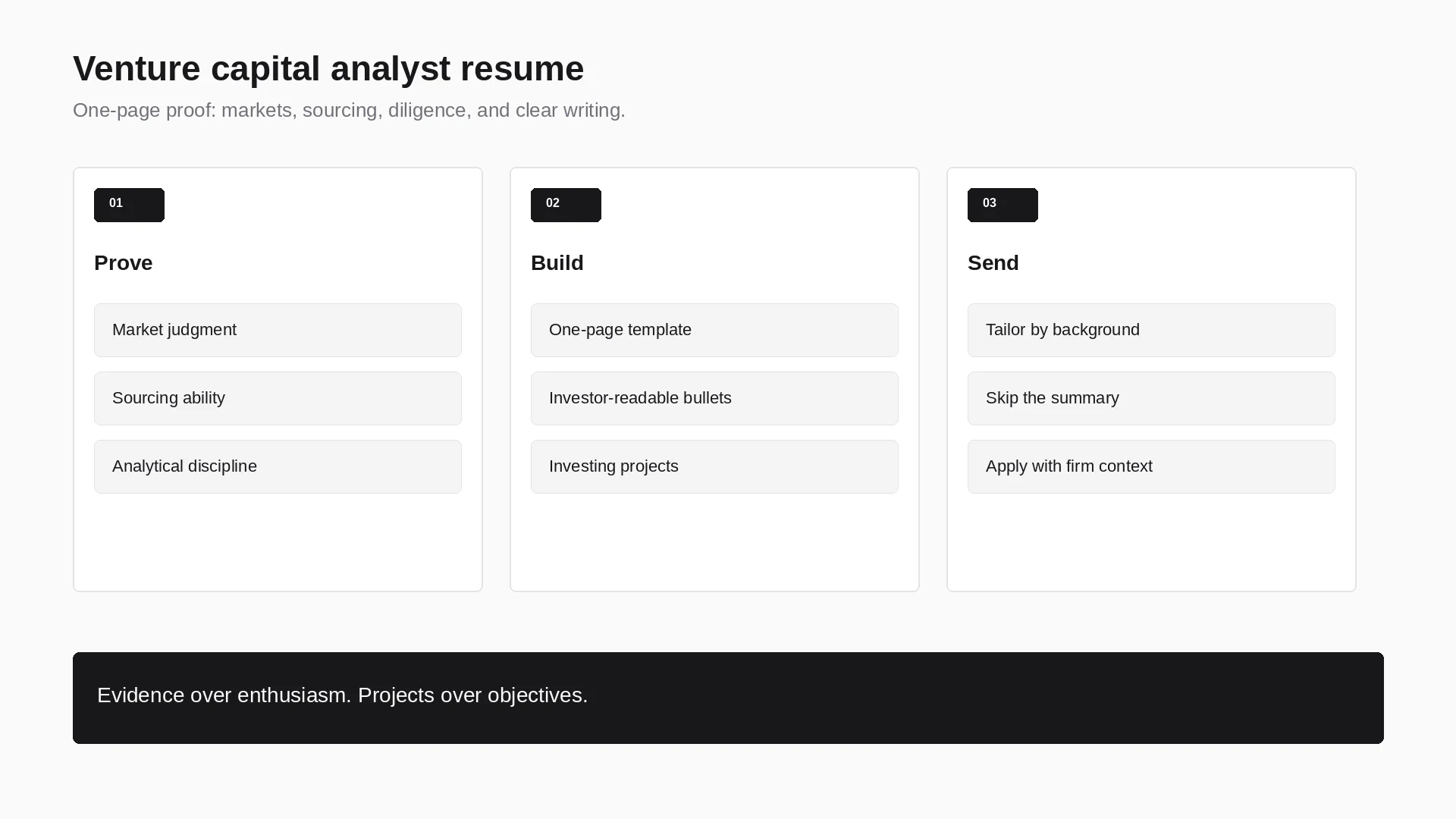
A VC analyst resume is a one-page proof document. Template, bullet formula, investing projects section, examples, and next steps for analyst applications.