
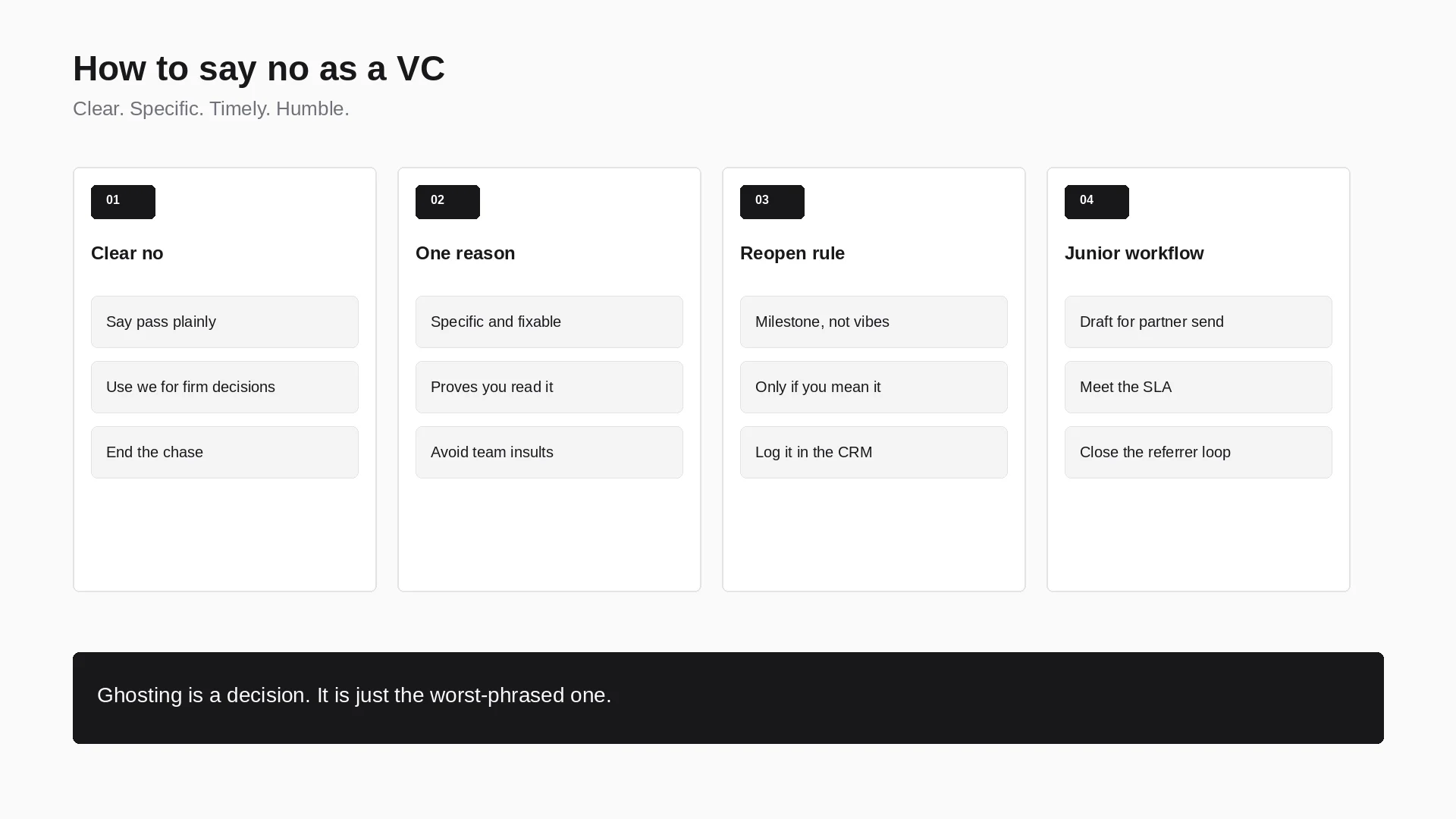
A good venture capital pass is clear, specific, timely, and humble. Say no plainly, give one reason the founder can act on, leave a concrete door open if you mean it, and send it before the silence becomes the story. That is the whole job. Ghosting, vague "not a fit," and template soup without a name cost more than the two minutes a real pass takes.
Associates and analysts write most of the first drafts. Partners own the send. If you are learning the craft, treat pass emails as part of diligence communication, not admin. The venture capital cold email template is for outbound asks. This page is for the decline after you have already been in the thread.
Why pass quality is part of the job
You will say no far more than yes. Founders remember how it felt. So do the people who introduced them.
A thoughtful pass protects three things that matter to your career and your firm:
| Outcome | What a good pass does | What a bad pass does |
|---|---|---|
| Reputation | Founders describe you as direct and fair | Founders warn peers you ghost or waffle |
| Optionality | Strong founders return on the next round | You lose the right to re-engage |
| Referrals | Passed founders still send you deal flow | Your inbound quality drops quietly |
Early-stage investing is a long game. The founder you pass on at seed may raise a later round you want, join a company you already own, or introduce you to the company that becomes the fund. None of that happens if the last email from your firm was silence.
Pass craft also sits next to venture capital due diligence. Diligence decides. The pass email communicates the decision without turning the founder into an adversary.
Principles of a good VC pass
Use these five rules every time. If a draft fails one of them, rewrite before it leaves the firm.
- Timely. Aim for 24 to 48 hours after the decision, sooner after a first call. Weeks of silence reads as disrespect even when the yes would have been soft.
- Clear. Use the word no, or "we are going to pass." Conditional maybes force founders to chase ghosts.
- Specific. One real reason beats five polite generalities. Specificity proves you read the materials.
- Kind without flattery. Thank them for time. Do not invent praise you do not believe.
- Humble and actionable. Admit you may be wrong. If you want them back, name a milestone, not "keep in touch."
Templates are fine. Mechanical templates are not. Keep a base structure, then fill founder name, company name, the one reason, and the reopen condition by hand.
Anatomy of a pass email
A strong pass email is short. Most good ones fit in five to eight sentences.
| Part | Job | Example move |
|---|---|---|
| Name | Personal, spelled correctly | Use the name in their signature |
| Thanks | Acknowledge time and firm interest | "Thanks for walking us through [Company]" |
| Clear no | End the chase | "This is a pass from us for this round" |
| One reason | Show you engaged | "We could not get comfortable with distribution economics at this stage" |
| Humility | Leave dignity intact | "We are often wrong on timing" |
| Reopen rule | Optional, only if true | "If you hit $X ARR with payback under Y months, ping me" |
| Soft close | Human exit | "Rooting for the raise" |
Base template
Hi [First name],

Thanks for taking the time to share [Company] with [Fund] and for thinking of me.

After reviewing the materials and our conversation, this is a pass from us for this round. My main concern is [one specific, fixable gap]. I could be wrong, and I would be glad to be shown otherwise.

If you reach [concrete milestone], please reach out and I will take another look. Either way, I appreciate the look and wish you a strong process.

[First name]
Customize the reason and the milestone. Leave the rest stable so partners can send quickly without rereading a novel.
Short example
Hi Priya,

Thanks for the intro call on Northline and for the follow-up memo. This is a pass from us.

We like the problem and the early customer love, but we could not get conviction on efficient acquisition outside paid social at this stage. If you build a repeatable partner or bottom-up motion and can show CAC payback under nine months at similar volume, I would be happy to revisit.

Wishing you a clean raise,
Alex
Quick pass vs deep-diligence pass
Not every no deserves the same length. Match depth to how much of the founder's time you took.
Quick pass (after an intro or deck screen)
- Send within a day when possible.
- One paragraph of thanks, one clear no, one reason, optional reopen line.
- Offer a better-fit intro only if you will actually make it.
Deep-diligence pass (after multiple calls, customer work, or partner review)
- Acknowledge the work they put in.
- Separate "what we liked" from "what blocked us" in short bullets if needed.
- Still pick a primary reason. Dumping every concern reads like a pile-on.
- Be extra careful with tone. You have a real relationship now.
If the company moved through a deal sourcing screen into real diligence, the pass should reflect that investment of trust. A one-line no after three weeks of questionnaires is worse than a firm no after the first call.
Reasons you can put in writing
Founders will argue with the reason. That is fine. Choose a reason that is true, specific, and not humiliating.
Safer written reasons
- Traction or proof points still early for your stage
- Distribution or CAC economics you cannot underwrite yet
- Market size or timing uncertainty for your fund model
- Business model still too indirect or unproven
- Category or stage misfit with the fund's mandate
- Need for a lead with domain expertise before you can follow
Reasons to avoid putting bluntly in email
- "The team is weak" or personal character judgments
- Comparative insults about other founders you backed
- Absolute claims that the company can never work
- Internal politics ("my partner hates this space") framed as the founder's fault
Team concerns are real. They are also the reason most likely to create lasting resentment when written carelessly. Translate team risk into observable gaps when you can: missing domain proof, thin operating cadence, unclear ownership of go-to-market. If you cannot say something true and constructive, shorten the email and stay clear on the no.
For the written judgment that goes inside the firm, use your investment memo process. The founder-facing pass is not the IC memo.
A junior's pass-email workflow
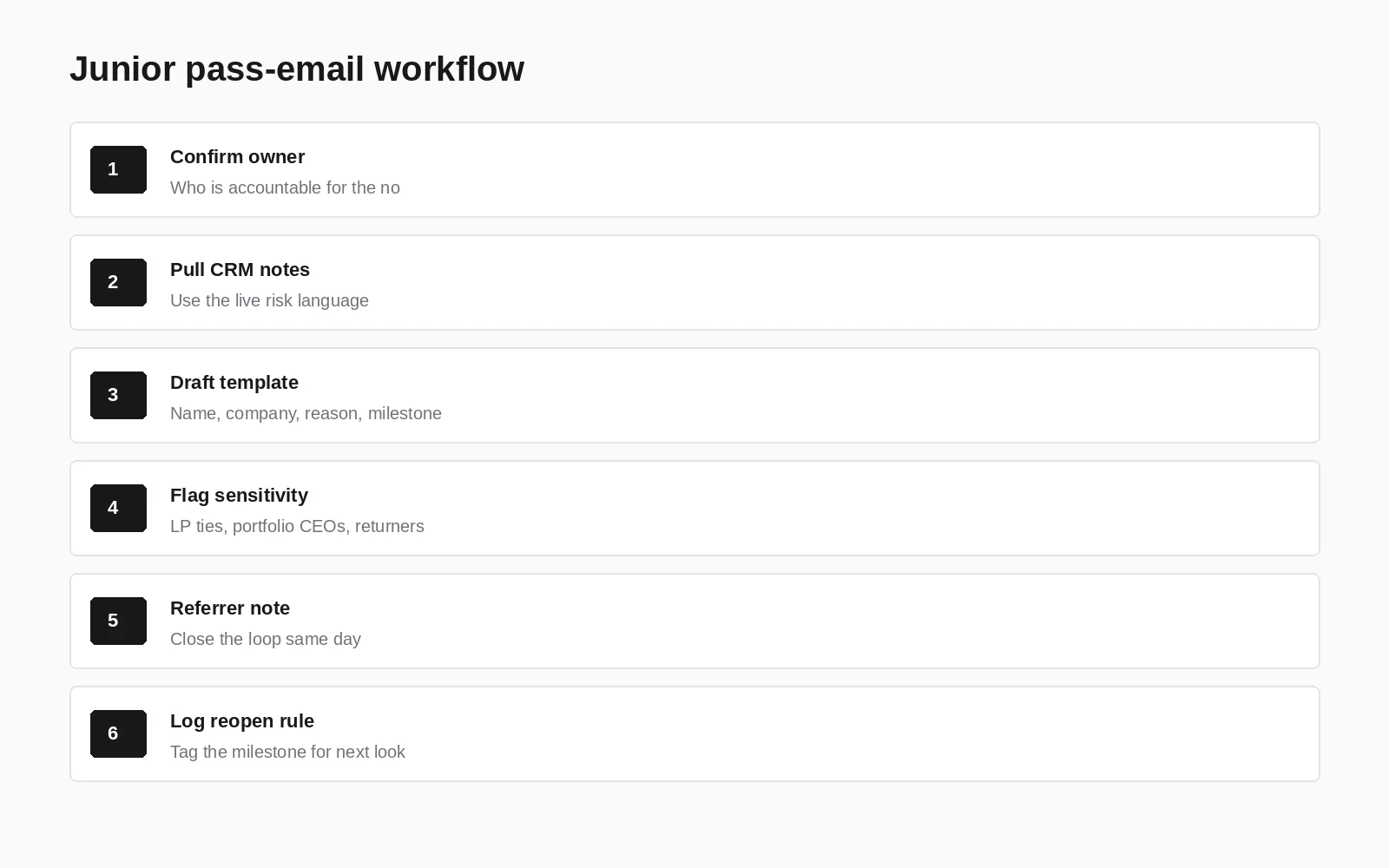
Most public pass guides speak as if every investor is a partner who can hit send alone. On many teams, analysts and associates draft, and a partner edits and owns the relationship. Use this workflow so your draft helps instead of creating cleanup.
- Confirm the decision owner. Know who is accountable for the no before you write.
- Pull the CRM notes. Capture the live risk language from the first call, not a reinvented reason a week later.
- Draft to the template. Fill name, company, one reason, reopen milestone. Keep it short.
- Flag sensitivity. If the founder is a friend of an LP, a portfolio CEO, or a prior pass who returned, say so in the Slack or CRM comment.
- Propose the referrer close. If the deal came inbound via intro, draft the short note to the referrer in the same thread.
- Meet the SLA. Many funds aim for a decision communication inside seven days of first meeting. Put the reminder on yourself, not on the partner.
- Log the reopen rule. Tag the company with the milestone that would justify a second look so the next associate does not invent a new story.
If you are still learning what a day looks like in the seat, the venture capital associate day in the life guide shows where founder communication sits beside sourcing and diligence. Practice pass drafts the same way you practice memos: reps with feedback.
When you want to see how firms describe the investing seats that own this work, browse open roles on the VC job board and firm pages in the companies directory.
Close the loop with the referrer
A large share of good deal flow arrives through introductions. Passing on the company without telling the referrer what happened trains people to stop sending you deals.
After you send the founder pass:
- Forward or paraphrase the pass to the referrer the same day.
- Thank them for the intro.
- Share the primary reason at the level of detail you shared with the founder.
- Note any intros you offered the founder, if relevant.
This is not optional courtesy. It is pipeline hygiene. Referrers who trust your process send cleaner companies next time.
Mistakes that burn bridges
Avoid these patterns. They show up in founder group chats faster than your marketing posts do.
- Ghosting after a meeting. Silence is a decision. It is just the worst-phrased one.
- Fake maybes. "Let's stay close" with no milestone creates unpaid follow-up labor for both sides.
- Reason salad. Five soft concerns dilute the one that actually drove the pass.
- Team insults. Even when team is the issue, write the observable gap or keep the email short.
- Broken promises. Never offer an intro, feedback call, or second look you will not deliver.
- Template tells. Mismatched name formatting, wrong company name, or praise that contradicts the reason.
- Partner shopping invites. Saying "this is a no from me" when you mean the firm invites spam to every other email on the website. Use "we" for firm decisions when you can speak for the firm.
FAQ
How fast should a VC send a pass email?
As soon as the decision is real. Within 24 to 48 hours is a solid default after an intro. After deeper diligence, send as soon as the partner decision lands, and acknowledge the work the founder already did.
Do I have to give a reason?
You should. A clear no without a reason is better than silence, but a single specific reason is better than both. Founders use real feedback to improve the next pitch. Vague "not a fit" teaches them nothing and makes you look careless.
Should associates send pass emails directly?
Only when your firm gives you that authority. Many teams want partner ownership on founder-facing decisions. Drafting is still your job. Know the send rules before you hit send.
What if I might invest later?
Say so with a milestone. "Come back at $1.5M ARR" is usable. "Keep us posted" is not. If you do not mean it, do not open the door.
Is a phone call better than email?
Use email for most passes. Save calls for founders you spent real diligence time with, or where the relationship is already close. A call that still ends in a fuzzy maybe helps nobody.
How is a pass email different from a cold email?
A cold email asks for time or attention you have not earned yet. A pass email closes a process you already started. Different intent, different tone, different template.
Next steps
If you are building the rest of the communication stack around passes:
- Practice outbound asks with the venture capital cold email template
- Keep networking threads clean with the venture capital networking email guide
- Tie decisions back to venture capital due diligence and the investment memo
- Browse open investing roles on the job board, research firms in the companies directory, and create an account for alerts when seats open
Saying no is the volume work of venture. Saying no well is how you stay in the market long enough for the yeses that matter.
Related posts
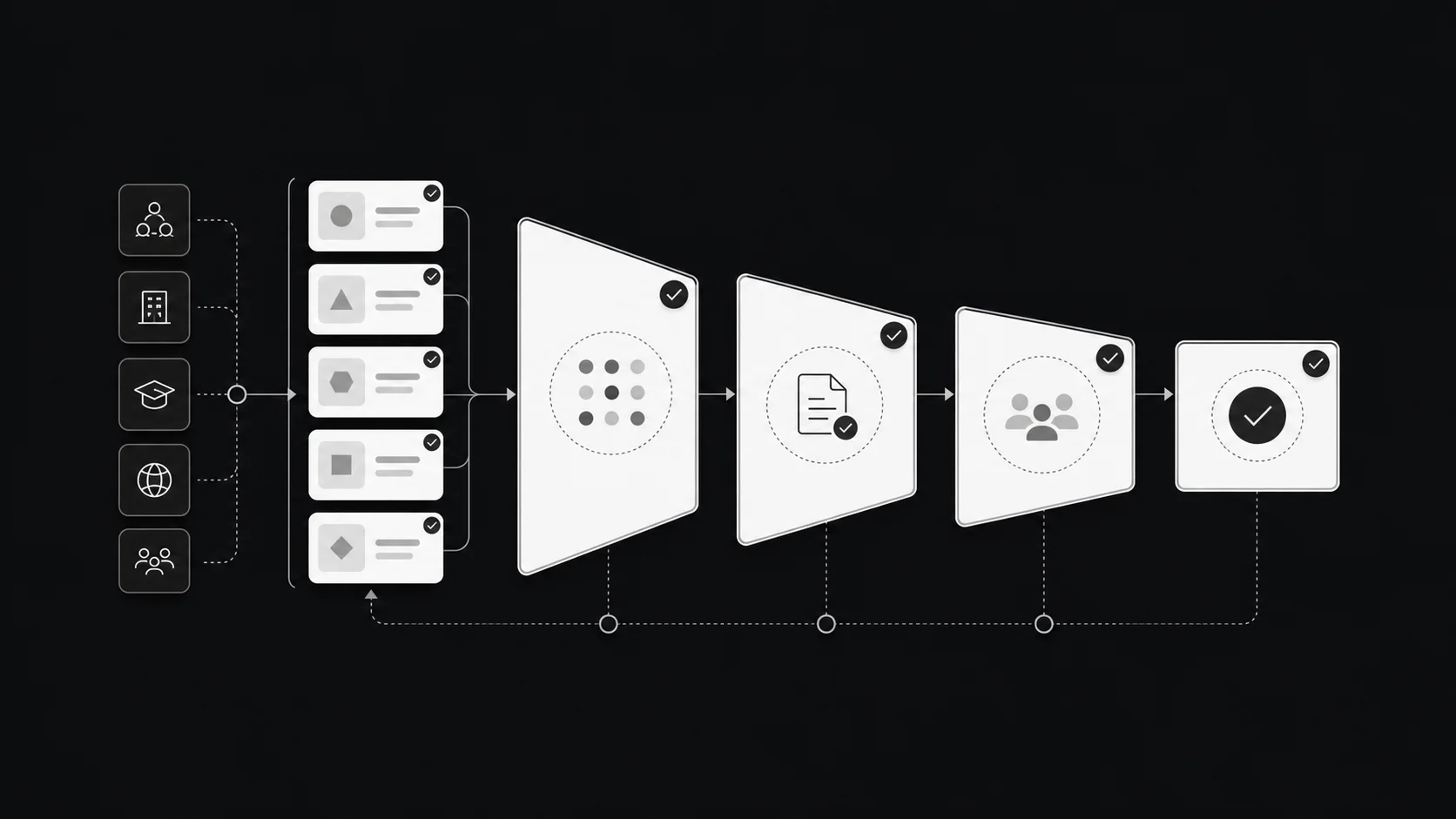
Deal flow is the stream of investment opportunities a venture firm receives and the funnel that sorts them. For every deal closed, firms consider about 101 companies.
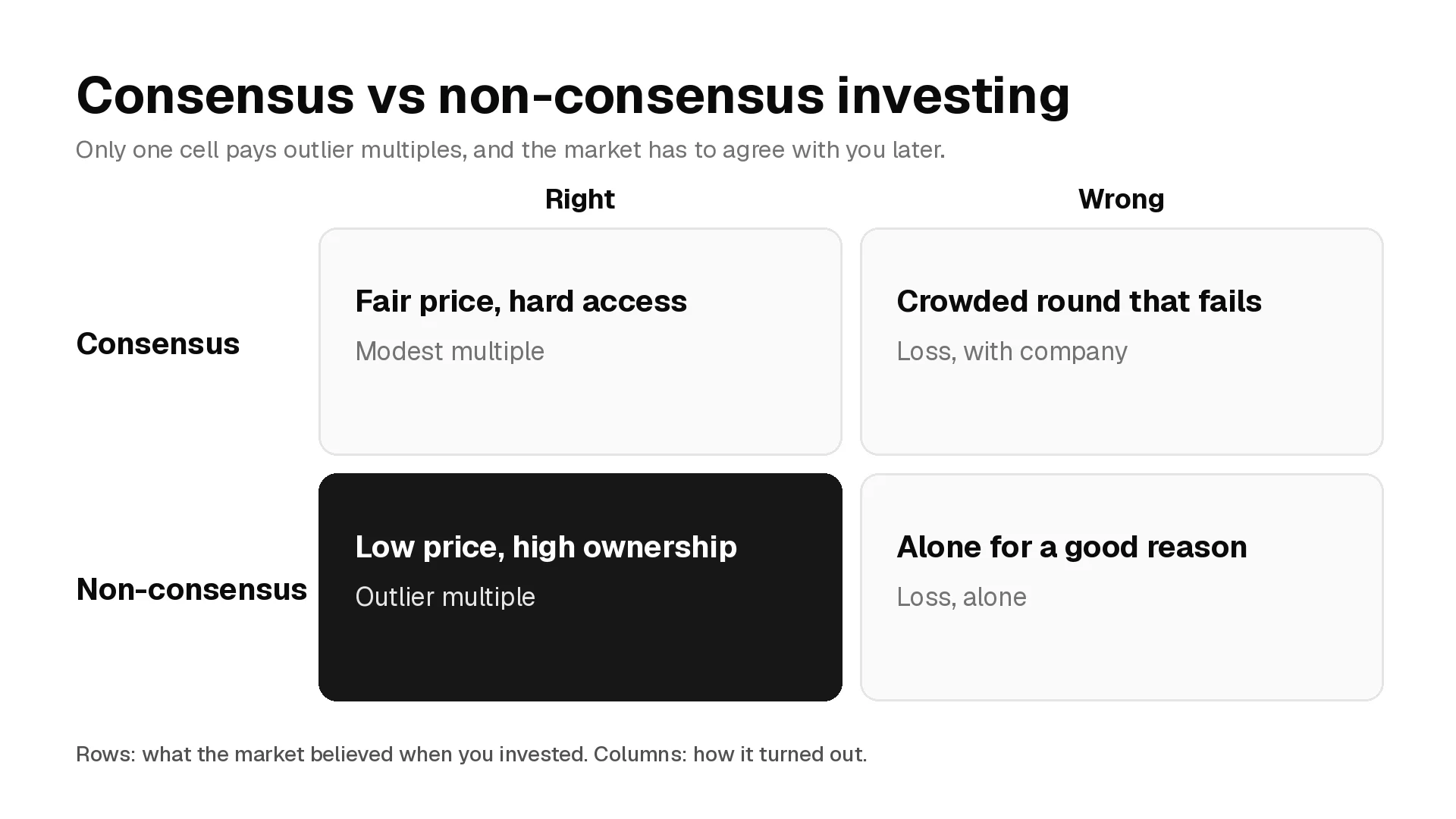
Non-consensus investing means backing a company most investors have passed on or not yet seen, for a reason you can state and test. How the 2x2 works, why firms drift toward consensus, how investment committees vote, and how analysts and associates bring a non-consensus deal.
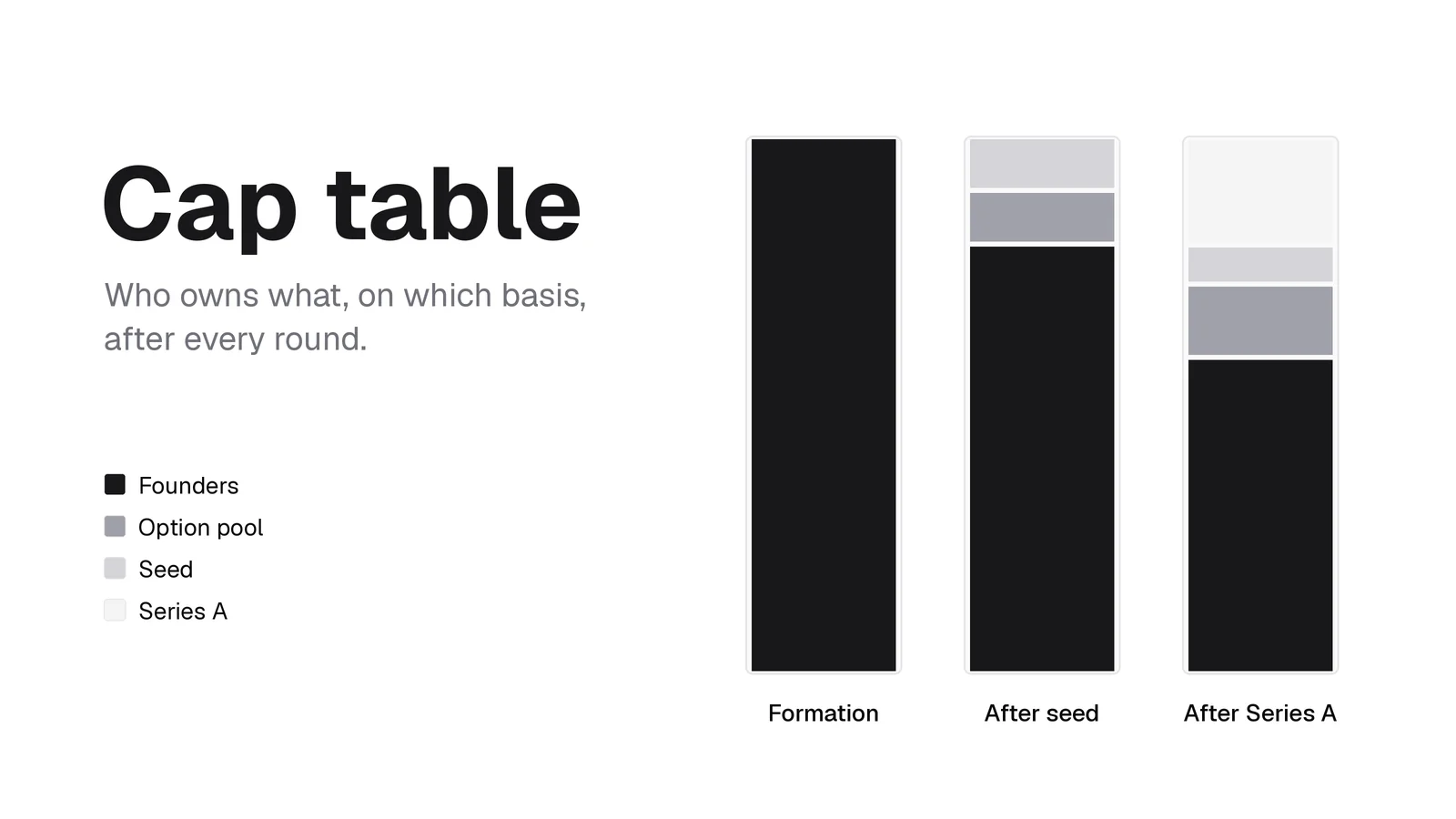
A cap table records who owns a company's shares, options, warrants, and convertible securities, and what percentage each holder owns on a stated basis.