Venture Capital Board Meeting Preparation: Founder Checklist and Agenda
A founder-first operating guide to VC board meetings, from agenda and board-pack handoffs to investor pre-reads, decisions, and follow-through.
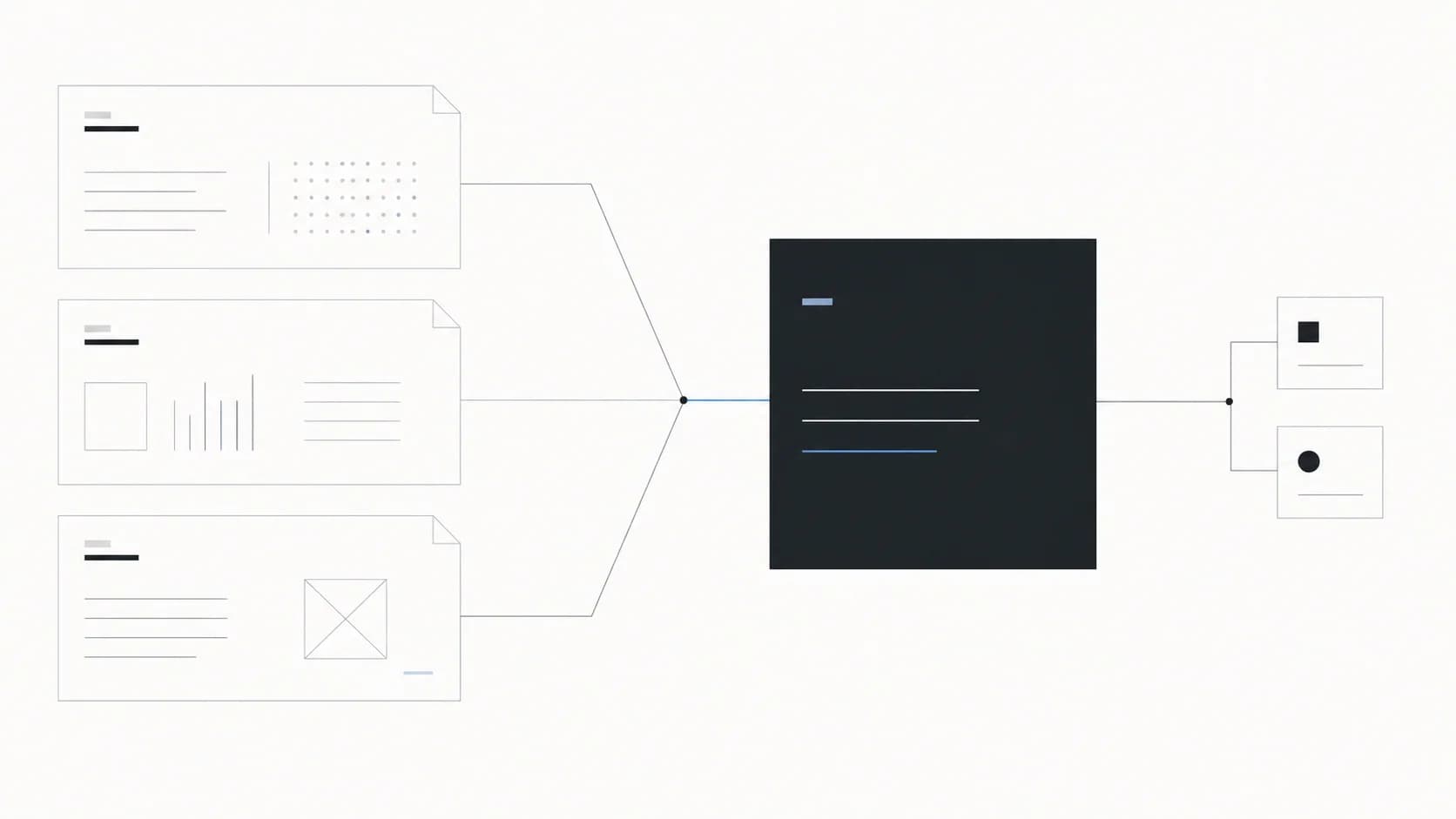
Prepare a venture capital board meeting by starting with the decisions the board needs to help make—not with the deck. Work backward from those decisions into a focused agenda, a layered pre-read, and the evidence behind each tradeoff. Give directors time to clarify facts before the meeting, pre-wire sensitive issues, then leave the room with named actions and checkpoints.
That process is shared. The CEO owns the operating narrative, but finance and functional leaders supply evidence, counsel protects the governance process, and investors must read, consolidate questions, and follow through on their own commitments. Exact notice, approval, minutes, confidentiality, and meeting requirements depend on the company's governing documents, jurisdiction, facts, and legal advice.
The board meeting is a handoff system, not a deck deadline
A board deck can be polished and still produce a poor meeting. The failure usually starts earlier: management has not decided what help it wants, the pack has no reading hierarchy, or directors discover a sensitive issue in the room. Everyone spends the meeting reconstructing context instead of testing choices.
Use a five-stage cycle:
| Stage | Question to answer | Working output | Primary owner |
|---|---|---|---|
| Frame | Which changes, risks, and decisions deserve board time? | Objectives and decision list | CEO with chair or lead director input |
| Assemble | What evidence lets the board evaluate each tradeoff? | Agenda, read-first memo, decision exhibits, appendix | CEO; finance and functional leads contribute |
| Pre-read | Which questions can be resolved before the room? | Consolidated questions and pre-wires | Directors, investors, and management |
| Decide | What decision, test, or information request follows? | Clear discussion outcome | Board and management under their actual authority |
| Close the loop | Who will do what, by when, through which channel? | Decision and action ledger | Company secretary, counsel, or agreed process owner |
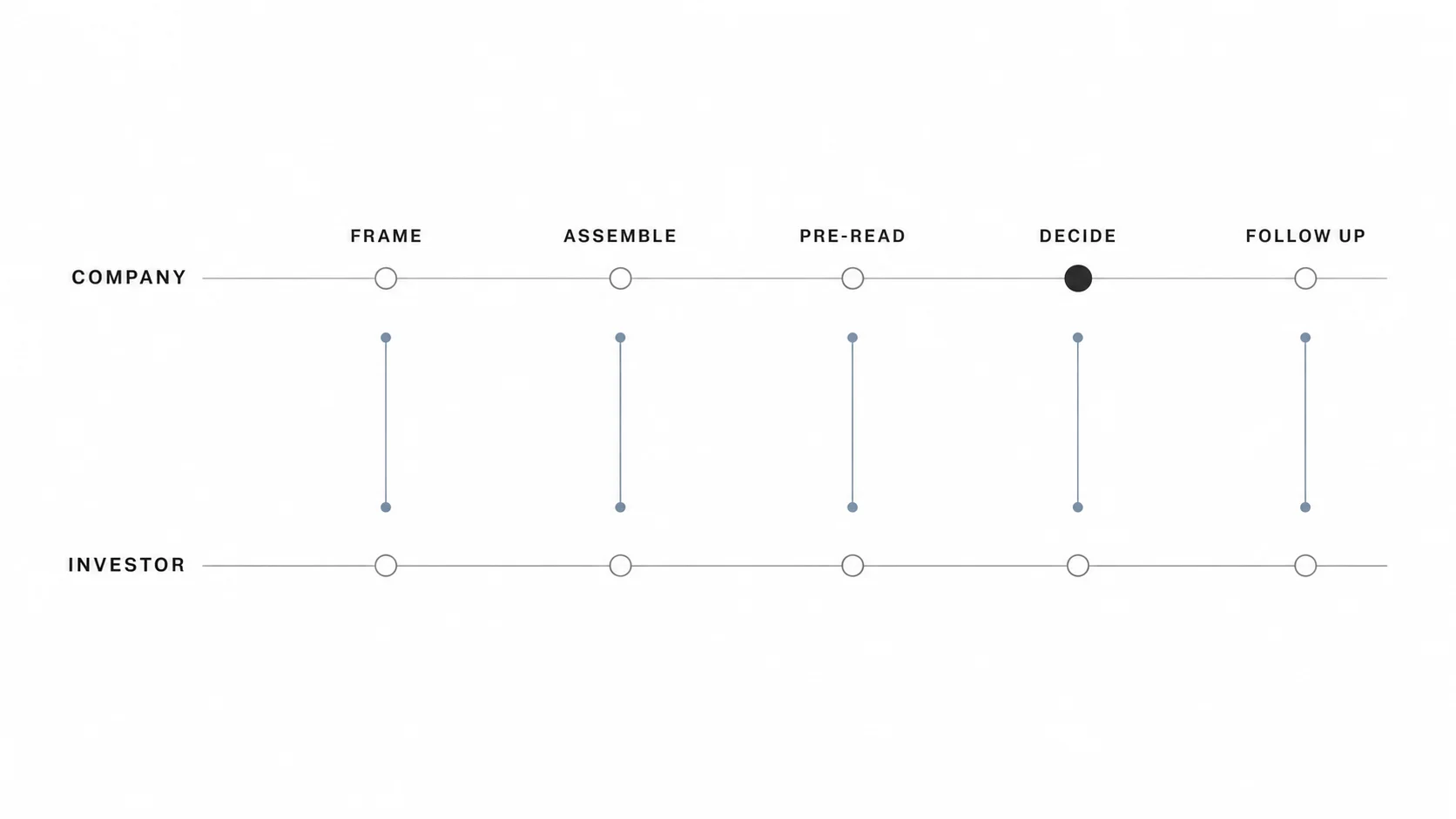
The operating rule is simple: every handoff should change the artifact. A list of concerns becomes two or three board objectives. Those objectives become decision briefs. Director questions refine the briefs before the meeting. The discussion produces a decision, test, or request. The outcome becomes owned work.
This is why status reporting should not consume the meeting. Sequoia's board-deck guidance frames the deck as a way to calibrate directors so their experience can be useful. Calibration is necessary; it is not the final product. The final product is a better decision trail.
Who owns what before a VC board meeting
At an early-stage company, the CEO may coordinate nearly everything. As the company scales, finance, operations, functional leaders, counsel, and governance staff take on more of the work. Use this responsibility map as a starting point, then adapt it to the company's actual documents and board practice.
| Work item | CEO | Finance / functional leads | Company counsel or governance owner | Chair / lead director | Investor director or observer |
|---|---|---|---|---|---|
| Choose meeting objectives | Own | Contribute material issues | Flag required formal items | Advise and challenge priorities | Suggest issues early |
| Build operating narrative | Own | Supply source evidence and explain variance | Review sensitive wording when needed | Test whether context is sufficient | Read for missing context |
| Prepare financial and operating exhibits | Approve narrative | Own source accuracy | Review governance-sensitive material when needed | Identify decision relevance | Review assumptions and inconsistencies |
| Confirm formal process | Stay accountable | Provide required inputs | Own or advise under the agreed process | Coordinate with counsel as appropriate | Respect materials, conflicts, and access boundaries |
| Consolidate pre-read questions | Respond | Resolve factual questions | Route privileged or formal questions | Reduce duplication and pre-wire sensitive topics | Read early; coordinate inside the investor team |
| Capture outcomes and follow-up | Confirm operating actions | Accept named work | Document through the proper process | Confirm board-level outcomes | Own investor commitments |
An observer is not interchangeable with a director. Attendance, materials, participation, exclusions, confidentiality, and other boundaries commonly depend on the agreement and the facts. The venture capital board observer guide covers that specialist role; keep this meeting-preparation process focused on the company-wide cycle.
The map also prevents a common investor mistake: sending the same question from a partner, principal, and associate. The investor team should reconcile its view before asking management to reconcile the company's.
A practical board-preparation timeline
The right lead time depends on the company's cadence, complexity, documents, and what directors have agreed. Work backward from the meeting date and preserve four distinct windows: choosing decisions, assembling evidence, resolving pre-read questions, and closing the loop. If every step lands in the final 24 hours, the board has received a presentation—not a pre-read.
About two weeks before: choose the decisions
Start with the prior meeting's actions and what changed since then. List material performance changes, cash or forecast movements, team developments, risks, and choices management expects to make before the next meeting. Then select the few issues where collective board judgment could change the path.
CRV's founder guide recommends framing agenda items around the decision required rather than a vague topic. That discipline matters more than the exact countdown. A topic earns board time when the group can improve a decision, pressure-test a recommendation, define a test, or identify missing evidence.
In the agreed preparation window: assemble the pack
Assign an owner to every number and assertion. Finance should reconcile the financial story. Functional leaders should explain material variance from plan, not paste every dashboard into slides. The CEO should make the narrative internally consistent: the hiring plan, product roadmap, forecast, and cash position must describe the same company.
Build for an agreed distribution date. Some boards want materials several days ahead; more complex decisions may need longer. Do not copy another company's timing rule. Ask directors how much review time they need, record the expectation, and set an internal deadline early enough to run a consistency check.
Before the meeting: resolve facts and pre-wire sensitivity
Directors should send factual questions early enough for management to answer without consuming meeting time. The chair or lead director can consolidate overlapping questions. Management should speak separately with the relevant director when an issue is sensitive, surprising, or likely to derail the planned discussion.
Pre-wiring is not a request for private approval. It is a way to separate fact-finding and emotional surprise from the board's collective deliberation. The question still belongs in the room when the board must consider it together.
In the meeting: spend time on tradeoffs
Use a short opening to establish what changed. Move quickly to the choices that need judgment. Present the evidence, recommendation, unresolved risk, and decision needed; then facilitate discussion rather than reading the pack aloud.
F2 Venture Capital's first-board-meeting guidance distinguishes strategic questions from tactical matters better handled in ongoing conversations. A useful test is reversibility: a routine choice that one executive can reverse rarely deserves full board time. A financing path, senior leadership change, major resource allocation, or plan that alters runway may deserve deeper discussion—subject to the board's actual authority and company process.
After the meeting: close the loop through the agreed process
Confirm decisions, actions, owners, and next checkpoints promptly enough that nobody has to reconstruct them later. Formal minutes, consents, notices, and approvals should follow the company's governing documents and counsel's advice. The operating ledger can support that process; it does not replace it.
Turn vague topics into decision-ready agenda items
Use four lines for every material board topic:
- Context: What changed, and why does it matter now?
- Options: Which realistic paths are available?
- Recommendation: What does management prefer, and on which assumptions?
- Decision needed: What should the board decide, advise on, test, or request next?
That structure converts updates into working sessions:
| Vague agenda item | Decision-ready version |
|---|---|
| Hiring update | Decide whether to hire three engineers now or sequence two engineers and one product role, given delivery risk and the current cash plan. |
| Pricing discussion | Choose the next pricing test, define the downside guardrail, name the owner, and set the evidence required to revisit the choice. |
| Fundraising | Align on the conditions for starting the next raise, the contingency trigger if growth or cash diverges, and who owns each preparation stream. |
| Product roadmap | Choose between accelerating the enterprise requirement or protecting the current release, using customer evidence, capacity, and revenue impact. |
Not every board discussion should end in a vote. A legitimate outcome can be a bounded experiment, a request for missing evidence, or a smaller working session with a deadline. “More discussion” is not an outcome unless someone names what must become knowable.
What belongs in the board pack
A board pack should let a director answer three questions in order: What changed? Which choices matter? What evidence should I inspect? Build three layers so the answer is not buried under appendix detail.
Layer 1: the read-first memo
Keep the opening compact enough to read in one sitting. Include:
- the few material changes since the last meeting;
- performance against the operating and cash plan, with important variance explained;
- the decisions or advice management needs;
- material risks or bad news that should not be discovered in an appendix;
- specific asks of the board or individual investors.
The memo is a navigation layer, not a victory lap. It should say where the company is off-plan as clearly as where it is ahead.
Layer 2: decision exhibits
Give each material decision only the evidence needed to test it: options, assumptions, customer or operating evidence, resource consequences, financial effect, key risks, and management's recommendation. Use consistent definitions across the pack. If one page uses bookings and another uses revenue, label the distinction instead of inviting the board to infer it.
Layer 3: the reference appendix
Put detailed cohorts, functional updates, metric definitions, supporting analyses, and prior context here. Directors who want to audit an assumption can go deeper without forcing everyone through the same detail in the meeting.
Sequoia's board-deck guidance makes a useful point: recurring operating materials should do much of the work rather than forcing management to rebuild the company story for each board meeting. The three layers preserve that efficiency while making the reading path explicit.
No universal metric list fits every company. A marketplace, developer tool, biotech company, and enterprise software business will not prove progress the same way. The test is materiality: include the small set of measures that explains performance against the company's plan and informs the decisions on the agenda. The fund may translate those facts into a separate portfolio review process; the company board pack should remain built for the company's board.
A reusable startup board meeting agenda
Use purpose blocks instead of copying fixed minute allocations from another board. The chair and CEO can set the order and depth based on the decisions, formal requirements, and meeting conditions.
| Agenda block | Purpose | Evidence or output |
|---|---|---|
| Formal and administrative matters | Complete required board business efficiently | Materials and proposed actions reviewed through the proper process |
| CEO context | Establish what changed and what deserves attention | Read-first memo; material wins, misses, risks, and asks |
| Performance and forecast exceptions | Examine material variance rather than replay every metric | Reconciled financial and operating exhibits |
| Decision working session 1 | Test the most consequential near-term choice | Four-line decision brief and supporting evidence |
| Decision working session 2 | Address a second choice only if it merits collective judgment | Options, recommendation, risk, and decision needed |
| Actions and checkpoints | Confirm what follows from the discussion | Owners, deadlines, evidence, and next review point |
| Executive or independent-director session | Create appropriate space for board-only discussion when used | Follow the company's practice and counsel's guidance |
Formal approvals, minutes, conflicts, privilege, notices, attendance, and executive-session practice require more than a generic template. The board should follow its governing documents and qualified legal advice. Cooley GO's post-funding board guidance is a useful issue-spotting source, but even a detailed checklist cannot determine the right legal process for a particular company.
What investors and board observers should do with the pre-read
Sending materials early only creates value if directors use them. An investor director or observer should read for four things:
- Change: Which assumptions, risks, or milestones moved since the last meeting?
- Consistency: Do the hiring plan, roadmap, forecast, and cash position reconcile?
- Decision quality: Are the real options and management recommendation visible?
- Investor action: Which introduction, recruiting effort, benchmark, financing task, or follow-up can the fund actually own?
Then route each question into one of four modes:
| Question mode | Use it when | Action before the meeting |
|---|---|---|
| Clarify asynchronously | The answer is factual and unlikely to change the decision | Ask once through the agreed channel; share the answer with the relevant group |
| Pre-wire privately | The issue is sensitive, surprising, or likely to consume the room | Speak with the CEO, chair, or appropriate director without seeking a private decision |
| Table for discussion | The question exposes a real tradeoff the board should consider collectively | Give enough notice that management can prepare the evidence |
| Escalate to chair or counsel | Privilege, conflict, attendance, authority, or formal process may be implicated | Do not improvise the boundary inside the meeting |
Jason Lemkin has argued publicly that founders should surface concerns and bad news early rather than let the board discover repeated surprises. Treat that as practitioner advice, not a governance rule. The broader operating lesson is sound: surprise consumes attention that should have gone to the choice in front of the board.
Inside the investor team, consolidate questions before sending them. An associate may validate a metric, a principal may pressure-test the financing path, and a partner may own the board relationship. The venture capital team structure explains those handoffs in more detail. If this mix of analysis, judgment, and portfolio support is the work you want to do, browse current venture capital jobs and look for roles that describe post-investment responsibilities—not just sourcing.
After the meeting: use a decision and action ledger
A productive discussion can still fail in execution. Record the operating consequence while the reasoning is fresh.
| Decision or action | Owner | Deadline | Communication path | Evidence of completion | Next-board checkpoint |
|---|---|---|---|---|---|
| Test revised enterprise packaging | Product lead | Agreed date | CEO operating review | Test plan and customer evidence | Review results against guardrail |
| Introduce two CFO candidates | Investor director | Agreed date | CEO or designated hiring contact | Introductions accepted or declined | Report search status |
| Reconcile hiring plan with cash forecast | Finance lead | Agreed date | CEO and board portal or agreed channel | Updated model with assumptions | Confirm plan or reopen decision |
Separate company work from investor work. An investor who offers an introduction owns that commitment; management should not have to translate it into a vague company task. Likewise, a board discussion does not authorize an investor to create a second management chain. Route requests through the CEO, chair, lead director, or another agreed contact.
The ledger is an operating control, not the legal record. Formal minutes, resolutions, consents, and approvals should be handled under the company's governing documents and counsel's advice.
Common board-preparation failure modes
Building the pack before choosing the decisions
The team fills slides because the template has sections. Fix it by writing the decision list first and requiring every major exhibit to support an agenda choice or explain material performance.
Sending an information dump with no reading hierarchy
Directors cannot tell what is essential, so each person arrives with a different interpretation. Fix it with the read-first memo, decision exhibits, and appendix.
Surprising the room with a sensitive issue
The board spends its attention processing surprise rather than evaluating options. Surface material bad news in the pack and pre-wire the appropriate people—without moving a collective decision into a private conversation.
Treating estimates as facts
Forecasts, pipeline, delivery dates, and market judgments contain assumptions. Label them. Show what changed and what would invalidate the recommendation.
Leaving asks unowned
“The board will help with hiring” is not an action. Name the person, introduction or task, expected timing, and channel.
Copying another company's governance process
A useful agenda example is not authority. Meeting notice, voting, approvals, conflicts, confidentiality, privilege, and recordkeeping can turn on documents, law, and facts. Use qualified counsel for the company and jurisdiction.
Board meeting preparation checklist
Frame
- [ ] Review prior decisions and open actions.
- [ ] Identify material changes, risks, and variances from plan.
- [ ] Choose the few issues where board judgment can change the path.
- [ ] Confirm required formal items with the appropriate governance owner or counsel.
Assemble
- [ ] Write each major topic as context, options, recommendation, and decision needed.
- [ ] Reconcile the hiring plan, roadmap, forecast, and cash narrative.
- [ ] Build a read-first memo, decision exhibits, and reference appendix.
- [ ] Assign an owner to every material number and assertion.
- [ ] Run a confidentiality, privilege, conflict, and process check where relevant.
Pre-read
- [ ] Distribute materials on the board's agreed timetable.
- [ ] Consolidate investor-team questions before sending them to management.
- [ ] Resolve factual clarifications asynchronously.
- [ ] Pre-wire sensitive issues without seeking a private board decision.
Decide and follow through
- [ ] End each major discussion with a decision, test, or evidence request.
- [ ] Record an owner, deadline, communication path, and checkpoint.
- [ ] Separate company actions from investor actions.
- [ ] Complete formal records and approvals through the proper process.
Frequently asked questions
How far in advance should board materials be sent?
Use the timetable agreed with the board and required by the company's process. Several practical guides recommend allowing multiple days for review, but complexity and board preference vary. Set an internal deadline that leaves time for a consistency check before distribution.
Who should prepare the board pack?
The CEO usually owns the narrative at an early-stage company. Finance and functional leaders own their source evidence; counsel or a governance owner handles formal-process issues; the chair or lead director may help prioritize the agenda. Ownership can shift as the company builds finance and governance capacity.
What should a startup board meeting agenda include?
Include required formal matters, a short CEO context, material performance and forecast exceptions, one or two decision working sessions, and explicit actions or checkpoints. Add an executive or independent-director session when appropriate under the board's practice and advice.
How long should a startup board meeting last?
There is no universal duration. The right length follows the decisions, formal matters, company stage, and cadence. A short, well-prepared meeting can be more useful than a long status presentation; agree the format with the chair and directors.
How often should a VC-backed startup hold board meetings?
Cadence varies with the company's documents, stage, financing, board practice, and current conditions. Set dates far enough ahead for directors to attend, and use interim communication for issues that cannot wait for the next scheduled meeting.
What topics should go to company counsel?
Ask counsel about notices, minutes, consents, formal approvals, conflicts, privilege, confidentiality, observer access or exclusion, fiduciary-duty questions, and any process affected by the company's documents or jurisdiction. The operational checklist should help the meeting run; it should not decide legal questions.
Make the decision trail visible
The most useful board pack is not the longest or most polished. It is the one that makes change, tradeoffs, and responsibility legible before the meeting—and leaves a clean trail after it.
Choose the decisions first. Give every reader a clear path through the evidence. Ask investors to consolidate their questions and own their commitments. Then let the formal governance process do its separate job.
For the investor-side role boundaries behind that work, read the venture capital board observer guide. Founders and candidates can also research venture capital firms and compare how each firm describes portfolio support, boards, and team responsibilities.