
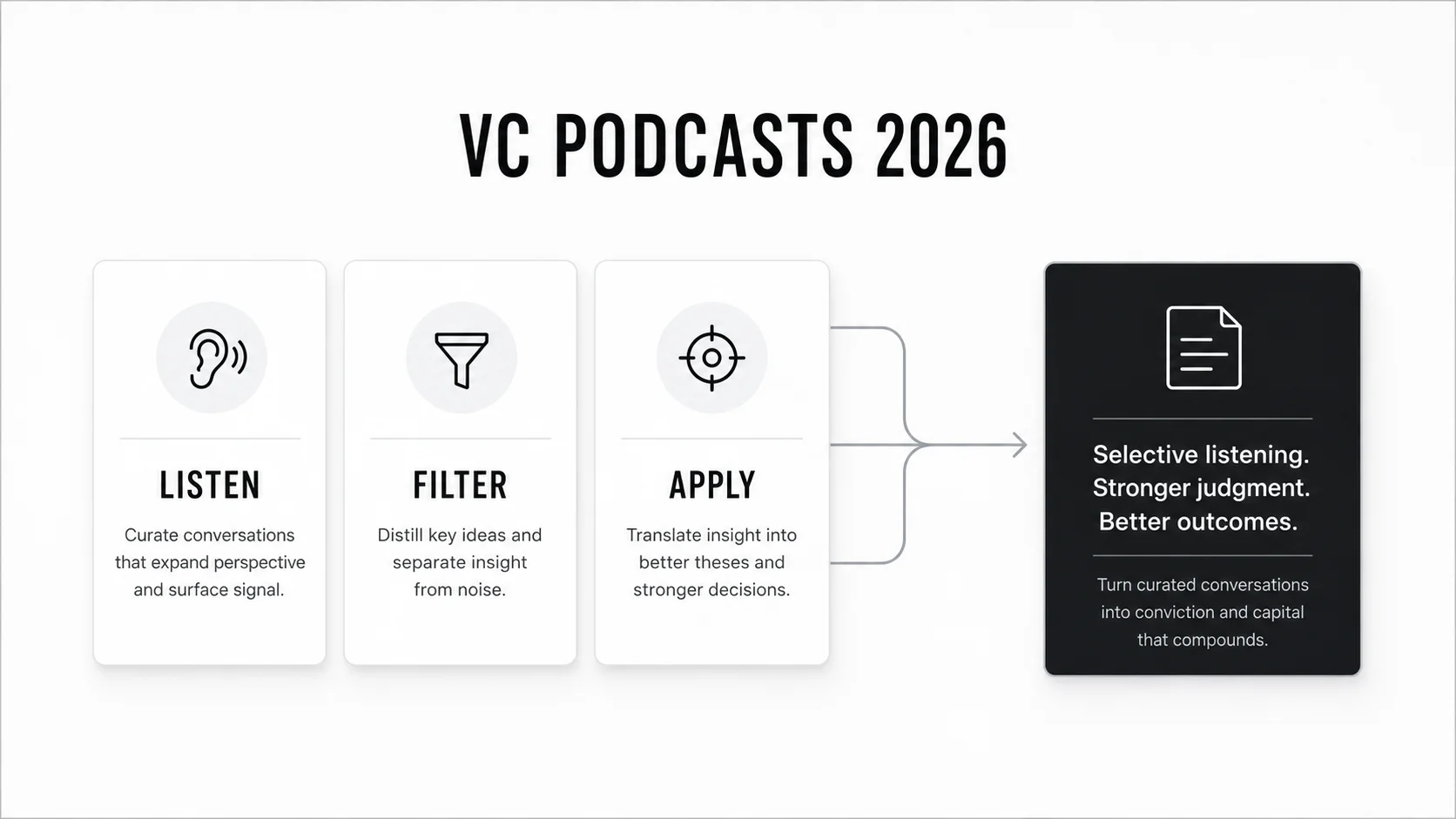
The best venture capital podcasts in 2026 are 20VC, The Full Ratchet, Venture Unlocked, Acquired, Invest Like the Best, The a16z Show, In Depth, Consumer VC, Grit, and the Venture Capital Podcast. Each earns a place for a different learning job, from fund mechanics and deal judgment to company analysis, sector research, and operator execution.
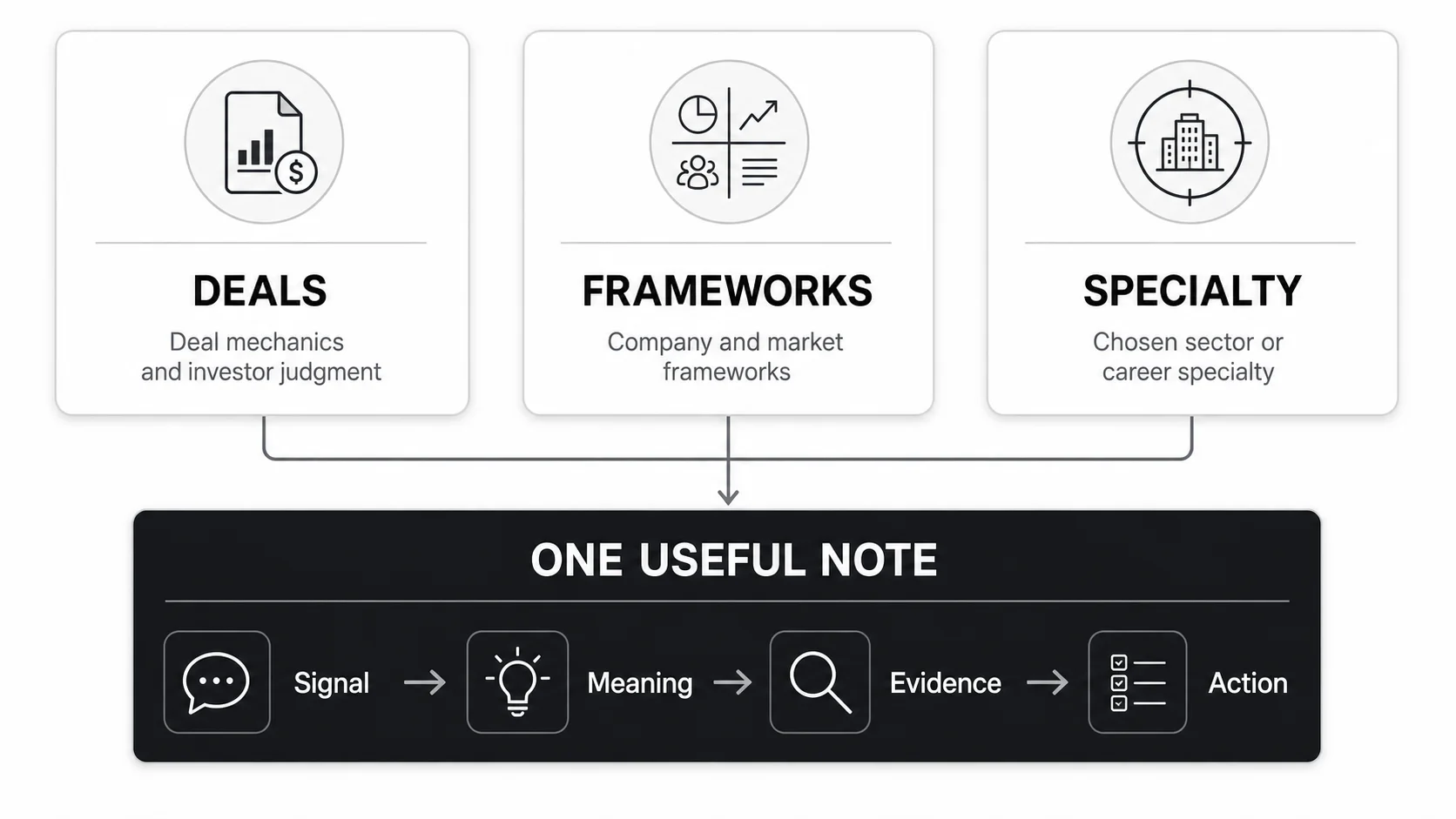
Do not subscribe to all ten. A stronger starting portfolio has three shows: one for deals, one for analytical frameworks, and one for your chosen sector or career gap. Listen with an output in mind. A defensible company note or diligence question is more valuable in a VC interview than a claim that you consume hours of industry content.
Every recommendation below had an active official page or 2026 distribution record when checked on 26 July 2026. Podcast schedules and formats change, so confirm the latest feed before building it into your routine.
The best venture capital podcasts at a glance
| Podcast | Best for | Typical lens | Useful output |
|---|---|---|---|
| 20VC | Investor interviews and current ecosystem views | VCs, founders, markets, and company building | Investor-question log |
| The Full Ratchet | Venture mechanics and decision patterns | Deals, portfolio math, misses, and lessons | Investment-process checklist |
| Venture Unlocked | Fund management and emerging managers | Fund strategy, LPs, portfolio construction, firm building | Fund-strategy note |
| Acquired | Deep company and strategy analysis | Company histories, competitive advantage, business models | Company thesis card |
| Invest Like the Best | Broad investor frameworks | Capital allocation, business quality, and judgment | Framework library |
| The a16z Show | Technology and sector themes | AI, software, fintech, health, defense, and more | Sector signal log |
| In Depth | Operator judgment | Product, hiring, sales, leadership, and scaling | Diligence question bank |
| Consumer VC | Consumer investing | Brands, retail, consumer behavior, and fundraising | Consumer-company scorecard |
| Grit | Go-to-market and leadership | Scaling teams, execution, and customer trust | Operating-risk note |
| Venture Capital Podcast | Accessible current VC conversations | Deals, founders, AI, fundraising, and markets | Weekly market brief |
There is no universal number-one VC podcast. The Full Ratchet may be the best first feed when you need deal mechanics, while Acquired may be the better choice before a company-strategy case study. Choose the show that improves the work in front of you.
How these podcasts were selected
The shortlist uses five filters.
- Venture relevance: the feed regularly covers investing, startups, private markets, technology, or the operating questions investors need to understand.
- Distinct learning job: each show contributes a different lens instead of repeating the same founder interviews and market headlines.
- Practitioner access: hosts or guests bring direct experience allocating capital, building firms, founding companies, or operating at scale.
- Career usefulness: a candidate can convert an episode into a memo, question, thesis, work sample, or better interview answer.
- Currentness: the show had an active official page or 2026 distribution record at the time of review.
Popularity is not a selection criterion. A large audience does not tell you whether a show will improve your judgment. Nor does frequency automatically create value. The relevant test is simple: after listening, can you explain a decision, identify evidence, or take a useful next action?
Best for investor interviews: 20VC
20VC is the strongest general choice for hearing how prominent investors and founders discuss markets, company quality, and capital allocation in a direct interview format. Its official site was publishing new material in July 2026.
The career value is not memorizing a guest's portfolio or repeating a confident market prediction. It is studying the questions. Notice when the conversation moves from a broad claim to evidence, when a guest distinguishes an exceptional company from a fashionable category, and which follow-up exposes an assumption.
Build an investor-question log with three columns:
- the original question;
- what evidence it revealed;
- where you would use a sharper version in diligence.
Before an interview, select two questions that fit the target firm's stage and sectors. Explain why each question matters. That demonstrates judgment more credibly than naming recent guests.
Best for venture mechanics: The Full Ratchet
The Full Ratchet describes itself as a podcast dedicated to demystifying venture capital. Its 2026 archive included conversations about portfolio math, missed investments, pricing, selling too early, fund strategy, and sector-specific investing.
That breadth makes it useful for learning how investors make decisions under uncertainty. Listen for recurring patterns rather than isolated rules. A seed investor, a growth investor, and an LP can use the same word—risk—while referring to different failure modes.
Turn an episode into an investment-process checklist:
- What was knowable at the decision date?
- Which assumption mattered most?
- What would have changed the investor's position?
- How did ownership, reserves, or exit size affect the outcome?
- Was the mistake in selection, sizing, timing, or follow-on behavior?
Then compare the checklist with VCC's explanation of how venture capital works. The goal is not to treat one guest's method as universal. It is to learn which variables sophisticated investors repeatedly test.
Best for fund management: Venture Unlocked
Venture Unlocked is hosted by Samir Kaji and focuses on the playbook for starting, operating, and scaling a venture firm. It is the clearest specialist choice for candidates who want to understand the business behind the investment team.
Many aspiring investors concentrate on selecting companies and ignore fund construction, LP relationships, differentiation, and the institutional constraints shaping a firm's behavior. That creates weak interview answers. A fund is not an abstract pool of money; its size, ownership targets, reserves, pacing, and return requirements influence which opportunities make sense.
Use the show to create a one-page fund-strategy note:
- target stage and check size;
- likely ownership ambition;
- portfolio size and reserve implication;
- credible source of differentiation;
- types of outcomes the model requires;
- questions an LP might ask.
Apply the template to a firm in the VCC companies directory. Label any inference as an inference. You will arrive at networking conversations with better questions about how the firm actually works.
Best for company strategy: Acquired
Acquired publishes long, heavily researched company histories and strategy analyses. Its official site showed active Spring 2026 episodes, including deep dives into Disney, Vanguard, Ferrari, and Formula 1.
Acquired is not a pure venture-news feed, which is why it is valuable. It trains the listener to connect an initial wedge, business model, distribution advantage, strategic choice, and compounding system across decades. Those muscles matter when evaluating whether an early-stage company's apparent advantage could become durable.
Do not summarize a four-hour episode. Build a five-line company thesis card:
- What customer problem or behavior created the opening?
- What was the company's first durable advantage?
- Which strategic choice strengthened the advantage?
- What almost broke the model?
- Which lesson transfers—and which does not—to an early-stage startup?
The last question prevents lazy analogy. A mature company's history can sharpen pattern recognition, but it cannot substitute for stage-specific evidence.
Best for investor frameworks: Invest Like the Best
Invest Like the Best features conversations with investors and business leaders about ideas, methods, and decision-making. Its distribution record was active in July 2026.
This is a useful framework feed. Different guests may disagree about valuation, concentration, market timing, management quality, or the role of narrative. Capture the disagreement instead of searching for one final answer.
Maintain a framework library with four fields:
Framework: What decision is it meant to improve?
Inputs: Which evidence does it require?
Failure mode: When could it mislead you?
Test: Which company or market will you apply it to?
After applying a framework, write whether it changed your view. A tool that never changes a question or conclusion may be elegant but not useful.
Best for technology themes: The a16z Show
The a16z Show sits inside a broader podcast network covering technology, builders, and investors. Its 2026 archive spanned AI, enterprise software, fintech, health, defense, energy, space, and other themes.
The breadth makes it a strong sector-scanning feed. It also creates a bias risk: firm-produced media reflects the firm's interests, access, and worldview. Treat each episode as an informed thesis, not neutral consensus.
For a sector signal log, record:
- the claimed change;
- the enabling technology or constraint;
- who benefits and who loses;
- what adoption evidence exists now;
- what would falsify the thesis.
After several episodes, group repeated signals into a venture capital market map. Add skeptical and primary sources before presenting the map as a work sample.
Best for operator judgment: In Depth
In Depth from First Round Review focuses on tactical company-building advice. Its current archive covers product-market fit, hiring, sales, customer obsession, leadership, and scaling.
Junior investors often have to assess operating plans they have never executed. This show helps close that gap. Its best use is not collecting founder maxims. Convert specific operator experience into better diligence questions.
For example:
- What evidence shows the sales motion is repeatable rather than founder-dependent?
- Which customer behavior indicates real product dependence?
- What breaks when the team or revenue doubles?
- Which senior hire is a constraint today, and why?
- Where is speed valuable, and where would it create hidden risk?
Keep the questions tied to a company stage and business model. Generic operating advice becomes useful only when it changes what you ask or test.
Best for consumer investing: Consumer VC
Consumer VC focuses on early-stage consumer companies, with conversations involving founders, operators, and investors. Its 2026 archive remained active and covered brand building, retail, consumer behavior, fundraising, and category change.
Choose it when consumer is your target sector, not because every aspiring investor needs another general feed. Consumer diligence often depends on evidence that looks different from enterprise software: repeat purchase, channel economics, merchandising, brand salience, gross margin, retail velocity, and changing behavior.
Build a consumer-company scorecard:
- customer and occasion;
- reason to switch;
- acquisition channel;
- repeat or retention evidence;
- margin and distribution constraints;
- credible path from product to durable brand.
Use the scorecard on one company after each relevant episode. Over time, you will see where charismatic stories outrun business quality.
Best for go-to-market leadership: Grit
Grit, associated with Kleiner Perkins, features conversations about building and scaling organizations. Its distribution record was active through 2026.
Grit is most useful when you need to understand execution inside growth-stage technology companies: leadership, sales, customer trust, organization design, and the operating choices behind durable growth.
Translate each episode into an operating-risk note:
- the growth objective;
- the organizational capability it requires;
- the leading indicator that execution is working;
- the bottleneck most likely to appear next;
- the question you would ask management.
This is particularly helpful before evaluating a company that has moved beyond product discovery and now has to build a repeatable go-to-market engine.
Best accessible general VC feed: Venture Capital Podcast
Venture Capital Podcast is hosted by Jon Bradshaw and Peter Harris. Its current archive covers deals, AI, fundraising, private markets, and conversations with investors and founders.
The format is approachable for listeners who want a broad weekly entry point. Use it as a current-market feed, then verify any company, market, or regulatory claim through a primary source before citing it in an interview or memo.
A compact weekly brief is enough:
- one market development;
- one investor or founder claim;
- one piece of confirming or conflicting evidence;
- one implication for a target firm or sector.
If your brief repeatedly stays generic, replace the feed with a more specialized show. Accessibility is useful only when it leads to deeper work.
Build a three-show portfolio for your goal
More subscriptions do not create more judgment. Choose one feed from each column: deals, frameworks, and specialty.
| Goal | Deals and investor judgment | Company or market frameworks | Specialty |
|---|---|---|---|
| Prepare for a generalist VC interview | 20VC or The Full Ratchet | Acquired or Invest Like the Best | In Depth |
| Understand the business of a VC firm | The Full Ratchet | Venture Unlocked | A sector show such as Consumer VC |
| Build a sector thesis | 20VC | The a16z Show | Consumer VC or a relevant specialist feed |
| Improve company diligence | The Full Ratchet | Acquired | In Depth or Grit |
| Learn growth-stage execution | 20VC | Invest Like the Best | Grit |
| Start from a beginner-friendly feed | Venture Capital Podcast | Acquired | In Depth |
Run the portfolio for four weeks. Keep a show if it repeatedly changes a question, improves a work sample, or creates a useful action. Replace it if you only collect interesting quotes.
Pair audio with a small reading stack. VCC's list of the best venture capital newsletters can add faster deal awareness and written source material.
Turn every useful episode into interview evidence
Use four fields: Signal, Meaning, Evidence, Action.
Signal
Write the specific claim, event, decision, or pattern that caught your attention. Avoid broad notes such as “AI is changing software.” A useful signal is narrow enough to investigate.
Meaning
Explain why the signal could matter to a company, sector, fund, or role. This is your interpretation, not the guest's authority transferred to you.
Evidence
Find one confirming source and one challenge. Prefer company announcements, product documentation, regulatory filings, credible datasets, or direct market evidence. A podcast is often a good discovery source and a weak final citation.
Action
Turn the note into one visible output:
- add a company to a market map;
- write a 150-word deal note;
- revise an investment thesis;
- add a question to a diligence checklist;
- research a firm in the companies directory;
- tailor a networking message; or
- strengthen a venture capital investment memo.
One applied note per week compounds. Four thoughtful notes give you more interview material than forty unprocessed episodes.
Common podcast mistakes
Treating listening as preparation
Consumption feels productive because the vocabulary becomes familiar. Interviews test whether you can form and defend a view. Schedule time for the note, not just the episode.
Following personalities instead of learning jobs
A famous host may not cover your sector, stage, or weakness. Assign each subscription a job. If two feeds do the same job, keep the one that produces better outputs.
Repeating a guest's confidence
Podcast conversations reward clear positions. Investing rewards calibrated uncertainty. Separate what the guest knows, what they infer, and what remains untested.
Ignoring incentives
Firm-produced media, founder interviews, and investor podcasts can all support reputation, fundraising, recruiting, or deal flow. That does not make the content unhelpful. It means you should ask which perspective is being amplified and which evidence is missing.
Citing the episode as proof
Use an episode to discover a company, market shift, or framework. Verify material claims independently before using them in a memo or interview answer.
Building an impossible queue
An unplayed backlog creates guilt, not expertise. Delete aggressively. The best podcast portfolio is the smallest one that improves your work.
Frequently asked questions
What is the best venture capital podcast for beginners?
Start with The Full Ratchet for venture mechanics or the Venture Capital Podcast for an accessible current-market format. Pair one of them with Acquired for company strategy and In Depth for operator judgment. Three complementary feeds are enough.
Which VC podcast is best for investment interviews?
20VC is useful for studying investor questions and current viewpoints, while The Full Ratchet is stronger for mechanics and recurring decision patterns. The interview advantage comes from converting an episode into an evidence-backed view, not naming the show.
What is the best podcast for aspiring fund managers?
Venture Unlocked is the specialist choice because it focuses on fund strategy, LPs, firm building, and portfolio construction. Use it to analyze how a target fund's size and model shape its investment decisions.
How many venture capital podcasts should I follow?
Three is a strong default: one for deals, one for frameworks, and one for a specialty. Add another only when it fills a clearly defined gap. If two feeds produce the same notes, remove one.
Can podcasts help me get a venture capital job?
Listening alone is a weak signal. Podcasts help when they lead to better company research, investment memos, market maps, diligence questions, networking conversations, and interview answers. Prepare those outputs, then browse current venture capital roles and research target firms in the VCC companies directory.
The best VC podcast portfolio is selective and productive. Choose three complementary feeds, verify what you hear, and turn one useful idea each week into work you can defend.
Related posts
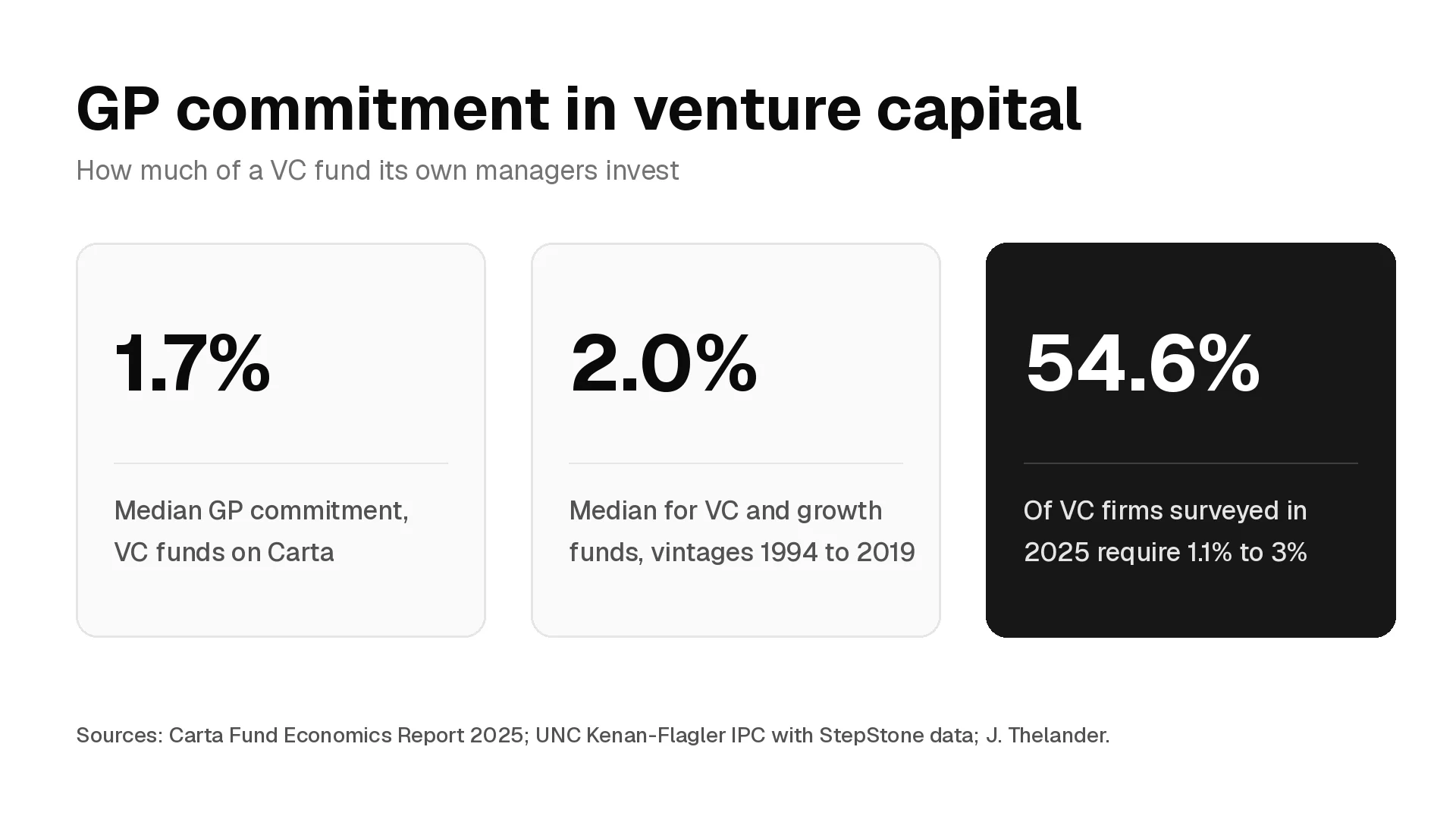
What a GP commitment is, how large it is in venture capital, how GPs fund it, where it sits in the LPA, what the returns evidence says, how firms split it across partners and principals, and what to ask before you accept a role with carry.
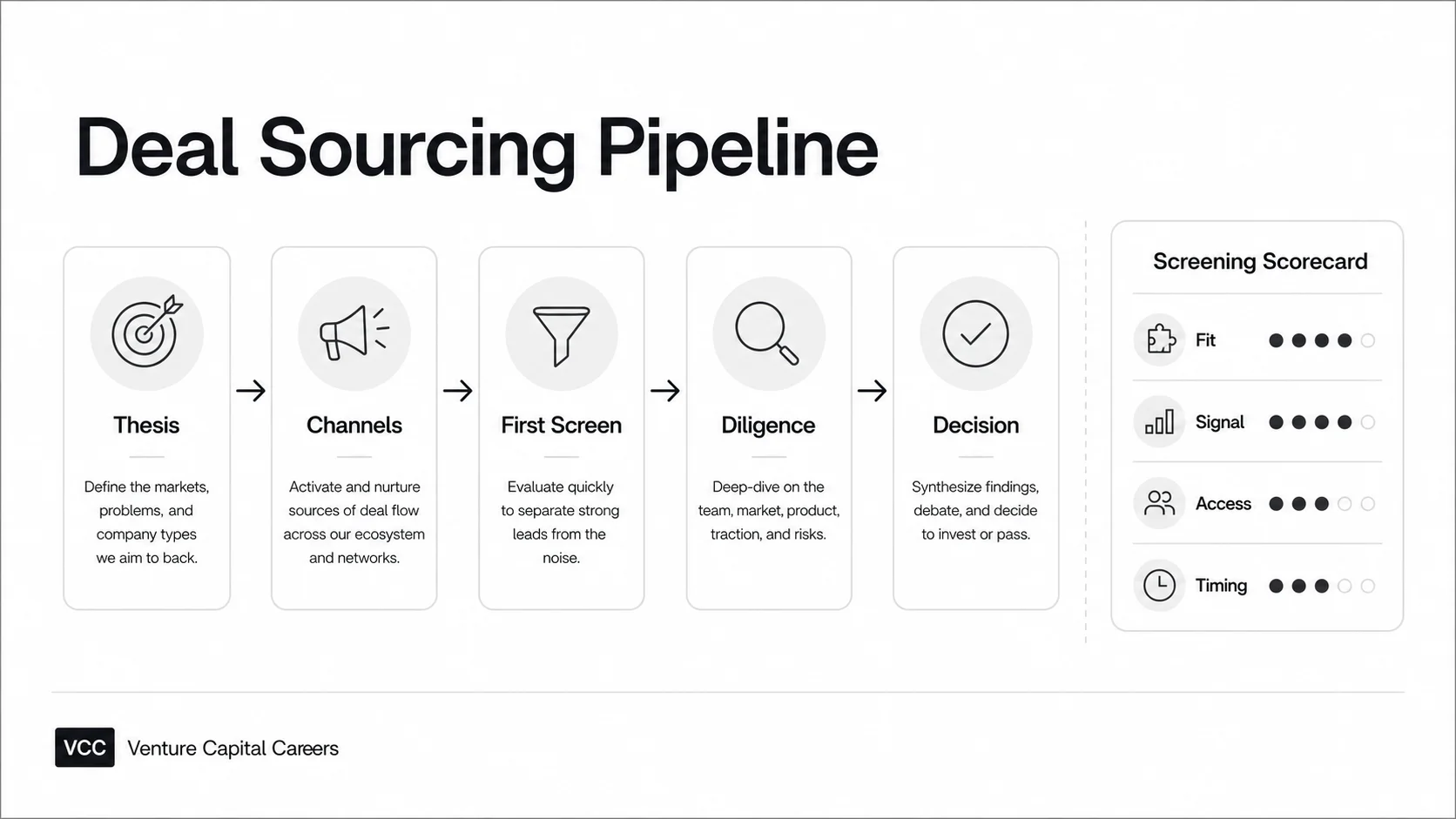
Most closed VC deals start with a relationship. See where deals come from by stage, how to work each sourcing channel, which signals show up early, and how analysts run a weekly sourcing process.
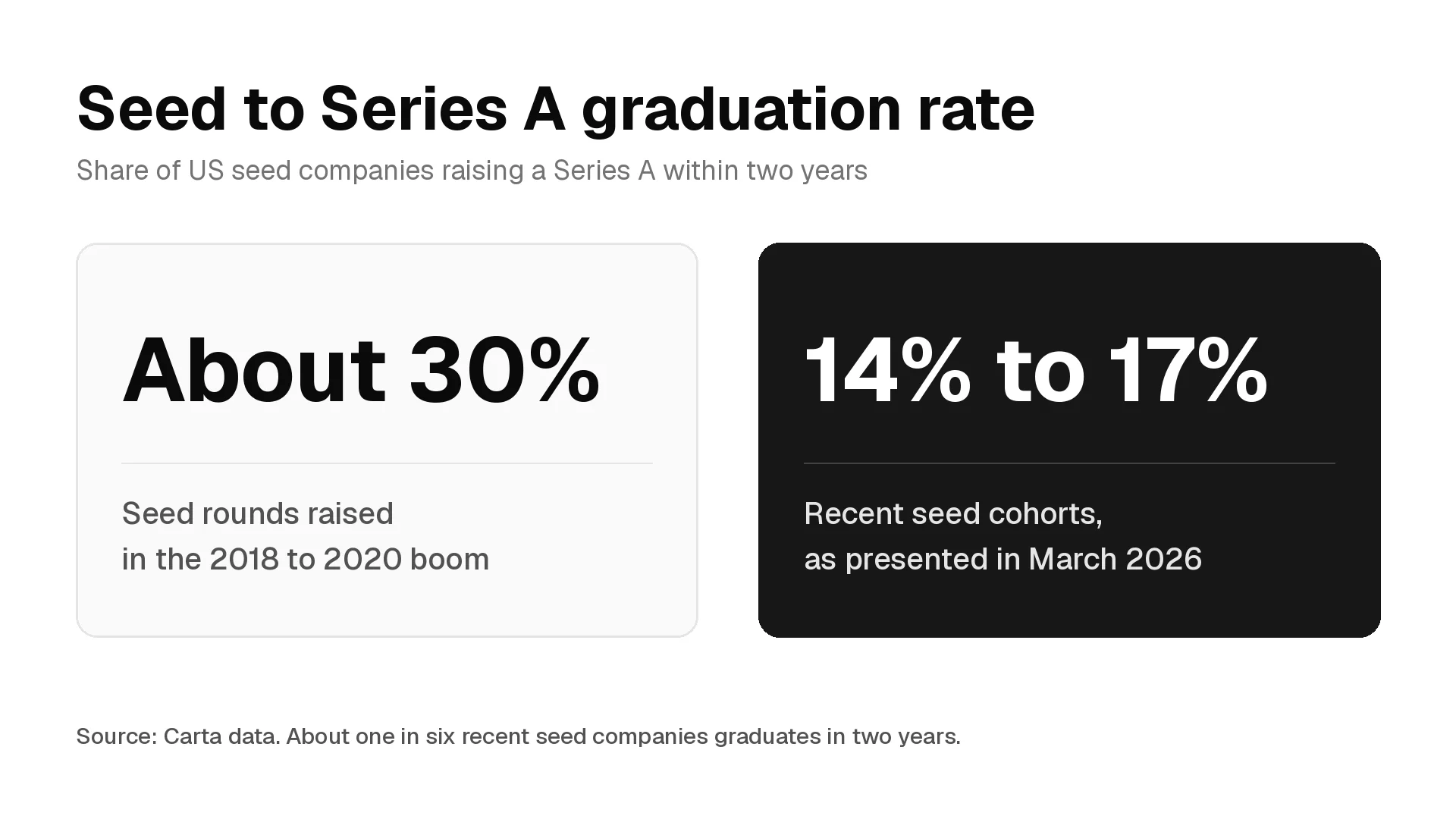
Seed to Series A graduation rates by cohort from Carta and Crunchbase, how long the jump takes, why rates fell after 2021, why published figures disagree, and how seed and Series A firms use the rate for reserves, LP reporting, portfolio reviews and interviews.